Options trading success has a lot to do with strategy and knowledge, but what you might not realize is that it’s also about having the right setup to do it! A well-equipped and organized workspace means that you can stay locked in, which will minimize any distractions. And you know what that means, right? You can make quicker and the most accurate decisions.
Our guide is here to help! We are going to teach you how you can create the ultimate options trading setup. That means everything from the physical workspace must-haves to the best technology, strategies, and routines. Even if you’re just getting your feet wet or you’re looking to polish your process, we are going to prep you with the practical tips so that you can elevate your trading game!
If you’re wondering why setup matters, it’s simple: a messy, cluttered, or just plain inefficient workspace can cause you to make unforced errors, waste time, and possibly result in poor decision-making. But with a good proper setup? You’ll be ready and able to take on the market with confidence!
Creating the Perfect Physical Trading Environment
Your trading environment sets the entire tone for your trading process, and that’s why a clutter-free, comfy space that keeps you alert and focused will make a huge difference during any critical trading moments. Below, we’ll walk you through creating a workspace that will have you trading at an optimal level!
Workspace Essentials
Your desk and chair are more than just mere furniture—they’re your trading station!
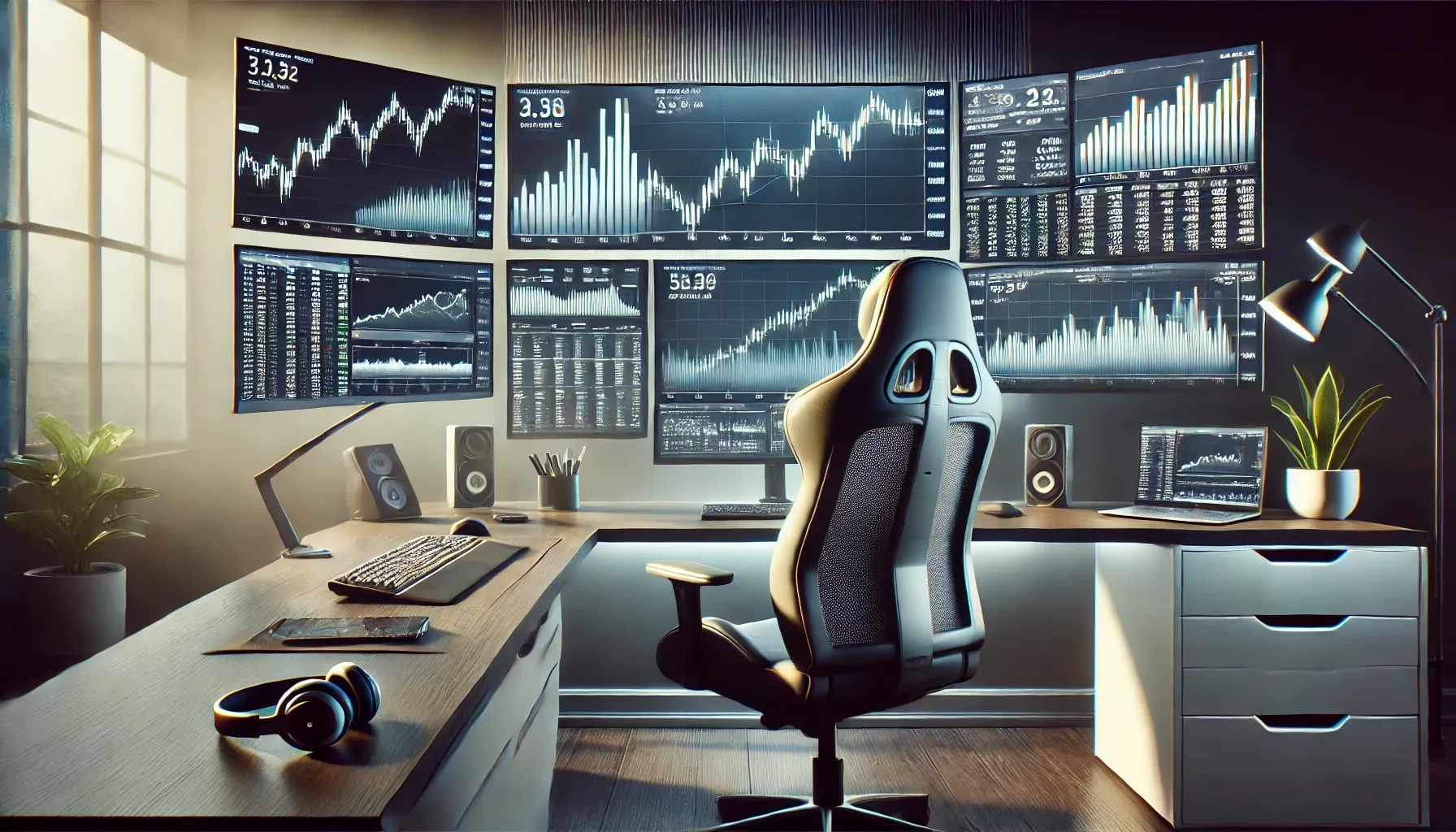
- Desk setup: Choose a bigger desk that is able to accommodate multiple monitors and still leaves room for things like keyboards, notebooks, or tablets. Look for a clean and sturdy surface so that you don’t end up feeling cramped.
- Chair: Opt for an ergonomic chair to support those longer trading sessions. Adjustable features like lumbar support and armrests decrease strain and that means you’ll be more comfortable.
- Distraction-free zone: Keep your workspace quiet and separate from any household noise or interruptions. And if this isn’t possible, invest in a pair of noise-canceling headphones.
A focused trader is a profitable trader, and a proper workspace is the first step in staying on top of your game.
Multi-Screen Setup
Why should you settle for only one screen when multiple monitors can boost your efficiency? You shouldn’t settle! A multi-screen setup is so good for tracking markets in real-time, analyzing charts, and executing multiple trades at the same time.
- Benefits: With multiple screens, you can dedicate one to live price feeds, another to technical analysis, and a third to your trading platform. This setup helps you avoid constantly toggling between tabs or windows.
- Configurations: For swing traders or long-term strategists, a two-screen setup might be sufficient. Day traders will probably benefit most from three or more screens for granular analysis and faster decision-making.
Pro tip: Invest in monitors with higher resolution for reduced eye strain.
Lighting and Comfort
Good lighting and ergonomic accessories can sometimes be overlooked or straight-up ignored, but they can make or break your concentration during trading hours.
- Lighting: Use soft, diffused lighting to avoid any glare on your screens. Think about investing in a desk lamp with adjustable brightness or a daylight lamp for a more natural feel.
- Ergonomic accessories: Items like wrist supports, footrests, or monitor stands will help prevent strain on your body and keep you more comfortable during longer trading sessions.
The goal here is a simple one—to make a space that has you sharp without physical discomfort that will take your attention away from the market!
Must-Have Technology and Tools for Options Traders
The tools you use for trading are the building blocks of your setup. From a fast computer to reliable software, having the right technology ensures you can execute trades smoothly and adapt to market changes quickly. Next up, we break down the must-haves!

High-Performance Computer
A fast and reliable computer is a necessity for executing trades without any kind of lag or annoying technical hiccups.
- Recommended specs: Look for a system with a multi-core processor, at least 16GB of RAM, and an SSD for fast storage. This setup guarantees that your trading platform and charts load quickly, even under heavy use.
- Laptop vs. desktop: Yes, desktops are usually more powerful and customizable, but laptops give you flexibility for trading on the move. Just choose one that is based on your lifestyle and consider if portability is a priority.
Don’t let a slow computer cost you opportunities—invest in a machine that can keep up with you and the markets!
Reliable Internet Connection
If you don’t have a stable, high-speed internet connection, then you won’t be able to trade—and of story.
- Speed requirements: Aim for a minimum download speed of 50 Mbps so it can handle multiple platforms, chart updates, and streaming data simultaneously.
- Backup solutions: Keep a backup internet option, like a mobile hotspot or secondary provider, so if an outage does happen, your downtime will be minimal.
Trading relies on precision and timing, and a slow or laggy internet connection will mess with your flow.
Essential Trading Software
The trading platform you choose and the tools you use should fit in with your style and strategies, so think about the following:
- Broker platforms: Choose a broker with strong charting and execution features—platforms like ThinkOrSwim or Interactive Brokers are super popular with a lot of options traders.
- Third-party tools: Think about using helpful tools like TradingView for advanced charting or automation tools like QuantConnect to streamline your trades.
Having the right software guarantees that you are able to analyze, plan, and execute in the most efficient way.
Trading Journal Tools
Tracking your trades is one of the absolute best ways to get better as a trader! Here’s how you can do it:
- Why journal? A trading journal helps you see any patterns in your behavior and strategies, and that will show what works—and what doesn’t.
- Best tools: Apps like Edgewonk and Tradervue have templates and analytics that simplify journaling. Even a basic spreadsheet can do the trick.
A disciplined approach to tracking trades will help in honing your strategy and hopefully, avoid repeating any past mistakes.
Key Strategies for a Successful Options Trading Setup
An options trading setup is only as good as the strategies that you use with it. A well-thought-out plan keeps you grounded, helps manage risk, and makes sure that every decision you make is intentional—not emotional. Next, we’ll walk you through the strategies that will give your setup a decent head start and help you stay on track!
Developing a Trading Plan
You do NOT want to fly blind in the options market—this is a recipe for disaster. Having a good trading plan means that you have a reliable compass and that will guide you on every trade you make. The following is how to build one that works:
- Set clear goals: Are you looking for steady income, capital growth, or just some quick wins? Your trading plan should match up with your financial objectives.
- Outline your strategies: Whether you’re concentrating on covered calls, straddles, or spreads, write out exactly how and when you’ll use each strategy.
- Risk management: Decide on position-sizing rules and stop-loss levels upfront. For example, you should limit each trade to 2-5% of your portfolio to protect yourself from any big losses.
Basically, your plan should be detailed enough to follow easily but also flexible enough to adapt if and when the market goes wonky.
Using Technical and Fundamental Analysis
A successful trader doesn’t solely rely on their gut feelings—they also rely on data. A combo of technical and fundamental analysis gives you a complete picture of the market. How can each fit into your setup? Look below!
- Technical analysis: Focus on the indicators like moving averages, RSI, and Bollinger Bands to identify any trends and entry/exit points. Candlestick patterns can also give you some great clues about market direction.
- Fundamental analysis: Keep a close eye on earnings reports, economic data, and news events that might have an influence on an asset’s price. And in options, implied volatility usually will spike around earnings announcements, and that creates solid trading opportunities.
Think of technical analysis as your short-term map and fundamental analysis as your long-term guide—when used together; they create a nice balanced approach to trading.
Mastering Order Types and Execution
As for orders and execution, they differ in a few important ways, and understanding how to use them will save you time and money!
- Market orders: Great for getting into or out of a trade quickly, but beware of slippage in fast-moving markets.
- Limit orders: These let you control the price at which your order executes, and that gives you more precision.
- Stop-loss orders: These are a safety net so that you can automatically exit trades if they move against you, which protects your capital.
Pro tip: To speed up execution, you should think about setting up hotkeys on your trading platform! A well-configured hotkey setup can mean the difference between catching or missing a trade in fast markets.
Optimizing Your Daily Trading Routine
A well-structured daily routine can make the difference between a scattered trader and a disciplined one. By prepping in the morning, staying on task during market hours, and reviewing your trades after the bell, you’ll create habits that result in long-term success.

Pre-Market Preparation
Before the market even opens, take the time to get organized and map out your day. You can do this by following the tips below:
- Look for opportunities: Use screeners to find options that have unusual volume, high volatility, or upcoming earnings reports—this will give you a shortlist of assets to focus on.
- Review market news: Check economic calendars, headlines, and pre-market movers. Events like Fed announcements or job reports can (and do) impact volatility.
- Set up your charts: Make sure that your technical indicators are in place and ready for all of the assets that you’re tracking.
This prep time means that you will start the trading day with a clear plan instead of just scrambling to react when it’s already happening.
During Market Hours
Once the market is live, discipline is everything! It is super easy to get caught up in the excitement of the moment, but staying calm, cool, and collected will pay off in the long run.
- Stick to your plan: Don’t chase trades that are outside of your strategy, as impulsive decisions usually cause mistakes.
- Limit distractions: Turn off unnecessary notifications and stay hyper-focused on your trading screen.
- Manage emotions: Trading is really stressful, especially when the market doesn’t go your way. Take breaks when you need to, and remind yourself to think with logic and not on pure emotion.
Look at your trading day like a steady jog, not a sprint to the finish line—pace yourself and be consistent.
Post-Market Analysis
The day may be over, but your work isn’t done, sorry! You still have to review your trades and look at your performance. It’s just as important as the trades you made that day. Do the following when the market closes:
- Analyze your trades: Look at what worked and what didn’t. Did you stay with your plan? Were your entry and exit points well-timed?
- Document lessons learned: Keep a log of any mistakes that were made or insights you gained. For example, “Waited too long to close the position” or “Good use of stop-loss saved capital.”
- Adjust for tomorrow: Use today’s lessons to refine your approach for the next trading session—even little tweaks can mean improvements.
The more intentional you are about your routine, the more control you’ll have over your results!
Staying Ahead: Continuous Learning and Adaptation
The market never stays the same, and neither should your approach to trading. You could be using and adapting to new tools, strategies, or market conditions, but continuous learning is what separates the most successful traders from those who get left behind. Next up, we’ll tell you how you can stay in the know and keep your setup evolving as your trading skills grow!
Ongoing Education for Options Traders
Even the most experienced traders know there’s always more to learn. Markets and strategies change, and new tools emerge almost daily, so staying curious is a must in order to stay competitive.
- Online courses and webinars: Platforms like Udemy, Coursera, or OptionsAnimal all have comprehensive options trading courses for traders at all levels.
- Books and publications: Keep the classic reads like Options as a Strategic Investment by Lawrence G. McMillan on your shelf. You can also stay in the loop with industry journals or blogs.
- Communities and forums: Engage with other traders via helpful online communities like Reddit’s r/options or trading-focused Discord groups. Sharing your experiences and insights and hearing from other traders can give you new perspectives and keep you motivated.
A commitment to lifelong learning means that your strategies will be relevant no matter how the market changes!
Adapting Your Setup Over Time
The setup that works for you today might not work as well for you tomorrow. As your goals, trading volume, and skill level change, you should revisit and change your setup as you see fit.
- Upgrading tools: As technology improves, think about upgrading your trading software, hardware, or internet setup. For example, a faster computer or a more reliable broker platform can make a huge difference.
- Testing new strategies: If you’ve mastered the basic strategies, it’s probably time to explore some more advanced ones like calendar spreads or iron butterflies—adjust your system to support any new approaches.
- Streamlining processes: Eventually, you’ll probably find ways to simplify your workflow. For instance, automating routine tasks like journaling or order placement can free up a lot of your mental energy, and that allows you to make more strategic decisions.
A flexible mindset and a willingness to evolve? That means that your setup will grow with you as a trader!
Conclusion: Build the Best Trading Setup
A well-thought-out trading setup is so much more than computer monitors and tools—it’s the actual foundation of a successful trading career. When you are in a zen physical workspace and use the strategies you have, you’re setting yourself up for being super efficient! That means less mistakes and way more confident decision-making.
Let’s do a quick debrief on the main takeaways for building your ultimate trading setup to get you on your way:
- Create a comfortable, distraction-free physical environment with ergonomic furniture and multi-screen setups.
- Invest in solid technology—high-performance computers, low-latency internet, and advanced trading software.
- Develop and polish your trading strategies! Use both technical and fundamental analysis to inform your trades.
- Stick to a daily routine that includes pre-market prep, disciplined trading hours, and a post-market analysis.
- Be curious and adaptable! You can learn lots of new techniques and upgrade any tools as your needs change.
What’s up next? Well, you can start by looking over your current setup and seeing the areas that could use some improvement. It could be something as minor as upgrading your tools or tightening up your routine—even little changes can turn into bigger and better results.
FAQs
It is time for those frequently asked questions that we get about the above topic! Here are the most common FAQs that our readers have sent us about options trading setups.
Why Is a Proper Trading Setup So Important?
A good setup will eliminate most distractions and errors, and it helps you stay organized and efficient. This means that you are able to focus on your strategies and make better decisions when you’re under pressure.
What Kind of Computer Is Best for Options Trading?
A high-performance computer with a multi-core processor, at least 16GB of RAM, and an SSD for fast data processing is your best friend. And if you trade on the go, a laptop with similar specs will work, too!
How Many Monitors Do I Need for Trading?
This all depends on your particular trading style. Day traders usually benefit from three or more monitors so that they’re able to track live data, charts, and trades simultaneously. Swing traders or long-term investors probably only need two screens.
What’s the Most Important Tool for Options Trading?
Your broker platform is arguably the most important tool, so pick one that has advanced charting, fast execution, and really good customer support. Two examples are TradingView and ThinkOrSwim—both are excellent options.
How Can I Improve My Trading Performance?
By keeping a detailed trading journal, reviewing your trades regularly, and staying committed to always learning. Little adjustments in your strategy, setup, or routine can make a big impact!