Five years ago, the majority of sane people wouldn’t have dared to even look at an options contract unless they were at an official Bloomberg terminal, had a degree in finance, and vast knowledge of the stock market. Back then, options trading was somewhat of a niche thing compared to other stocks.
And then came the “influencers.” No, not the “models” on Instagram who want to sell you tea that will shrink your belly fat—these are TikTokkers and Reddit gurus that are garnering millions of views and comments about options trading strategies. They are on your TikTok feeds and in your Reddit threads, and there are legit teenagers who are arguing over straddles in the comment sections. The so-called influencers? They’re attempting to walk viewers through iron condors like they’re Julia Child doing a cooking tutorial, only Julia Child knew her way around a kitchen.
Because options are not mainstream, what caused this explosion of options content? The perfect storm of pandemic boredom, zero-commission trading apps, and an internet audience that thinks vitality means it’s accurate. A single viral post or a mere 30-second TikTok can send viewers to platforms to make trades. But they don’t have any experience.
Social media isn’t only influencing the volume of trades that are made, it’s also causing people to make hasty decisions, amplifying group-think behavior, and putting some downright risky financial strategies in front of millions.
This trend has undoubtedly changed options trading, but in a good or a bad way? We are going to find out as we unpack how Reddit and TikTok have changed the options market and what that means for anyone who is interested in doing it!
The Rise of Retail Trading Culture
Retail trading, of course, existed before 2020, but it wasn’t nearly as popular as it is now—it wasn’t exactly making headlines. But things changed dramatically during the early months of the COVID-19 pandemic. All of a sudden, there were millions of people who were cooped up at home with stimulus checks, hardly any entertainment options, and an internet that was full of investing tutorials.
Those commission-free platforms like Robinhood? They were gaining traction, but now they were everywhere. No trading fees? Check. No intimidating interface? Double check. And they were designed to look more like a game than a brokerage site.
Once a fringe community, Reddit’s r/WallStreetBets, known for budding stock bros and some super questionable YOLOs, was now a driving force in markets. Trade ideas weren’t confined to investment newsletters or private forums anymore. Now they were meme-ified, upvoted, and shared with the general public.
Then came the meme stock boom: GameStop, AMC, Blackberry, Bed Bath & Beyond. What started out as a bet on short squeezes turned into a financial flash mob. People weren’t just buying stocks, no, they were buying call options en masse, which caused volatility that professional traders had a hard time keeping up with.
If you think it was only about making money, you’re mistaken. They wanted to beat the system that had been gatekeeping forever. For a lot of these retail traders, making a trade on a meme stock felt like it was an act of rebellion. And that attitude hasn’t gone anywhere in the options trading culture.
The TikTok Effect: Bite-Sized Trading Advice
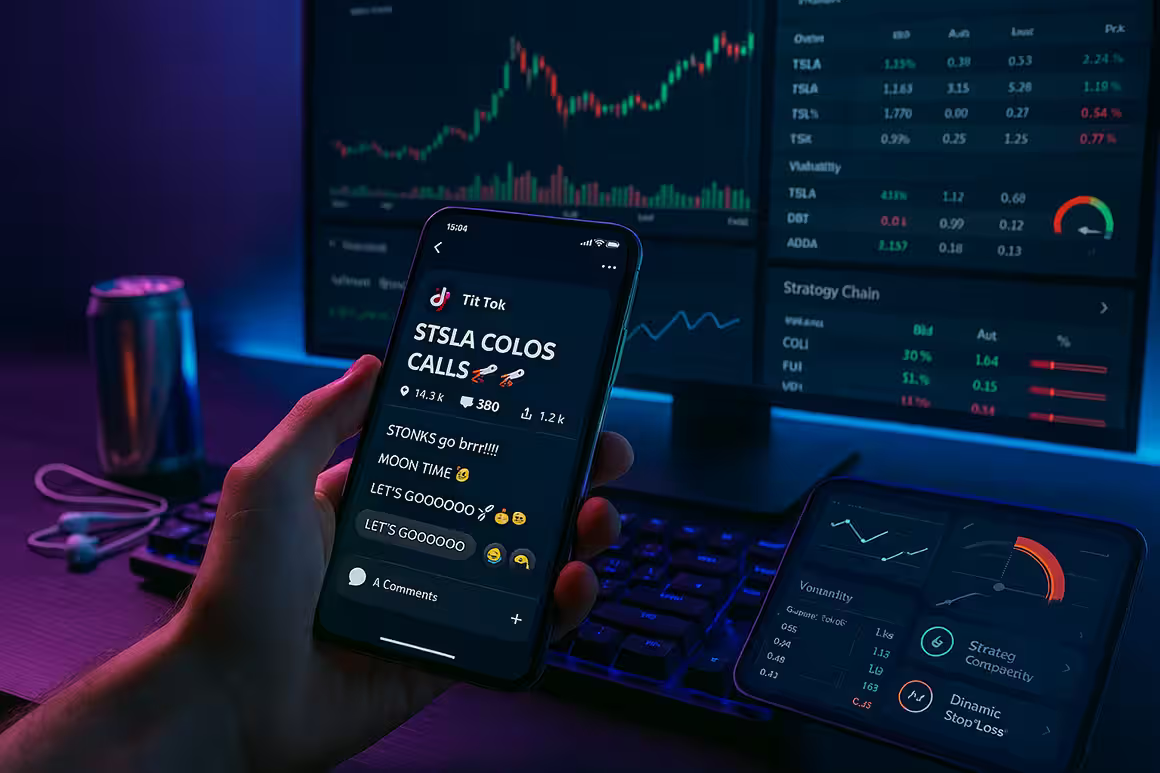
TikTok is not a platform that was created to financially educate the masses, but that certainly hasn’t stopped creators from trying! Sandwiched between the latest TikTok dances, makeup tutorials, dating advice, and adorable animal vids, there’s a steady stream of 60-second breakdowns on debit spreads and iron butterflies. “Finfluencers” (that’s what they call themselves) are packaging options trading into quick and easily digestible lessons that almost anyone can follow.
And people are eating it up with a spoon.
We can’t lie—there are a few creators that are actually really good at explaining things in a clear and understandable way. They are able to simplify complex strategies by dumbing them down for people who don’t know a thing about options. They use props, whiteboards, screen shares—basically whatever it takes to make it click for the viewers.
- Humphrey Yang (@humphreytalks) is one of them—he breaks down the concept of call options in a simple way. His 41 second TikTok is a solid primer on how call options work in stock trading.
- Another creator who gets it right is @wordsofrizdom. He talks about the most important strategies and hacks for being successful in options trading with practical tips that can help every level of trader hone their approaches.
- Over on Reddit, esInvests posted a comprehensive four-step methodology for developing a trading strategy, and it includes profit mechanism identification and signal testing. It’s a really valuable resource for readers who are interested in building a solid and structured approach to options trading.
@wordsofrizdom
Use This ONE Trading Hack To Become A Profitable Trader 🤯 DISCLAIMER: Stop Losses aren’t necessary in options trading as you can risk your allocated amount and Size to zero on the contract. That being said the main lesson here it to choose your risk amount and learn to let your trade play out and even if your trade is a loss being okay with that. Set your risk and let your trades play out in full! Watch this episode now using the link in our bio or on YouTube just search – Words of Rizdom Elite Options Trader 🚨
But the above creators are the exception, not the rule! There’s a really thin line between simplifying options and overselling something that is basically a worthless 60-second video. And a lot of the TikTok content out there crosses it.
If your algorithm has clocked that you watch this kind of content, your FYP (for you page) will be full of videos that promise to teach you “How to make $5K with zero risk” or “The one trade that I make every week that never loses.” Add in some legit-looking screenshots and a confident voice? It’s not hard to see why new traders would listen to them and not question it.
What’s missing from the TikToks in question? A lot! Context. Risk. Nuance. Disclaimers. All of the parts that matter the most when you’re putting real money on the line.
TikTok certainly didn’t invent bad financial advice—that’s not new. But it definitely jacked up how fast it spreads.
The Pros: Accessibility, Community, and Speed
Okay, so not everything that sprang forth from this culture explosion is totally reckless. There are some changes that have actually made options trading easier to get into, especially for those people who previously felt like they were shut out. The following are the pros of TikTok and Reddit!
Accessibility
Before the advent of apps like Robinhood, trading options meant that you had to find your way around clunky platforms and had to understand all of the super complicated fee structures. Now? You can open a trading account on your phone in five minutes flat and start to learn the basics for free.
You don’t have to pay for expensive courses or buy a stack of textbooks. Reddit threads, TikTok explainers, and YouTube walkthroughs can help you to get your feet under you and build a foundation in minimal time. Whether or not that foundation is good all depends on where you look and what you watch, but the barrier to entry has pretty much vanished.
Community
One of the biggest changes to come from all of this is that people aren’t trading all by their lonesome anymore. Reddit threads are all full of people who are posting their trades, outcomes, and the lessons that they learned. And TikTok comments are full of questions, tips, warnings, and, because it’s TikTok, insults and trolls.
The social side of trading makes it so much less intimidating, and it’s way easier to get started when you feel like you’re part of a group, which is a good thing!
It also makes trading feel a little less like it’s algebra homework and like a conversation among friends. A sense of connection matters in a world that has become almost totally online.
Speed
Speed is another tick in the positive column. A viral TikTok can inspire thousands of new trades in minutes, and a Reddit post that gains a lot of traction can influence a stock’s option volume by the end of the day.
Virality equals volume. And that kind of speed wasn’t even a possibility before. After an options trading post goes viral, you’re able to see the ripple effect as it’s happening. How? Google searches spike. Robinhood sign-ups increase. Brokerages will report huge increases in their options activity. The time it takes for an idea to turn into action has shrunk to minutes.
That kind of immediacy makes markets way more reactive and a lot less predictable.
The Cons: Hype, Herd Behavior, and Misinformation
Speed and accessibility are not bad things! But because it all moves so fast, there will be turbulence. And not like a little bit. Like, you’re afraid the plane might go down kind of turbulence. Look below for the scary score of TikTok and Reddit options trading content!
Echo Chambers
Reddit and TikTok are both platforms that are driven by engagement. That means that the posts with a lot of views and the ones that make over-the-top claims and promises, will always get pushed to the top, and it doesn’t matter if they’re accurate or responsible.
The best strategies don’t always get traction. Viral ones do. And a lot of the time, those are the worst ones.
Once a dangerous trade starts getting attention, it snowballs. Other users will share and copy it. Upvotes start to pile up. And that starts to make it look credible because it’s everywhere.
Blind Following
Who among us hasn’t been targeted by an ad on IG and bought that product? I’m guilty of that several times over. If someone sounds confident and claims that they tripled their money with a trade, it’s only human to wonder, “What did they buy?”
But trades always need context. You don’t know how much money they risked. You don’t know if they’re even telling the truth. And you definitely don’t know if they’ve also blown up five trading accounts before this one. Don’t just copy someone else’s trade because they tell you to—especially if you have no idea what the trade is! Could it work out for you? Maybe. But chances are pretty good that it will end in disaster.
False Confidence
When people get one win, they want another. TikTok is loaded with “easy money” narratives. There are screenshot flexes, clips of people who claim that they’ve quit their jobs, and promises of consistent weekly income. That kind of stuff is seductive and addictive.
It also creates a super distorted view of what options trading really looks like. The real truth? It’s always risky, and most traders lose money. And there’s no one setup that will ever guarantee success all of the time.
But social media rewards numbers, and when you watch enough videos of people saying they’re rich because of their trades, it’s hard to resist. Which pushes people to trade emotionally instead of in a strategic way, and that is not how it’s done.
Real Examples of Viral Trades That Moved the Market
We can’t talk about options trading and social media without reliving the whole meme stock madness. It wasn’t only stocks that went parabolic! Options activity was the thing that supercharged all of the moves in cases of viral trades that shook the market.

GameStop (GME)
This was the big one. In January 2021, GameStop’s stock price rocketed from under $20 to almost $500, and it was all due to Reddit-fueled enthusiasm and coordinated buying of call options. The calls forced market makers to hedge by buying shares, and then that created a feedback loop that sent the price even higher.
Options weren’t a footnote in this case—they were the match that lit the gasoline.
AMC, BBBY, and Others
AMC Entertainment had a similar run. So did Bed Bath & Beyond. In both cases, the social media hype surrounding them turned into real-world movement. Retail traders piled into short-dated calls, which ramped up implied volatility and pushed the prices higher.
It wasn’t rational, but it was powerful all the same.
On Reddit, posts that were titled “YOLO” would lay out huge options positions, usually with tens of thousands at stake. Some paid off. Others flopped hard. But the point wasn’t to necessarily make a profit—it was conviction, community, and some chaos to boot.
And Wall Street? They had no choice but to take it seriously.
How Platforms Are Responding (and What to Expect Next)
After the GME mess and subsequent meltdown, platforms started putting some guardrails in place. Robinhood temporarily restricted trading on volatile stocks. They also added warnings before users made any kind of advanced options trades. And some brokerages had users take quizzes before they were able to access the more complex strategies.
That’s still a work in progress.
On the social side, moderation is even harder. TikTok has guidelines against financial misinformation, but enforcement is spotty at best. Financial creators are required to add disclaimers, but let’s be real, most people ignore those.
There’s also been more interest in regulating influencer-driven trading. The SEC has started sniffing around when creators make specific trade recommendations without disclosure. That could become a bigger issue as “finfluencers” gain more and more clout.
As for what’s next? Expect the next wave of traders to come not from business school like Wharton, but from the school of social media. And expect platforms to keep walking the tightrope between accessibility and responsibility.
How to Navigate the Noise as an Options Trader
If you’re seeing options content everywhere you look and you’re curious, that’s a natural reaction! But you have to know what’s good info and what’s bad info—and how to figure that out. The following is how you can see through the hype so that you don’t blow up your account!
- Look Past the Hype – If a strategy sounds like it is too good to be true, it is. High returns always come with high risk, and it doesn’t matter what the “finfluencer” behind the camera is saying.
- Do Your Own Research – Before you place a trade, you have to understand how it all works. What’s the worst-case scenario? What’s the breakeven point? What are the moves that will hurt you most?
Watch tutorials, read actual books about options trading, and cross-check any strategies with multiple sources. - Ask ‘What’s the Risk?’ – Too much of social media is concentrated on profits. But come at it from the other direction and ask yourself these two important things: “How much money could I lose?” and “Is it worth it?”
Good risk management? That’s the difference between a trader and a gambler. - Don’t Trade on Emotion – FOMO (fear of missing out) is a really bad trading strategy. So is revenge trading. If you are chasing someone else’s win or trying to make your money back in a reckless way, close the trading app and take a break.
Independent thinking will always beat following the crowd every single time, no exceptions—don’t be a sheep!
Conclusion: Use the Hype—Don’t Get Used By It
Social media is the thing that is throwing gasoline on the fire that is the options market. Yes, Reddit and TikTok can claim that they’ve made trading more popular, more visible, more accessible, and honestly? It’s a lot more entertaining. But all of that visibility comes at a cost and should be approached with extreme caution. They’ve hyped up fast trading over strategy and made virality a substitute for substance.
Want to know what to do and what not to do if you’re getting your trading advice from TikTok and Reddit? Look below for a recap:
- Learn from the conversations, but don’t ever let them control your trades.
- Use the tools that social platforms offer, but always back them up with your own real research.
- Don’t fall for any big promises or get-rich-quick schemes.
Want to level up without the nonsense? Check out our no-hype beginner’s guide to options, plus tools for building strategies that actually make sense.
If you want the best options trading strategies that are backed by real research, check out our beginner’s guide and tools to improve your trading game on OptionsTrading.org!