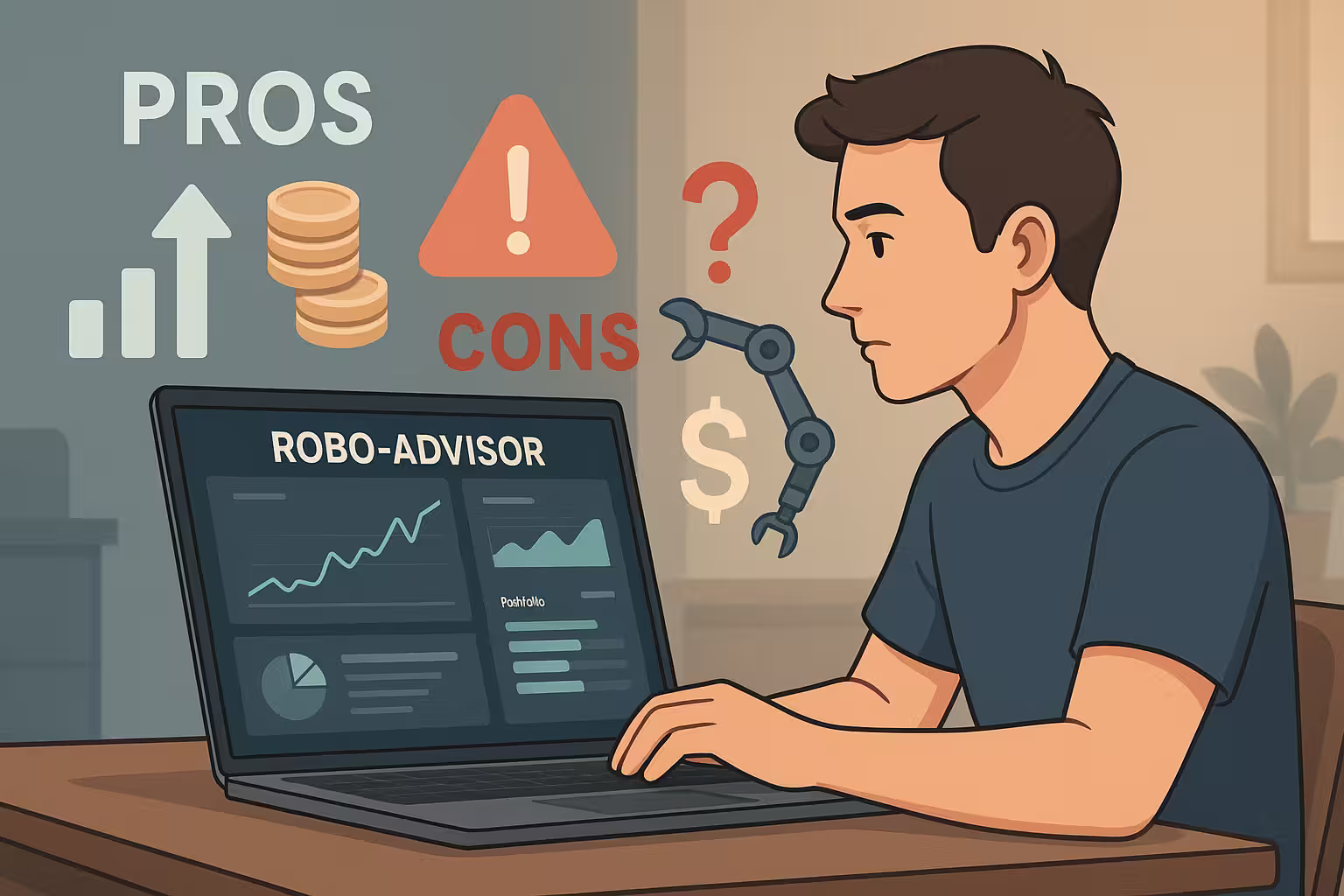
Robo-advisors are digital platforms that provide automated investment advice and tips on portfolio management through the use of computer algorithms. A growing number of first-time investors are turning to robo-advisors for simplified and cost-effective portfolio management. This guide explores the advantages and disadvantages of robo-advisors, empowering first-time investors to make an informed choice.
Is using robo-advisors the right thing for you? It all depends on your trading goals, style, and what you’re looking for in the experience. Our guide will explore the pros and cons and some great tips for deciding if a robo-advisor is a good fit for your trading routine. There are several great perks to using robo-advisors, including customized portfolios, accessibility, lower fees, and goal-based investments, but we’ll let you explore the guide and decide for yourself!
What Are Robo-Advisors?
Robo-advisors are algorithm-based financial advisors offering automated investment management. They’re perfect for traders or investors who might not have the time and energy to fully commit to everything that goes into full-time trading, like market research and a well-thought-out investment strategy.
How They Operate
When an investor joins a robo-advisor service, they must complete an online survey to gather information about their income, financial goals, assets, and risk tolerance. This initial investor questionnaire is used to gauge and assess risk tolerance, goals, and timelines. The robo-advisor uses the investor’s answers to develop an algorithm-driven portfolio and then manages it according to the investor’s trading goals and objectives.
Examples
Traders and investors can choose between several popular platforms for robo-advisory services, including the following:
- Betterment
- Wealthfront
- Fidelity Investments
- Schwab Intelligent Portfolios
- E*TRADE
- Vanguard
- Acorns
- Ally Invest
- Wells Fargo
The Pros of Using Robo-Advisors

Let’s check out the perks and benefits of using robo-advisors to do the heavy lifting for your online investments:
- Cost-Effectiveness: Robo-advisory services come with lower fees compared to traditional financial advisors. They are, therefore, ideal for beginners with smaller budgets.
- Ease of Use: Robo-advisors come with user-friendly interfaces to cater to beginning investors. The simplified investment setup makes it easy to join these platforms and access their services.
- Accessibility: Investors don’t need to have a deep financial knowledge to get started making these services great for investors from all kinds of backgrounds and skill levels. These platforms are also accessible due to their 24/7 availability through mobile apps or websites.
- Diversified Portfolios: These services offer automated portfolio rebalancing to ensure that investors can properly allocate capital proportionally to each position and have a collection of investments with a healthy amount of risk. Robo-advisors also offer investors access to ETFs and other diversified asset classes.
- Goal-Oriented Approach: Robo-advisory services help investors create a customized approach to their investment goals like retirement, wealth growth, or short-term savings.
The Cons of Using Robo-Advisors
Now, let’s review some of the downsides and disadvantages of using robo-advisors. While there are many perks to be had using these services, there are some notable drawbacks that might present challenges for investors.
- Lack of Personalization: Due to the limited human interaction or personalized advice, investing using robo-advisories lacks the human element that some investors might be looking for in the experience. Along with the lack of personalization, the algorithms may not account for unique financial situations that might need the personal touch of a human advisor.
- Restricted Investment Options: Many of these robo-advisory services will focus on ETFs and low-risk strategies, which can ultimately limit high-risk or niche investment opportunities. For a wider range of investment offerings, traders or investors would have to look into traditional trading platforms, which is a more time-consuming endeavor.
- Potential for Over-Simplification: Over-reliance on algorithms could result in missed opportunities during market shifts. Sometimes, robo-advisory services are used by passive investors as a “set it and forget it” practice which could cause them to miss the boat on investment situations where they could rake in extra profit by taking advantage of a market movement.
- Fees for Additional Services: Traders and investors will incur extra charges for advanced features like tax-loss harvesting or human advisor consultations. This can create more overhead for investors and cut into the profits that are taken in from their investments.
- Technical Limitations: Dependence on technology could pose risks, like outages or algorithm errors. These technical limitations could especially cause problems if the investments are closely monitored, which tends to be the case with many passive investors who enjoy these services.
Comparing Robo-Advisors to Traditional Financial Advisors
What’s it like using robo-advisors compared to using traditional financial advisors? This section of the guide will dive into the primary differences, and hopefully, it will give you a decent idea of which might be the best for your trading goals and desired investment experience.
Difference | Details |
|---|---|
Cost Differences | Ultimately, robo-advisors are the cheaper way to go for investors, with their fees being anywhere from 0.25% to 0.50 AUM. On the other hand, traditional advisors charge 1-2% AUM or even higher. |
Human Touch | While robo-advisors have a hands-off approach and lower fees, traditional financial advisors provide the personal touch that you cannot capture with an algorithm or computer program. Human advisors can deal better with complex financial scenarios that require human oversight to make up for the mistakes that the algorithm could make. |
Flexibility and Range | Perhaps the biggest disparity between these two types of services is the overall flexibility of each and the range of services that are offered. By far, traditional financial investors offer the best variety of services and more in-depth financial planning, compared to robo-advisors who are focused mainly on ETFs and other low-risk investment strategies. |
Is a Robo-Advisor Right for You?
If you want a quick answer on whether or not a robo-advisory service might be good for you, we’ve got you covered. We’ll discuss who these services are ideal for and which investors might want to avoid them altogether and focus on the more traditional advisory services.

Who They Are Ideal For
- Beginners with Limited Investment Knowledge: Because using a robot-advisory service can be so passive and offers a limited number of investment options, this makes it one of the best choices for newbies and investment novices who don’t know much about how it works.
- Those Seeking Hands-Off Management: These services are also perfect for investors who don’t want to deal with human advisors and would rather invest using a platform where they can set everything up from their computer or mobile device without having to talk with anyone.
Who Might Avoid Them
- Investors with Complex Financial Needs: These kinds of investors need the personal touch of a traditional financial advisory service that can make up for the flaws in using an algorithm for investments. Investors with complex financial needs also tend to be those who want a wide range of investment products, another reason they should avoid robo-advisors.
- Those Looking for Personalized Strategies or High-Risk Ventures: Robo-advisors aren’t the best platform for investors who are looking for investment ventures that involve high risk because most of the investment strategies offered are through ETFs and other low-risk endeavors. Traditional investors are also far better for a more personalized strategy.
Tips for Choosing the Right Robo-Advisor
To find the robo-advisor that is best for your investment goals and needs, continue reading to view some of the best tips to narrow down your choices for the winner. We’ll show you which factors to think about in your decision and the importance of testing out each service ahead of time before fully committing.
Key Factors to Evaluate
- Fees and Minimum Investment Requirements: Find a robo-advisory service that works for your financial situation. Make sure that you can fulfill the minimum investment requirements. Take a look at the fees and commissions involved. Not only will you want to be able to cover these costs but also do so in a way where you aren’t cutting too deeply into your profits. Find a platform with minimal or lower fees if you can!
- Features like Tax-Loss Harvesting and Portfolio Customization: Everyone’s financial goals and needs are going to be different, but most investors can’t go wrong with tax-loss harvesting tools and resources for great portfolio customization. Take the time to find out which robo-advisory services offer these perks at a decent fee and go with those platforms.
- Customer Reviews and Platform Reputation: You can get a decent idea of how well-received a robo-advisory service is based on the reviews customers have given them and how well-liked or trusted they are according to the public. Check out customer reviews and platform reputation before committing financially to one.
Trial Runs
Another way to determine which service would be best for you is to look for platforms offering free trials or demo accounts. This allows investors to use the services and see what each platform offers before they fully commit to it. Take advantage of the trial runs to find out which services will best suit your investment strategies.
Robo-Advisors Are Great for Beginning Investors
If you’re new to investing online and you’re looking for guidance as well as some low-risk investment techniques, then using a robo-advisor could be a great initial move to get your feet wet in the world of investing. Not only are these services easy-to-use, cheaper than traditional investment advisory services, and accessible for beginners, but robo-advisors are also great for building a diversified portfolio for new investors and tailoring a goal-oriented approach for those investors.
Robo-advisors might not be best for investors who are looking for the personalized touch of an investment advisor, don’t want to deal with technical limitations, or are restricted in how they invest due to limited investment offerings.
Frequently Asked Questions
To understand the key highlights and points discussed in this guide, we compiled a list of the most common questions asked by our readers and customers. We answered and placed them in this FAQ section to give you an idea of the most important things you need to know about investing with robo-advisors.
What Is a Robo-Advisor, and How Does It Work?
These are algorithm-based financial advisors that offer automated investment management services, a good option for traders or investors who don’t have time to engage in full-time trading. Investors joining robo-advisory services have to complete an online survey to gather information about their income, financial goals, assets, and risk tolerance. The robo-advisor uses the investor’s answers to develop and manage an algorithm-driven portfolio.
Are Robo-Advisors Safe for First-Time Investors?
Yes, robo-advisors are safe for first-time investors and they’re actually ideal for beginners and newbies. One of the primary reasons for new investors to use these platforms is due to the more passive nature of this form of investing and the limited, low-risk investment offerings that are found with these services.
How Much Do Robo-Advisors Typically Cost?
Robo-advisors are ultimately the cheapest way to go for investors with their fees being anywhere from 0.25% to 0.50 AUM. On the other hand, traditional advisors charge 1-2% AUM or even higher. Using the traditional advisors you’re spending more but you’re getting a more personalized approach and access to more investment opportunities in the process.
Can I Use a Robo-Advisor and a Traditional Advisor Together?
Yes, there’s a way for investors and traders to use a combined approach with the use of both a robo-advisor and a traditional advisor. There’s no formal rule or regulation against it. Any investors that have a sound financial plan in place with the help of their financial planner can go for this combined approach, and more power to them.
What Are Some Popular Robo-Advisors for Beginners?
Traders and investors can choose between several popular platforms for robo-advisory services, and they work well for beginning investors with little-to-no experience:
– Betterment
– Wealthfront
– Fidelity Investments
– Schwab Intelligent Portfolios
– E*TRADE
– Vanguard
– Acorns
– Ally Invest
– Wells Fargo