The demands of trading high-volume options can drain your mental energy fast, leading to decision fatigue and severely impacting trading performance. Decision fatigue is common among traders, especially when managing multiple trades in fast-paced markets. It can lead to poor choices, missed opportunities, and mental burnout. This article will explore decision fatigue, why it happens in high-volume trading, and how traders can manage it effectively.
Are you indecisive when making simple choices or uncertain about your strategy when trading options online? You might have decision fatigue, which is quite common in high-volume options trading, so don’t feel too bad. And there’s no need to fear—decision fatigue isn’t forever, and you can deal with it effectively and move past the mental fog or overwhelming feelings you’ve been having lately. Continue reading to boost your return to effective, dynamic trading!
Understanding Decision Fatigue
To better understand the challenges we’ll be discussing in our guide, you must first know what decision fatigue is, how it shows up in the lives of investors and traders, and how it can affect these traders’ results.
What Is Decision Fatigue?
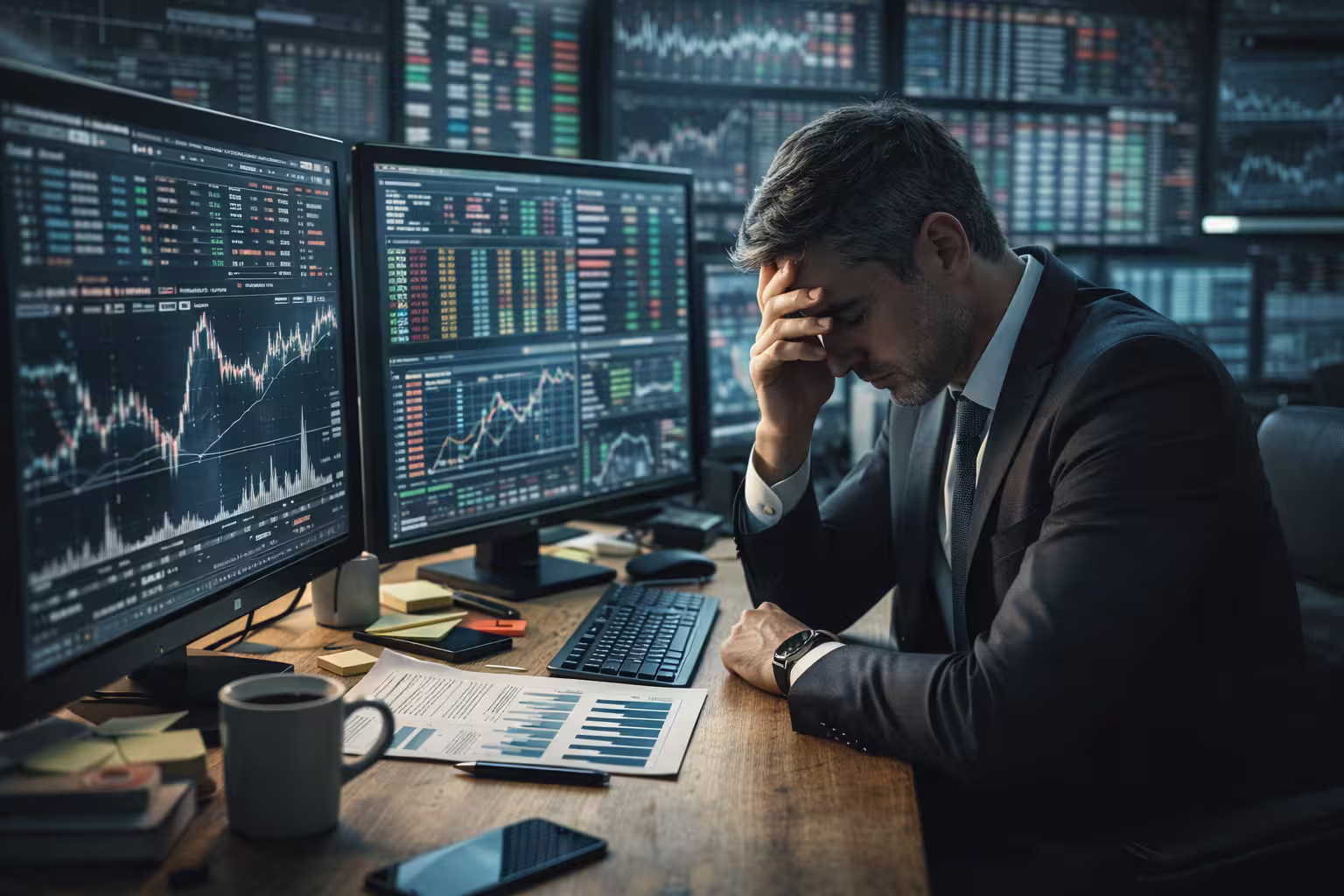
Decision fatigue is the deteriorating quality of decisions after a lengthy decision-making session. In a nutshell, it means that someone is tired of making decisions, which can often lead to procrastination or inaction, which could have worse results than choosing the wrong thing.
Signs of decision fatigue include:
- A lack of caring
- Feeling foggy where you’re unable to think
- Not being able to listen or engage with others
- Feeling angry when pushed to make a decision
A real-life example is when you walk into a grocery store, and you’re overwhelmed by what you can get. This leads you to overthink which items work best for your grocery budget or the fear of missing out if you don’t get all the right items. Instead of making firm decisions on what to get, you can waste a lot of time overthinking each decision, like what brand to get, what to buy, and what to cook when you get home.
How Decision Fatigue Manifests in Trading
Take the scenario at the grocery store and imagine those feelings of indecision and uncertainty in the world of online trading. Decision fatigue is a real thing for traders and investors, often working to their detriment. What does it look like in trading? We’ll highlight how it manifests itself to show you how badly it can work against online investors and traders.
Overtrading
This occurs when traders or investors excessively buy and sell financial instruments such as stocks or ETFs. Overtrading can be characterized by high transaction volume and frequent trades. Some traders will have too many positions open, while others might experience cash flow problems as a result of not correctly sizing the amount of capital dedicated to each position. Ultimately, overtrading occurs when investors haven’t considered their trading plan or strategy very well. It’s highly important to scale your trades and investments proportionately to the capital you have to work with and slowly build the volume over time if your decisions are shown to be profitable.
Impulsive Decisions
The essence of impulse decisions is when traders make emotional decisions instead of rooting their choices or selections in strategic analysis. This can often look like the trader opting for the first available choice rather than the best one. Trading and investments online require logical, rational thinking, and impulsive decisions are a hallmark sign of decision fatigue in trading. It’s a delicate balance of researching to make the best choice but then embracing the choice confidently, even if there’s an outside chance it won’t be correct.
The Psychological Toll
Decision fatigue in trading can make it difficult for traders to make the right decisions, let alone think things through clearly. Repeated decision-making taxes the brain, leading to decreased focus and errors in judgment. An example would be a trader choosing a default option when presented with multiple choices or making a big decision based on a mental shortcut.
Avoidance behaviors could possibly manifest as traders can begin procrastinating due to the decision fatigue which leads them to avoiding decisions entirely. There’s also an element of passivity due to decision fatigue, where traders might even choose not to act because their stance toward trading has become so passive after mental overload.
Why Decision Fatigue Is Common in High-Volume Options Trading
It’s easy for online traders to fall into decision fatigue due to the high-pressure environment of the industry. Traders dealing in high volume are naturally going to handle more trades and must keep a constant eye on the market—along with this comes a ton of decisions. Let’s see how decision fatigue manifests itself with online traders and investors who have a lot to juggle.

Multiple Trades, Multiple Decisions
Managing complex options trades requires constant decision-making, so it’s no wonder that some traders experience bouts of indecision or feel as if their brains are so overloaded that making the next decision is the hardest thing in the world. The more volume a trader handles, the more prone they could be to decision fatigue due to the constant bombardment of trade decisions and having to act promptly.
Constant Monitoring of the Market
Watching prices, tracking news, and responding to market shifts adds to the mental load. With so much information and data to keep on top of, traders might fall victim to decision fatigue and begin making trading mistakes. They could see negative market events and fall into emotional trading, making decisions that aren’t best for their portfolio and investments.
Emotional Pressure
The pressure to capitalize on fast-moving opportunities or manage risks in volatile markets can lead to emotional pressure. This doesn’t come as a big surprise because successful traders must continually monitor market conditions and conduct multiple daily traders to manage a high-volume portfolio effectively. If a trader or investor lets these pressures mount without dealing with them, it can lead to decision fatigue over time.
Signs of Decision Fatigue in Options Trading
Decision fatigue might manifest itself in different ways with different people. Still, some common signs indicate a trader or investor is beginning to have a rough time making everyday decisions. Once you’re aware of these signs and signals, you can know with certainty if it’s something you’re experiencing, and you can deal with it as soon as possible.
Hesitation or Overthinking Simple Choices
One classic sign of decision fatigue is when options traders experience difficulty pulling the trigger on routine trades. Traders might have a hard time choosing between options because they fear losing money or because they’ve let their emotions overtake them to the point where they lack confidence in their choices.
Increased Errors or Oversights
Decision fatigue can negatively affect traders’ mental stamina and clarity, such as missing critical details in trade setups or forgetting to adjust strategies. Trades who experience decision fatigue often create mental shortcuts to make decisions, form judgments, or solve problems, basing their reasons on past experiences or rules of thumb. Traders usually use anecdotal information to make their decisions instead of basing it on strategic analysis.
Feeling Mentally Exhausted After Trading Sessions
Feeling drained after trading might result in decision fatigue at work. When traders are confronted with a continuous stream of choices during their sessions, it can overwhelm their cognitive abilities and lead to poor decision-making, impulsive actions, and falling into a bad pattern of overtrading. Feeling completely drained after a trading session is usually a hallmark sign that you’re grappling with decision fatigue.
Preference for the Status Quo
Another prime example of mental fatigue in options trading is that traders might choose the default option selection, siding with the status quo instead of making a beneficial decision for themselves. Decision fatigue means that the trader is operating with reduced mental bandwidth, so sticking with what they know might seem like the best choice at the time, which could lead to major trading errors.
Strategies to Manage and Overcome Decision Fatigue
Decision fatigue can be dealt with in several ways, but it requires some careful planning and consideration from the trader ahead of time. Once you’re able to control what you can, such as planning out your entire trading routine and using automated tools when possible, it takes a lot of stress off your plate, and it can greatly reduce decision fatigue over time with practice and repetition.
Streamline Your Trading Process
Coming up with a plan of how you’ll operate during your trading session and how to put your plan into execution can help traders focus less on the basic elements of their trading plan and limit the number of total decisions they have to make during the course of a single day.
Use Pre-Set Trading Plans
Planning out your trading strategy ahead of your next session can help you focus on the decisions that matter when the market opens. To reduce decisions during market hours, have predefined criteria for trades such as entry points, exit points, and risk tolerance. You don’t want to think about these elements during your session, but having the plan set up ahead of time can help you more effectively monitor the market and make the best trades possible.
Pre-set trading plans help investors avoid emotional trading, improve their discipline and trading habits, and help them make the most logical decisions possible. Developing a trading plan involves establishing your big goals and then breaking them down into smaller, time-based goals to make them more manageable to attain. Remember to stick with the plan during the session and reevaluate or make changes after the market closes for the day.
Automate Where Possible
Another helpful method of streamlining the trading process is using automation tools to handle routine tasks. Traders can allow their computers to execute trades and monitor price alerts to remove much of the decision-making burden. Automated systems ensure that specific rules for trade entries and exits are maintained, keeping the trading plan’s integrity intact.
When these simple tasks are sent to automated systems, traders accept the terms of the trading plan, which (in a way) relieves them of having to make those decisions, allowing them to focus on the details of their trading sessions that are most important, like carefully watching market conditions or looking for new opportunities.
Limit the Number of Decisions
To keep yourself from decision-making overload, an effective strategy in options trading is simply limiting the number of decisions you must make. We’ve already discussed this to an extent by setting up the terms of your trading plan before your session begins and using automated tools to your advantage. However, we’ll highlight some additional actions you can take to limit how many decisions you face in a single trading session.
Focus on Key Trades
View online trading as a “quality over quantity” prospect. Prioritize high-probability trades and cut back on lower-quality opportunities to limit the number of total trades you conduct during a single trading session. You don’t want to use this strategy indefinitely. Still, it’s an excellent technique for reducing decision-making fatigue and giving you the time to build the discipline and stamina to take on more in the future when the time is right.
Trade in Specific Windows
A huge favor that traders can do for themselves is to set up time limits on their trading sessions to avoid wasting unnecessary time and exposing themselves to decision-making overload. Setting a fixed time window for trading each day can help tremendously in this regard. It works similarly to limiting the number of trades you’re conducting—you must focus on handling less or trading in a more limited fashion to give you time to detox from decision-making overload. Once you’ve proven to yourself that you have the energy and stamina to expand your session, you can start to trade or monitor the market in additional time windows.
Mental and Physical Breaks
We cannot stress enough the importance of taking a break from your trading session to breathe and reflect on what you’ve done. Making that space and time to remind yourself of your goals and trading plan can do wonders for keeping you away from the drain of decision fatigue. In addition to physical breaks, mental breaks can effectively help traders renew their focus through another activity.
Take Short Breaks
Step away from the screen periodically to reset your mind. Professional, high-volume traders and professional gamblers or bettors commonly use this trick. It’s a practical approach for staying in a logical frame of mind and gives you time to reflect on your plan and the goals you’re hoping to achieve. The longer you stay in front of the screen, the more likely you are to fall into emotional trading or slip into decision-making fatigue.
Incorporate Stress-Relieving Activities
Exercise, meditate, or do something that helps refresh your focus following a long trading session. This is a good way for traders to maintain balance in their lives and avoid burnout from spending too much time focused on trading or actively engaging in a session. Practicing mindfulness and meditation can help traders keep themselves centered, and it could even bring some insights into trading motivations or when it’s the right time to readjust a trading strategy.
Track Your Energy Levels
Defeating decision fatigue is just as mental and physical as simply rearranging your trading sessions or implementing automated tools. Those who care for their mental and physical health stand a greater chance of avoiding decision fatigue altogether, so tracking your energy levels each day is important.
Monitor Your Mental State
To optimize your trading schedule, keep a journal of when you feel sharp vs. fatigued during trading sessions. A detailed log of how you’ve felt during each session can help you discover the best times to trade or actively monitor the market. Traders can choose to avoid certain times of the day that aren’t best for them from a mental state perspective. These windows can be limited due to the hours the market is open, but choose times when your mental acuity is the best (to the best of your ability, of course).
Eat Well and Stay Hydrated
Physical well-being plays a significant role in mental sharpness. If you haven’t had much to eat or are hopped up on caffeine, this can ultimately affect how well your trading experience is going. It’s critical to stay hydrated to keep your mind alert and sharp. If you’re eating well, you won’t think about hunger during your session. This will ultimately alleviate distractions that could detract from your stamina or focus.
Tools and Resources to Assist in Managing Decision Fatigue
To access tools and resources to help you with your decision fatigue struggles, you might not have to look further than the trading app you use for your sessions. Often, these platforms have resources for helping online traders deal with mental overload. However, you might even have some luck accessing third-party sites or other tools like mindfulness apps. Regardless of how you get help for decision fatigue, there are some great options out there, and we’ll highlight the best choices below.
Trading Platforms with Decision-Making Support
With options trading trading apps and platforms becoming increasingly advanced, many offer customers helpful tools that provide analytical support, AI-driven suggestions, or decision aids. You can also find these tools with third-party apps or websites. We’ve already mentioned some of these resources, like automation that executes trades, monitors price alerts, or maintains strict trade entries and exits.
Time-Saving Tools
To reduce cognitive load during your trading session, traders should use time-saving tools to their advantage. They can set up alerts to capitalize on price movement or market events or have pre-set order types in place to ensure that their stocks or ETFs are bought or sold at the correct times for the correct price.
Mindfulness Apps and Techniques
Check out mindfulness or meditation apps geared explicitly toward traders. These platforms are designed for traders who are looking for mindfulness techniques to begin each day with and want to maintain an active focus on the present moment throughout each portion of their day, including market hours, where it’s easy to get distracted.
Case Study—How Professional Traders Handle Decision Fatigue
It’s one thing for us to tell you how to deal with decision fatigue that comes from high-volume options trading, but it’s quite another to hear it from professional options traders and professionals in other industries who are aware of this challenge and have successfully dealt with it to achieve their illustrious goals.
We’ve prepared some quotes from trading professionals and industry leaders as well as a real-world example of professional trading successfully using decision fatigue management techniques to their advantage to show you that these patterns and trends have been known for a long time now, and there are solutions for navigating this challenge!

Interview or Quote from a High-Volume Trader
If you research it enough, you’ll find plenty of thoughts from professional, high-volume traders that address the topic we’re discussing in this guide. And this isn’t an isolated incident where one or two people have come to this conclusion. Thoughts on decision fatigue shared by multiple voices in multiple industries point to this phenomenon and how it can ultimately work against you if you don’t put practices into place to keep it at bay.
Michael Hyatt, the former CEO of Thomas Nelson Publishers, has said, “Any decisions we can routinize or automate help us conserve energy and stay sharp.”
The unique investment advice service, The Chartist, has said, “Systematic or algorithmic trading can remove emotions from our trading decisions, including fatigue-based emotions.”
Henry Ford once said, “Any time we can make fewer decisions and keep things simple, the better. That’s at the heart of overcoming decision fatigue.” He founded Ford, one of the most successful American car companies ever.
Real-World Example
A professional trader from Opinicus Holdings (Kyle Janas) has written at length about his occasional challenges with decision fatigue and how it negatively affects his trading performance. His struggles with decision fatigue are typical of overthinking trade decisions or resorting to the status quo when faced with a barrage of overwhelming choices throughout the trading day.
What he did to overcome the challenge is very much in line with what we’ve discussed in this guide. His primary takeaways for dealing with decision fatigue included the following:
- Reduce decision load by minimizing the number of choices during each session and focusing on specific timeframes to streamline the decision-making process.
- To decrease the cognitive load during a session, it’s best to have a trading plan ahead of time where you know how you’ll engage the price before the market has even opened.
- Effectively manage glucose levels by snacking before making big decisions to improve mental focus and maintain energy levels.
- Sleep well, balance your time well between trading (or thinking about trading) and other activities, and practice mindfulness to maintain good mental and emotional well-being.
- Because decision-making abilities deteriorate as the day goes on, make a concerted effort to trade earlier in the day to take advantage of the mind’s peak performance.
- Create structure in your trading routines to effectively reduce the cognitive load when making decisions. Look for areas in your trading rituals that can be automated to simplify decisions.
Deal With Decision Fatigue Before It Deals With You!
Decision fatigue is inevitable in high-volume options trading, but it doesn’t have to ruin your trades. Remember that the frustration that comes from this phenomenon isn’t forever, and it’s entirely manageable if you take the proper steps at the right time:
- Simplify your trading routine through automated systems and have a solid trading plan in place before your session begins.
- Take care of your mental health through frequent breaks, taking care of your physical needs before sessions, and tracking your energy levels.
- Be proactive in managing decision fatigue, like eliminating the number of decisions you make in a single trading session and choosing strategic moments in the day best suited to when you’re feeling the sharpest during market hours.
Try implementing one of the strategies outlined in our article during their next trading session to see if there’s any positive change!