
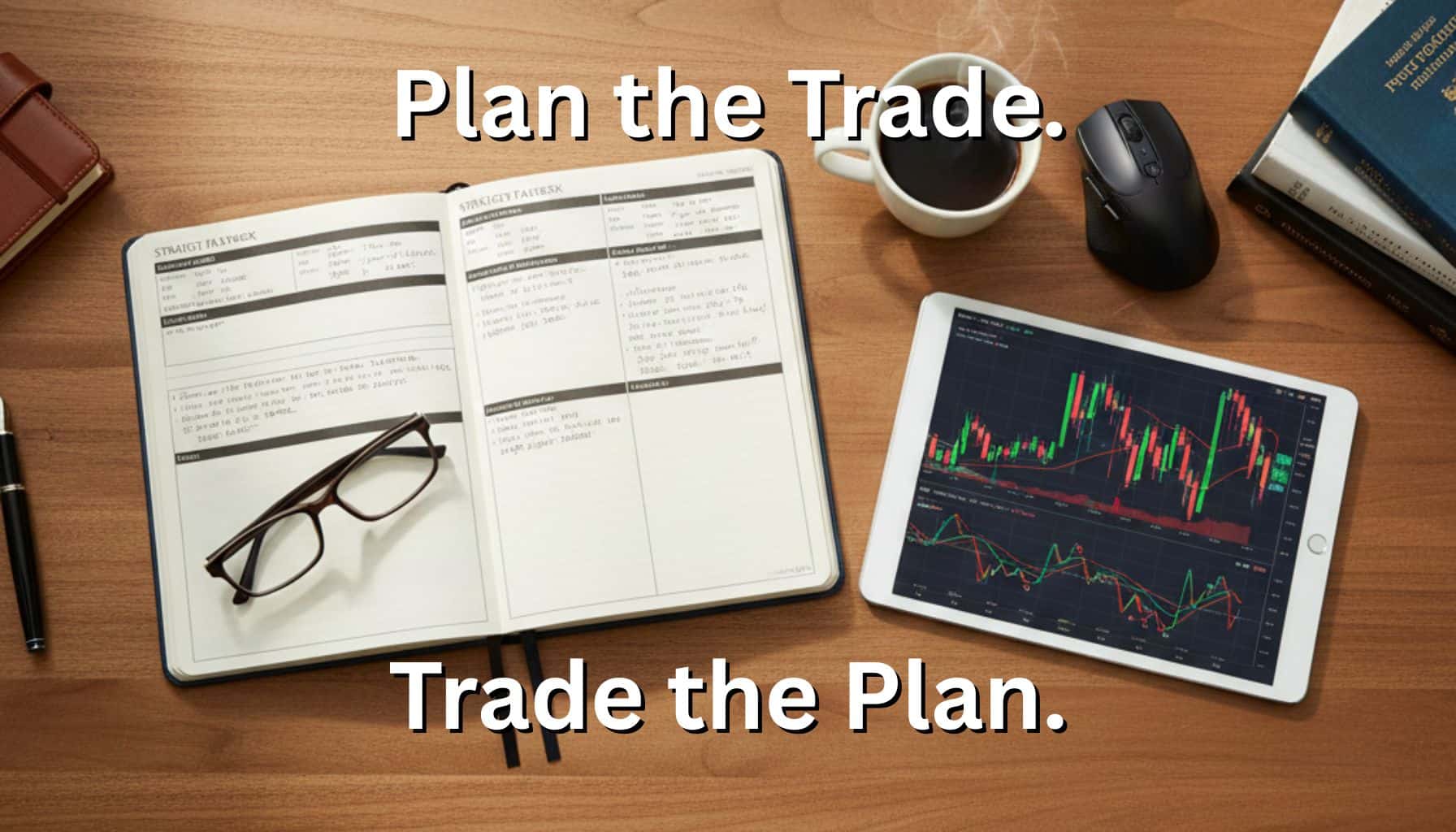
Options trading can be a great way to grow your investments, but to play it right, you need more than just a good strategy—you need discipline, especially when the market starts to throw curveballs your way. Without it, even the smartest game plan can fall apart, turning possible wins into unexpected losses.
Emotions always have a sneaky way of messing with our decisions—maybe you’re afraid of missing out on a big win, or you’re in a panic because the market isn’t going your way, these feelings l can make you second-guess yourself. Let’s say you’ve decided to sell a call option when a stock hits a certain price. But as that moment gets closer, you start to doubt yourself—what if it goes even higher? You hold off, and before you know it, the stock plummets, completely wiping out the profit you could have had. This is how emotions can throw even the best laid plans right out the window.
That is why discipline is so important in the options in options trading—it keeps you grounded. When you have a plan and stick to it, no matter how tempting it is to act impulsively, you are so much more likely to come out on top! A disciplined trader knows when it’s time to cash in, when to cut and run, and when to stay the course, even when emotions are running amok. Consistency is the name of the game and what makes all the difference between hitting your goals and falling short in options trading.
Consider a trader who has a clear plan and follows it to the letter. Instead of constantly watching the market and reacting to every little movement, they have faith in their plan and only make moves when the time is right. Over time, this method pays off—they regularly hit their profit targets and don’t have to contend with big losses that come with rash decisions.
Discipline in options trading isn’t solely about following a plan—you also have to trust yourself and your strategy, even when things get hairy. And we are here to help! Keep reading to find out how you can maintain discipline in options trading, so you can set yourself up for steady, long-term success.
The Foundation of a Disciplined Trading Plan

A disciplined trading plan is the buttress of your options trading—it keeps you focused and in the zone, even when the market throws surprises your way. To build a solid plan, you need to begin with clear goals and an honest assessment of how much risk you’re willing to take!
Define Your Trading Goals
The first step in making a disciplined plan is to get clear on what you want to achieve. Are you trading to make money, increase your capital, or perhaps both? Knowing what your goals are means you can better guide your decisions so they’re in line with your objectives.
If your primary goal is income generation, you should prioritize strategies like selling covered calls, which can bring in regular premiums. But if you’re set on capital growth, you should think about buying calls or puts with the possibility of bigger gains. Whatever your focus, it’s a requirement to set realistic and measurable goals. Instead of a vague goal like “I want to make money,” set specific targets like “achieving a 15% return annually” or “generating $700 a month in income.” Concrete goals give you purpose and a clear direction for your trading decisions.
Identify Your Risk Tolerance
Knowing exactly how much risk you’re comfortable with is another main part of your trading plan. Every trade involves some level of risk, and it’s important to determine just how much you’re willing to risk without jeopardizing your overall financial stability.
Suppose you’ve allocated $20,000 for trading. If you’re comfortable risking 2% of your capital on each trade, you’d be putting $400 on the line per trade. This plan will prevent overexposure and give you a margin of safety—a few bad trades won’t deplete your account.
Trading isn’t about trying to hit it out of the park on every trade—it’s about making consistent, calculated decisions that add up over time. By setting a clear risk threshold and adhering to it, you protect your capital while still allowing for growth.
Develop Your Trading Strategy
Okay, you’ve got your goals down and know how much risk you’re comfortable with, so now it’s time to pick a trading strategy that suits you. You can think of your strategy as the playbook for your trading journey—it should show what your goals are! The trick here is to choose something that feels right for your specific situation and risk level.
If you’ve decided on a steady income, strategies like selling covered calls or cash-secured puts could be your best bet. These are options that can bring in a regular income stream without taking on too much risk. On the other hand, if your goal is capital growth and you’re okay with taking more risks, buying options might be more up your alley, as they have the potential for bigger returns.
But before you start, you should backtest your strategy! Why? Well, because backtesting is a way to test out your plan with a trial run using past market data to see how it would have played out. No, it doesn’t predict the future, but it gives you an idea about your strategy and if it has a good foundation before you put real money on the line.
Create a Trading Journal
A trading journal isn’t simply a place to keep track of your trades—it’s your personal guide to becoming a better trader. By writing down your trades, you are making a record that will help you learn from both your wins and your losses so that you can better understand the decisions you made and why.
In your journal, include details like when you got into a trade when you got out, why you made those choices, and even how you felt at the time. Doing so will make patterns clear, and you’ll realize that you make better decisions when you stick to your plan or that emotions can cloud your judgment during market swings. It’s like therapy but for options trading!
Regularly looking back at your journal will help you see the areas where you can improve and reinforce the habits that are working for you.
Common Challenges to Maintaining Discipline
Sticking to a trading plan is easier said than done. It’s one thing to have a solid strategy, but it’s another thing entirely to stick with it when emotions are running super high, the market is in turmoil, or everyone around you is in your ear trying to give their two cents or advice! Discipline is a must, but there are plenty of wrenches that can get tossed into your plan. The following are some of the most common challenges that can make it tough to stay on track and how you can either manage them or at least tune them out.
Emotional Biases
Emotional responses can be a trader’s biggest Achilles heel—even with a great plan in place, feelings like greed, fear, and getting a little too confident can throw you off—they can trip up even the best traders out there.
Fear of Missing Out (FOMO)
The fear of missing out is that nagging feeling that everyone else is cashing in on something huge, and you’re being left out of the loop. When you see a stock or option skyrocketing, it’s really tempting to jump in, even if it wasn’t part of your original plan. But chasing hot trends is risky! You could buy at the top, only to watch the price tumble seconds after. It’s really hard to resist the urge, but sticking to your plan means letting these opportunities pass if they don’t fit into your strategy. The market will always give you new opportunities, but it’s always smarter to stick with the ones that line up with your goals.
Overconfidence
Overconfidence can be just as dangerous—after some successful trades, it’s normal to start thinking you’ve got the market all figured out. You might feel like you’re on a winning streak, and that can cause you to take bigger risks than you should. But beware: the market has a way of humbling even the best traders. Just because you’ve had some wins doesn’t mean you’re invincible, so keep your ego in check and stick to your risk management rules, even when things are going swimmingly—being overconfident can cause avoidable losses if you’re not super careful.
Revenge Trading
Revenge trading is another snare that’s all too easy to get trapped in. After a bad trade, the instinct to get your money back can be overpowering, and all of a sudden, you are hopping into a new trade without thinking it through, trying to get back your losses. But this kind of impulsive behavior can dig you into an even deeper hole. Instead of trying to get even with the market, it’s better to take a break and reassess. Ask yourself what went sideways and what you can learn from it.
Market Volatility

The market is always unpredictable, with prices swinging wildly in short periods, and this volatility can make it harder to stick to your plan, especially when your emotions are all over the place. But this is the time when it is absolutely the most important to stick to your plan!.
Staying Steady During Market Swings
When the market is all over the place, it’s only human to feel anxious. Sharp drops might make you want to sell everything, and sudden spikes can call out to you to buy more. But reacting impulsively to market movements is never a wise move! If you’ve done your homework and have a solid plan in place, it’s important to trust it, even when things get bumpy. Selling in a panic or buying out of greed usually winds up in regret. Instead, take a pause, review your plan, and remind yourself why you made those decisions in the first place.
Avoiding Knee-Jerk Reactions
It’s so easy to get caught up in the moment when prices are moving fast, but making decisions based on short-term market movements rather than your long-term plan can cause mistakes. If you find yourself on the verge of making an impulsive trade, take a moment to breathe and count to ten. Sometimes, doing absolutely nothing is the smartest decision you can make. Let the market settle, and stick to your plan.
External Influences
In the age of social media and 24-hour news cycles, it’s almost impossible to get away from the constant stream of info and opinions about the market. But letting these external influences dictate your trading decisions can be dangerous!
Filtering Out the Noise
Every day, there’s a new headline about the next big thing in the market, and social media is loaded with so-called experts claiming to know the secrets to success. It’s not hard to get really overwhelmed and start second-guessing your strategy, but stop right there! You have to remember that your trading plan is built on your research, your goals, and your risk tolerance. Tuning out the noise and concentrating on your plan will keep you from making rash decisions based on hype or fear. It’s okay to stay informed, but don’t let the latest trend or opinion push you into a trade that doesn’t fit your strategy.
Making Decisions That Are Truly Yours
It’s normal to want to get advice from others, especially when you’re feeling unsure. Even so, in the end, the decisions you make in trading are yours alone. While it’s fine to consider different perspectives, you should always weigh them against your own analysis and instincts. Trust the work you’ve put into developing your plan, and don’t let someone else’s opinion move the needle or shake your confidence. Sticking to your plan, even when others are telling you to do something different, is a huge part of maintaining discipline.
Discipline in trading isn’t about being perfect—far from it! It’s about being aware of the challenges and staying committed to your plan, even when it’s hard to do. Emotions, market volatility, and external influences will always be there, but with a solid plan and a steady hand, you can negotiate them and stay on the course you have plotted.
Strategies for Sticking to Your Plan
Holding on to your discipline during trading is a skill that calls for both mental fortitude and practical strategies. You need more than a decent plan; you also have to be in the right environment and a frame of mind that allows you to follow through on that plan consistently. Whether you’re a die-hard trader or just getting started, the temptation to deviate from your strategy will always be there. However, by building solid habits, using the tools at your disposal, surrounding yourself with the right people, and checking your emotions at the door, you’ll be able to stick to your plan and get to your trading goals!
Develop a Routine
Establishing a routine is one of the best ways to build discipline in your trading habits—routines provide structure so that you are able to approach trading with the same seriousness and consistency as any other professional endeavor.
Set Aside Dedicated Time for Trading and Analysis
Trading is serious business, so you need to treat it that way! Set aside specific times every day to focus solely on it and nothing else. This could be in the early morning, where you prep before the market opens and look over the latest market news, or in the evening, when you analyze your trades and make a plan for the next day. The thing is to have a block of uninterrupted time where your only focus is on trading.
By making this a regular part of your day, you avoid the risks of making rushed decisions because you’re trying to squeeze trading into an already busy schedule. With a dedicated trading block of time, you give yourself the room to think clearly, analyze calmly, and make decisions that match up with your strategy!
Don’t Trade When You’re Tired, Stressed, or Not in a Good Headspace
Look, we all have bad days when we wake up on the wrong side of the bed or are just cranky. And then there are the days where personal matters take over—that’s life. And one of the most important parts of a trading routine is knowing when you are not up to trading, no matter the reason.
If you’re sleepy, angry or stressed out, or dealing with personal issues, your judgment is probably off, and that can result in trading decisions you might regret. Trading needs a clear mind—if you’re not in the right mental state, it’s better to take a day off. The market will still be there when you return, and taking a break is the best course of action. Recognizing when you’re not at your best and having the discipline to leave it is a sign of maturity in trading.
Use Technology to Your Advantage
There is so much technology at your fingertips, so why not take advantage of it? There are lots of tools that can make sticking to a trading plan more manageable. By using these tools wisely, you can level up your discipline and stay true to your goals, even if the market goes bonkers.
Set Alerts and Reminders
Setting up alerts is a simple but powerful way to stay disciplined—you can set price alerts that notify you when a stock or option reaches a certain level so you don’t miss out on any important trading opportunities. This can really come in handy if you’re not able to watch the market like a hawk because you have other commitments. In addition to price alerts, setting reminders for regular portfolio reviews or strategy check-ins will help you stay focused so that you’re consistently evaluating your progress. Reminders act as a gentle nudge, keeping you on track and preventing you from drifting away from your trading plan.
Automate Certain Aspects of Your Trading
Automation is another way technology can help you out in terms of maintaining discipline. By automating some parts of your trading, like setting stop-loss orders or placing limit orders, you remove the emotional component from decision-making.
For example, a stop-loss order can automatically sell a position if it falls below a predetermined price, protecting your capital and adhering to your risk management strategy without you having to make a snap decision in the heat of the moment. Automation can also include setting up recurring trades or rebalancing your portfolio at regular intervals. By automating these tasks, you lessen any temptation to make rash decisions based on short-term market movements so you can stick to your long-term strategy.
Get Support
Trading can make you feel like you are alone on a desert island, but you don’t have to be marooned! Finding and getting support from others who understand the trading life is invaluable in keeping you on track and motivated to get better.
Find a Trading Mentor or Join a Community
A mentor who has been there done that can give you solid guidance, support, and accountability. They can tell you their experiences, help you navigate tough decisions, and give you advice when you’re not quite sure what your next move should be. If you don’t have access to a mentor, joining a community of traders can be just as beneficial—there are online forums, local trading groups, and professional networks, and being part of a community lets you exchange ideas, talk strategy, and learn from others’ successes and mistakes. The common experience and knowledge within a community can be incredibly motivating, helping you stay disciplined by reminding you that you don’t have to go it alone.
Share Your Experiences and Learn from Others
One of the best advantages of being part of a trading community is the chance to share your own experiences and learn from others. Maybe you’re celebrating a successful trade or mad about a loss—either way, talking about it with other traders will give you new insights and perspectives. Sometimes, just talking through your thought process with someone else can help you see things in a better light and find areas where there is room for improvement.
Similarly, hearing about how others have handled similar challenges can give you practical ideas on how to deal with your own. This kind of mutual support is a priceless tool for staying disciplined and continuing to grow as a trader.
Practice Mindfulness

Mindfulness isn’t just for crunchy people or yogis—it is just a bougie term that translates to being fully present and aware of your thoughts and emotions, which is a skill you should have in trading. By cultivating mindfulness, you can improve your ability to keep calm and focused, even when the market is chaotic or your emotions are getting the best of you.
Cultivate Self-Awareness and Emotional Control
Being cognizant of your emotions and how they affect your trading decisions is key to maintaining discipline. Do you panic when the market drops? Do you get really amped after a successful trade and start taking on more risk than you should? By being aware of your emotional patterns, you can start to manage them better. This could look like taking a few minutes to pause and think before making a trade or writing in your trading journal we talked about earlier. The more you understand your emotional triggers, the better you can control them, which is necessary for sticking to your plan.
Techniques Like Meditation and Deep Breathing
Again, these things aren’t just for yogis, as meditation and deep breathing are tried and tested practical techniques that help you manage stress and stay focused. Even just a few minutes of meditation each day can help clear your mind and keep you centered. Deep breathing exercises can be super useful during high-pressure trading moments, helping you remain calm and think clearly. If you incorporate these techniques into your daily routine, you will build up your mental resilience and develop the ability to stay composed under pressure. A calm, concentrated approach is a necessity for making rational decisions and maintaining discipline in trading!
Sticking to your trading plan is so much more than willpower alone—it’s about creating the right environment and mindset that supports disciplined decision-making. Developing a routine, using available technology tools, reaching out for support, and practicing mindfulness are all strategies that will help you stay on track.
Case Studies and Examples
In the options trading world, discipline is the defining line between success and failure. The markets are unpredictable, but the most successful traders are ones who keep strict adherence to their strategies and keep a lid on their emotions. Below are stories of traders who exemplify this discipline, as well as cautionary tales that show the consequences of impulsive decisions. These examples are meant to serve as inspiration and a warning, and are good lessons for anyone looking to negotiate the complicated world of trading!
Successful Traders Who Embody Discipline
The following are three of the most successful traders who kept it together and are absolute legends in the area of discipline:
Paul Tudor Jones
Paul Tudor Jones is one of the most renowned hedge fund managers, known for his incredible ability to generate consistent returns in a variety of market conditions. A huge element of his success is his rigorous approach to risk management. Jones is famous for saying, “The most important rule of trading is to play great defense, not great offense.” This quote encapsulates his philosophy of capital preservation, where he focuses on minimizing losses even more than maximizing gains.
Jones believes in what he calls “asymmetry” in trading, which means that he only takes trades where the potential reward significantly outweighs the risk. He explains, “I’m looking for 5:1 (risk/reward). Five to one means I’m risking one dollar to make five. I can actually be a complete imbecile. I can be wrong 80% of the time, and I’m still not going to lose.” This approach has allowed him to survive—and thrive—through some of the most volatile periods in financial history, including the 1987 stock market crash, where he famously shorted the market and made a massive profit.
Jesse Livermore
Jesse Livermore is another trader whose discipline, particularly his patience, led to his success. Livermore’s strategy was often about waiting for the right moment to strike—a concept he referred to as “sitting tight.” He once said, “It was never my thinking that made the big money for me. It always was my sitting. Got that? My sitting tight!” Livermore understood that the markets moved in cycles and that timing was everything.
Livermore’s greatest triumph came during the 1929 stock market crash, where his patience paid off in a big way. He had been waiting for the perfect moment to short the market, and when he did, he made a fortune while many others lost everything. His ability to wait for the right opportunity, rather than jumping in and out of trades, is a lesson in the importance of patience and discipline in trading.
Ray Dalio
Ray Dalio, the founder of Bridgewater Associates, attributes much of his success to a disciplined, principles-based approach to trading. Dalio has long advocated for the importance of having a clear set of principles to guide decision-making. He believes that by following these principles, traders can remove emotion from their decisions and make more rational, consistent choices.
Dalio famously said, “If you don’t have principles that guide your behavior, you’re going to have a hard time making consistent decisions.” His book, “Principles: Life and Work,” outlines the core beliefs that have guided his trading career and contributed to his success in building one of the world’s largest hedge funds. Dalio’s disciplined approach to sticking with his principles, especially during times of market uncertainty, highlights the importance of consistency in achieving long-term success.
The Consequences of Impulsive Trading
While the stories above show the amazing benefits of discipline, there are plenty of examples that underscore the dangers of impulsive, emotionally-driven trading. These cautionary tales serve as a stark reminder of what can go wrong when discipline is nowhere to be found.
Nick Leeson
Nick Leeson is perhaps one of the most infamous traders in financial history, known for his role in the collapse of Barings Bank. Leeson’s downfall began when he started making unauthorized and highly risky trades in an attempt to recover earlier losses. Rather than cutting his losses and sticking to a risk management plan, Leeson doubled down, taking even bigger risks in the hopes of turning things around.
Leeson later reflected on his actions, saying, “I knew it was wrong. But I didn’t know how to stop.” His inability to stop and his desperation to recover losses led to a series of escalating trades that eventually resulted in a loss of over £800 million, bankrupting Barings Bank.
“The message that my name brings is caution. You do need to understand what you’re doing, otherwise a lot of people blow up, and blow up very quickly,” said Leeson, who introduced the world to the term “rogue trader” after amassing £827 million ($1.5 billion) in losses. Leeson’s story is a cautionary tale about the dangers of emotional trading and the importance of maintaining discipline, especially when things are going south.
The London Whale
Bruno Iksil, known as the “London Whale,” is another example of what can happen when a trader abandons discipline. Iksil’s trades in credit derivatives were so large and risky that they eventually led to a loss of over $6 billion for JPMorgan Chase. Iksil’s downfall was driven by overconfidence—he believed his trades would eventually pay off despite the increasing risks.
JPMorgan’s CEO, Jamie Dimon, said after the incident, “It was the stupidest and most embarrassing situation I have ever been a part of.” The London Whale incident highlights the perils of ignoring risk management and the consequences of letting emotions drive trading decisions. Iksil’s lack of discipline not only cost his firm billions but also tarnished its reputation.
The Dot-Com Bubble
The late 1990s saw a surge in day trading, fueled by the dot-com boom, and a lot of inexperienced traders entered the market, driven by the fear of missing out on the next big tech stock. The quick ascent of internet stocks created a sense of euphoria, and most abandoned discipline in the name of chasing quick profits.
As one trader from the era recalled, “Everyone was getting rich. It didn’t matter if you knew anything about the companies—you just had to buy something with ‘.com’ in the name.” But when the bubble burst in 2000, these traders were left holding the bag. Many had taken on excessive leverage, leading to catastrophic losses. The dot-com bubble serves as a powerful reminder of the dangers of market euphoria and the importance of sticking to a disciplined trading plan, even when it seems like everyone else is making easy money.
Final Thoughts on Maintaining Discipline

Discipline in trading is everything. It’s not advice, it’s the bread and butter of every successful trading strategy. When you are trading, pulling back on the urge to make impulsive buys or sells, and sticking to your plan when things get crazy, discipline is what keeps you grounded and will get you to your goals.
We put together a brief recap of everything we talked about above so you have it in one handy place:
Importance of Discipline in Options Trading
- Discipline is a necessity for options trading success, especially when the market becomes unpredictable.
- Emotional reactions like fear or overconfidence can derail or sabotage even the best trading strategies.
- Sticking to a well-constructed plan helps in making consistent, calculated decisions.
Foundation of a Disciplined Trading Plan
- Define Trading Goals: Clearly outline what you want to achieve (e.g., income generation or capital growth).
- Identify Risk Tolerance: Determine how much risk you’re comfortable taking, and stick to it to avoid overexposure.
Develop a Trading Strategy
- Choose strategies that match up with your goals and risk tolerance.
- Backtest your strategies to make sure they are solid and likely to be profitable.
Create a Trading Journal
- Document every trade, including entry and exit points, reasons for your decisions, and your emotions.
- Regularly review the journal to identify patterns and improve any future decisions.
Common Challenges to Maintaining Discipline
- Emotional Biases: FOMO, overconfidence, and revenge trading can lead to poor decisions.
- Market Volatility: Stick to your plan during market swings; avoid knee-jerk reactions.
- External Influences: Filter out noise from financial news and social media; trust your plan.
Strategies for Sticking to Your Plan
- Develop a Routine: Dedicate specific times for trading and analysis.
- Use Technology: Set alerts and automate aspects of your trading to stay disciplined.
- Get Support: Find a mentor or join a community to share experiences and stay motivated.
- Practice Mindfulness: Cultivate self-awareness and emotional control to make better trading decisions.
If there’s one thing we want you to take away from this, it’s to hang on to your discipline! Developing and sticking to a disciplined approach to options trading isn’t being rigid—it’s giving yourself the best chance to succeed in the long run. It takes setting goals, being consistent, and making decisions that match up with your big picture, even when the market wants to pull you in different directions. Discipline doesn’t seem sexy, but guess what? It’s the things that will guide you through the volatility that is the stock market.