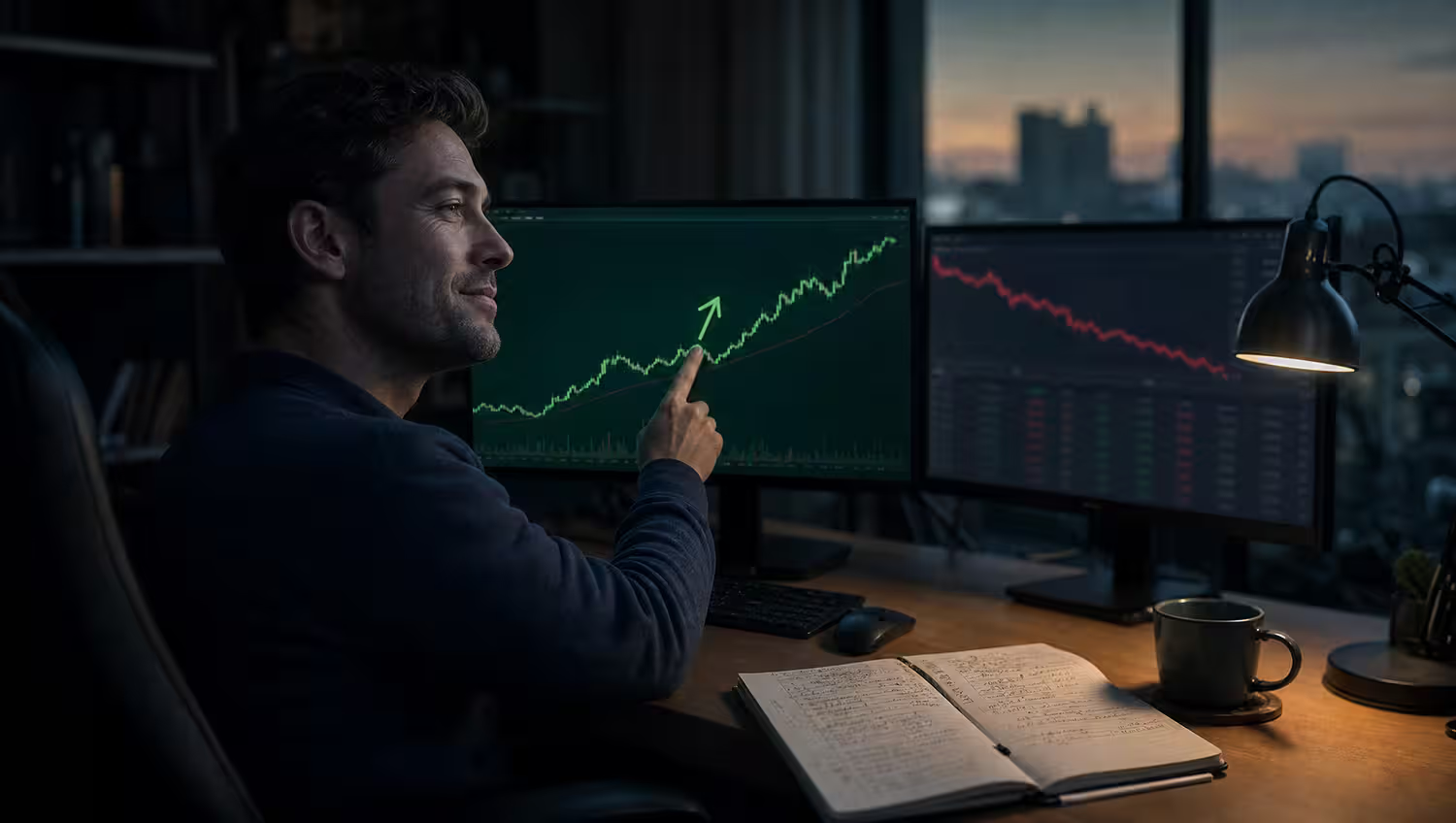

In the financial market arena, fear and greed are powerful motivators, steering traders more than logic or analysis. Think of these emotions as invisible puppeteers that are pulling the strings of the moves they make in the market, which makes a scary puppet show!
And in options trading, knowing exactly how fear and greed influence decisions is absolutely a factor in success. These strong emotions cloud judgment, which leads to choices based not on a solid plan—it’s based on sheer panic or the temptation of quick gains. This emotional pull can cause traders to take on risks they initially didn’t plan to or to bail on trades too soon, turning possible gains into losses.
We are going to explore how fear and greed read their emotional heads in options trading—if you’re just starting out or have been at it for a while, we’ll cover how to clock these emotions when they happen to you and how to manage them. Our ultimate goal is to help you make decisions that are fueled by strategy, not by emotion.
Understanding Fear and Greed in the Financial Markets
In financial markets, emotions are powerful forces that shape the decisions traders make. Among these, fear and greed stand out as two of the most impactful. They drive actions that might not always align with a well-thought-out strategy, especially in the world of options trading.
Fear and Greed in Behavioral Finance
Fear and greed are not just any old emotions—they have long been central to the study of behavioral finance, which examines why traders make decisions that defy logic. Behavioral finance gets into why even the most experienced traders act in ways that go against all rational analysis. The fear of losing money could make a trader exit a position too quickly, while greed can cause another to stay in a trade longer than is advisable because they are hoping for more gains. These two emotions are deeply embedded in human psychology and play a big role in market movements and individual trading behavior.
Fear in Trading
Fear manifests in several forms within options trading—there’s the fear of loss, where traders dread losing their capital, which pushes them to make hasty decisions, like selling off too early or avoiding trades altogether. FOMO, or the fear of missing out, is another aspect—traders might jump into trades without doing enough analysis or due diligence just because they don’t want to miss a potential opportunity.
Then there’s the fear of a market downturn, which causes traders to make overly cautious decisions or exit trades prematurely. And then there’s the fear of holding onto losing trades, where traders are crossing their fingers in hopes of a turnaround and hold off on cutting their losses. Each of these fears disrupts a trader’s strategy, resulting in decisions that stray from their initial plan.
Greed in Trading
Greed in the context of trading is the relentless pursuit of more—more profits, bigger gains, and usually, more risk. This mindset causes traders to hold onto winning positions longer than they should, hoping for even greater returns, which might result in turning a profitable trade into a loss if the market changes direction. Greed also drives traders to over-leverage their positions, taking on more risk than they might comfortably manage chasing after higher returns.
Additionally, this desire for bigger rewards frequently pushes traders toward high-risk opportunities, like speculative assets, without sufficient analysis or risk management. This type of behavior risks substantial losses when the market doesn’t act as anticipated.
The Impact of Fear and Greed on Market Movements
Fear and greed influence not just individual traders but entire markets, which drives volatility. When fear takes over, panic selling happens, causing sharp declines in prices as traders rush to exit positions. This situation creates opportunities for those willing to take on risk but also raises the likelihood of further losses if the downturn continues.
Greed also causes speculative buying, where traders flock to assets that are rapidly increasing in value, usually due to the aforementioned FOMO. This type of behavior inflates bubbles that eventually burst, resulting in sudden and severe market corrections.
Fear in Options Trading

Fear is a super strong emotion in options trading, and it obviously affects decisions in ways that logic and strategy may not. Sure, it’s a knee-jerk and common response to the risks involved in the market, but when left unchecked, fear has the potential to undermine even the most carefully crafted trading plans!
Fear of Losing Money
One of the most common fears among traders is the fear of losing money—it’s the whole reason they are in options trading! This anxiety can become so overwhelming that it paralyzes decision-making, making it harder to take the necessary risks. The fear of seeing a trade turn against them can direct traders to avoid trades altogether, even when there’s an obvious opportunity for profit.
Hesitation in Taking Trades
This fear of loss causes traders to hesitate, missing out on potentially profitable opportunities. The focus shifts entirely to the potential downside, leaving traders stuck in a cycle of inaction. Instead of executing a well-thought-out trade, they second-guess their strategy, allowing fear to overtake their decision-making process, a hesitation that can be costly, as it prevents traders from capitalizing on market movements that match their analysis.
Exiting Trades Too Early
Fear doesn’t just keep traders from entering the market; it also impels them to bail out of trades too soon. The moment a trade shows a small profit, that fear kicks in, coercing the trader to lock in those gains rather than allowing the trade to reach its full potential. A premature exit strategy leaves money on the table, as traders miss out on larger gains that could have been realized if they had stuck to their original plan!
Fear of Missing Out (FOMO)
FOMO is that nagging feeling that everyone else is making money except you. In the world of options trading, it’s the urge to jump into a trade because you’re afraid of missing out on a big opportunity. It’s the voice in your head that says, “If you don’t act now, you’ll regret it.”
Chasing Trades
When that FOMO strikes, traders will jump into a trade when it’s already too late, just because everyone else seems to be cashing in. Instead of following their original plan, they end up making decisions based on what everyone else is doing! They are buying into a position after the best entry point has passed just to avoid the feeling of being left out. It’s basically peer pressure only in the financial world.
Buying High and Selling Low
When FOMO is at the wheel, traders tend to buy at inflated prices because they’re convinced the market will keep going up. But when the excitement dies down and reality sets in, they panic and sell, usually at a loss. A cycle of buying high and selling low is the exact opposite of what traders aim for, but it’s what happens when FOMO gets the upper hand.
Risk Aversion
Risk aversion is a natural response in trading, especially when it comes to options, where the stakes can feel high. It’s the tendency to prioritize safety over potential rewards, which isn’t always a bad thing. But when fear takes the wheel, risk aversion can start to work against traders, leading to overly cautious decisions that limit profit or, worse, keep traders out of the market entirely.
Over-Hedging
One super common reaction to fear in options trading is over-hedging. Hedging is the standard practice, a way to protect your investments by decreasing potential losses. But when fear enters the picture, a protective strategy can be taken to an extreme. Over-hedging happens when traders start piling on too many protective positions, like buying too many put options or spreading their trades too thinly across various hedges.
This approach, while seemingly safe, usually backfires—the problem with over-hedging is that it can severely limit your upside. Instead of letting your winning live up to their full potential, you end up capping your profits. If you’re too heavily hedged, even when the market moves in your favor, the gains are muted because the hedges you’ve placed offset most of the positive movement.
Think of it like this: Over-hedging is like wearing floaties in the pool—yes, it keeps you safe, but it also stops you from actually swimming. In trading terms, it’s a way to evade the pain of losses, but it also means giving up the possibility of any big gains. It’s important for traders to hit a balance—enough hedging to protect against serious downturns, but not so much that it strangles the potential for profit!
Staying Out of the Market
Another way fear manifests in options trading is through total market avoidance. When traders become too risk-averse, they might decide that the best way to circumvent losses is to stay away from trading altogether. This excessive fear means missed opportunities, as sitting on the sidelines equals missing out on profitable trades.
Avoiding the market might feel like a safe bet, especially during times of high volatility or uncertainty. It does prevent losses, but it also prevents any gains. Markets are dynamic, and opportunities come and go. By staying out of the market, traders miss the chance to capitalize on these opportunities.
Moreover, avoiding the market entirely also means you aren’t getting the experience or learning! Trading isn’t solely about making money; it’s also about getting more knowledgeable, honing strategies, and improving decision-making skills. In the long run, this approach can be more detrimental than taking calculated risks.
Balancing Risk Aversion with Opportunity
The key to managing risk aversion in options trading is balance, balance, balance! You need to protect yourself without closing off any great opportunities. Traders have to recognize when their caution is warranted and when it’s holding them back. Overcoming the fear that results in over-hedging or market avoidance takes a change in mindset—focusing on the potential rewards while managing risks rather than letting fear dictate every move.
Options trading is all about making informed decisions—you understand the risks, but don’t let them stun you into inaction. Risk aversion, when managed properly, is an amazing tool. It can help you steer clear of reckless trades and protect your capital. But when it becomes excessive, it stops being helpful and becomes a hindrance.
Successful traders learn to manage their fears, finding that sweet spot where they’re cautious enough to protect themselves but brave enough to seize opportunities when they pop up—risk aversion is just one part of a well-rounded trading strategy!
Greed in Options Trading

Greed is a huge factor in options trading—the pursuit of higher profits pushes traders to take more risks, and this can be dangerous. When greed overrides a trader’s strategy, it results in decisions that stray from well-laid plans, ultimately jeopardizing their financial goals.
Holding on for Bigger Profits
Greed encourages traders to keep their positions open, waiting for the market to push profits even higher.
Failure to Lock in Gains
Greed can make traders hang onto profitable trades longer than necessary in the hopes of squeezing out every last cent of potential profit. This can turn into a dangerous game—markets are unpredictable, and what looks like a continued upward trend might suddenly reverse. When traders don’t lock in gains at the exact right moment, those profits can vanish if the market turns against them, turning what could have been a successful trade into a missed opportunity or even a loss.
Ignoring Profit Targets
Predetermined profit targets are set for a very good reason—they help traders stick to a plan and manage risk. But greed tempts traders to ignore these targets, thinking they can make even more by staying in the trade. A choice to override their initial plan in pursuit of additional gains can backfire spectacularly! By ignoring the profit targets, traders open themselves up to more risk, potentially losing the gains they were initially trying to secure. This lack of discipline disrupts their overall trading strategy and leads to unnecessary losses.
Over-leveraging
Taking on more than you can handle is known as over-leveraging in options trading. This happens when traders stretch their resources too thinly, using borrowed money or taking on too many contracts, thinking they can maximize their profits.
Taking Excessive Risk
Taking risks that are way beyond your comfort zone can be traced back to greediness. Over-leveraging is one such move, where traders use borrowed funds or get into high-risk strategies like short straddles or naked options. These tactics might seem like a fast way to make big money, but they come with the potential for huge losses. When you’re over-leveraged, even a small move against you in the market can turn into losses that far exceed your original investment, possibly wiping out your trading account altogether.
Doubling Down on Losing Trades
Greed can also show up when traders refuse to let go of a losing trade—instead of accepting a loss and moving on, they throw even more money at it, hoping the market will turn around and save the day like some kind of superhero. This frame of mind is the hope of recouping losses, which is super risky. Markets don’t always bounce back the way we want them to, and doubling down can make a bad situation even worse. Instead of just cutting their losses, traders can end up digging a deeper hole, watching their losses pile up instead of taking the hit and learning from it.
In both cases, greed blinds traders to the hazards at hand, and they make decisions that can have devastating financial outcomes. The temptation of making quick, big gains makes it really easy to overlook the fact that with more leverage or more money tossed at a losing trade, the losses can quickly spiral out of control if things don’t go as hoped.
Overtrading
Overtrading is a super common problem in options trading—it’s the constant urge to make more profits that causes excessive and unnecessary trades. Greed is at the core of this behavior, driving traders to keep chasing that next “big win” instead of adhering to a disciplined and well-thought-out approach!
Compulsive Trading
Greed also manifests as compulsive trading—traders find themselves constantly entering and exiting positions in search of the next big score. Instead of following a smart and planned strategy, they hop into trades impulsively, compelled by FOMK or the desire to increase their profits faster.
This constant trading isn’t just exhausting; it also spells out disaster. Without a clear plan, traders are way more likely to make mistakes, enter trades at the wrong times, and end up with losses that could have been avoided with a disciplined approach. The compulsion to trade, driven by greed, means a lack of focus on quality trades and an overemphasis on quantity, which rarely pays off in the long run.
Ignoring Risk Management Rules
The greed monster can also cause traders to throw caution to the wind, ignoring the risk management rules that they’ve set for themselves. When the draw of potential profits becomes overpowering, traders could start to take bigger risks than they first planned to, ignoring their stop-loss orders or over-leveraging their positions.
This abandonment of risk management is treacherous because it leaves traders exposed to larger-than-expected losses. Without safeguards, a single bad trade can wipe out gains made over weeks or even months. Ignoring these rules, which are designed to protect against big losses, is a glaring sign that greed has taken over.
The Psychological Cycle of Fear and Greed

We’ve established that feelings of fear and greed can push you to make moves that either pay off big or end in disaster, but there is a psychological cycle that occurs during the trading process. Knowing how it plays out means you can get a better handle on your decisions and stay far away from some of the common traps that trip up even the best traders!
The Emotional Cycle
The emotional cycle in trading usually kicks off with optimism! When a trader enters a position and the market moves in their favor, they feel confident and hopeful, and positive reinforcement turns into more engagement, as traders start to see their predictions coming true. As profits add up, this optimism can morph into greed. At this stage, traders might begin to believe that the trend will continue forever and that there are even larger profits to be made if they stay in the market.
Greed makes traders hold onto their positions for longer than they planned to, ignoring their original exit strategies in the hope of seeing more gains. This phase of the cycle is marked by overconfidence, where traders feel at the top of their game and invincible—they might increase their exposure to riskier trades or over-leverage their positions.
So when the inevitable market reversal happens, the first reaction is usually disbelief. Traders might try to convince themselves that the dip is only temporary or that the market will rebound. But as prices keep dropping, that greediness turns into fear. This fear is not only about losing profits; it’s about the potential of incurring huge losses. The psychological shift from greed to fear happens quickly, and traders often find themselves incapacitated, not sure of what to do next.
As losses mount, the fear then escalates into panic. Traders who were once confident in their positions now rush to sell, desperate to minimize their losses. The fear of losing everything propels this panic selling, and it often results in traders exiting the market at the worst possible time—right before a rebound. The cycle usually completes with traders selling at a loss, which reinforces their fear and erodes their confidence in the market. After the fall, the cycle begins all over again, with traders cautiously re-entering the market when their optimism comes back.
This emotional cycle is not just a theoretical concept; it has played out time and again in the history of financial markets. Knowing and understanding the psychological forces behind this cycle is really important for traders who want to avoid the dangers of their own emotions!
Case Studies: Market Bubbles and Crashes
IRL examples of market bubbles and crashes best illustrate the psychological cycle of fear and greed. These events illustrate just how these emotions drive market behavior and influence the decisions of traders, particularly in the options market.
The Dot-Com Bubble (Late 1990s to 2000)
One of the most famous examples of a market bubble driven by greed is the dot-com bubble of the late 1990s. During this period, internet-based companies saw their stock prices skyrocket as investors, fueled by the excitement of the burgeoning internet industry, poured money into tech stocks. The market was gripped by an overwhelming sense of optimism and greed, with many believing that the growth would continue indefinitely.
Options traders were particularly active during this period, using leveraged positions to capitalize on the rapidly rising stock prices. However, as with all bubbles, the reality eventually set in. Many of these internet companies were vastly overvalued, with little to no actual revenue to support their stock prices. When the bubble burst in 2000, the market quickly shifted from greed to fear. Stock prices plummeted, and traders who had been holding on for bigger profits suddenly found themselves facing massive losses. Panic selling ensued, and the market crash wiped out billions of dollars in wealth almost overnight.
The dot-com bubble is a classic example of how greed can inflate asset prices beyond their intrinsic value and how fear can then cause a sudden and dramatic reversal as the market corrects itself. For options traders, the lesson is clear: ignoring risk management in pursuit of outsized gains can lead to devastating losses when the market turns.
The 2008 Financial Crisis
The 2008 financial crisis is another example where fear and greed played central roles. Leading up to the crisis, the housing market in the United States was booming. Easy access to credit and the widespread belief that housing prices would continue to rise led to a speculative frenzy. Banks and investors, fueled by greed, took on increasingly risky investments in the form of mortgage-backed securities and derivatives.
As housing prices rose, so did the profits for those involved in the market. Greed led to a massive expansion of leverage, with financial institutions and investors taking on more and more risk. Options traders, too, were caught up in the frenzy, with many placing bets on the continued rise of housing-related stocks and financial institutions.
However, the bubble eventually burst. The market began to unravel when it became obvious that many of the mortgages underlying these securities were of poor quality. The initial response was disbelief, followed quickly by fear. As the crisis deepened, fear turned into panic, with investors and traders alike scrambling to exit their positions. The fear of total financial collapse led to a massive sell-off in the markets, resulting in one of the most severe economic downturns in history.
For options traders, the 2008 financial crisis shows the dangers of ignoring the underlying risks in pursuit of short-term gains. The extreme leverage and speculative behavior that characterized the pre-crisis period left many traders vulnerable to the rapid downturn, resulting in huge losses.
The Bitcoin Bubble (2017-2018)
A more recent example of the psychological cycle of fear and greed can be seen in the rise and fall of Bitcoin from 2017 to 2018. In 2017, Bitcoin and other cryptocurrencies experienced a massive surge in value. What started as a niche investment for tech enthusiasts quickly became a mainstream phenomenon, with investors around the world eager to get in on the action.
The rapid increase in Bitcoin’s price led to a frenzy of speculative buying. Greed took hold as stories of early adopters becoming millionaires overnight fueled the belief that the price would continue to rise. Options trading in Bitcoin-related assets also surged during this period, with traders looking to capitalize on the extraordinary volatility.
But by early 2018, the bubble had burst. Bitcoin’s price began to dive, and the optimism that had driven it to new heights turned into fear. As prices continued to drop, fear gave way to panic, and many investors sold their holdings at a loss, trying to salvage what they could. The market’s dramatic downturn was a stark reminder of how quickly greed can turn into fear and how volatile markets can be when driven by speculative behavior.
The COVID-19 Market Crash (2020)
The market crash in early 2020, driven by the COVID-19 pandemic, is another example of the emotional cycle at work. As news of the virus spread and governments around the world began to impose lockdowns, the markets experienced unprecedented volatility. In February and March of 2020, global markets saw sharp declines as fear gripped investors.
The initial response to the pandemic was panic selling, as traders scrambled to exit their positions in the face of an uncertain future. The rapid decline in asset prices was a classic example of fear overwhelming the market, leading to widespread losses.
However, as governments and central banks around the world stepped in with massive stimulus measures, the markets began to recover. By the second half of 2020, optimism had returned, and markets started to climb again. This recovery, driven by a combination of greed and hope, saw many traders re-enter the market, pushing prices higher and higher.
Strategies for Managing Fear and Greed in Options Trading

Fear and greed are always lurking in the background when you’re trading, ready to steer you off course if you’re not careful. But with the right strategies, you can keep these emotions in check and make more rational decisions. What’s the best way to do that? Have a solid trading plan!
Create a Trading Plan
A well-thought-out trading plan is like having a roadmap. It helps you know where you’re going and what to do when you get there, which can take a lot of the emotional stress out of trading.
Define Entry and Exit Rules
When you’re caught up in the heat of the moment, it’s really easy to let emotions make your decisions. That’s why it’s so important to have set rules for when to enter and exit trades. By making these guidelines ahead of time, you’re way less likely to make impulsive decisions that are rooted in fear or greed. You know exactly what to do when certain conditions are met, which helps you stay focused and stick to your strategy rather than getting swept up in the frenzied market’s ups and downs.
Set Profit Targets and Stop-Loss Orders
Setting profit targets and stop-loss orders is another solid strategy for managing your emotions in trading. These tools let you automate your decisions, taking some of the pressure off! When you set a profit target, you decide in advance how much profit is enough and when it’s time to close out the trade. Similarly, a stop-loss order helps you limit your losses by automatically exiting a trade if it goes against you. By sticking to these pre-set levels, you’re far less likely to let fear make you sell too early or greed make you hold on too long—make sure your emotions don’t run the show.
Practice Risk Management
Managing risk is one of the most important aspects of trading, especially when emotions like fear and greed start creeping in. A solid risk management approach can help keep these emotions in check, allowing you to trade more confidently and responsibly.
Position Sizing
One of the best ways to manage risk is through proper position sizing, which means not putting too much of your capital into a single trade. When you overcommit, you’re setting yourself up for stress—fear if things start going south and greed if the trade goes your way. By sizing your positions correctly, you can avoid the emotional rollercoaster that comes with being too heavily invested in one trade. It just means you keep things in perspective and not let one trade make or break your portfolio.
Use of Protective Strategies
Incorporating protective strategies into your trading plan is another smart way to manage risk. Tools like protective puts, covered calls, or collars can help shield you from potential losses while also preventing you from getting too caught up in the hunt for bigger gains. A protective put serves as a safety net, giving you peace of mind that your downside is limited.
Covered calls, on the other hand, can bring in some income on the side, which can be a nice bonus if the market isn’t moving as fast as you’d like. By using these strategies, you’re not only reducing the chance of losing money but also keeping your expectations in check, helping to curb the impulse to take on too much risk in the pursuit of more profit.
Stick to Your Strategy
When those pesky emotions like fear and greed start to take over, it’s not hard to lose sight of your original plan. That’s why sticking to your strategy is so important in trading—having a plan and following it through can be the difference between success and expensive mistakes.
Discipline in Trading
Sticking to a predefined options strategy takes a lot of discipline, especially when your emotions are running amok. Fear will tell you to exit a trade too soon, and greed will convince you to hold on longer than you should. The key is to trust in the strategy you’ve set up and follow it through, no matter what emotions are telling you. Consistency is important; by sticking to your plan, you decrease the chances of making decisions that are fueled by your feelings instead of logic.
Avoid Emotional Trading
When you feel emotions creeping in or straight up taking over, the best thing you can do is take a break. Walking away from the screen for a bit will help clear your mind and prevent you from making impulsive trades that you regret later. Trading while overwhelmed results in rash decisions, so giving yourself space to breathe will make a big difference. It’s better to miss a trade than to make a bad one because you weren’t in the right headspace.
Mindset Training
Your mindset has a major impact on how you negotiate the ups and downs of options trading. Developing the right mental approach will assist you in remaining steady if and when fear and greed begin to creep in!
Mindfulness and Emotional Control
Incorporating mindfulness practices into your daily routine really does help you get a handle on your emotions in trading! Techniques like meditation, journaling, or even taking some deep breaths when things get tense will make you more aware of what you’re feeling. The earlier you recognize these emotions, the better equipped you’ll be to keep them from influencing your decisions. Being mindful means you can stay focused on your plan rather than reacting impulsively to market swings.
Trade with Confidence, Not Emotions
Building a mindset where you trust in your strategy over emotional impulses is the answer to better decision-making. Confidence comes from knowing you’ve done your homework and sticking to the plan you’ve set. When you have faith in your strategy, you’re less likely to be influenced by fear or greed. This doesn’t mean ignoring what you feel but rather acknowledging those emotions without letting them dictate your actions. By staying confident in your approach, you’re more likely to make decisions based on long-term goals instead of short-term reactions!
Backtest Your Strategies
Testing your strategies before putting actual money on the line is the smartest way to build your confidence and lessen the impact of emotions in trading. Backtesting lets you see how your strategy would have performed in past market conditions so you can tailor and refine your approach and make the smartest decisions. How can you backtest? Look below to find out!
Use Historical Data
Backtesting is running your trading strategy against historical market data to see how it would have performed. This process gives you valuable intel into the strengths and weaknesses of your approach so you can make any changes before you start trading live. When you examine how your strategy would have handled different market scenarios—both good and bad—you can see possible downsides and adapt your plan to address them.
Backtesting also helps with being sure of your strategy. If you see that your approach has consistently performed well over time, it reinforces your belief in the process. This confidence is clutch when emotions begin to come into play. Knowing that your strategy has been thoroughly tested helps keep you on the right track, even when fear and greed threaten to influence your decisions.
Backtesting also stresses the importance of sticking to your strategy over the long run—markets are always unpredictable, and not every trade will be a home run. But by reviewing historical performance, you’ll be able to see that a solid strategy can still be profitable over time, even if some trades don’t go your way. This decreases the urge to make impulsive changes to your strategy based on short-term results—you don’t make decisions with emotion instead of smarts.
How Professional Traders Handle Fear and Greed
Look, even the most experienced traders aren’t immune to fear and greed—they’re just better at handling their emotions. The difference between them and other traders isn’t that they don’t feel these feelings; it’s that they’ve developed tools and habits to stay calm, cool, and collected so they can keep their eyes on the prize!
Discipline and Routine
Discipline is the holy grail of how professional traders operate—they’ve learned that sticking to a routine does wonders for keeping their emotions at bay. Every trading day starts with a plan. They know what they’re looking to achieve, where they’ll enter and exit trades, and, most importantly, how much they’re willing to risk. It isn’t just having a strategy; it’s trusting it enough to follow through, even if their emotions are yanking them in different directions.
For these traders, it’s not solely about making money on every trade—they are protecting their capital and making sure that they don’t let one bad trade get out of control. They set strict stop-loss orders and position sizes so they know exactly how much they’re putting on the line. This method removes a lot of the anxiety that comes with trading because they’ve already made the tough decisions ahead of time. When the market starts to move, they don’t have to scramble—they just follow the plan they laid out.
Use of Technology
Professional traders also make good use of technology to keep a lid on their emotions by relying on automated trading systems and algorithms to help them make decisions. These systems execute trades based on predefined criteria, removing the emotional aspect of trading. By letting the data lead the way, they remove the gut reactions that can come from fear or greed.
These tools are particularly useful during volatile times when emotions might otherwise get out of control. Automated systems don’t panic, and they don’t get greedy. They stick to the plan, following the rules set by the trader. This doesn’t mean that pros aren’t involved—they’re still monitoring and adapting their strategies as needed. But, by utilizing technology to take care of the execution, they are able to focus on the big picture instead of getting caught up in the minute-by-minute fluctuations.
Adopting a Long-Term Mindset
One of the biggest differences between pro and amateur traders is how they think about success. Pros aren’t looking to rack up a win on every trade; they’re concentrating on long-term profitability. They understand that trading is a long game, not a quick fix. This perspective helps them stay calm during the ups and downs of the market.
When the market is up, they don’t get carried away with greed, and when it’s down, they don’t let fear dictate their actions. They’ve seen enough market cycles to know that sticking to a well-thought-out strategy is more important than reacting to every fluctuation—they’re in it for the long haul and that patience pays off over time.
Pros also spend a lot of time reviewing their trades and learning from their experiences. They’re constantly refining their strategies, not based on emotional reactions, but on what the data tells them. A continuous improvement mindset allows them to grow as traders and keep fear and greed relegated to background noise.
Conclusion: Fear and Greed Are Never Your Friends
Options trading can feel like you’re on a bucking bronco and holding on for dear life—and fear and greed will loosen your hold on the reins. But you can tighten your grip and tame that horse with good habits, using the technology that’s available and focusing on the long game!
Time for a quick recap of the main points:
- Fear and Greed as Key Drivers: In the financial markets, fear and greed are strong motivators that can override logic and strategy. These emotions can result in traders making impulsive decisions, whether that is taking on unnecessary risks fueled by greed or selling off too soon out of fear.
- Impact on Trading Behavior: Fear manifests in several ways, like the fear of losing money, hesitation to take trades, or exiting trades too soon. Greed, on the other hand, pushes traders to hold onto winning positions too long or ignore profit targets in pursuit of bigger gains. Both emotions can lead to over-leveraging, compulsive trading, and abandoning risk management rules.
- The Psychological Cycle: Traders go through a psychological cycle, starting with optimism and turning into greed as profits grow. When the market reverses, this greed turns into fear, leading to panic and then poor decisions like selling at a loss.
- Historical Case Studies: Real-world examples like the dot-com bubble, the 2008 financial crisis, and the Bitcoin bubble of 2017-2018 illustrate how fear and greed can drive market bubbles and crashes, impacting both individual traders and the entire market.
- Strategies for Managing Emotions: To manage these emotions, traders should create a solid trading plan, set clear entry and exit rules, use a protective strategy, and practice risk management. Additionally, adopting a long-term mindset and utilizing technology will help lessen the emotional impact on trading decisions.
- Professional Traders’ Approach: Experienced and successful traders handle fear and greed by having strict discipline, following routines, leveraging technology, and focusing on long-term success rather than short-term gains. They consistently refine their strategies based on data and experience instead of letting their emotions dictate their actions.
Final Thoughts on Emotional Control
Emotional control doesn’t come naturally to everyone; it’s a skill that traders need to develop actively. Success in options trading isn’t just having a good strategy—it also takes sticking to that strategy, even when strong emotions are trying to pull you in different directions. Practice discipline, have trust in your plan, and focus on the long term!
How do you handle fear and greed in your options trading? We’d love to hear any tips you have for keeping a handle on your emotions, so let us know what they are!
Further Reading
Want more resources on how to manage your emotions better and improve your trading mindset? Look below!
- Trading Strategy Guides’ Article on the Battle of the Trading Mindset: Advice for psychological challenges that traders face and how to build a strong trading mindset. It discusses the importance of self-awareness, discipline, and maintaining emotional control, and gives practical strategies for overcoming psychological obstacles in trading.
- Investopedia’s Guide on Trading Psychology: A comprehensive article on the impact of emotions like fear and greed on trading decisions and has strategies to manage these emotions. It gets into cognitive and emotional biases that traders face and provides actionable advice on how to overcome them. It’s a great starting point for understanding the psychological aspects of trading!
- StockToTrade’s Insights on Developing a Trader’s Mindset: This resource stresses the importance of adopting a trading psychology mindset, focusing on managing emotions to achieve consistency in trading. It highlights common psychological dangers and offers practical tips for building mental discipline and avoiding impulsive decisions.
- IG’s Guide to Mastering Trading Psychology: This guide gives a detailed look at the emotional challenges traders face and how to manage them. It discusses the importance of developing a resilient mindset and offers tips from professional analysts on how to maintain psychological balance in trading.
- Bullish Bears’ Take on Why Mindset and Discipline Matter: Concentrates on the emotional aspects of trading, discussing how traders can build a strong psychological foundation. It covers the importance of self-reflection, discipline, and emotional control, offering strategies to stay focused during market volatility.