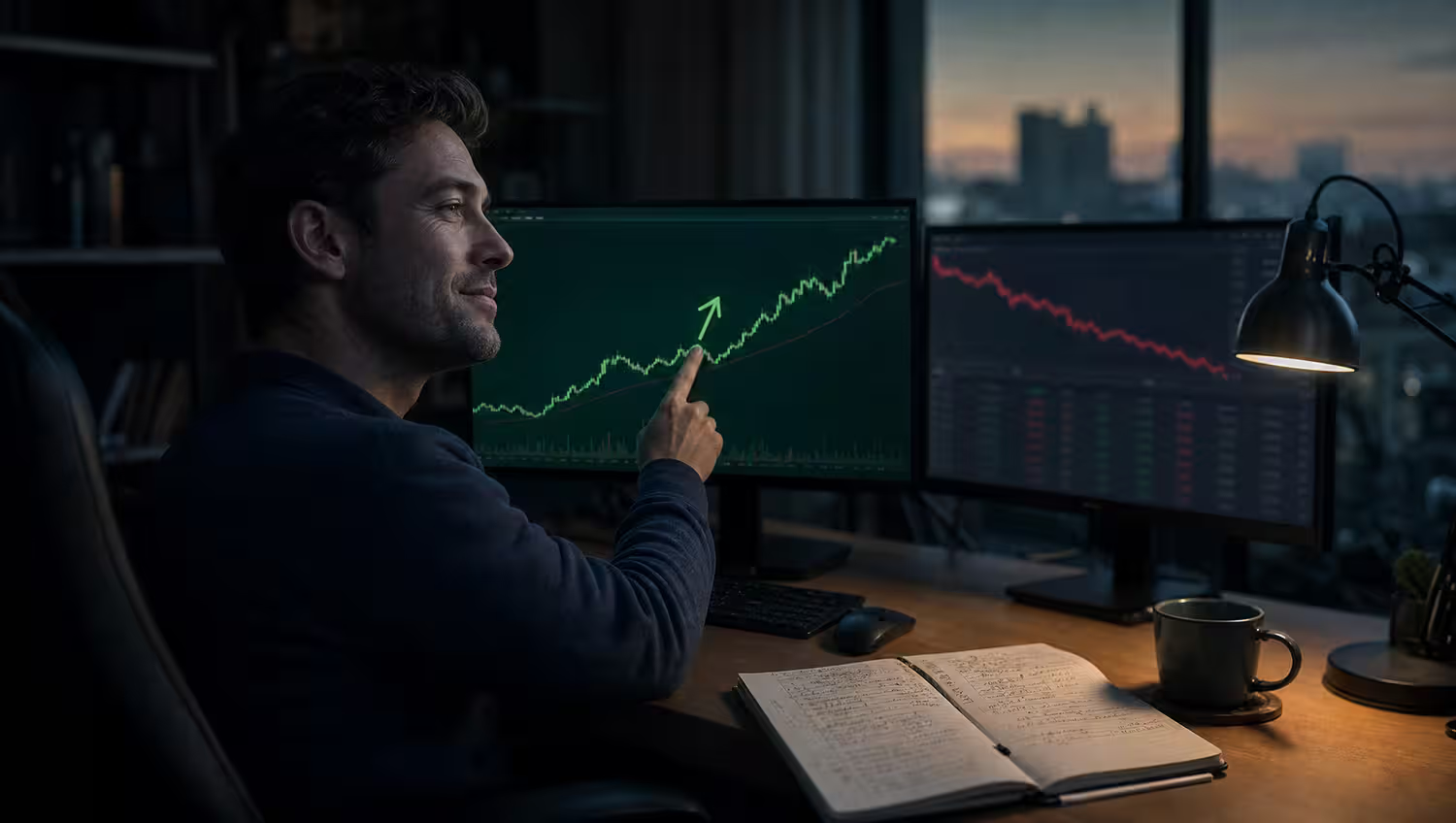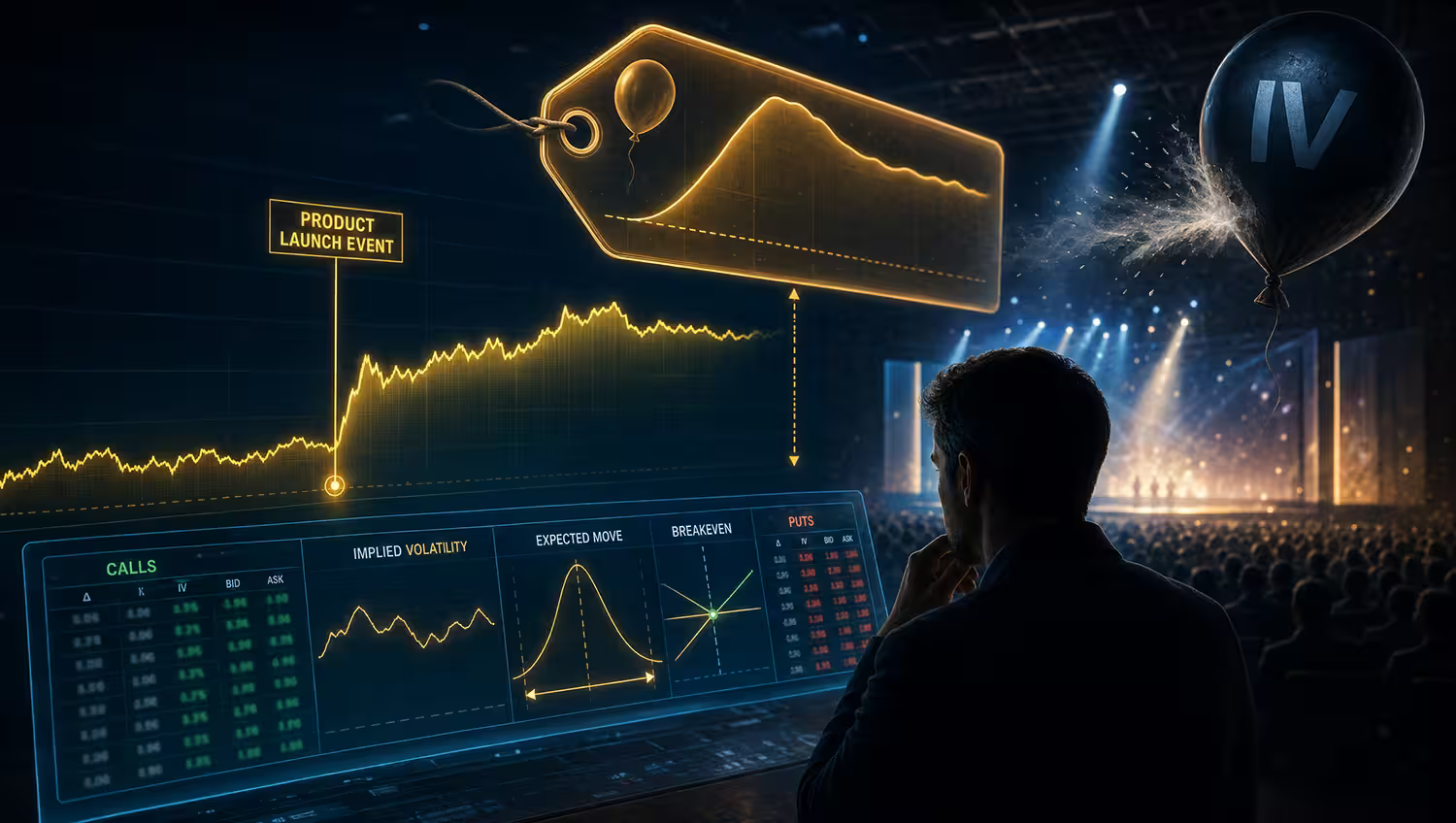

The dumbest options trades that accidentally made millions are not myths. People really do buy a contract for the wrong reason, forget about it, and find it worth a fortune. What the retellings leave out is the shape of the distribution those stories are drawn from, where the great majority of contracts are closed out or expire without value and only a small minority are ever exercised. We read the whole genre as survivorship bias with a capped downside attached, and we hold that with high confidence, because it follows from the payoff structure rather than from any forecast.
Key Takeaways
- The tail is real: spectacular accidental wins happen because the option payoff is genuinely asymmetric, not because the trade was clever.
- The centre is not: roughly 22% of contracts expire without value and only about 6% are exercised.
- Capped loss, uncapped story: a buyer risks only the premium paid, so surviving winners always sound enormous.
- The penny rule: exercise by exception at $0.01 in the money is the real mechanism behind forgotten-contract legends.
Why the Dumbest Options Trades Get Remembered
Every viral windfall has the same structure. Someone with no particular thesis buys a cheap, far out of the money contract. The underlying does something violent. The screenshot circulates. The trade is retold as though the buyer saw something, when the more likely explanation is that thousands of people made the same bet and one of them was standing in the right place.
The reason this genre exists at all is the payoff shape. FINRA puts it in a single line: for the purchaser of an option, the premium paid is the maximum loss. A trade that can only cost you what you put in, and can in principle return many multiples of it, will produce extreme winners at some rate no matter how uninformed the buyers are. Extreme winners are the only outcome interesting enough to share.
That asymmetry does something subtler too. Because the loss is capped and small, losing is unremarkable and cheap to forget. The person whose contract expired at zero has nothing to post and no reason to post it. The distribution is not hidden from us; it is simply silent.
Nobody screenshots the 22%. The distribution has a long right tail and a very crowded left one, and only one of those ends up on a timeline.
What the Data Says
Most contracts never reach the moment the story needs. The Options Industry Council's contract resolution data puts more than 72% of option contracts as closed out in the market before expiry, and about 22% as expiring without value. The accidental-millionaire story requires someone to hold to the end, and most positions are managed out long before that. It also settles a familiar myth: the popular claim that 90% of options expire worthless is considerably wrong, and the true share is both smaller and quite enough to make the point.
Only about 6% to 7% are exercised. The OIC puts exercised contracts near 6%. FINRA, approaching it from the assignment side, states that only about 7% of options positions are typically exercised, while cautioning that this does not mean a seller can expect assignment on only 7% of short positions. Two independent sources landing within a point of each other is a firm number, and it means the terminal event these stories turn on is the rarest of the three outcomes.
A penny decides it. The mechanism behind the forgotten-contract story is exercise by exception: the OCC exercises contracts finishing in the money by as little as $0.01 unless instructed otherwise. The OIC is careful that this is not, strictly speaking, automatic and advises customers to give explicit instructions rather than assume. The legend of the trader who forgot and got rich is really a story about a default setting.
What's Driving It
The supply of these stories tracks the supply of inexperienced buyers, and the regulatory record is explicit about where that pressure sits. FINRA's Regulatory Notice 22-08, dated March 8, 2022, raises sales-practice concerns for complex products and options and flags heightened concern when a retail customer reaches them through a self-directed platform without a financial professional. That is precisely the population that buys the cheap far-out-of-the-money contract. The same notice cites a 2021 enforcement matter in which a broker recommended concentrated positions in high-risk securities to seniors, resulting in more than $2 million in customer losses.
That number is the same order of magnitude as the windfalls that go viral. It moved in the opposite direction, and almost nobody has heard about it.
There is a structural reason the losses stay invisible beyond simple embarrassment. The winning trade produces a single dramatic number. The losing trades produce many small ones, spread across thousands of accounts, none individually remarkable. Aggregate them and you would have the real story, but no mechanism exists to aggregate them in public.
Time works against the buyer throughout. Notice 22-08 names time decay on purchased options among the specific risks inexperienced traders face, and decay is relentless in a way that a directional view is not. The contract does not need the trader to be wrong about direction to go to zero. It only needs them to be wrong about timing.
Counterarguments
Asymmetric payoffs can justify small speculative positions. A capped loss with an uncapped gain is a genuinely different instrument from leveraged share exposure, and it is not irrational to allocate a deliberately small, written-off amount to that shape. Many traders limit any single speculative position to a low single-digit percentage of account capital for exactly this reason. The objection is fair, and it narrows the thesis rather than defeating it: the argument here is against treating the tail as a plan, not against ever buying a cheap option.
Some trades only look dumb in retrospect. A position that appears absurd at entry may reflect information, a thesis about a catalyst, or a hedge whose other leg is invisible in the screenshot. Retellings strip context, and a trade described as a lucky accident may have been a considered bet with a stated rationale that nobody bothered to record. We would treat any specific viral claim as unverified unless the position and reasoning were documented before the outcome was known, which is almost never the case.
What We'd Watch
- Contract resolution mix: whether the OIC's roughly 72% closed, 22% expired, 6% exercised split shifts materially in later updates.
- Exercise-side confirmation: whether FINRA's 7% figure continues to track the OIC's 6%, since the two are measured differently.
- Regulatory posture on access: any move from guidance, as in Notice 22-08, toward firmer approval requirements for self-directed options accounts.
- Documented positions: viral claims accompanied by a position disclosed before the outcome, which is the only version that would carry evidentiary weight.
Implications for Traders
The useful conclusion is not that cheap options are always a mistake. It is that the story format teaches the wrong lesson about frequency. If a structure produces a spectacular winner roughly as often as the resolution data implies, then planning around that outcome is planning around the least likely of three, and the other two are what will actually happen to most positions most of the time.
That suggests treating lottery-style purchases as an explicit, pre-sized expense rather than an investment thesis. Brokerages already gate options approval to keep investors from trading beyond their means, and the same principle applies internally: decide the amount you are prepared to write off before entry, not after the contract has moved. The broader framing sits in our notes on risk and money management and on the risks of trading options.
One practical point deserves separating from the psychology. If a position may finish near the strike, the $0.01 exercise-by-exception threshold means the outcome can be decided without any action from you, and on American style contracts assignment can arrive earlier than expiration. Knowing how exercising an option actually works, and giving your broker explicit instructions, is what separates a deliberate outcome from a story about a default.
What Would Change Our View
If accidental winners turned out to repeat across many independent trades by the same people, the variance explanation would weaken and something closer to skill would be the better reading. Equally, if contract-resolution data began showing exercised outcomes far above the 6% to 7% both sources report, the tail would be less thin than argued here.
We hold this view with high confidence and no particular time horizon, which is unusual for us and worth explaining. The claim is structural rather than predictive: it rests on the shape of an option payoff and on published resolution statistics, neither of which depends on the current market. What would genuinely revise it is better data on outcomes, not a change in conditions.
FAQ
These answers cover what readers usually ask once the distribution argument lands, and they assume no more than a working knowledge of what a call and a put are.
Do Most Options Really Expire Worthless?
No, and the popular version of this claim is wrong. The Options Industry Council reports that more than 72% of option contracts are closed out in the market before expiration, about 22% expire without value, and roughly 6% are exercised. The frequently repeated figure of 90% expiring worthless does not match that breakdown.
How Can Someone Forget About an Option and Still Make Money?
Through exercise by exception. The OCC exercises contracts that finish in the money by as little as one cent unless the clearing member instructs otherwise, so a forgotten position can be exercised without the holder lifting a finger.
The OIC is explicit that this is not strictly automatic, and advises customers to give their broker explicit exercise instructions rather than relying on the default.
What Is the Most a Buyer Can Lose on One of These Trades?
The premium paid. FINRA states plainly that for the purchaser of an option, the premium paid is the maximum loss. That capped downside is exactly why lottery-style buying persists, and it is also why the losing outcomes stay quiet enough to vanish from the retelling.
Why Do These Stories Cluster Around Inexperienced Traders?
Partly access and partly selection. FINRA's Regulatory Notice 22-08 flags heightened concern when retail customers reach complex products through self-directed platforms without a financial professional. Inexperienced traders also tend to take the low-probability, high-payoff bets that generate both the largest winners and the bulk of the losses.
Does an Asymmetric Payoff Make Small Speculative Bets Rational?
It can, within strict sizing. A capped loss with an uncapped gain is a genuinely different shape from a leveraged share position. The distinction that matters is between risking a deliberately small amount already written off, and treating the tail outcome as a plan.