Unless you live under a rock, we are pretty sure that you’ve heard a story or two about people who strike oil and hit it rich in the stock market. They become billionaires (ok, we’re exaggerating) pretty much overnight.
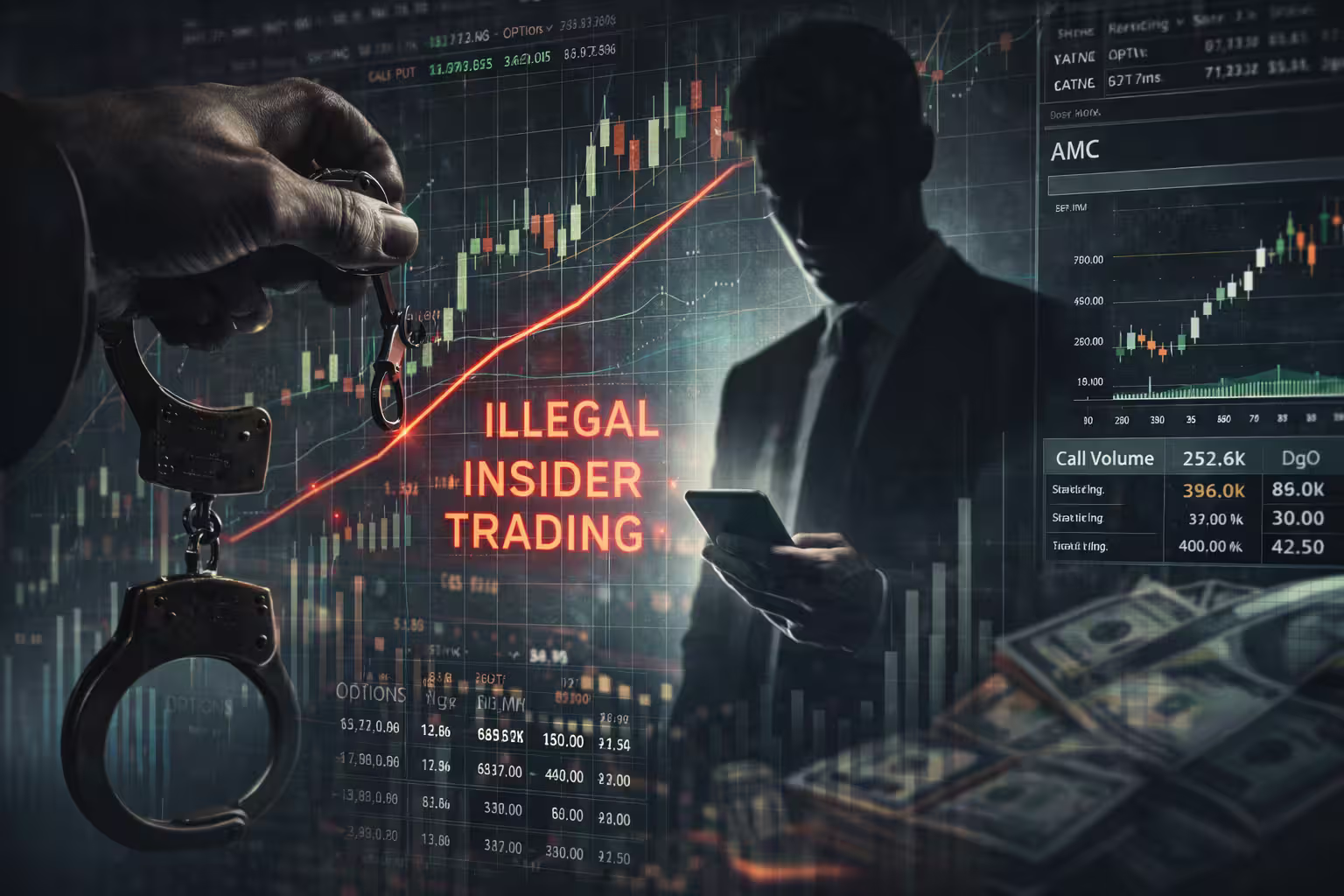
If you were like, hmmm, there has got to be more to the story, you aren’t wrong—at least in some cases. Because there are people who aren’t savants or just have insane luck—it’s insider trading. Which is illegal, btw. And it gets even more shady when options trading is involved. Why? Because options give you the power to control big amounts of stock with a relatively small investment. That means any unfair advantage, such as secret info, can give a person massive financial gains.
But why should insider trading matter to you? For one, it creates an uneven playing field where only a select few will benefit at the expense of everyone else. It also undermines trust in the financial markets, so it’s harder for honest investors to be confident about where they put their money. And we can’t ignore the serious legal consequences—hefty fines and possible prison time—that along with the crime when the perpetrators get caught.
It happens more than you think, which is why we thought we’d take a walk down memory lane and look at some of the most infamous insider trading scandals in the world of options trading—how they unfolded, the ripple effects they had on financial regulations, and how they’ve shaped the public’s perception of the markets. You’ll be able to see how important it is that our financial systems stay fair and transparent for all who are involved!
What Is Insider Trading?
Insider trading happens when someone with inside knowledge about a company—like a top executive, employee, or anyone who is connected to the company—uses non-public info to buy or sell the company’s stock. They basically have knowledge that outsiders don’t, and have, or can give someone else, a secret heads-up on a big change, like an upcoming merger or a poor earnings report, and then use it to turn a quick profit or avoid a loss.
And in options, insider trading has another layer. Why? Because options are about leverage, which means even the smallest moves in stock price can turn into huge financial gains. So, when insiders trade options with confidential info, they can make a massive profit by betting on the stock’s future moves.
Why It’s Illegal
Insider trading is unfair, plain and simple. If people on the inside can make trades based on information that the rest of the public doesn’t have, it skews the market, as it gives them an unfair edge over everyday investors. The whole point of stock markets is that everyone should have access to the same info—so when insiders break that trust, it messes with the market’s reputation. People stop trusting the system if they feel like it’s rigged for those who are in the know. Legally, the SEC defines illegal insider trading as using “material, non-public information” to make trades, and they crack down hard on those who try to work around the system this way.
Who’s Policing Insider Trading?
The SEC, or the Securities and Exchange Commission, is the main watchdog here in the U.S. They keep a close watch on trading patterns, and they use sophisticated data tools to do so. If they notice something fishy—like an unusual spike in trading right before major news hits—they investigate it to see if insider trading could be happening. They’re not the only ones, though; FINRA, a self-regulatory body, also monitors trading, and in serious cases, the Department of Justice (DOJ) can step in with criminal charges, which can mean expensive fines and jail time.
How Insider Trading Works in Options Markets
Insider trading in the options market is a whole different animal—it’s when people with confidential knowledge about a company use options trading to capitalize on that information. Options bring leverage, meaning even a small shift in stock price can translate to a much larger gain or loss. Below is a rundown of exactly how insider trading in options works, an example of how it could play out, and some of the signs that regulators look for!

The Mechanics of Insider Trading in Options
Options are different from regular stocks in that they’re contracts, not plain stock purchases. They let you buy (call options) or sell (put options) shares at a certain price by a set date, amplifying even small movements in stock value. The amplification can make them super appealing for insider trading. If someone knows a company is about to announce strong earnings, they could buy call options to cash in on a price jump. Or, if negative news is coming down the pike, they may buy put options in order to benefit from a dip.
Example of a Typical Insider Trade Using Options
Let’s say an executive at Company X hears that the company is about to be acquired, which would likely push the stock price up from $50 to $70. Having this knowledge, the executive buys 100 call option contracts with a strike price of $55, each costing $2 per share.
- Initial Cost: 100 contracts x 100 shares/contract x $2 = $20,000
After the acquisition news becomes public, the stock jumps to $70. Now, each call option has an intrinsic value of $15 per share ($70 stock price – $55 strike price).
- Total Option Value: 100 contracts x 100 shares/contract x $15 = $150,000
- Profit: $150,000 – $20,000 = $130,000
In this scenario, the insider’s $20,000 investment turns into a whopping $150,000, and this shows how options can amplify profits when confidential information is used in this manner.
Main Red Flags and Detection Methods
How do insider traders get on the radar? Well, the regulatory bodies like the SEC and FINRA are always vigilant for any unusual trading moves, especially in the options market. The following are a few things they consider when investigating:
- Unusual Volume Spikes: A sudden increase in trading volume on specific options, especially out-of-the-money options, draws attention.
- Timing Patterns: Trades that happen right before major announcements, like mergers or earnings reports, as they look sus.
- Repeated Patterns: If someone is always profiting from trades that are made just before big news breaks, it’s a red flag that insider knowledge might be happening.
- Close Connections: Traders with known ties to company insiders who seem unusually successful in their trades tend to be scrutinized.
The SEC and other agencies all use advanced data analysis tools to suss out these types of patterns, and they flag trades that seem a little too timely or out of the ordinary in any way. Via careful monitoring, they are constantly working to keep all types of trading fair and to hold those who exploit confidential info for their own gain accountable.
The Most Infamous Insider Trading Cases in Options Trading
Insider trading, particularly when it involves options, has led to some of the most infamous financial scandals. The cases below don’t just highlight the misuse and abuse of confidential information for personal financial gain—it also underscores why market integrity is so important and the role that regulatory bodies play in maintaining it.
The ImClone Case (2001)
In December 2001, Martha Stewart (yes, Ms. Queen of Everything Home & Garden) sold nearly 4,000 shares of ImClone Systems that were based on non-public information about the company’s forthcoming FDA decision on its cancer drug, Erbitux. This sale happened right before the public announcement, which resulted in a big drop in ImClone’s stock price.
Who Exactly Were the Main Stars of This Scandal?
– Martha Stewart: Lifestyle entrepreneur and CEO of Martha Stewart Living Omnimedia.
– Samuel Waksal: CEO of ImClone Systems, who tipped off his close contacts about the impending negative FDA decision.
Outcome and Legal Consequences
In 2004, Stewart was convicted of conspiracy, obstruction of justice, and making false statements—she went to jail. Like, real jail for five months! Then she had to do five months of house arrest, with an ankle monitor and everything and was hit with a $30,000 fine. Waksal got a seven-year prison sentence and was fined $4.3 million.
Impact on the Market and Public Awareness
The ImClone case pushed insider trading into the sphere of public awareness, and it showed that even not even Ms. Martha Stewart is above the law. It also caused more scrutiny of corporate executives and reinforced the utter importance of transparency in the markets.
The Raj Rajaratnam and Galleon Group Case (2009)
Raj Rajaratnam, who was the founder of the Galleon Group hedge fund, orchestrated an extensive insider trading scheme and profited from non-public info about companies like Goldman Sachs and Intel.
Who Were the Main Players in This Insider Trading Scheme?
– Raj Rajaratnam: Founder of Galleon Group, the central figure in the insider trading network.
– Anil Kumar: Senior executive at McKinsey & Company, who provided the confidential info to Rajaratnam.
Outcome and Legal Consequences
In 2011, Rajaratnam was convicted on 14 counts of securities fraud and conspiracy, received an 11-year prison sentence and a $10 million fine. The Galleon Group was dissolved, and several of the associates were also convicted.
Impact on Hedge Fund Regulations
This case prompted regulators to tighten up oversight of hedge funds, as it stressed the need for the strongest compliance programs and transparency in order to prevent similar abuses from happening.
The SAC Capital Advisors Case (2013)
SAC Capital Advisors, which was helmed by Steven A. Cohen was implicated in insider trading—employees were using non-public information to trade options and stocks, and yielding substantial profits from the crime.
Who Was in on This One?
– Steven A. Cohen: Founder of SAC Capital Advisors, although he was not personally charged, his firm did face big legal challenges.
– Mathew Martoma: The SAC portfolio manager who was convicted of insider trading related to pharmaceutical stocks.
Outcome and Legal Consequences
SAC Capital pled guilty to insider trading charges, paid $1.8 billion in fines and agreed to cease and desist managing outside money. As for Martoma? He was sentenced to nine years in prison.
Changes in Hedge Fund Practices
The case resulted in much stricter compliance measures within hedge funds, and they include better internal controls and much more rigorous monitoring of trading activities.
The Kodak Case (2020)
Before the public announcement of a massive government loan to Eastman Kodak for pharmaceutical production, there was some unusual trading activity in Kodak options, and that raised hackles about possible insider trading.
Who Were the Dirty Deeders in This Scandal?
– Kodak Executives: Individuals within the company who had prior knowledge of the loan agreement.
– Traders: Entities that engaged in suspicious trading of Kodak options ahead of the government loan announcement.
Outcome and Legal Consequences
The SEC launched an investigation into the trading activities, and the media extensively covered the incident, but we never got the specifics of any legal outcomes—they were not publicly released.
Impact on SEC Scrutiny of Corporate Announcements
The Kodak case heightened the SEC’s concentration on monitoring trading activities surrounding important corporate announcements in the hopes of detecting and deterring insider trading.
Other Notable Cases
You didn’t think the above four cases were the only ones, did you? They’re just the ones you’ve probably heard of! Below are a few other notable insider trading scandals that shook the market!
The Albert H. Wiggin Case (1929)
- What Happened: Albert H. Wiggin, then head of Chase National Bank, short-sold more than 40,000 shares of his own company’s stock during the 1929 stock market crash, profiting from the decline in share price.
- Key Players:
- Albert H. Wiggin: Chairman of Chase National Bank, who exploited insider knowledge of the bank’s vulnerabilities.
- Outcome and Legal Consequences: At the time, insider trading laws were not well-defined, so Wiggin’s actions, though unethical, were not illegal. However, public outrage led to significant reforms in securities regulation, including the Securities Act of 1933 and the Securities Exchange Act of 1934, which established the SEC.
- Impact on Market Regulations: Wiggin’s case highlighted the need for stricter securities laws and greater transparency in financial markets, leading to the creation of regulations that form the foundation of modern securities law.
The R. Foster Winans Case (1984)
- What Happened: R. Foster Winans, a columnist for The Wall Street Journal, leaked information about his upcoming “Heard on the Street” columns to stock brokers, who traded on this information before publication.
- Key Players:
- R. Foster Winans: Journalist who misused his position to provide non-public information for personal gain.
- Peter Brant and David Clark: Stock brokers who profited from the leaked information.
- Outcome and Legal Consequences: Winans was convicted of securities fraud and conspiracy and served 18 months in prison. This case expanded the definition of insider trading to include individuals outside a company who misuses confidential information.
- Impact on Insider Trading Laws: The Winans case set a precedent that insider trading laws apply not only to corporate insiders but also to anyone who misappropriated confidential information for securities trading, broadening the scope of enforcement.
The Impact of Insider Trading on Options Markets
Insider trading in options markets has far-reaching consequences—it has an effect on investor confidence, prompts major regulatory reforms, and alters trading behaviors within all of our financial institutions!
Market Perception and Investor Confidence
High-profile insider trading cases erode trust in the fairness of financial markets. Insiders exploiting non-public information for personal gain creates an uneven playing field, disadvantaging ordinary investors. This perceived inequity can deter participation, as individuals may feel the system is rigged against them. For instance, the ImClone scandal involving Martha Stewart in 2001 brought insider trading into the public eye, highlighting that even prominent figures are not above the law. Such incidents underscore the need for transparency and equal access to info, which are fundamental to keeping investor trust and confidence.
Regulatory Changes and Increased Scrutiny
In response to insider trading scandals, regulatory bodies have implemented much stricter measures to detect and prevent such activities. The Securities and Exchange Commission (SEC) has enhanced its surveillance capabilities, employing advanced data analytics to monitor trading patterns. Notably, the SEC adopted amendments to Rule 10b5-1 under the Securities Exchange Act of 1934, introducing new conditions to the use of the affirmative defense to insider trading liability. These amendments aim to strengthen investor protections against insider trading and help shareholders understand when and how insiders are trading in securities for which they may, at times, have material nonpublic information.
Additionally, the Financial Industry Regulatory Authority (FINRA) plays a vital role in ensuring market integrity by monitoring trading activities and enforcing compliance with securities laws. FINRA’s Insider Trading Detection Program uses sophisticated technology and analytics to monitor 100% of trading in stocks, options, and bonds for potentially suspicious activity around material news events, resulting in hundreds of referrals to the SEC and law enforcement every year.
Influence on Trading Behavior and Risk Management
The crackdown on insider trading has prompted trading firms to reassess their compliance and ethical standards. Firms have implemented more robust internal controls, including comprehensive training programs to educate employees about legal boundaries and ethical considerations. The adoption of stricter insider trading policies and procedures has become commonplace, with firms filing these policies as exhibits to their annual reports on Form 10-K.
Moreover, the SEC’s amendments to Rule 10b5-1 have introduced new disclosure requirements, enhancing transparency regarding insider trading arrangements. These changes aim to deter investors from exploiting existing Rule 10b5-1 and strengthen investor protections against insider trading.
Insider trading in options markets completely undermines investor confidence, prompts regulatory reforms, and necessitates changes in trading behaviors and risk management practices. Ongoing vigilance and adherence to ethical standards are a must in order to uphold the integrity of the financial markets.
Lessons Learned from Infamous Insider Trading Cases
Insider trading scandals have left a lasting mark on the financial world, and it reinforces the need for strong oversight and ethical vigilance. The cases we examined serve as a potent reminder of the steps that can help prevent this type of misconduct and keep the markets honest and trustworthy!

Importance of Regulatory Oversight
Active monitoring and enforcement by regulatory bodies are super important in discouraging insider trading. The Securities and Exchange Commission (SEC) has implemented several measures in recent years to improve oversight in this area, like the amendments to Rule 10b5-1 under the Securities Exchange Act of 1934, which introduced stricter conditions to the affirmative defense used in insider trading cases, thus reinforcing protections for investors.
The Financial Industry Regulatory Authority (FINRA) also plays a critical role here. FINRA’s Insider Trading Detection Program watches all trading in stocks, options, and bonds for any suspicious activity. By using advanced tools, they are able to detect any unusual trading around major news events, and this has resulted in hundreds of referrals to the SEC and law enforcement every year.
The Role of Whistleblowers
Whistleblowers have been invaluable in exposing insider trading schemes. The term whistleblower is for people within organizations who report suspicious activity and provide regulators with info that might have gone undetected otherwise. The SEC’s whistleblower program, which was established under the Dodd-Frank Act, offers monetary rewards to those who come forward with any information that leads to successful enforcement actions. Since its inception, the program has awarded more than $107 million to 33 whistleblowers, and that goes a long way in encouraging people to speak up against misconduct they witness or have information about.
Increased Use of Technology for Detection
Technological advances have changed how insider trading is detected, and regulators now rely more on data analytics and machine learning to identify suspicious trading patterns around big events, like l earnings reports and corporate developments. This means they are capable of monitoring markets in real time so they can see patterns that might otherwise go unnoticed. Research also shows the potential of artificial intelligence in improving detection capabilities—technology will keep playing a bigger role in sustaining market integrity.
Main Takeaways for Traders and Investors
Understanding the rules around insider trading is critical for anyone involved in financial markets. Participating in insider trading compromises market fairness and brings serious legal repercussions. To stay compliant, traders and investors should keep the following in mind:
- Stay Updated: Regularly review securities laws and regulations to remain informed.
- Implement Compliance Measures: Organizations benefit from having strong compliance programs, with training and monitoring to help prevent misconduct.
- Support Whistleblowing: Build and maintain an environment where employees feel safe to report suspicious activities without fear.
- Leverage Technology: Utilize monitoring tools to catch any anomalies that could suggest insider trading is happening.
By following these practices, traders and investors contribute to a fair and transparent market environment, building trust among all participants.
How to Spot Potential Insider Trading as an Options Trader
Insider trading undermines market fairness, and as an options trader, being able to recognize suspicious activity helps protect the playing field for everyone. Below are the most common red flags to look for, how regulators handle insider trading, and how you can report any concerns—aka snitch.
Common Signs of Suspicious Activity
Spotting insider trading often comes down to noticing patterns and market behavior that just don’t add up, like the following:
- Unusual Trading Volume: A noticeable increase in options trading volume, especially in contracts that are out-of-the-money or have far-off expiration dates, could suggest traders acting on non-public information ahead of major announcements.
- Abnormal Price Movements: Large price shifts in options or the underlying stock, without any news or clear market drivers, can be a warning sign. Such movements might indicate trading based on confidential information.
- Concentrated Trading Activity: Large trades from a single entity or group, particularly in less liquid options, could be a sign of coordinated trading based on insider knowledge.
- Timing of Trades: Trades placed right before big announcements, such as earnings reports or mergers, can be suspicious. Insiders may attempt to profit from information before it’s public.
- Patterns of Success: Consistently profitable trades by an individual or group, especially around market-moving events, suggest the possible use of confidential information.
How Regulators Monitor and Investigate
Regulators like the SEC and FINRA use several advanced methods to detect and pursue insider trading, like the ones below:
- Data Analytics: Modern algorithms and analytics help scan vast amounts of trading data, flagging patterns, and unusual activity that hint at insider trading. These tools spot irregularities that human analysts might miss.
- Market Surveillance: Ongoing monitoring of trading activities aids regulators in identifying unusual behavior. For example, FINRA’s Insider Trading Detection Program examines all trades in stocks, options, and bonds, catching suspicious activity around major news events and referring hundreds of cases to the SEC and law enforcement every year.
- Whistleblower Programs: Regulators rely on reports from individuals within organizations who notice misconduct. The SEC’s Whistleblower Program incentivizes people to report wrongdoing, often with financial rewards for tips that lead to enforcement actions.
- Cross-Market Analysis: Looking at trading across multiple markets and securities allows regulators to pick up on coordinated activities, which might signal insider trading.
Reporting Suspicions
If you notice any activity that looks like insider trading is underfoot, reporting it is important to keep the markets fair and trustworthy. Here’s how you can do it:
- Contact the SEC: The SEC has an online portal for reporting suspected securities violations. You can submit a tip or complaint directly through their website.
- Provide Details: Include specific information, like the names of those involved, trade details, dates, and any supporting documents. More context helps the SEC assess your report.
- Options for Confidentiality and Anonymity: The SEC permits both confidential and anonymous reporting. If you choose to report anonymously, consulting an attorney may help protect your rights.
- Whistleblower Protections: The SEC’s Whistleblower Program also provides protection against retaliation for whistleblowers and offers financial rewards for tips that lead to enforcement actions.
When you are aware of the warning signs and know how to report any concerns you have, you can contribute to a more transparent and fair trading environment for all!
Conclusion
Insider trading busts aren’t only scandals to see and read in the news—they’re a wake-up call that shows exactly what happens when people cheat their way to money in the financial markets. If Martha Stewart can’t get away with it, no one can!
Look below for a recap of the biggest insider trading we covered above:
- ImClone and Martha Stewart: A case that drew attention because of Stewart’s fame and showed how insider trading isn’t just a “Wall Street thing.”
- Galleon Group: Raj Rajaratnam’s scheme pushed regulators to look harder at how hedge funds handle sensitive info.
- SAC Capital: Steven Cohen’s fund faced a major fallout, proving that even massive firms can’t break the rules.
- Kodak’s Government Loan Leak: Odd trading before a big loan deal for Kodak reminded everyone that corporate news couldn’t be “leaked” for trading gains.
As the technology gets better (and smarter!), so too do the regulators. They’re ramping up with new tools to catch shady trading, and we’ll likely see more rules as trading methods change going forward. And whistleblower programs and transparency are here to stay—they’re the foundation of keeping on the up and up.
Fairness matters, period. Financial markets were built on trust, and it’s up to traders and investors to respect that and play fair. Staying in the know and watching out for red flags keeps the market a clean game for everyone who wants to participate.