
Sometimes, I get the “Buffett’s” mixed up. That’s right, Warren and Jimmy. The two men couldn’t be more different if you know who they are—we have Jimmy Buffett (RIP), the chill king of Margaritaville, who’s got a legion of dedicated fans that call themselves “Parrotheads” who are singing along to Cheeseburgers in Paradise.
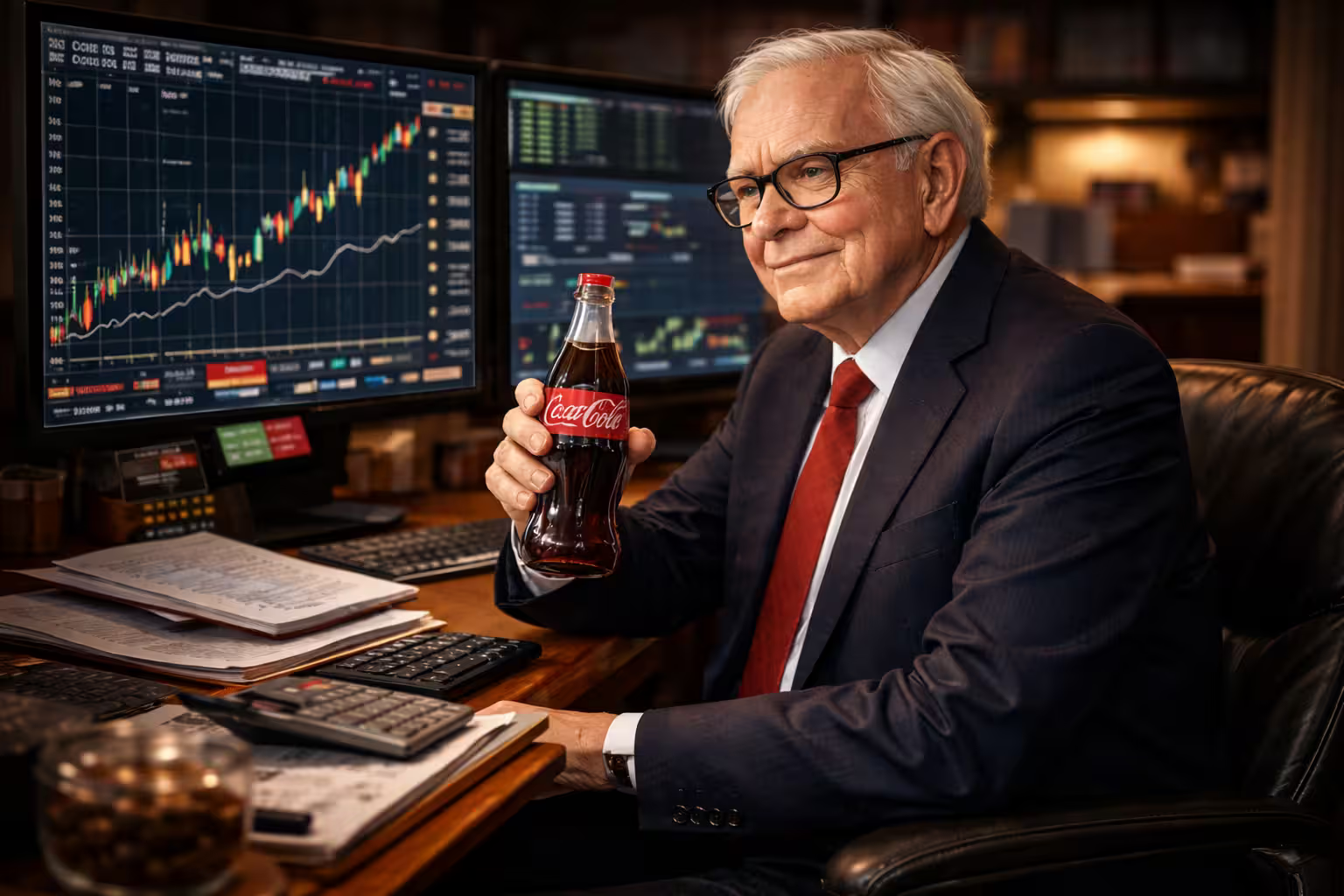
And then there’s the wizard trader Warren Buffett, who’s also chill but one of the richest people on the planet. The two Buffets are worlds apart besides sharing a last name (no relation, btw), but only one of them knew how to turn Coca-Cola stock into a goldmine—and it’s not the one with the guitar.
Warren Buffett is known for his long-term investing strategy—he’s that dude who buys a stock and will hold onto it forever. But the most interesting thing is how he uses options to boost his returns while never straying from his buy-and-hold philosophy.
Buffett, who has a lot of valuable stock, is best known for his investment in Coca-Cola, which he bought way back in the late 1980s. Did Warren just sit on those shares? Nope! He used long-term options to maximize his returns. It’s a strategy that’s a little out of the ordinary for someone known for playing the long game, but it matches his overall approach to investing.
We are going to pick apart his strategy so we can learn how Warren Buffett thinks—and maybe even pick up a few tips for our own portfolios! How does the Oracle of Omaha do it? Let’s find out, shall we?
Understanding Warren Buffett’s Investment Philosophy
First off, we have to tell you what Warren Buffett’s favorite Coke beverage is because it matters when he holds such a massive stake in the beverage giant. The 93-year-old loves Cherry Coke—he drinks five cans per day.
Quoted in Yahoo Finance, in 1986, Buffett said, “After 48 years of allegiance to another soft drink, your chairman, in an unprecedented display of behavioral flexibility, has converted to the new Cherry Coke. Henceforth, it will be the official drink of the Berkshire Hathaway annual meeting.” Buffett is the CEO of Berkshire Hathaway, FYI.
Now that we’ve gotten that important tidbit out of the way let’s get on with examining Buffett’s investment philosophy. This man is not in it to make a quick buck; his approach is based on understanding businesses, recognizing their actual worth, and then holding on for the long term. And if there’s one investment that epitomizes this philosophy, it’s his legendary stake in Coca-Cola.
Long-Term Value Investing
Buffett’s basic strategy revolves around identifying companies with the strongest fundamentals—those that have a durable competitive advantage, or what he calls a “moat.” Once he’s found such a company, he’s in it for the long run and will sometimes hold positions for decades. This approach is called long-term value investing, and it’s basically buying great companies at fair prices and then letting time and compounding work their magic. Coca-Cola, which is a globally recognized brand and a consistent earner, was a perfect fit for this strategy.
Coca-Cola Investment History
In 1988, Buffett made headlines by investing over $1 billion in Coca-Cola—in doing so, he acquired about 6.2% of the company. At the time, Coca-Cola was trying to recover from the 1987 market crash, and lots of investors were super skittish. But Buffett looked past the short-term market panic and recognized Coca-Cola’s long-term potential. Fast forward to today, and that initial investment has grown exponentially, and not just in terms of stock price—it also pays out steady dividends. The investment is one of Berkshire Hathaway’s largest and most successful positions and exemplifies Buffett’s unwavering belief in the company’s permanent value.
Focus on Simplicity and Predictability
One of Buffett’s main guiding principles is that he sticks with what he knows. He stays clear of industries that are too complicated or outside his “circle of competence.” He looks for companies with simple, predictable business models that he can easily understand, and Coca-Cola was in this wheelhouse. The company’s business—selling beverages—is straightforward, and its products have always had universal appeal. The predictability gave Buffett confidence that Coca-Cola would continue to generate steady returns, even as market trends and consumer preferences changed.
What Are Long-Term Options?
Long-Term Equity AnticiPation Securities (that’s a mouthful, which is why most people call them LEAPS), are options that give you the chance to speculate on or hedge against the price movements of a stock or index over a much longer period than regular options. While typical options contracts might expire in a few weeks or months, LEAPS can stretch that timeframe out to two or even three years, giving investors a different kind of flexibility and potential for those who are thinking about the future.

Definition of Long-Term Options
LEAPS are options contracts that extend past the standard expiration period—they give timelines that are over one year long. Like all options, they come in two main varieties: calls and puts.
- A call option gives the holder the right, but not the obligation, to buy the underlying asset at a specific strike price by the expiration date.
- A put option gives traders the right to sell shares at a predetermined price.
What makes LEAPS unusual is the amount of time they give you for your investment thesis to develop. Standard options typically require a stock to move within a few weeks for the option to be profitable, but with LEAPS, you have the luxury of watching that stock evolve over a couple of years. This is super useful for long-term investors who are betting on gradual changes in a company’s fortunes instead of sudden shifts.
Let’s say that you believe that a tech company like Amazon will greatly increase its market value over the next two years—buying a LEAPS call option would let you lock it in the current price and benefit from any future appreciation without needing to commit a large amount of capital upfront. Conversely, if you’re worried about potential declines in a stock you already own, purchasing a LEAPS put can act as a type of insurance so you’ll be shielded from any big losses.
Benefits of Long-Term Options
Why are LEAPS so sought after? Well, it’s their potential for leverage. When you buy a LEAPS call option, you are able to control a substantial amount of stock with a much smaller initial investment than if you were buying the shares outright. This leverage means that if the stock price moves in your favor, your percentage gains can be much higher than they would be with a direct stock purchase.
Another big benefit is the extended timeframe that LEAPS gives investors—they can take a somewhat more relaxed approach to market timing. Instead of constantly worrying about day-to-day fluctuations or the immediate expiration of a short-term option, you can hold onto your LEAPS for years, giving your investment theory the time to materialize. This can be especially advantageous in volatile markets where short-term price movements might be unpredictable, but the long-term outlook remains strong.
LEAPS are also a cost-effective way to gain exposure to a stock’s price movement. Because these options are generally cheaper than buying the underlying stock outright, you can potentially reap the benefits of a stock’s price increase without having to invest a ton of capital upfront. This is particularly beneficial for investors who have a strong belief in a company’s long-term prospects but want to minimize their initial investment.
LEAPS are also a very powerful tool for hedging! Investors who hold a long position in a stock can purchase LEAPS puts to protect against possible downside risks, a strategy that can be very useful in uncertain markets or during periods of economic instability when the future direction of stock prices is murky.
Risk Vs. Reward
LEAPS do have a lot of benefits, but they also come with some risks that need to be discussed—one being the higher cost of premiums. Because LEAPS gives traders a longer duration, they are more expensive than shorter-term options. This means that if the underlying stock doesn’t move in the direction you expect, you could end up losing the entire premium you paid for the LEAPS.
Another risk is time decay; even though LEAPS give you more time, they aren’t immune to the effects of time decay, which is the gradual reduction in the value of an option as it approaches its expiration date. The closer you get to the expiration date, the more rapidly the value of the LEAPS can decrease, especially if the stock hasn’t moved appreciably in your favor. That’s why it is so important for investors to have a clear exit strategy in place, no matter how the stock is performing.
The leverage that makes LEAPS attractive can also work against you. If the stock moves in the opposite direction of what you anticipated, the losses can be magnified just as the gains would be if the stock moved in your favor. This is especially true for out-of-the-money LEAPS, where the stock needs to make a notable move before the option becomes profitable. If the stock doesn’t reach the necessary price level, the option could expire worthless, which results in a total loss of the premium.
Another thing to consider is the potential for market changes over the long term! Yes, LEAPS gives you more time for your investment strategy to play out, but it also exposes you to more market risks. Economic shifts, changes in industry dynamics, or unexpected events can all impact the performance of the underlying asset over the longer term, making it much more challenging to predict outcomes with accuracy.
Warren Buffett’s Use of Long-Term Options in Coca-Cola
Warren Buffett has a long-standing reputation for a straightforward and patient investment strategy due to his concentration on buying and holding quality companies for the long term. And while Buffett’s investment style does appear to be quite simple on the surface, the man contains multitudes! Buffett has been known to dabble in more sophisticated financial tools when the situation calls for it.
While Buffett is famous for his massive buy-and-hold position in Coca-Cola, there’s a lesser-known aspect to his approach: the use of options to improve his position. Below, we’ll look at just how Buffett might have employed long-term options in his Coca-Cola strategy and how these moves match up with his overarching philosophy of patience and value investing.

Buffett’s Strategy with Coca-Cola
Warren Buffett’s investment in Coca-Cola is the stuff of legends. After the 1987 stock market crash, when most investors were losing their minds, Buffett saw a chance and took it by purchasing Coca-Cola shares. Over time, this investment became one of the main and most lucrative holdings in Berkshire Hathaway’s portfolio, exemplifying Buffett’s belief in the long-term potential of strong brands.
What’s really fascinating, though, is exactly how Buffett approached this investment. He didn’t just do it with a straightforward stock purchase but with the strategic use of long-term options to either improve his returns or protect his position. Although Buffett doesn’t really talk about his use of options in public, there are strong indications that he employed them as part of his bigger strategy.
A potential strategy that Buffett could have used would’ve involved selling put options on Coca-Cola stock. Selling put options would have let Buffett collect premium income, which could have improved the returns on his existing positions. If the stock price dropped to a certain level, the options would obligate Buffett to purchase more shares at a price he already saw as attractive, effectively lowering his cost basis on the investment. Given his confidence in Coca-Cola’s long-term prospects, this strategy matches up with his philosophy of buying more of a solid company when it’s trading at a good price.
It’s also possible that Buffett used covered call options in his Coca-Cola strategy. By selling call options against a portion of his Coca-Cola shares, Buffett could’ve generated extra income through the premiums. This approach would have been particularly appealing during any times of lower market volatility when stock price movements are less pronounced. Selling covered calls would mean Buffett would benefit from his belief that Coca-Cola’s stock would stay relatively stable over time, so he’d be collecting premiums while still holding the underlying shares.
Potential Option Plays
Buffett’s possible use of long-term options in his Coca-Cola investment wasn’t only about improving the returns—it was also about risk management! Long-term investors like Buffett know that while the market generally trends upwards over time, there are periods of volatility that can impact even the most stable companies, and by using long-term options, Buffett was able to mitigate some of these risks while still capitalizing on the long-term growth he anticipated from Coca-Cola.
As we speculated earlier, a specific option play that Buffett might have utilized is the purchase of LEAPS. The long-term options would’ve given him the right to purchase additional Coca-Cola shares at a set price for an extended period without the need to invest a large amount of capital upfront. This strategy would mean Buffett could benefit from any potential upside in Coca-Cola’s stock price while minimizing his downside risk. LEAPS are super useful in situations where an investor has a strong long-term view of a stock’s potential but wants to keep some flexibility in their investment strategy.
As an example, let’s say that in the early 1990s, Buffett believed that Coca-Cola’s stock was likely to appreciate markedly in the next few years. Rather than committing a large amount of capital to purchase additional shares outright, he could have bought LEAPS call options, giving him the right to buy Coca-Cola shares at a predetermined price two or three years down the line. If the stock rose as he predicted it would, Buffett could exercise the options and purchase the shares at a lower-than-market price, realizing a big gain.
In addition to potentially purchasing LEAPS, Buffett might have employed a strategy of selling LEAPS put options, which would’ve let him collect premiums upfront, effectively paying him to wait for an opportunity to buy Coca-Cola shares at a price he thought was favorable. If the stock price dropped to the level of the put option’s strike price, Buffett would then be obligated to purchase the shares—but since the strike price would have been set at a level he already found attractive, it would only represent a discounted entry point into a stock he already wanted to own more of. If the stock didn’t drop, Buffett would keep the premium, further increasing his returns.
The option plays, which are more nuanced than simple stock purchases, are actually consistent with Buffett’s broader investment philosophy. They are a way to increase exposure to a high-quality company like Coca-Cola while managing risk and generating extra income through premiums. They also show Buffett’s willingness to use all of the available tools to maximize returns for Berkshire Hathaway’s shareholders.
Illustrating the Power of Patience
Buffett’s entire investment philosophy is built around patience, and it has worked wonders for him. The notion is that the market rewards those who are able to wait for the long-term value of an investment to be realized, and his use of long-term options in his Coca-Cola investment strategy is a solid example of this patience at play.
Options trading is most often associated with short-term speculation, but Buffett’s use of long-term options gets rid of this stereotype (for him, at least). Instead of using options to make fast profits, Buffett employs them as part of a disciplined, long-term strategy that meets his overall investment goals.
When the market gets erratic, some investors will panic and sell, but Buffett’s use of options would mean he could stay the course and be confident that his long-term view will eventually be vindicated. If the market were to undervalue Coca-Cola temporarily, Buffett could use options to either buy more shares at a discount or generate income while waiting for the stock to bounce back. His approach takes an understanding of the underlying business and a steadfast belief in its long-term prospects—both of which are hallmarks of Buffett’s investment philosophy.
Moreover, Buffett’s use of options in Coca-Cola shows his commitment to protecting and boosting shareholder value. By carefully managing risk through the use of options, Buffett can guarantee that Berkshire Hathaway’s investments are not only positioned for growth but also safeguarded against potential downside risks. This is really important in a company like Coca-Cola, which, while stable, operates in a sector that can be subject to the whims of consumer preferences and regulatory changes.
Buffett’s Saint-like patience is also evident in his willingness to hold these options positions over extended periods while waiting for the right moment to strike. A long-term perspective is what allows Buffett to remain stoic in the face of short-term market fluctuations—he is focused on the bigger picture and the eventual realization of Coca-Cola’s intrinsic value. It’s this ability to wait, combined with an acute understanding of market dynamics and a disciplined approach to risk management, that has made Buffett such a legendary investor.
Why Warren Buffett Prefers Long-Term Options Over Short-Term
Buffett’s investment approach is famously built on being patient and a long-term perspective, and though his strategy is most often associated with buying and holding onto stocks, Buffett also sees a lot of value in using long-term options, which complement his philosophy by reducing risk and improving returns over time. His preference for long-term options over short-term ones stems from several things: the benefits of a longer time horizon, the ability to mitigate market noise, and the potential to maximize the power of compounding returns.
Time Horizon
Buffett has always stressed the importance of time in investing—his philosophy revolves around the idea that the longer you stay invested in a high-quality company, the better your chances of realizing substantial returns. His belief naturally extends to his use of long-term options, which, unlike short-term options that require fast decisions and can be affected by short-term market fluctuations, give Buffett a lot more wiggle room to let his investment theories pan out.
Because he focuses on long-term options, Buffett can make investment decisions based on where he expects a company to be several years down the line rather than where it might be in the next few months. An extended timeframe is important because it decreases the pressure to react to short-term market conditions, which are sometimes misleading or irrelevant to the company’s actual value. Long-term options give him the flexibility to stay invested and patient because he is confident that time will eventually prove his investment decisions were right.
The approach also lets Buffett set the terms of his investments way into the future—he can secure favorable prices for stocks that he believes in without having to worry about immediate market movements. It’s a strategy that plays directly into his core investment principle: that time in the market is far more valuable than trying to time the market.
Mitigating Market Noise
Buffett’s disdain for short-term market noise is well-documented, and he often compares the stock market to a voting machine in the short term—driven by popularity and sentiment—but a weighing machine in the long term, where the real value of a company becomes apparent. Short-term options are heavily influenced by this “voting,” which makes them more susceptible to the whims of market sentiment and less reliable as indicators of a company’s long-term potential.
Long-term options help Buffett avoid the distractions of short-term market volatility—with longer-dated instruments, he can keep his focus on the underlying fundamentals of the businesses he invests in, rather than getting caught up in the day-to-day noise that can cause hasty or emotional decision-making.
During periods of high market volatility, when short-term options can become super risky and expensive due to increased premiums, long-term options are a safer and more predictable alternative. They give investors a buffer against the uncertainties of the market, so Buffett has the peace of mind to hold his positions and wait for the market to recognize the actual value of his investments eventually.
Compounding Returns
One of Buffett’s most famous principles is the power of compounding, which is the idea that the returns on an investment generate their own returns over time, resulting in exponential growth. Long-term options fit nicely into this strategy as a way to leverage his investments over an extended period, maximizing the compounding effect.
With long-term options, Buffett can secure the right to buy stocks at today’s prices for a future date, so he can benefit from the potential growth of the company over several years. As the company’s value increases, the option itself becomes more valuable, and this growth compounds over time. The strategy enables Buffett to multiply his returns, thereby creating a snowball effect where the gains from one investment contribute to even greater gains down the line.
And the premiums Buffett collects from selling long-term options can be reinvested, which further drives the compounding process. This doesn’t just give him an immediate cash flow—it also boosts his overall return on investment by continuously adding to his capital base, which can then generate even more returns in the future!
Key Lessons for Retail Investors
How Warren Buffett approaches investing can give traders a wealth (pun intended) of knowledge, especially for retail investors who are looking to build their portfolios. His principles have stood the test of time and are stellar guidance for those who are trying to grow their wealth both responsibly and successfully. We know that not every investor has the resources of Berkshire Hathaway, but the foundational ideas Buffett follows can be adapted by anyone who is willing to learn and apply them!

Adopt a Long-Term Mindset
If you take one thing away from Warren Buffett, it should be this: have a long-term mindset. Unlike traders and investors who are only after quick profits, Buffett doesn’t see investing as a race to the finish line. He believes that real wealth is built by holding onto quality investments for long periods of time so they can grow and compound. Buffett’s perspective calls for patience and discipline, which are qualities that are a must for weathering the inevitable ups and downs of the market.
For those retail investors out there, adopting a long-term mindset means resisting the temptation to react to every market fluctuation. It means staying committed to your investment choices, as long as they are based on solid research and a strong understanding of the company’s fundamentals. This doesn’t just reduce the stress associated with market volatility—it also increases the likelihood of getting substantial returns over time!
Look for Quality Companies
Buffett’s investment success largely stems from his uncanny ability to identify companies with strong fundamentals. He looks for businesses that have a durable competitive advantage, reliable management, and a history of consistent performance. Coca-Cola, one of his most famous investments, fit this bill and was chosen for its global brand recognition, loyal customer base, and its ability to generate steady cash flows.
Retail investors can learn from this by investing in high-quality companies—don’t just spread out your resources across a variety of stocks! It’s much more prudent to concentrate on a few companies that have a proven track record of success. You don’t have to only invest in household names, but you do have to do your homework and truly get what makes a company a strong one. Look for things like a strong balance sheet, a competitive edge in the market, and the ability to generate consistent earnings, which are all important indicators of a company’s potential for long-term success.
Consider LEAPS
LEAPS is an interesting opportunity for investors who are thinking about the future. The long-term options let investors benefit from potential growth in a stock without the need to invest a big amount of capital upfront. LEAPS can be really useful for those who are confident in a company’s future but don’t want to sink all of their money into it at once.
LEAPS gives investors a way to leverage potential gains while still having some flexibility, but it’s important to remember that LEAPS, like all options, does come with risks. The value of these options can fluctuate, and there’s always the potential that the stock won’t perform as expected within the given timeframe. Anyone who is considering LEAPS should have a solid understanding of how options work and be ready for the possibility that their investment might not pan out as they hoped it would.
Risk Management
Buffett’s approach to investing is grounded in careful risk management, and he often emphasizes the importance of understanding what you’re investing in and avoiding any and all unnecessary risks. This principle is especially relevant for retail investors who might be tempted to try out more complicated strategies without fully grasping the potential downsides.
For those who are new to options trading or other advanced investment strategies, education is your BFF. You need to understand the risks involved thoroughly and make sure that the strategies fit within your overall financial goals. Buffett’s advice is to always have a margin of safety—meaning you should invest in such a way that even if things don’t go as planned, you won’t suffer catastrophic losses.
A cautious approach to risk doesn’t mean you have to avoid every single risk—it means you have to manage them in a thoughtful way. It takes making smart decisions that are based on thorough research and being prepared for every kind of outcome. If you are going to use strategies like LEAPS, you should have a solid exit plan and be aware of the potential for loss, especially if the stock doesn’t move in the expected direction within the timeframe.
Conclusion
Warren Buffett is the GOAT (greatest of all time) of investing, period. Not only does he love Cherry Coke, which is hands down the best flavor (this is not up for debate), but he put a kinder face on investors by donating more than $55 billion to charity. Buffett’s legendary investing skills will go down in history as the best to ever do it.
Look below for a quick recap of how the Oracle of Omaha made his fortune:
- Long-Term Perspective: Buffett’s preference for long-term options, like LEAPS, reflects his commitment to a long-term investment horizon. These options allow him to capitalize on future growth potential without the immediate pressure of short-term market fluctuations.
- Focus on Quality: Just as Buffett chooses companies with strong fundamentals, his use of options is also targeted. He applies options in situations where he has high confidence in the underlying company’s long-term prospects, like Coca-Cola, so he can boost returns while keeping his main focus on quality investments.
- Risk Management: Long-term options give Buffett a way to manage risk more effectively. By using strategies like selling put options or covered calls, he can make extra income or secure more favorable purchase prices, which lines up with his cautious and disciplined approach to investing.
- Compounding Growth: Buffett’s strategy with long-term options also leverages the power of compounding returns. By securing the right to buy stocks at today’s prices for a future date, he maximizes the benefits of the company’s growth over time, contributing to the overall success of his investments.
Final Thoughts
Want to be like Warren? Considering the use of long-term options is the first step in using the same value-based, patient approach that Warren Buffett is revered for. The tools mean you can plan for the future and give your investments the time they need to grow without being influenced by short-term and noisy market distractions. Just remember, they’re not a sure thing, so think about how they fit in with your overall investment goals and whether you’re ready for the risks that are involved.
If you want to learn more about long-term options and other options trading strategies, you can check out all of the educational resources that are available at OptionsTrading.org!