
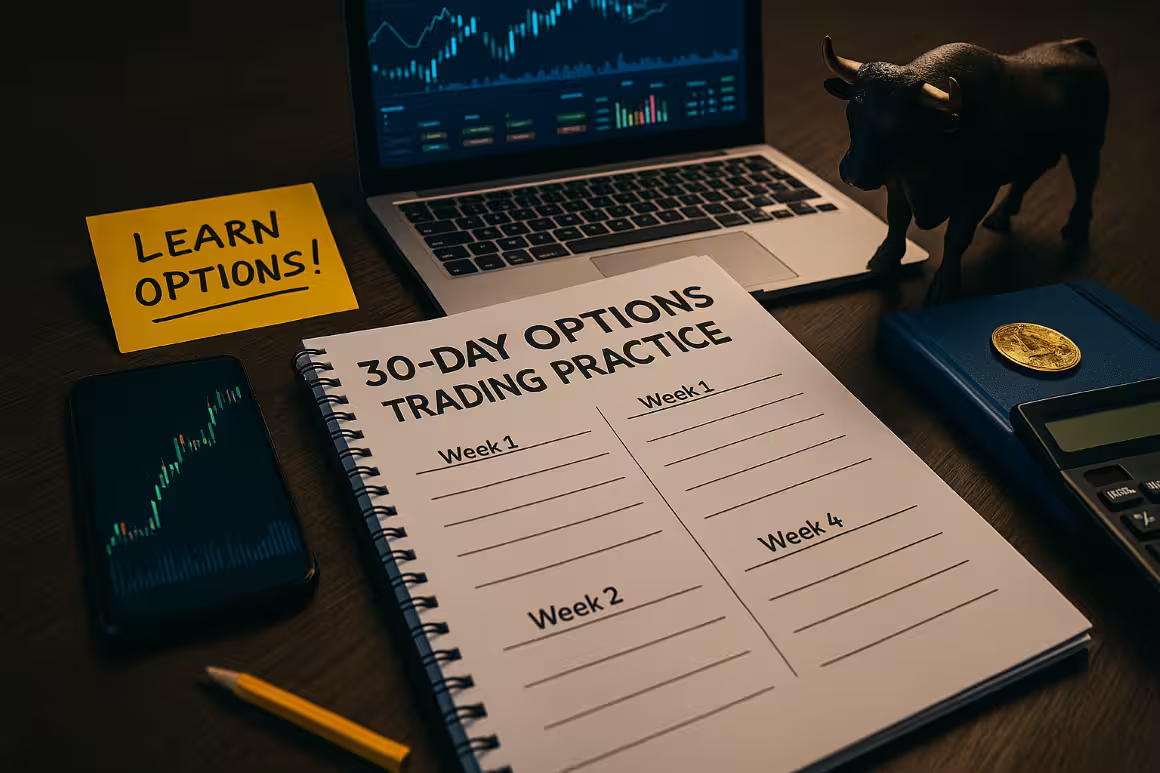
Want to learn options trading without risking real money? You’re not alone. Options are one of the most powerful trading tools available, but for beginners, they can feel overwhelming. The jargon, the strategies, and the fast-moving prices all create a steep learning curve.
That’s where this 30-day practice plan comes in. By following a structured routine, you’ll go from confused to confident—without putting a single dollar at risk. Using paper trading, reflection, and daily exercises, this plan will help you build both knowledge and trading discipline.
This guide is designed for beginners who want a clear, step-by-step roadmap to start learning options trading the smart way.
What to Expect from This 30-Day Plan
To give you a better understanding of what you might be up against or what would be involved with going from beginner level to a place where you’re more comfortable with the process and the strategies involved with making money.
Time Commitment
How long will this process take? If you’re new to options trading, you can expect to spend 30–60 minutes per day. This will give you the time and space enough to learn, practice, and reflect—without getting overwhelmed. That’s the key: easing into the process but not getting burnt out with the new things you have to learn during the journey.
Focus
This plan is about risk-free, practice-driven learning. A lot of the focus and concern is with simulating trades, tracking outcomes, and building a personal playbook along the way. The more time you can spend practicing the strategies, the less money you’re going to be losing trying to practice in the live market.
Tools You’ll Need
Now let’s focus on the tools you’ll need to succeed in this new endeavor. In addition to a good options trading app or website, you’ll also need some of the necessary secondary tools for guiding your trading plan itself. We’ve outlined everything you’ll need below for your convenience.
- Paper Trading Platform: Thinkorswim, Webull, or Tastyworks are all solid choices. What you need specifically will vary based on your trading goals, tolerance for risk, and other personal factors.
- Trading Journal or Spreadsheet: You’ll also need this secondary tool to log trades, notes, and reflections. It can help you keep a good track of what you’ve done and how you can make things better in future trading sessions.
- Options Chain + Stock Charts: For practicing trade entries and analysis, traders will need to consult stock charts and study options chains. This can help you figure out where the market might be heading. They’re good tools for planning out your next move in terms of strategy or trading technique.
Daily Breakdown
How will this system look in day-to-day practice? We’ve included a daily breakdown below, and by the end of 30 days, you’ll have a hands-on foundation in options trading.
Each day, you’ll:
- Learn a key concept
- Complete an exercise or simulated trade.
- Reflect in your journal.
Your 30-Day Options Trading Practice Plan
Now we will break down your first four weeks (roughly 30 days) to give you a good understanding of the practices you’ll be putting into place to get into the good rhythms of an options trading practice plan.

🔷 Week 1: Foundation & Platform Setup
Goal: Learn the basics and set up your tools.
- Day 1: Learn what options are—puts vs. calls explained simply.
- Day 2: Master essential lingo (strike, expiration, premium, intrinsic vs. extrinsic value).
- Day 3: Choose and set up your paper trading account.
- Day 4: Practice reading an options chain (bid/ask, open interest, Greeks).
- Day 5: Understand time decay (Theta) and why options lose value over time.
- Day 6: Intro to Implied Volatility (IV) and probability of profit.
- Day 7: Set up your journal + take a recap quiz for Week 1.
🔷 Week 2: Trade Types & Simulations
Goal: Start simulating simple trades.
- Day 8: Buy calls—simulate 3 trades and track results.
- Day 9: Buy puts—do the same.
- Day 10: Learn covered calls and paper trade one.
- Day 11: Simulate a cash-secured put.
- Day 12: Track how trades move with the stock price.
- Day 13: Learn breakeven, risk/reward, and why they matter.
- Day 14: Reflect: Which trades felt most comfortable and why?
🔷 Week 3: Strategy Stacking
Goal: Explore multi-leg trades and advanced setups.
- Day 15: Intro to vertical spreads (bull call & bear put).
- Day 16: Build and paper trade a bull call spread.
- Day 17: Build and simulate a bear put spread.
- Day 18: Learn Iron Condors—construct and test one.
- Day 19: Track live movement—see how delta and IV shifts affect pricing.
- Day 20: Analyze why a trade succeeded or failed.
- Day 21: Journal mid-month wins, losses, and lessons.
🔷 Week 4: Routines, Adjustments & Review
Goal: Build real-world trading habits and decision-making.
- Day 22: Create a daily watchlist and trade ideas.
- Day 23: Set personal entry and exit rules.
- Day 24: Learn adjustment techniques for losing trades.
- Day 25: Simulate two full trades from open to close.
- Day 26: Practice recognizing when not to trade.
- Day 27: Focus on risk management and setting max loss rules.
- Day 28: Build a personal “strategy cheat sheet.”
- Day 29: Simulate your ideal trade, start to finish.
- Day 30: Review the month: what worked, what didn’t, and your next step.
Recommended Tools & Resources
When you’re learning options, the right tools can dramatically speed up your progress. Check out some of the best tools and resources out there for getting into the right rhythms when you first begin your online trading journey.
Paper Trading Platforms
- Thinkorswim (TD Ameritrade): This platform is ideal for professionals and has great tools like powerful charting, strategy testing, and a realistic paper trading simulator.
- Webull: This one is best for beginners because it comes equipped with a beginner-friendly, mobile-first, and clean interface. Newcomers will enjoy Webull for its quick trades and simple journaling features.
- Tastyworks (now Tastytrade): Designed for options traders, with intuitive order entry and real-time options stats like IV rank and probability of profit, Tastytrade is the pick of the litter if you’re looking for something that caters to traders in between professionals and beginners.
Tip: Consistency matters more than platform-hopping. Pick one platform and stick with it through the 30 days.
Journaling Templates
Keeping track of your trades is where you learn compounds. You can use the following journaling templates for the best results.
- Notion templates: Perfect if you like structured workflows.
- Google Sheets/Excel: Customizable, simple, and free.
- Edgewonk (paid): Advanced trade journaling with analytics on win rate, expectancy, and risk metrics.
Over time, traders can use these journaling templates as their personal playbook. They’ll want to be used to include columns for the following data:date, ticker, strategy, strike/expiration, thesis, outcome, and lessons learned.
Books & Learning Resources
- Trading Options Greeks by Dan Passarelli — great for understanding how Delta, Theta, Vega, and Gamma actually move trades.
- Options as a Strategic Investment by Lawrence McMillan — the “bible” of options strategies.
- Free video resources like Tastytrade’s YouTube channel or Investopedia tutorials.
Communities & Support
- Reddit’s r/options: Crowdsourced insights and strategy breakdowns (beware of hype).
- Option Alpha community: Educational and structured learning.
- Discord groups: Great for accountability and discussion, but filter for quality—avoid “get rich quick” spaces.
Online options traders can shorten their learning curve drastically if they focus on good journaling and getting involved in a supportive trading community. Another good leg-up that traders can achieve as well is choosing a reliable options trading platform that comes with the right tools for handling the trader’s personal goals and objectives.
What Happens After 30 Days?
Completing this 30-day practice plan is a huge milestone—but it’s just the beginning. Here’s how to transition from simulation to real-world application:

Step 1: Transition to Small Real Trades
- Start with defined-risk strategies (like debit spreads) using small position sizes.
- Trade with money you can afford to lose—think of it as “tuition.”
- Focus on execution, discipline, and consistency, not profits.
Step 2: Refine Your Strategy
- Review your journal and identify which trades “clicked” with your personality.
- Example: If you like defined risk and low stress, debit spreads may fit. If you prefer collecting premium, cash-secured puts or covered calls might suit you better.
- Specialize in one or two strategies before branching out.
Step 3: Track Performance Metrics
Numbers don’t lie. Monitor key stats such as:
- Win rate (% of trades profitable)
- Average return per trade
- Risk/reward ratio
- Max drawdown
This data will reveal whether your edge is real—or if adjustments are needed.
Step 4: Build Long-Term Habits
- Maintain your daily watchlist and journaling practice.
- Commit to weekly reviews: what worked, what didn’t, what to adjust.
- Set trading rules (max capital per trade, daily loss limits, number of trades per day).
Step 5: Keep Learning & Expanding
- Explore earnings plays, advanced spreads, or options flow once you’re comfortable.
- Keep consuming educational material—markets evolve, and so should you.
- Consider joining a mentor group, structured course, or even backtesting software.
From Paper Trades to Profitable Plays
Try getting through the first 30 days of structured practice for options trading before heading to the live markets. This will give you the time needed to learn about using the right strategies and getting familiar with the process of options trading. We cannot say enough about the benefits of paper trading to prepare for a future of profitable plays.
The key to success in all of this is focusing on progress and not getting everything perfectly right. The best traders out there all began where you are, with a small balance and having to work their way up through experience and sometimes mistakes. It’s over time that you’ll develop your style and find your edge. We’d encourage you to continue with consistency while building routines and managing the risks along the way!