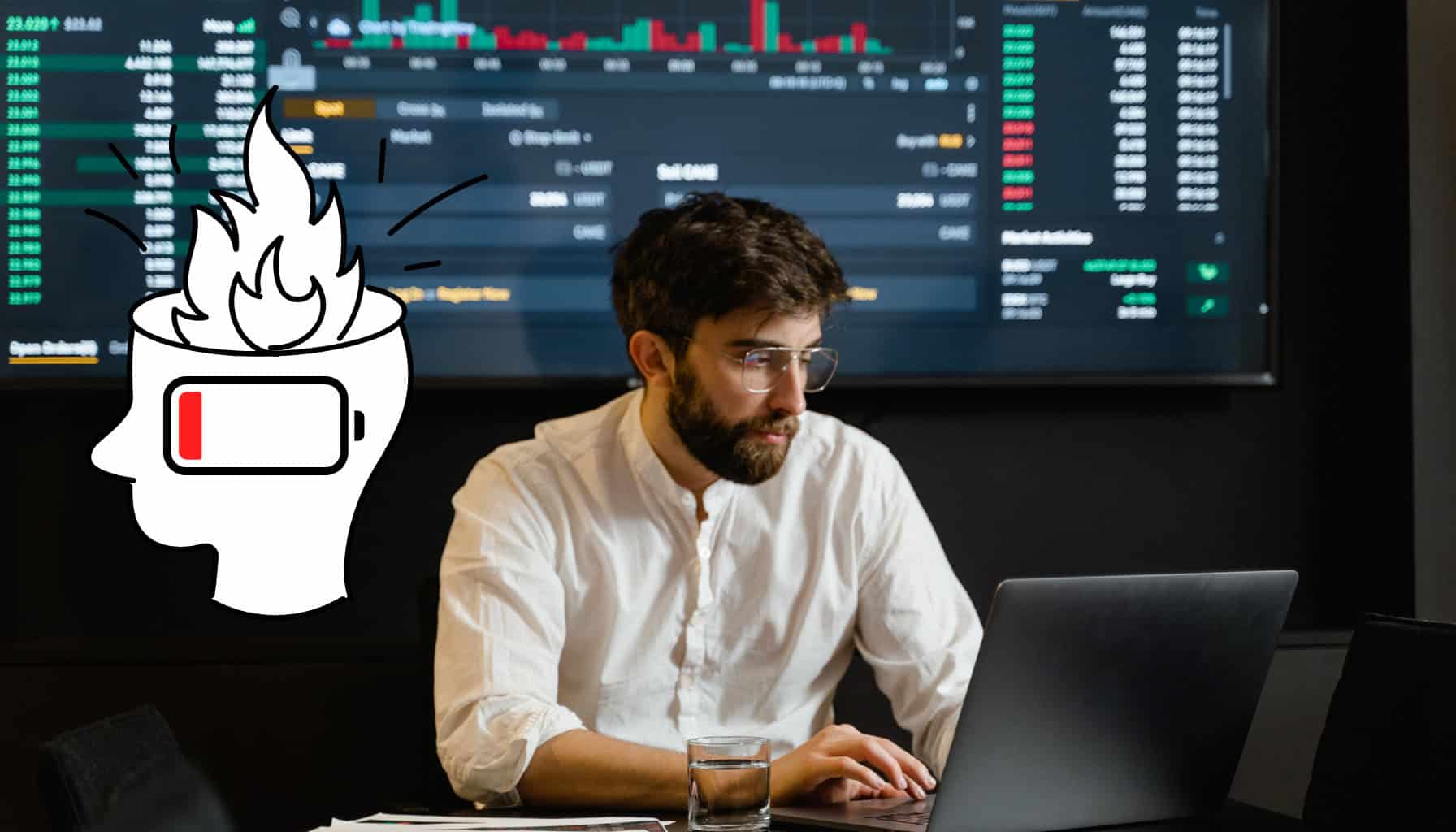
You might be making money, but are you losing your edge? You might be experiencing the beginnings of trader burnout.
Trader burnout comes from the mental and emotional exhaustion from online trading options. Those who don’t keep burnout in check can expect some adverse consequences with their trading activity over time. Unfortunately, many traders fall victim to burnout, and it’s becoming increasingly common throughout the options industry.
A high-performance mindset can backfire without balance—options traders might be doing well, but it could be at the cost of their mental or emotional health. Some traders know they’re amid burnout, but it’s more subtle for others. Our guide on trader burnout will highlight the main warning signs, show you some real-world examples, and show how to employ some prevention strategies to ensure you can turn your outlook around!
What Is Trader Burnout?
Trader burnout, in the context of options trading, is when traders experience emotional, mental, or physical exhaustion due to the demands and stressors of options trading. Causes of trader burnout include working long hours, emotional tension, stress or anxiety, or loss of interest in work. It’s different from everyday stress or fatigue in that it’s a state of exhaustion from the pressures of the job. Regular fatigue stress can be more easily managed with additional rest or lifestyle changes.
Why Options Traders Are at Risk
Options trading can be a high-stakes profession, so many options traders are at risk of developing trader burnout for the following reasons:
- High Stakes—One of the biggest reasons options traders are at risk of trader burnout is the monetary dangers at hand. The use of overleveraging in options can amplify gains as well as losses, which can increase the financial risks for traders. Traders can also incur significant losses if they trade emotionally and fail to cut losing trades early.
- Rapid Decision–Making—Options markets require investors to think quickly and immediately react to market movements. Traders must take quick analysis and execution seriously; otherwise, they will not succeed. However, this contract pressure can take a toll on options traders.
- Market Obsession—Between staying informed about developing market news, adjusting strategies, and tracking prices, options traders can become obsessed with constantly monitoring the markets and managing complex trades.
Real-World Example
For our illustration, let’s focus on a trader who isn’t quite a beginner but someone who has middle-of-the-road experience and savviness with online trading and has made it his full-time profession. He’s still learning but not a complete newcomer to the options world, either.
This trader began experiencing a string of consistent financial losses the last few weeks, and it’s discouraging, so much so that it has led to a lot of stress in his life, and he feels that he has failed in making options trading his full-time job. Not only does he experience burnout from the financial losses, but other symptoms begin settling in, such as reduced concentration on tasks outside of work, difficulty sleeping at night due to high anxiety, and an increase in irritability and frustration because of the job’s demands and due to the financial losses he just experienced.
Warning Signs You’re Burning Out

Of course, the example above is just that, an example. How trader burnout manifests will differ from one trader to the next. We were painting with broad strokes to give you a general idea of what could happen. However, there are plenty of other warning signs that traders should be aware of that could indicate that they’re burning out.
Mental & Emotional Red Flags
Loss of Enthusiasm or Motivation | This one can especially sneak up on traders who have just experienced a series of losses that cause them to lose motivation or interest. It can be tough to be enthusiastic about trading options when a few losses have wiped out much of your hard work. Traders who have suddenly lost enthusiasm for what they’re doing might be experiencing trader burnout. |
Increased Irritability or Anxiety | One of the more notable signs of trader burnout is when traders become irritable outside of their trading sessions, which could be frustration from losses or the pressure of trading options leaking into their personal lives. |
Obsessive Checking of Positions or News | Perhaps a trader is doing well in securing profits. Still, it’s at the sacrifice of constantly monitoring the markets or thinking about their investments, even when the trading day is done. This can be a form of trader burnout. Being continually plugged into business can make many traders mentally or physically exhausted with the process. |
Physical Symptoms
Fatigue | This could be physical fatigue because worry or fear can lead to this type of exhaustion. But there’s also mental fatigue, which can sometimes be worse as traders have difficulty thinking about anything else but their trades on investments. |
Poor Sleep | Some traders might experience significant losses during their sessions, which can, understandably, cause some sleepless nights. This could even affect traders who do well but are constantly preoccupied with the next day’s plans, which can lead to poor sleep for active traders who are highly vigilant. |
Headaches | Not only can traders feel physical fatigue from burnout, but they also might experience other physical sensations such as headaches due to the stress associated with managing positions, accounting for risk, monitoring markets, or experiencing losses from options trades. |
Appetite Changes | When traders are worried about business, this can cause them to be preoccupied with work and not thinking about food. Many active traders might be able to go long periods without eating. It might be good for losing weight, but it can also negatively impact the trader’s health. |
Behavioral Clues
Revenge Trading or Overtrading | When traders begin experiencing burnout, they can become irritable when they lose money, and they might seek to get the money back by straying away from their trading plan and making big trading moves to recoup the losses. If they work out, that’s great, but it’s generally not a good move because they could lead to further losses. |
Ignoring Your Trading Plan | Straying from your original trading plan can be another strong clue that you’re falling into burnout. If you want to remain logical and rational in your approach, you best follow your plan to ensure you’re growing your balance and guardian against potential losses. Traders dealing with burnout, however, fall into the patterns of chasing losses when they get away from the fundamentals. |
Lack of Interest in Backtesting, Journaling, or Learning | Another significant sign of trader burnout is showing a lack of interest in these areas. A core tenet of getting better with trading options is planning out your moves and learning each day from what happened during your session. If a trader feels no interest in improving or honing their approach, they are likely dealing with burnout. |
Why Burnout Can Be So Dangerous in Trading
You’re playing with fire if you’re trading options online and letting burnout take root in your everyday routines and trading patterns. We want to shine some light on why burnout can be so dangerous for traders who don’t address it and barrel ahead with online trading, not thinking of the consequences.
Financial Consequences
Traders experiencing burnout tend to get away from the principles of their trading plan and make decisions out of emotions like frustration, overconfidence, or fear, which can ultimately lead to a lower win rate over time. As we’ve mentioned, some traders might overtrade to recoup losses, leading to more losses over time.
Risk of Making Emotionally Driven Trades
Strong emotions can cause traders to make bad decisions. For example, a losing trade should either be rolled to a further expiration date (provided the future market conditions will turn around the investment) or cut altogether to preserve capital. However, a frustrated trader operating in fear might take the loss and try to set up a few more big traders to get the money back, even though it goes against their original plan. This could result in more losses if it doesn’t work out.
Long-Term Career Damage if Left Unchecked
Letting burnout take a significant foothold in your daily trading decisions can damage financial losses, but some burnout traders can experience the long-term.
Opportunity Cost of Losing Focus or Quitting Prematurely
In some cases, traders experiencing burnout will focus on recouping money from losing traders instead of accepting the loss and concentrating on the next trade as a part of their predetermined trading plan. On the other hand, some traders can be so burned out and discouraged by losses that they might close out a losing trade too early and not wait out the market to see if it will turn around.
Root Causes of Trader Burnout
What causes burnout to develop and grow inside of online options traders? We’ll address why traders fall into these patterns. It isn’t difficult. Trader burnout can set in quickly, but it’s all about managing what healthily comes at you, staying the course of your trading plan, and making logical adjustments and pivots when faced with challenges.
Lack of Structure or Routine
Traders can run into burnout when they don’t have set hours dedicated for trading, or they don’t have a structured trading plan to guide them. These things can help traders keep a rational frame of mind and prioritize how they allocate their capital in all their trades.
Unrealistic Profit Expectations
Some traders can have an unrealistic idea of how much money they’ll be making through options trading, leading to burnout. From the start, traders need to know what kind of traders they are and how realistic it is to achieve success over time with each method. Scalpers capitalize on short-term price fluctuations but must deal with a large volume of traders to build their balance over time. On the other hand, long-term traders focus on ways to incrementally build their balance over weeks and months with high-success strategies that payout predictable but smaller payouts.
Constant Screen Time and Lack of Breaks
Burnout can settle in when traders are too plugged into their screens, be it monitoring their positions, watching the markets, or planning their next risk management move. It’s key to take breaks to relax your mind and gain perspective on what you’re doing in your trading session. Constant screen time will drive almost any trader into emotional decision-making or apathy.
Emotional Attachment to Outcomes
Our advice on this subject is not to be so wed to a particular outcome that it causes you to spiral out of control when it doesn’t occur. Online trading requires investors to take their lumps and continue to press on—endurance in the name of the game. When you begin forming emotional attachments to what you hope to see as the end result, you can set yourself up for disappointment and cynicism.
Trading with High Pressure
Nothing can lead a trader to a nasty bout of burnout than trading with high stakes. For instance, a trader who has made options for his full-time job and needs the money to pay bills can become easily discouraged if they lose a lot of cash or cannot seem to experience success in the market. It’s understandable. When there’s that much at risk, it can be easy for your attitude to be destroyed by a financial loss.
How to Prevent Trader Burnout
Now, let’s discuss solutions to trader burnout. You know what the signs are and what can cause them—what can you be doing to nip these burnout issues in the bud when they first arise? That’s what we’ll be addressing in this next section, and we hope these can be a great source of guidance if you end up experiencing these common challenges in options trading.
Build a Structured Trading Routine

A plan that accounts for your available capital and the amounts you’re willing to take in losses and profits can give trades a good framework. The whole idea of a trading plan is to have a system to fall back on when you’re unsure how to proceed.
- Set Fixed Trading Hours—Conducting all your trading and business within a defined time parameter can keep you from spending too much time on your computer screen, which is one of the significant reasons many traders burn out. It forces you to do everything within the timeframe and leave it behind you when the time is up.
- Pre/Post-Market Rituals—One element of putting together a structured trading routine is having a ritual that opens the day and one conducted after the closing bell. A pre-market routine might look like reviewing overnight news, checking the futures market, and analyzing the pre-market trends. A post-market routine might look like writing your trading journal, evaluating your current positions, and reviewing the performance of your trades so you can make future improvements.
Use a Trade Journal with Reflection
Going off our last point about keeping a trading journal as a part of your post-market routine, you can use this tool to note how your trading sessions went, tracking what you did well and where you might have made mistakes (areas of improvement for the future).
- Track Performance AND Emotions—Traders should record how they feel at each point in their trading session. This information can provide insights into where traders begin deviating from their trading plan and let their emotions play a larger role in their decision-making.
- Spot Patterns in Mental Fatigue—Keeping a trading journal of all your movements, strategies, and the accompanying attitudes and feelings that came with each stage can also help you pinpoint the areas of your trading routine where mental fatigue could set in. With this information, traders can begin addressing these areas and developing better habits to address burnout.
Set Realistic Goals & Manage Expectations
You cannot expect to set the world on fire when you trade options. It’s a continual process of using the right strategies for securing profits and taking losses on your way to overall profitability. If you’re a scalper, you’re dealing with a high volume of smaller trades and hoping to exploit small price fluctuations to achieve profits. It’s done through small steps and high volume. Long-term traders are successful if they can grow incrementally over time by riding out long-term positions that produce premiums and small profits.
Everyone’s trading goals are going to look different. If you’re achieving the realistic goals you set out to accomplish with the money you had to dedicate to your trading account, you’re already doing well for yourself! Remember that options trading is about sustainability over the long term—it’s not like gambling, where you’re looking to hit a jackpot and a huge payout. It’s about developing a trading plan that works for your available capital balance and the risk you’re willing to take on. It’s all about profiting slowly but surely over a longer time horizon.
Incorporate Breaks & Downtime
Taking breaks from your sessions and enjoying downtime away from business is one of the primary strategies for avoiding burnout as an options trader. You need to have a life outside of trading; otherwise, you’ll be miserable and preoccupied with other thoughts in your free time.
- Walk Away from Screens—One of the best favors you could do for yourself is to limit your overall screen time while trading. Stick to your original time parameters for trading and even consider taking the weekends off. Spend time with family or friends—enjoy your time away from trading, and don’t let it rent space in your mind during non-work hours.
- Power of Daily Movement or Hobbies—Taking breaks amid your trading sessions is highly beneficial. Move around, walk, or engage in a hobby for a few minutes to clear your mind and gain the perspective to approach your session with clarity, mindfulness, and a rational, logical frame of mind.
Lean on Automation Where You Can
When trading online options, there is nothing wrong with using additional tools to make your life easier. Just as you would use a calendar to keep track of your life, you can use reminder or notification tools like alerts or AI assistants to stay on top of key price movements or significant market events that could impact your current trading plan.
Create a Support System
A smart move for online options traders is to have support systems to keep them accountable for their trading goals. You should take on a trader mentor or get plugged into online trading communities that act as accountability partners. Support systems such as these can help you stay the course with your trading plan, plus they can offer insights from their personal experiences. Mentors can act as advisors, offering wise counsel to those under them.
Tools That Can Help You Stay Balanced
Let’s touch briefly on some helpful and dynamic trading tools that can help you balance your approach to online options trading and steer clear of trader burnout.
- Trading Apps with Built-In Alerts—Many online broker apps come with alerts that can notify traders when it’s time to take breaks from their current session. Traders can use this tool to balance screen time and step away to take a warranted break from the action.
- Mental Performance Trackers—Traders can use apps like these to track options for their mental health and well-being. The platforms offer tailored plans for each user to deal with the stresses of trading online options. They include names like Myndlift and Remente.
- Meditation or Mindfulness Apps for Traders—These are helpful platforms that can help traders with their mindset when taking breaks from their sessions or off the clock. They can help them to stay rooted in the moment and achieve mindfulness to enjoy their life outside of options trading.
Beating Burnout—Your First Step Starts Now
Burnout doesn’t mean weakness—it’s a signal to pivot. When you know the signs of trader burnout, you can better deal with it and start to develop new patterns or behaviors marked by realistic expectations and a long-term mindset that allows you to make money even when you hit a few bumps in the road.
Successful traders aren’t just smart—they’re sustainable. Whether you’re a scalper/price speculator or a trader who values risk management and a longer time horizon, options trading is about playing the long game. And you cannot succeed in the long game if you’re letting burnout set in, infecting your trading plan and parameters.
If you’ve just finished reading this guide, we will encourage readers to do a quick self-check today to see if there are any areas of your trading sessions where you’re getting weary or burned out from the stresses and demands. Another great place to start is to check out our Options Trading Strategies Cheat Sheet to reduce screen time!