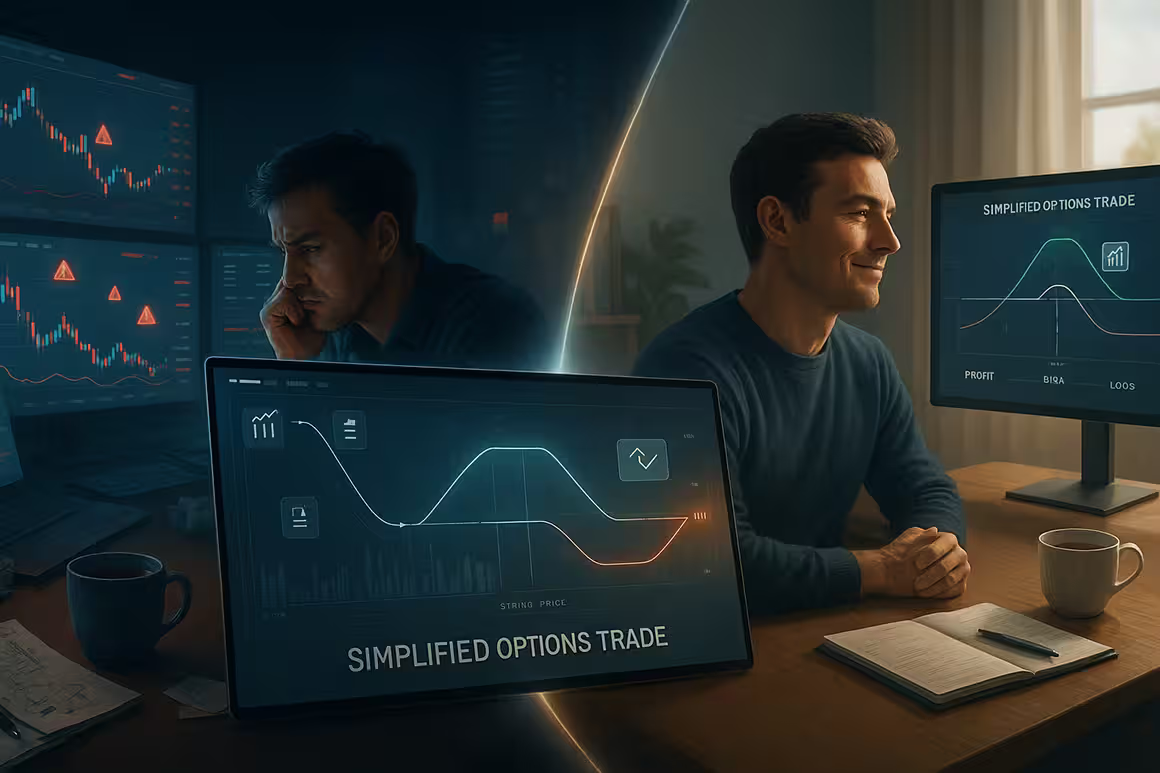
You’re glued to your screen, placing trade after trade… but your results aren’t improving. Sound familiar? You’re likely experiencing a compulsion to overtrade. It happens to many people who trade options online, even some of the best traders, so don’t let it get you down too much. However, you’ll want to move on from this dysfunctional trading style rooted in emotions and prioritize the number of trades conducted over the quality of those positions.
Overtrading is considered by many to be a “silent killer” for options traders because it hurts their performance over time due to the incursion of additional fees to take on extra positions and the high chance of racking up losses that come from spreading investments thin and trying to recoup losses through additional trade setups.
In this post, you’ll learn how to spot overtrading and simplify your strategy for better results. Learn about the signs of overtrading, the things that happen to trigger some traders into this pattern of behavior, and how setting up a trading plan can alleviate a lot of these issues. The main key to avoiding overtrading is to streamline your approach and prioritize quality over quantity!
What Is Overtrading in Options?
Overtrading is a term used to refer to excessive buying and selling of options contracts on the part of online traders and investors. Unlike logical and objective trading, which is driven by a sound strategy and clear goals, overtrading is often driven by emotions, which can lead to negative outcomes like significant losses or higher-than-necessary transaction costs.
Compulsive overtrading, which is driven by emotions, is different from high-frequency trading, which is done intentionally and with a plan in mind. High-frequency is an automated system that uses complex algorithms to buy and sell at a rate that is faster and on a bigger scale than is possible with normal human capabilities. On the surface, it might appear to be overtrading, but the key difference is that high-frequency trading is done with a plan to profit and isn’t executed based on whims or strong feelings.
Signs You Might Be Overtrading
- Taking Trades Out of Boredom: It’s not the best thing to be constantly monitoring the markets all day long. When there’s nothing else going on, it can be easy for traders to get into boredom trades, trading that comes from restlessness or the desire to be active in the market. These trades are usually ill-advised and impulsive, but they can be avoided by taking a break from your trading session.
- Chasing Losses: This occurs when traders experience losses and then, in an attempt to gain back the money they lost, they get into other trades without having a trading plan in mind. This is emotional trading, with the mistake of the trade being motivated by frustration. Chasing losses can lead traders to incur more losses than necessary, and it can be avoided by traders cutting their losses early.
- Spreading Yourself Too Thin Across Strategies: One of the core tenets of successful online trading is for traders or investors to concentrate their efforts in specific areas to avoid getting spread too thin across multiple strategies. Falling into this overtrading mistake can lead to bad decision-making and inconsistency in results.
- Constantly Switching Setups: If you’re always changing your trading strategy to see what could possibly work for your session, it’s a good sign that you’re trading too much. It’s best to stick to a trading strategy, execute your trades for the day without constantly monitoring the market conditions, and then assess your performance at the end of the day to see if any modifications or complete changes need to be made for the current strategy.
Why Overtrading Hurts Your Performance
Overtrading is a bad pattern that traders and investors can fall into, and it ultimately results in less-than-ideal portfolio performance. Through more frequent buying and selling, traders can compound their losses and miss out on the potential gains that come with higher-quality investments that turn a profit over a longer time horizon.

Let’s take a look at a few of the specific ways that overtrading can hurt your performance while trading options online:
- Emotional Burnout: Unsurprisingly, the act of overtrading can lead to exhaustion, mainly due to all the negative emotions that come into play in these environments. Traders can often feel greed or the fear of missing out. Letting these emotions trump any sort of well-defined, pre-planned trading strategy is what leads many traders to throw in the towel.
- Decision Fatigue: Nearly everyone has heard of the fear of missing out, and that’s what’s at play with overtrading and the resulting decision fatigue that many traders get when they aren’t using a clear plan or strategy. Having too many investments going at one time can cripple a trader’s decision-making abilities and can cause them to burn out quickly from online trading.
- Excessive Fees and Commissions: One of the biggest hindrances to a trader’s performance as a result of overtrading is that it costs more in fees and commissions to take on more positions. Whatever profit you can secure from these investments could be undercut by the costs associated with entering these new positions. Most of the time, it hurts traders because a lot of these positions are low-quality positions.
- Poor Trade Quality: Going off our last point, another significant reason that overtrading hurts the investor is due to the poor trade quality you often get when you’re entering new positions out of boredom, instead of using a sound strategy. The idea is that the more trades you enter and the more thin you spread yourself in your investments, the less likely you are to have quality setups that produce the good profit you’re looking for.
- Increased Risk Exposure: Because you’re taking on more transaction costs by having a larger amount of investments going (compared to someone who is shooting for a smaller set of quality investments), you’re taking on more risk exposure, especially to unnecessary risks that come with low-quality trade “opportunities.”
Common Triggers That Lead to Overtrading
What causes people to overtrade with online options? It seems like anyone with sense could see the downsides of overtrading and avoid it altogether. However, traders can get overconfident in their strategies, attempting to go outside the limits of the trading plan because they are tempted by the idea of securing additional profit. There are a few other reasons too, which we’ll discuss in greater detail below, but a lot of it is driven by the fear of missed opportunities and greed that’s so easy to fall into, especially when you’ve had some success.
- Dopamine Rush From “Action”: The term “spinning your wheels” refers to using a lot of effort without achieving anything—-that’s the core idea behind experiencing “action” in the options market. Many traders will enter low-quality positions because it’s something to do, while in reality, it’s simply something to give them a sense of movement or direction, without actually taking them anywhere of importance.
- Lack of a Defined Trading Plan: When traders with little experience don’t have a well-defined, pre-planned trading strategy in the works, it can be easy for them to fall over-trading as a way of trying to figure out what works and what doesn’t. Traders who take the time to learn from others more experienced than themselves and teach themselves about the common mistakes that new traders usually make will understand the importance of having a trading plan and pursuing high-quality trades.
- Social Media and FOMO: The pressure to keep up with people you see online and the fear of missing out can both be big driving forces behind a trader’s decisions to overtrade and therefore overextend themselves into low-quality trades. Taking the focus off of a trading plan and the quality investments that would help to make that plan a reality, and placing the focus on “action” and keeping up with other traders causes many to fall into the practice of overtrading.
- Revenge Trading: You can call it revenge trading or chasing losses, but no matter what you call it, it’s a practice that traders can fall into where they dig themselves into a deeper hole to recoup the losses they might have experienced during a bad trading session. It’s tempting for traders to simply pursue a giant trade that will be a quick fix to their mistake, but often, revenge trading is done without a clear plan, a knee-jerk emotional response that can result in further losses.
- Confusing Activity with Productivity: This harkens back to the idea of “activity” that we mentioned earlier where downtime or boredom can be a trigger for some traders to enter low-quality positions because it feels like a productive use of time. However, getting into these positions that are more of a sink on your time and money doesn’t really get traders anywhere, especially when they could have used their time and capital on positions that have more promise.
How to Simplify Your Options Strategy—Fewer, Better Trades
What is the balance you have to strike between being profitable in trading, but also simplifying your overall strategy to ensure you’re not wasting your time and capital? The key to pulling this off is taking the stance of making fewer, but better trades. Focusing on the quality of your trades and having a pre-defined trading plan in mind can bring perspective to your next trading session, keeping you simplified in your approach.
Check out these tips and tricks for cutting the fat and streamlining your options trading strategy for the best results:
- Focus on One or Two High-Probability Strategies—It’s best to keep things simple, focusing on fewer and better trades, to get the most profitable outcome using the smallest amount of time and capital possible. Traders will want to focus their efforts on one or two high-probability trades, which can be done by looking at trends and focusing on momentum trading strategies. A few good examples of these high-probability strategies include using credit spreads or iron condors.
- Define Strict Entry and Exit Criteria—Part of setting up a sound, solid trading plan for your next trading session involves outlining your goals as well as the parameters for entering and exiting each position you take on. Use automated orders like stop-loss or take-profit orders for existing positions and options scanners to find investment opportunities that let you enter each position for a good price that works with your strategy.
- Use a Checklist Before Placing Trades—Adopt a checklist of important steps that you need to follow before making your trades. Find out what the risk-reward ratio is before committing, use technical indicators to confirm the trade you’re about to execute, and identify how much money you’re willing to take as profit or loss.
- Emphasize Quality Over Quantity—The stance and posture you should be taking is focusing on high-quality trades over a large volume of either mid-quality or low-quality positions. This helps traders to keep lean in their approach and maximize their profit potential by incurring limited fees or commissions along the way.
Create a Rules-Based Trading Plan
A “rules-based trading plan” is a guideline that traders use to establish risk management techniques for their trades, pre-defined entry and exit points, and established target profits. Having a trading plan like this in place before trading online options can keep traders structured in their approach and deliver them consistent results in their trading activities.

- Limit the Number of Trades Per Week: Keeping the number of trades you perform throughout the week to a smaller number keeps your overhead costs lower (fees and commissions), plus it can minimize your losses over time. Taking on additional positions not only represents an opportunity to profit but also a scenario where you could lose money.
- Set Time Blocks for Research vs Execution: Traders need to spend time executing their trading plan during the busiest hours of the business day and reserve time before or after their session to research. There’s also the midday lull that occurs from roughly 10:30 AM EST to 2:00 PM EST, which is a good time to study the markets and keep an eye on investments. Traders who organize their time to dedicate energy to both research and execution will find much more consistency in their trading habits.
- Track Your Performance Weekly: The best way for traders to keep track of their performance is to keep a trading journal. Record all trades, including the reasons for entering and exiting positions, the prices at which the trade was entered or exited, and the emotions you might have experienced during each trade. It’s also key to note any news events or market analysis that might have influenced your decisions. Traders can take this data and learn what has been working or not working for them.
Helpful Tools to Keep You Focused
Keeping focused and sticking to your trading plan when dealing with online options is the approach that will deliver long-term consistency and strong results in your trading endeavors. Check out some of the best trading apps and options scanners/screeners the market is currently offering to online traders. Be sure to work a trading journal, alerts, and automated setups into the mix for the best results!
Good Trading Apps
Check out the best trading apps and brokerage platforms that we feel offer the best results for online traders or investors. These are terrific platforms for identifying and executing high-probability trades.
Check out a few other helpful resources and tools for enriching your online trading experience. We’ve included some scanners and screeners to find options contracts with the criteria needed to align with your current trading strategy.
Option Scanners
- Stock Rover
- TradingView
- StocksToTrade
- Finviz
- Trade Ideas
- TrendSpider
- Blackboxstocks
- Benzinga
- StockFetcher
- Market Chameleon
- The Trading Analyst
- TC2000
- Yahoo! Finance
Option Screeners
- Stocker Rover
- Zacks Investment Research Inc.
- StocksToTrade
- TradingView
- Yahoo! Finance
- Seeking Alpha
- Benzinga Pro
- Block Trade Screener
- TC2000
- Zacks Stock Screener
- ChartMill
- Fidelity Investments
- StockFetcher
- TrendSpider
- TD Ameritrade
- Trade Ideas
To have a strong trading plan in place, some other important tools that traders should be using are alerts and automated setups. Alerts help give traders advanced notice of market conditions or impending market events that can have a significant impact on their trades. Automated setups are extremely useful when you’re dealing with multiple trades and you don’t want to miss out on entering or exiting certain positions at the correct price points. Automated setups like stop-loss or take-profit ensure that you never miss a beat.
Again, we want to emphasize the importance of using trade log templates (trading journals) to track your progress over time. Having all the data recorded in one place can offer insights into what strategies or trading techniques are working to build your profits and which moves weren’t the best. Over time, you can find areas of improvement and get confirmation that your current approach is producing effective results.
Final Thought: Less Is More in Options Trading
🧠 Tip of the Day: “One great trade beats five average ones.”
Overtrading is a hidden drag on your success. Spreading yourself thin into multiple mid-to-low-quality positions results in more trading fees and not a lot in terms of payoff for the investors or traders who stumble into this pattern of behavior. When it comes to trading options, the idea that “less is more” is the modus operandi you should be adopting. Focus on a few high-quality setups, instead of wasting time and resources on extra positions only to bring in a small profit.
It’s best to pause, simplify, and re-center their trading around clarity and control. Unless you’re an advanced trader who is delving into high-frequency trading using advanced algorithms and trading systems, you’ll want to focus your efforts on a few quality trade setups that don’t have too much of a drain on your time and capital resources.