
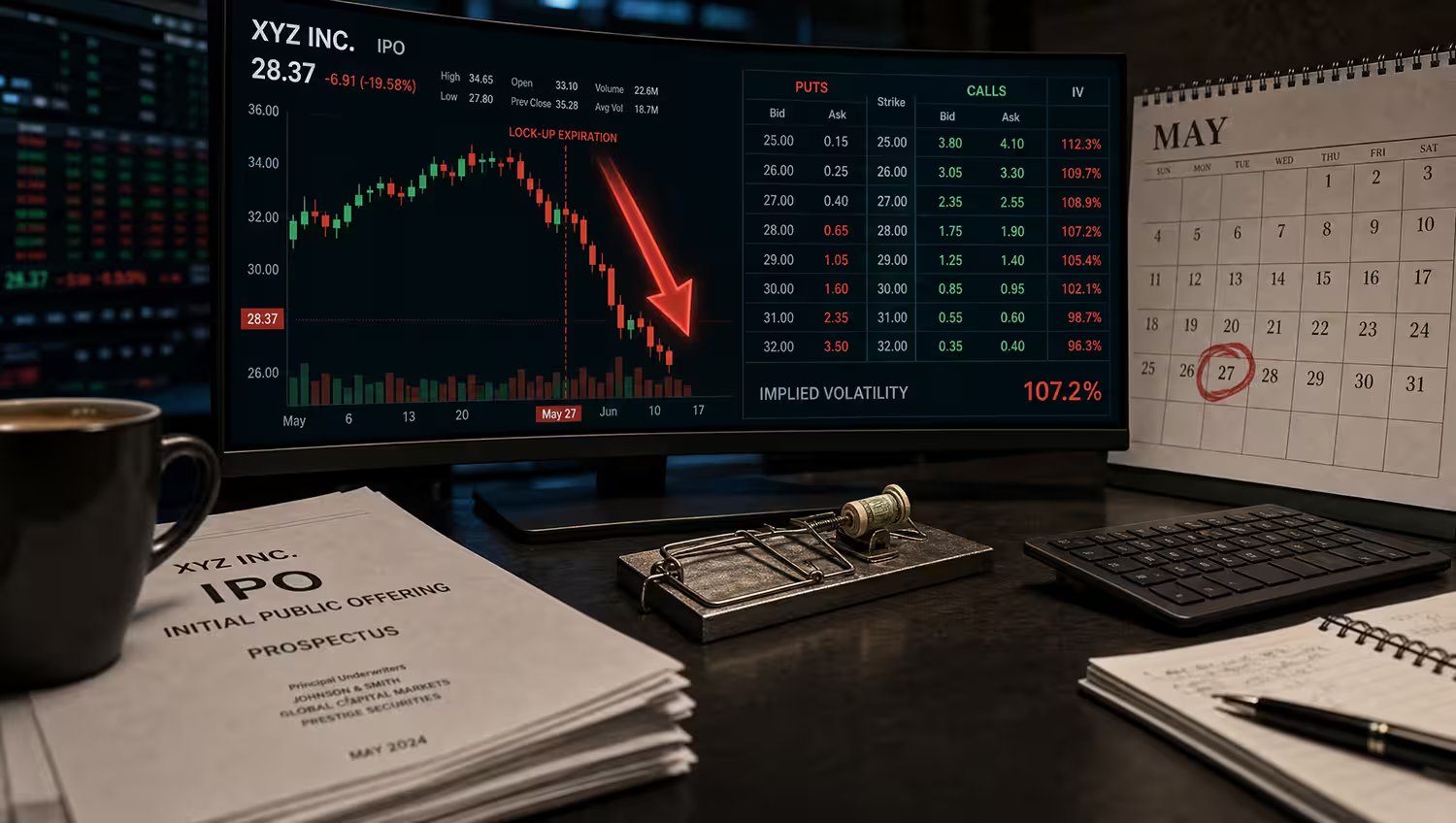
A lock-up expiration can sound like one of the cleaner event trades in the market. Insiders and early investors were restricted from selling after an IPO. That restriction ends. More shares may become available. The stock might fall. A trader buys puts or sells calls and waits for the obvious move.
The problem is that markets are rarely that generous. By the time retail traders notice a lock-up date, the event may already be reflected in the stock, the option chain, or both. The bearish story can be right and the option trade can still lose because implied volatility was too high, the timing was wrong, the spread was too wide, or the actual selling pressure was smaller than expected.
That does not mean every lock-up expiration options play is a trap. It means the event needs to be treated as a risk catalyst, not as a one-line trade signal. A smart setup starts with the share-supply calendar, then moves through liquidity, volatility, breakeven, position size, and assignment risk before any order is placed.
A Lock-Up Expiration Is a Supply Event, Not a Direction Signal
Plain English definition: a lock-up expiration is the point when certain holders of a newly public company may be allowed to sell shares that were previously restricted. It means potential supply can change. It does not mean those holders will all sell, that buyers will disappear, or that put options are automatically cheap.
The trade question is not, ‘Will the lock-up expire?’ The trade question is, ‘What does the options market already charge for the risk, and can my structure survive if the move is smaller, later, or cleaner than expected?’
Fast Takeaways
- Lock-up expirations can matter because they may increase the number of shares available for sale.
- Most lock-up plays are not pure predictions about insider selling; they are trades on timing, volatility, liquidity, and crowd behavior.
- A falling stock can still produce a losing put trade if implied volatility falls or the move arrives too slowly.
- A covered call, credit spread, or short put can look attractive before the event but still carry gap, assignment, and margin risk.
- The best filter is simple: if the breakeven, exit price, and worst-case account result are unclear, the event is not trade-ready.
What Is a Lock-Up Expiration?
After many IPOs, company insiders, employees, founders, and early investors cannot freely sell some or all of their shares for a set period. When that period ends, the market may face a larger potential supply of stock. Investor.gov explains lock-up agreements as arrangements whose terms can vary, while noting that many prevent insider sales for 180 days.
The expiration date is usually disclosed in the company’s registration documents or prospectus. Traders watch it because a company with a small public float can suddenly have a larger pool of shares that might be sold. That can change the supply-demand balance, especially if the stock has been trading on momentum or scarcity.
The key word is might. Some insiders may sell for liquidity or diversification. Others may hold because they believe in the company, face tax constraints, are subject to additional restrictions, or do not want to send a negative signal. The market may also have weeks or months to prepare for the date.
For options traders, the lock-up expiration matters because it can become an event embedded in implied volatility. The expected move may already be expensive before the trade is entered.
When the Setup Helps and When It Traps Traders
A lock-up expiration can create useful context, but context is different from edge. The same event can support a disciplined trade or become a crowded retail trap depending on how the contract is priced.
Factor | Why It Can Help | How It Can Trap Traders |
|---|---|---|
Known calendar date | The trader can plan around a visible event instead of guessing randomly. | Everyone else can see the date too, so the option premium may already reflect it. |
Potential share supply | More available shares can pressure a stock if demand is weak. | Not all eligible holders sell, and buyers may absorb supply more easily than expected. |
High implied volatility | Premium sellers may find richer credits if they understand the risk. | Buyers can overpay, and sellers can underestimate gap risk. |
Social-media attention | Heavy attention can make liquidity easier to find in some strikes. | The crowd can chase the obvious put trade after the risk has already been priced. |
Recent IPO history | A young stock may still be in price discovery. | Short trading history makes probability estimates less reliable. |
Options liquidity | Active chains can allow cleaner entries and exits. | Wide spreads can turn a correct thesis into a bad fill. |
Why the Obvious Bearish Trade Can Fail
The common retail version of the trade is simple: buy puts before the lock-up expires. That can work if the stock falls far enough, fast enough, and the option was not overpriced at entry. Those conditions are harder than they sound.
The first problem is implied volatility. If many traders expect the expiration to pressure the stock, put premiums may rise before the date. The stock can decline and the put can still disappoint if implied volatility drops after the event. This is the same broad dynamic that shows up around earnings and other scheduled catalysts.
The second problem is timing. A stock can drift lower before the date, rally into the event, fall after the date, or barely react. Weekly options make that timing risk sharper. A trader might be right about eventual pressure and wrong about the expiration cycle.
The third problem is liquidity. IPO-related options can have wide bid-ask spreads, especially away from the most active strikes. The article on why a tight bid-ask spread matters is especially relevant here because the screen price can make a strategy look cleaner than the fill actually is.
A lock-up date can be useful information. It is not a substitute for pricing the option.
How Different Lock-Up Plays Change the Risk
There is no single lock-up expiration options play. The structure determines which risk the trader is really taking.
Trade Idea | What It Is Really Betting On | Main Risk |
|---|---|---|
Long put | The stock falls enough before expiration to overcome the premium. | The bearish move is too small, too late, or already priced into implied volatility. |
Put debit spread | The stock falls toward a defined target while limiting premium paid. | The cap can limit gains if the move is larger, and both strikes need liquidity. |
Call credit spread | The stock stays below a selected level after the event. | A squeeze or relief rally can move quickly against the short call. |
Covered call | The trader owns shares and wants income while accepting capped upside. | The shares still carry downside risk if selling pressure appears. |
Cash-secured put | The trader is willing to buy shares lower and collect premium. | Assignment can happen when the stock is falling and sentiment is weak. |
No trade | The trader decides the event is too crowded or poorly priced. | The stock may move anyway, but no capital is exposed to a low-quality setup. |
The Smart Version of the Trade
The smart version starts with evidence, not excitement. A trader checks the prospectus or company filings for the lock-up terms, estimates how much stock could become eligible for sale, looks at the current float, and asks whether the market has already spent weeks discussing the date.
Next comes the options chain. The trader compares the implied move with a realistic stock move, checks whether open interest is concentrated in obvious strikes, and looks at the spread before treating the midpoint as a real price. Heavy put volume by itself is not enough; unusual options activity can be misread when traders ignore whether the flow is opening, closing, hedging, or part of a spread.
Then comes structure. A long put may be cleaner for defined risk, but it can be expensive. A spread may reduce premium paid but cap the payoff. A short premium trade may benefit from elevated implied volatility, but the trader must be comfortable with assignment, margin, and a fast adverse move.
The final step is deciding what would prove the trade wrong. A plan that only says ‘the lock-up expires soon’ is not a plan. A plan that defines the expected stock path, option price, exit, maximum loss, and post-event volatility risk has a much better chance of surviving contact with the market.
Where Retail Traders Get Caught
Most bad lock-up trades fail for a practical reason, not because the trader noticed the wrong event.
- Buying puts after implied volatility has already expanded.
- Assuming all eligible insiders will sell immediately.
- Ignoring that a weak stock may have already sold off before the event.
- Using weekly options when the expected move may take longer to develop.
- Entering thin strikes where the exit spread is much worse than expected.
- Selling premium without planning for assignment, margin changes, or a gap move.
- Sizing the trade like a routine setup even though the stock is still young and volatile.
Options Risk Still Comes First
Lock-up expiration trades can be tempting because they sound tied to a concrete event. Options still add leverage, time decay, assignment exposure, and liquidity risk. FINRA’s options overview reminds investors that options require specific approval from a brokerage firm and can carry significant risks depending on whether the trader is buying or selling.
The OCC options disclosure document is the core risk document for standardized options. It matters for lock-up plays because the trade can involve more than simply buying a put. Short calls, short puts, spreads, early exercise, and assignment all need to be understood before the event arrives.
If the position could result in owning shares, losing shares, taking assignment, or needing extra buying power, review what happens when an option gets assigned before the trade is placed. If the plan depends on holding close to the final day, review what happens when an option expires as well.
The stock story may be about insiders and supply. The option story is always about price, probability, time, and risk.
Before Trading a Lock-Up Expiration
- Confirm the lock-up expiration date and whether there are staggered releases or special terms.
- Estimate how many shares could become eligible for sale relative to the current float.
- Check whether the stock already sold off before the event.
- Compare the option’s breakeven with a realistic stock move, not just the headline narrative.
- Check bid-ask spreads, volume, open interest, and whether the strike can be exited cleanly.
- Look at implied volatility before and after similar scheduled events when possible.
- For short options, calculate assignment, margin, and gap-risk exposure before entry.
- Use smaller size if the chain is thin, the stock is newly public, or the event is crowded.
- Write down the exit before entry, including what happens if the expected move does not arrive.
Smart Strategy or Retail Trap?
It can be a smart strategy when the trader has a defined thesis, a realistic view of supply, a contract that is not obviously overpriced, and a structure that matches the risk. In that case, the lock-up date is one input in a larger plan.
It becomes a retail trap when the trader treats the expiration as a guaranteed selloff, chases the same put strike everyone is talking about, ignores implied volatility, and sizes the trade as if the catalyst alone creates edge.
An example or simple scenario makes the difference clear. Suppose a recent IPO trades at $42 and a lock-up expiration is one week away. The $40 put costs $3.00, so the stock must fall below $37 by expiration before the trade is profitable at expiration, excluding commissions and execution slippage. If the stock drops to $39 but implied volatility falls and time passes, the trader can be directionally right and still have a disappointing trade.
Related concepts include float, short interest, implied volatility, realized volatility, open interest, assignment, and bid-ask spread. A common confusion is thinking a lock-up expiration is different from other scheduled event trades. The stock-specific supply issue is different, but the options math still works the same way.
What To Review Before Making It a Trade
A lock-up expiration trade is easier to evaluate after the surrounding mechanics are clear.
- Review IPO options volatility to understand why new listings can have unstable option pricing.
- Use options risks to separate premium risk, assignment risk, and leverage risk.
- Check why bid-ask spreads matter before entering a thin contract.
- Review what happens when an option expires before holding short-dated contracts near the event.
FAQ
Lock-up expiration trades raise the same practical questions again and again: timing, direction, pricing, and risk.
Do stocks usually fall after lock-up expirations?
Some do, but a lock-up expiration is not an automatic sell signal. The impact depends on how many shares become eligible, whether holders sell, existing demand, prior price action, and what the market already expected.
Are puts the best way to trade a lock-up expiration?
Puts are one possible structure, but they can be expensive when many traders expect a decline. Spreads, covered calls, or no trade may be more appropriate depending on the chain and the trader's risk tolerance.
Can implied volatility crush happen after a lock-up expiration?
Yes. If the event was heavily anticipated, implied volatility can fall after the date passes, especially if the stock move is orderly or smaller than feared.
Is selling premium around a lock-up expiration safer than buying options?
Not necessarily. Selling premium may benefit from elevated implied volatility, but it also exposes the trader to gap moves, assignment, and margin risk.
Where can traders find lock-up expiration details?
The terms are typically disclosed in IPO registration documents or the prospectus. Traders should confirm the exact terms rather than relying only on a social-media calendar.
What is the simplest risk check before entering?
Calculate the breakeven, expected move, realistic exit price, and worst-case account result. If those are unclear, the trade is not ready.
Source and Freshness Note
This explainer was reviewed on June 22, 2026 against public materials from Investor.gov, FINRA, and OCC covering IPO risk, lock-up agreements, options approval, leverage, assignment, and standardized-options disclosure.
Lock-up terms, option availability, margin treatment, and contract liquidity can vary by company, broker, and market conditions. This article is educational and does not recommend any IPO, stock, option, or strategy.