
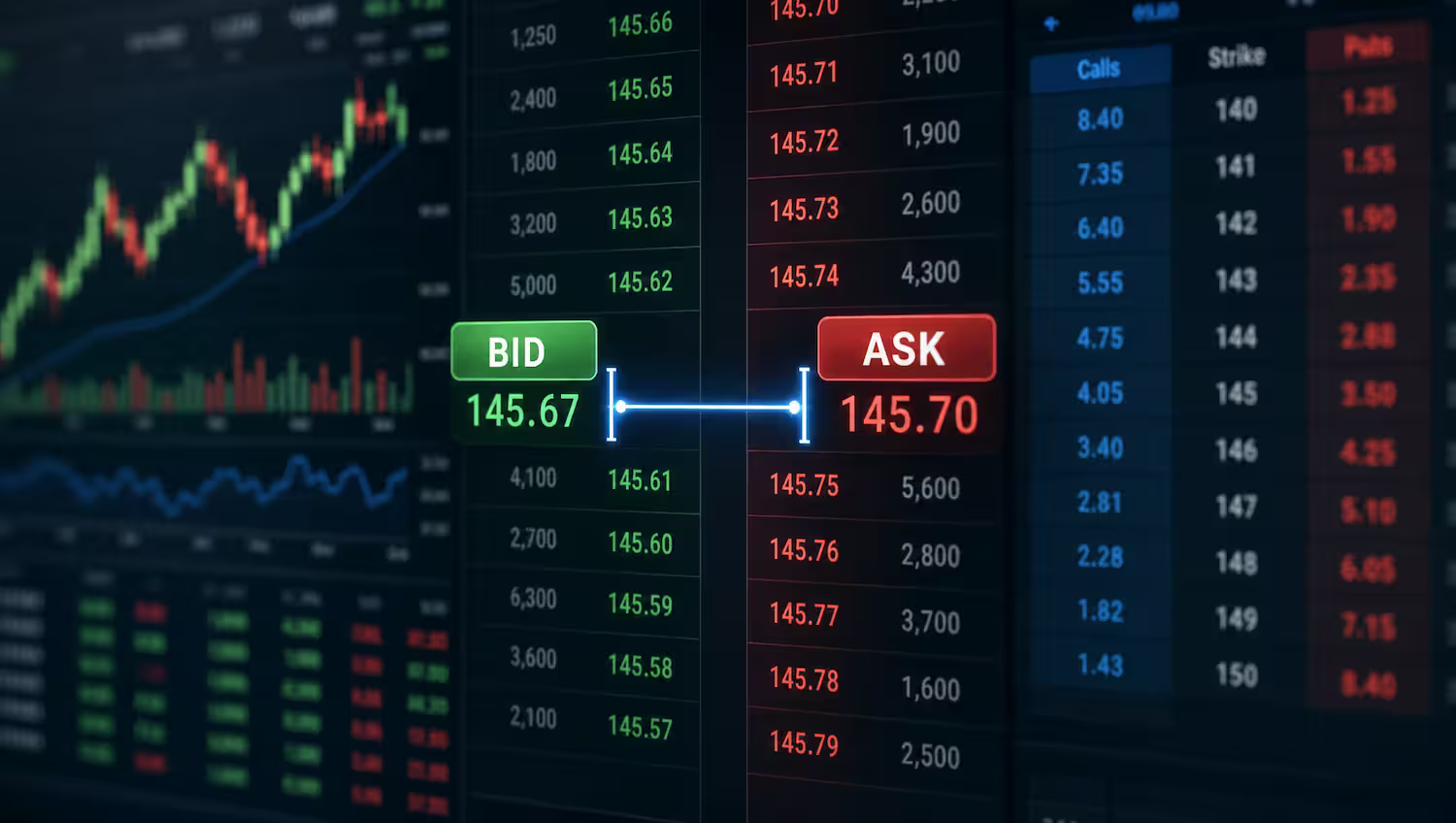
An options chain can make a contract look clean when the spread is only a few cents wide. The bid is where buyers are currently willing to buy, the ask is where sellers are currently willing to sell, and the space between them is not just screen clutter. It is part of the price a trader may pay to get in and out.
That is why a tight bid-ask spread can matter more than the headline premium. Two calls can have similar strikes, expirations, deltas, and implied volatility, but the contract with a cleaner market may leave less money behind at entry and exit. A good thesis still has to survive the fill.
This article treats the spread as an execution-cost problem first. The goal is to help readers slow down the order ticket, compare the midpoint with realistic fills, and use liquidity checks before assuming an option is cheap, liquid, or easy to exit.
The Spread Is Part of the Price
A quoted option premium is not one single price. It is a market. If a call is quoted at $2.40 bid and $2.50 ask, the displayed midpoint is $2.45, but a trader who uses a market order to buy may pay near the ask. If they turn around and sell immediately, they may receive closer to the bid.
That gap can create an instant hurdle before the stock has moved at all. A tight spread does not guarantee a perfect fill, but it usually gives the trader a narrower range of possible execution outcomes than a wide, thinly traded contract.
Bid, Ask, Midpoint, and Fill Price
The bid is the highest displayed price a buyer is currently showing for the option. The ask is the lowest displayed price a seller is currently showing. The midpoint is the simple halfway point between them, often used as a starting reference for a limit order.
The fill price is what actually happens after the order is routed. A trader can enter a limit order at or near the midpoint, improve the limit gradually, or decide the market is too wide. A market order is faster, but it can cross the spread and accept the best available price at that moment.
This is where options order types matter. The same idea can have a different result depending on whether the trader uses a limit order, market order, stop order, or more advanced instruction supported by the platform.
Execution Takeaways
- A tight bid-ask spread can reduce friction, but it does not make an option trade safe.
- The midpoint is a reference point, not a guaranteed execution price.
- Limit orders can help control the worst acceptable price, while market orders prioritize speed.
- Volume and open interest help describe liquidity, but they should be read with the current spread.
- A spread that looks tight at entry can widen near news, expiration, or fast price movement.
- Execution quality should be reviewed before the trade and again before the exit.
A One-Contract Spread Cost Example
The numbers below are simplified, but they show why a spread that looks small can still affect the trade. One standard equity option contract generally controls 100 shares, so every $0.01 in option premium equals about $1 per contract before commissions and fees.
Quote Detail | Tight Market | Wide Market |
|---|---|---|
Displayed quote | $2.40 bid / $2.50 ask | $2.20 bid / $2.80 ask |
Midpoint | $2.45 | $2.50 |
Cost to buy at ask | $250 per contract | $280 per contract |
Immediate sale at bid | $240 per contract | $220 per contract |
Approximate round-trip spread hurdle | $10 per contract | $60 per contract |
Why Tight Spreads Change the Decision
A tighter market gives the trader more room for the actual thesis to matter. If the option only has to overcome a few dollars of spread friction, the result depends more on stock movement, implied volatility, time decay, and the exit decision. If the spread hurdle is large, the trade can start in a hole.
This matters most when the expected gain is modest. A trader buying a short-dated call for a quick move may only be looking for a small premium increase. If the spread is wide, the trade may need a larger move just to offset poor execution.
Tight spreads also help with review. When entry and exit prices are closer to the displayed market, it is easier to judge whether the trade failed because of the idea, timing, volatility, or execution. Wide spreads blur that lesson because the fill itself may explain much of the loss.
The broker and platform matter here, too. Good options trading brokers usually give traders clearer option chains, order tickets, spread views, and limit-order controls. Those tools do not remove risk, but they can make execution costs easier to see before the order is sent.
Liquidity Ladder for Options Spreads
Spread width is only one liquidity clue. A useful review combines the current quote with contract activity, open positions, expiration, and how the market behaves when the underlying moves.
Market Look | What It May Suggest | What to Verify |
|---|---|---|
Tight spread with active volume | The contract may be easier to enter and exit near the displayed market. | Check whether the spread stays tight when the stock moves and whether nearby strikes are also active. |
Tight spread with low activity | The quote may look clean, but depth can still be thin. | Review size at the bid and ask, recent trades, and whether the quote changes quickly. |
Moderate spread with decent open interest | There may be interest in the contract, but execution still needs patience. | Compare today’s volume with open interest and consider staged limit prices. |
Wide spread near a catalyst | Uncertainty or fast movement may be making market makers quote defensively. | Avoid assuming the midpoint is available; review implied volatility, expected move, and exit timing. |
Wide spread far from the money | The option may be cheap in dollars but expensive to trade. | Check whether the low premium is hiding poor liquidity and high slippage risk. |
Where Tight Spreads Can Still Mislead
- A tight spread can widen quickly around earnings, product news, macro data, or a fast stock move.
- A displayed midpoint does not guarantee the order will fill at that price.
- High volume in the underlying stock does not always mean the specific option contract is liquid.
- Open interest updates after the trading day and should not be treated as a live depth reading.
- A contract can have a tight entry spread but worse exit conditions later in the day or near expiration.
- A small spread does not fix an overpriced premium, unrealistic breakeven, or weak thesis.
- Execution tools reduce friction; they do not make options suitable for every account or investor.
How to Use Limit Orders Without Pretending They Solve Everything
A limit order lets the trader define the worst price they are willing to accept. For an option buyer, that may mean starting near the midpoint and deciding whether to improve the bid gradually. For a seller, it may mean setting a minimum acceptable credit instead of accepting a lower price just to get filled.
The trade-off is that a limit order may not fill. That can be frustrating, but a missed trade is sometimes better than turning a marginal setup into a worse one through poor execution. The choice depends on the urgency of the trade, the spread width, and whether the contract still makes sense at the eventual fill.
Market orders have a different job. They prioritize speed, which can be useful in some liquid markets but risky in thin or fast-moving option chains. The danger is slippage: the final fill may be meaningfully different from the price the trader expected when clicking the order button.
A practical rule is to write the maximum acceptable entry price and minimum acceptable exit price before sending the order. That turns the spread from a vague annoyance into a real line item in the trade plan.
Bid-Ask Spread Review Checklist
- Compare the bid, ask, and midpoint before choosing the order type.
- Calculate the approximate dollar value of the spread for one contract.
- Review volume, open interest, and activity in nearby strikes and expirations.
- Check whether the spread is stable or changing quickly as the stock moves.
- Use a limit order when the acceptable price matters more than immediate execution.
- Be cautious with market orders in thin, fast, or event-driven option chains.
- Include spread cost and possible slippage when calculating breakeven and exit targets.
- Review whether the broker platform shows enough detail to support the decision.
- Remember that tight spreads are execution context, not personalized financial advice.
FAQ
These questions focus on using bid-ask spreads as part of an options execution review, not as a standalone trade signal.
Does a tight bid-ask spread mean an option is safe to trade?
No. A tight spread can make execution cleaner, but the option still has premium risk, time decay, implied volatility risk, assignment considerations when applicable, and the possibility of total premium loss for long buyers.
Is the midpoint a fair price?
The midpoint is a useful reference, but it is not a promise. A limit order near the midpoint may or may not fill depending on liquidity, volatility, order routing, and how quickly the market is changing.
Are market orders ever appropriate for options?
They may be used by some traders in very liquid markets when speed matters, but they can be dangerous in contracts with wider spreads or fast-moving quotes. Beginners are usually better served by understanding limit orders first.
What spread is too wide?
There is no universal cutoff. The answer depends on the option price, position size, expected move, holding period, and exit plan. A spread that is small for a high-priced contract may be large for a low-priced, short-dated option.
A Clean Fill Is Part of a Clean Trade
Bid-ask spreads are easy to ignore because they look like quote-chain details. In practice, they shape the actual price a trader pays, the price they may receive when exiting, and the amount the option must overcome before the thesis can be judged.
A tight spread does not make an option trade good. It simply removes one layer of friction. The better habit is to review the quote, choose the order type deliberately, include slippage in the plan, and decide whether the trade still makes sense at the price that can actually be filled.
That habit fits the broader risk framework in the OptionsTrading.org guide to options risks. The contract, the thesis, and the execution all have to be reviewed together.
Sources Used for Options Execution Context
Readers can compare options mechanics and risk framing with FINRA options education, the OIC overview of options pricing, and the OCC options disclosure document. Educational examples in this article use simplified prices to show how bid-ask spreads, order type, and slippage can affect realized results.