
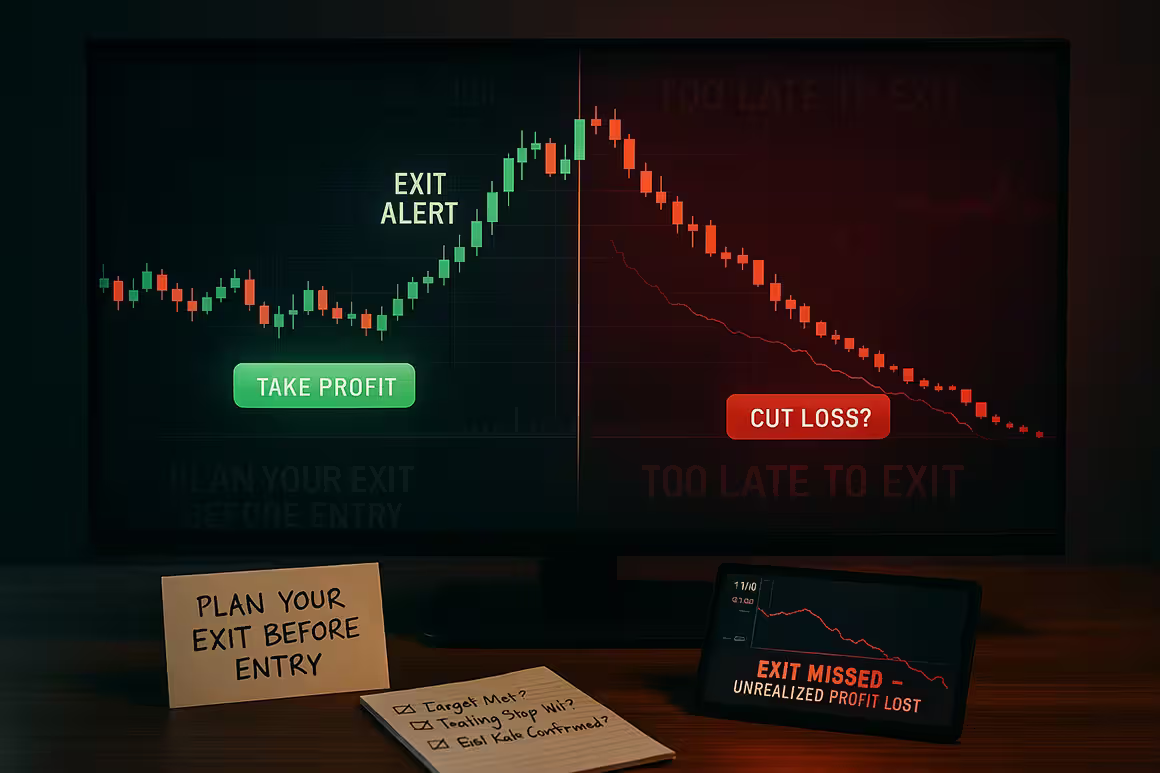
Getting into a trade is easy—knowing when to get out is where the real skill lies.
When trading options online, it’s crucial to have a clear exit strategy in place, either to lock in profits when they’re available or to mitigate losses before they escalate. Regardless of your trading plan, intentions, or skill/expertise in managing your portfolio, even the most solid of trades can turn into losses due to poor exit decisions.
Our intention with this trading guide is to address and highlight the most common exit mistakes traders make, as well as provide guidance on how to avoid them. You have little control over the markets as a whole. Still, when you understand the risks of improper exits and the potential mistakes that could be made, you can begin planning effective exit strategies that, most of the time, either secure profits or cut off losses early.
Mistake #1—Not Having a Predefined Exit Plan
The biggest mistake that an options trader could make when planning their exit is not having a plan in place for securing profits or mitigating losses. Profit targets and stop-losses are both crucial components of an exit plan, as they provide the trader with clear and measurable objectives for exiting the trade. The trading plan serves as a framework for the trader to work from, helping to avoid emotional decision-making.
- Profit Targets—These are predetermined price levels where the trader can close out the position and lock in gains on the trade. These levels can be based on several criteria, including trend-following or technical analysis.
- Stop-Loss Levels—These refer to a predetermined price point at which an automatic order is placed to sell the option if its price drops to that level or lower. It’s a helpful tool in limiting potential losses if the price of the option moves against your position.
When traders don’t have a set plan in place for exiting their position, it can be easy to fall into a line of thinking that says, “Hold on just a little longer.” This is like a double-edged sword. You could be gaining and want to pursue further gains, but you end up holding on too long and lose money if the market goes against you.
On the other hand, you may be losing money on the position, and holding on for a bit longer may allow you to reap the benefits of a market turnaround. However, if that doesn’t happen, you could lose more money than was necessary.
Tips
- Use a Risk-Reward Ratio—When entering a trade, you can figure out the potential profit of a trade against the potential loss. It can help you determine if the trade is worth the risk taken. You aim to achieve a risk-reward ratio of at least 1:2, but ideally, it’s best to reach 1:3 or higher. This means that for every $1 you risk, you stand to gain $3 if your strategy proves successful.
- Set Conditional Orders If Needed—These are instructions that only execute if specific criteria are met, such as when the stock price reaches a certain level. The trigger price must be reached to activate the conditional order, but the limit price is the level you would like the order to be executed once the trigger has been reached.
Mistake #2—Letting Emotions Override Logic
Emotional trading is one of the more significant mistakes that online options traders could make. The danger of this mistake is that it can happen to anyone, regardless of their skill level or experience. Even the most seasoned traders can fall into this trap, which is why having a well-defined trading plan and sticking to it is of the utmost importance.

The Possible Emotions
- Fear—Being afraid of losing money can keep traders from making moves to pursue profit because they cannot deal with losing. This could cause them to exit trades early, take on a minimal profit, or not give the market a chance to turn around, resulting in closing out losing trades prematurely when they could have recouped some of their losses if they had held on a bit longer.
- Greed—Some traders get a taste of winning, and they become greedy, pursuing big profits but not taking risks into account. It can cause them to take on more positions than they can realistically handle or become over-leveraged in their portfolio. In the context of exiting trades, greed can cause a trader to stay in the position too long as they try to gain more profit beyond what was outlined in their original plan. They could exit early and lock in profit, but sometimes, they go for more, and the market turns against them, causing them to lose a substantial amount of money.
- Hope—This feeling can seep in when traders are caught up in wishful thinking and believe that the market will turn around, giving their traders a chance at profitability. These traders can stay in the position too long and end up losing more than necessary instead of terminating it early. A good example of this is when a trader sees a trade in the green but holds it too long, hoping for more.
- FOMO—The fear of missing out can also cause traders to take on too many trades or get overleveraged in their positions, much the same way that greed does. They are being motivated by missing out on the action, and this emotion can cause the trader to spread themselves thin with volume and not focus on the quality of the trade.
The solution to tackling your emotions and not letting them ruin your strategy is to stick with your plan, including all the predetermined criteria, such as take–profit or stop-loss levels. Your risk-reward ratio dictates these.
Another common way to manage your emotions and keep them in check is to journal your emotional responses and analyze them afterward. You can gain some insights into the areas of your trading plan where you’re allowing emotions to play a factor in how you execute your plan.
Mistake #3—Ignoring Time Decay (Theta)
Another common mistake that traders make when exiting positions is ignoring the impact that time decay may have on the options positions in their portfolio. Time decay and theta decay are the same concept, referring to the gradual decrease in an option’s value as it approaches its expiration date. Theta decay has a greater impact on contracts nearing their expiry, as well as on options with a higher extrinsic value.
How, then, can options traders make mistakes with exiting a trade by not taking theta decay into account? A good way to illustrate this is a trader or investor who holds a winning trade for too long and watches the value erode even though the position is gaining money from the strategy being used. A significant portion of the value gained can be lost if the option is near expiration or if it has a high degree of extrinsic value.
Pro Tip: Roll positions or take profits earlier when trading short-dated options.
Mistake #4—Overstaying in Losing Trades
Another mistake that we alluded to in a prior section is that some traders adopt the ever-common “recovery” mindset: “It’ll bounce back.” It’s critically essential to cut losses before they balloon. You could hold onto a position for too long with the wishful thinking that the trajectory of your investment will turn around and become profitable. The big mistake with this is that you can incur more losses than are necessary because you don’t exit the position soon enough.
Strategy Tip: Use trailing stops or alerts to manage downside exposure. The trailing stop is a type of stop-loss order that automatically adjusts as the market price changes, allowing investors to protect their profits while continuing to trade if the market is in their favor.
Mistake #5—Not Adjusting or Rolling When Appropriate
At times, it can feel like the best move to let your trade expire as worthless if it looks like the market is against you and there’s no hope of turning it around. However, there are a few other options you can take in this scenario before allowing your position to expire: rolling or adjusting the position.

- Rolling—This is where a trader closes one position and immediately opens another with the same underlying asset, but they might adjust the strike prices or the expiration date.
- Rolling Out—Trader can do this to roll the position out to a later expiration date.
- Rolling Down—This action refers to moving to a lower strike price, which is helpful if the underlying is expected to decrease in value.
- Rolling Up—This action refers to moving to a higher strike price, which is helpful if the underlying is expected to increase in value.
There’s a time and place to adjust your trade. These reasons can include unexpected market movements that disrupt the entire structure of your original trading plan, the release of economic data or news reports that unexpectedly impact your investments, or something as simple as experiencing decision fatigue and needing to reassess your trading plan.
Mistake #6—Exiting Too Early on High-Conviction Trades
Some traders make the mistake of not sticking with a trade all the way through, and this can result in them missing out on potential gains that could have been secured if they had stayed longer. Often, these are fear-based exits where the trade feels like the market might move against them at any moment, and they want to take their losses and move on. The mistake is that they cut short good trades.
Allowing winners to run within reason can enable traders to expand their profit potential. This is why it’s crucial to study the markets carefully and conduct a thorough technical analysis to determine if the trend is likely to continue. If that’s the case, you best stick around for a bit longer until you get signals that tell you otherwise.
Key Takeaway: Use data, not panic, to guide exits.
Mistake #7—Failing to Account for Earnings, News, or Volatility Events
Traders must consider the entire market context when they’re planning their exit, which includes taking relevant news, volatility events, and earnings announcements into account, as these can result in expected market movements or price swings.
An event like a sudden IV crush after the volatility surrounding an earnings announcement subsides could ruin a good trade. You could find yourself in a situation where a vast, unforeseen geopolitical event impacts an industry or sector you’ve invested in, wiping out the growth you’ve overseen. It’s essential to stay informed about global news, particularly the developments affecting the industries in which your investments are invested.
A few other good practices include checking for earnings dates or Federal Reserve meetings to gain a rough understanding of when stock prices or market sentiment might be impacted. Once you have a heads-up of when these events are coming, you can begin considering how you might exit your current positions of hedge before these events even occur.
(Bonus) Mistake – Letting Assignment or Expiration Surprise You
Some traders might even make the careless mistake of holding their trade through expiration without a plan because they are unaware of what expiration or assignment means—you see this most commonly with newer traders who are unfamiliar with how options work.

There are two primary risks that traders face when they lack an exit plan and are unaware of how expiration or assignment works in options: the risk of assignment for short options and auto-exercise for long options.
- Risk of Assignment (Short Options)— This risk occurs when the option buyer exercises their right to buy or sell the underlying asset. The seller of the short option is obligated to fulfill the contract. Those who sold a call option with the buyer exercising their right will be compelled to sell the underlying stock at the strike price. Those who sold a put option with the buyer exercising their right will be obligated to buy the underlying stock at the strike price.
- Risk of Auto-Exercise (Long Options)—The main risk here is the capital requirement to either purchase the underlying shares in the case of a call option or deliver them for a put option. This is quite common with traders who hold long options that are in the money at the expiration date. Traders face the risk of auto-exercise unless they take action to prevent it from occurring.
Suppose you’re interested in learning the best practices for managing your investments during expiration week. In that case, we’ve included a brief checklist that can help you better manage everything to ensure you exit at the proper times:
- Identify the options in your portfolio which are expiring this week.
- Assess the moneyness of each position.
- Understand what the potential outcomes are for each position.
- Decide which strategy you want to use for each position (closing out, rolling, or holding the position until expiration).
- Figure out if you have sufficient buying power.
- Take into consideration the potential assignment risks for any short options you might be holding.
- Figure out your current risk tolerance.
- Place orders, roll positions, or exercise options according to your trading plan.
- Keep any trading deadlines in mind as you proceed with your plan.
- Keep a close eye on your positions.
How to Avoid These Mistakes: Exit Strategy Checklist
In addition to the checklist included in the previous section, it’s also essential to consider a few other key points as you plan your trade exits. These are good practices to adopt that will enable you to see your trades through to a successful conclusion.
Practice Steps
- Predefine stop-loss and take-profit levels—Outline the amount of money you’re willing to take in profit before closing out the trade and the maximum amount of money you’re willing to lose on the deal.
- Know your breakeven and time decay risks—Establish ahead of time the breakeven point of the trade, the point where the cost is covered if the position neither incurs a loss nor profits. Also, be aware of the loss of value that occurs as the expiration date approaches.
- Set alerts or auto-close orders—Alerts can keep you on top of certain price levels being reached or keep you updated on significant events that could impact stock prices, such as earnings announcements or Fed meetings. Auto-close orders can help you stay on top of closing out trades early, preventing unnecessary losses.
- Review trades weekly to learn and adjust—Keep a trading journal or good documentation of how each trade exit went to get an idea of where you achieved success or where you fell short and didn’t execute the exit correctly. Take note of what has worked and what hasn’t, continually improving over time.
Final Thoughts: Exit Smart, Trade Smarter
Every trade needs a planned exit—mastering the exit is the mark of a complete pro. The more you can perfect your exit strategy for each position, the more you mitigate potential losses or lock in the gains that fit into your overall trading plan. Do your best to become aware of the risks and mistakes you could make, and with time, you can learn the best practices for achieving better exits!
Key Takeaways
- Exit mistakes are more common than bad entries.
- Emotions, lack of planning, and poor timing are major culprits.
- Build discipline through planning, automation, and review.
Want help building your options trade plan? Check out our Options Strategy Builder Tool today to get started!