
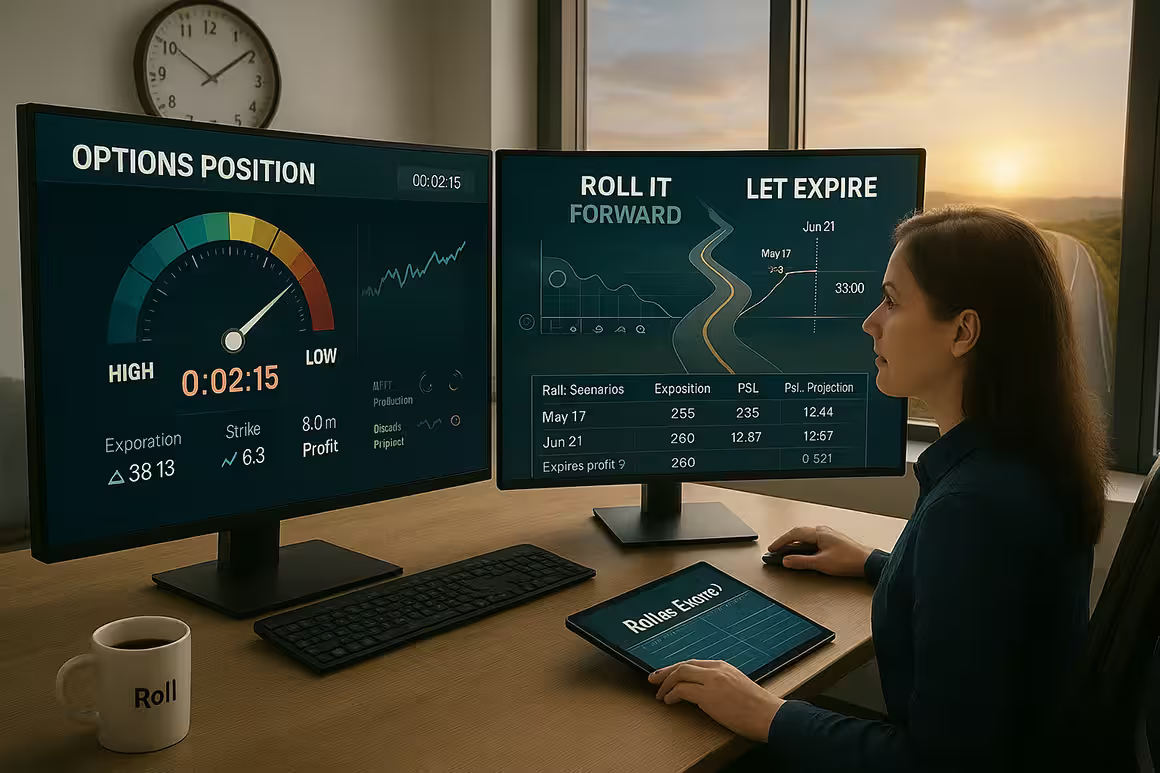
Every options trader eventually faces a crucial choice—roll or let it ride? We’re referring to the subject of rolling options positions. This strategy can help traders or investors make the most of timing and decision-making when their options contracts are nearing expiration. You have the option of rolling your contract to a further expiration date to give the position more time to become profitable or you can roll to different strike prices, allowing you to maintain exposure while also adjusting your risk/reward profile.
This guide will help traders confidently decide when to roll and when to let an option expire. Learning when rolling makes sense and some factors to consider before pulling the trigger. On the other hand, we’ll also outline the times when it’s best to let the position ride out its natural course. Keep reading to learn about rolling like a pro and having a good sense of timing when it comes to managing your options contracts!
What Does It Mean to “Roll” an Options Position?
“Rolling options” refers to closing an existing position and immediately opening a new one. The new position often comes with a different strike price or expiration date, but the rolled position still focuses on the same underlying security as the last position. We’ll discuss this further in our guide, but there are several good reasons for traders to roll options from time to time, to either give themselves more time to become profitable or to adjust their risk/reward profile effectively.
The Mechanics of Rolling
Follow these steps to begin rolling an options position for any of the reasons listed above. Once you’ve done it a few times, it should become second nature. The trick is getting the timing right in a way that’s aligned with your trading goals.
- Close your current position. This is done by buying it back.
- The next step is to open a new position while you’re buying back the original. You can make changes to the strike price or expiration date for the new position, but you’ll most likely be dealing with the same underlying asset.
- The reason for executing these two moves at the same time is to experience the least amount of slippage or other market impacts that could affect the outcome.
Types of Rolls
When it comes to rolling your options positions, there are a few ways that you can make it happen. A few focus on the strike price, while others are more centered on changing the expiration date.
- Roll Up—Close an existing position and open a new one with a higher strike price. This move is usually used when the underlying asset price has gone up and the trader is expecting the trend to continue. On top of rolling up the original position, traders can roll up the new positions to extend the expiration date if needed.
- Roll Down—Close an existing position and open a new position with a lower strike price. Traders will roll down when their underlying asset price has dropped in value and the trader feels that it will continue to decline. As is the case with rolling up, traders can roll down the new position to extend the expiration.
- Roll Out—This move is centered on the expiration date instead of the strike price. Rolling out happens when the trader or investor buys back their existing position to close it out and, at the same time, sells a new option contract with a different expiration date but still on the same underlying security.
- Diagonal Rolls—Traders adjust a diagonal spread position where they are buying and selling options with different strike prices and expiration dates. It involves closing a short-term position and opening a new short position with a later expiration date.
Why Traders Would Roll Positions
There are several reasons why a trader would want to roll an option contract. In some cases, it has to do with having more time, and in others, it is to adjust the amount of possible risk or reward you’ll encounter with the positions. We’ve outlined all the primary reasons below to give you a better understanding of everything.
- Traders can adjust their risk and reward profile through rolling.
- Rolling lets traders extend their contract out to a later expiration date to give the underlying more time to move to a profitable place.
- Traders can take advantage of the fact that rolling lets them adjust the terms of their current position while still maintaining market exposure to the underlying asset at hand.
- If the stock price is rising toward the strike price on a short-call option, traders can use the rolling technique to avoid assignment obligations.
Letting an Option Expire — What Happens and When to Consider It
When online options traders “let it expire,” this means that they don’t adjust the expiration date of the contract and let the trader run through until the date when it becomes invalid. The holder loses the right to buy or sell the underlying asset at the strike price once the expiration date arrives. There are a few instances where it makes the most sense for traders to let their contract expire instead of rolling out the expiration date further.

Out-of-the-Money (OTM) Expiration
This is quite common when the options are out-of-the-money and have minimal time value remaining—rolling the date out further doesn’t make sense as far as time or money goes. The trader simply lets the option expire as worthless, and they lose the premium paid for the option. Plus, there’s no danger of any further losses. It only makes sense to roll when there’s still time value and the option is in-the-money.
In-the-Money (ITM) Expiration
It’s really only appropriate to roll options to a further expiration date if it’s in the money and there’s still some decent time value left. This is because there is increased profit potential with rolling, plus it’s a move that is well within the bounds of good risk management. However, there’s a good reason to just let your contract expire naturally, and that’s if the position is already in-the-money. The trader can make a quick profit without having to make any adjustments to the contract’s strike prices or expiration.
Pros of Letting a Position Expire
- Limited Loss — If you let an option expire out-of-the-money, you’re limiting your losses to the premium you paid to enter the trade. Any traders who have an out-of-the-money position and choose to roll it out will incur more transaction costs, and there’s little likelihood they can turn it around, which will end up in more losses. Cut those losses early and let the position expire with the premium being the max loss.
- Maximize Your Profits — If the markets move in your favor and the option expires in the money, you get to keep the premium you paid to enter the trade, plus whatever value was gained when the stock prices rose. Letting the option expire can limit losses when your trade hasn’t panned out the way you want it to, but there’s the perk of maximizing your profits if the market moves favorably.
- Fewer Trade Costs — Rolling out your position to a further out expiration date will incur additional trade costs, so letting the contract expire to lock in profit or limit your losses to the premium are both scenarios where you’re incurring the fewest amount of commissions or fees because you’re dealing with fewer positions.
- Reduced Risk Management — Letting the option expire for the sake of a profit or to reduce potential losses is a way to simplify matters. Going with the route allows the trader or investor to experience the least amount of active management for their portfolio. It’s the best way to save time and resources.
Cons of Letting a Position Expire
- Losing Out on Potential Profit — If the trader lets the option expire when the contract is in-the-money, they get to keep their premium, but they could miss out on additional profit if they choose to exercise the position or sell it for its intrinsic value.
- Could Be Less Cost-Effective — Some traders might want to let an in-the-money call expire and then buy the shares separately to acquire a portion of the underlying asset, but this could result in additional expenses. A better course of action might be to exercise the option and receive the shares at the strike price.
- Miss Out on Premium Recoup — Some traders make the mistake of letting OTM options expire as worthless when there’s still some time value left in the contract. Traders could be selling the contract before expiration to recoup a portion of the premium they paid to enter the trade.
- Rolling Opportunities Missed — In some cases, you could roll ITM options (and sometimes OTM options) to a further expiration date to give the trade more time to become more profitable. If you have some decent time value still built into the contract, you can definitely roll ITM options and have a decent shot at securing a profit.
When Is It the Right Move to Let It Expire?
Check out the main instances where it will be more advantageous for the trader to let their options contract expire outright, be it in-the-money or out-of-the-money.
- Small Premium Remaining — This is a good scenario to let the option contract simply expire, especially if you’re a buyer. While it might be a good idea to do this to minimize the losses you’ll experience with your premium, be sure to pivot if the underlying asset price moves considerably in your favor because you could either exercise the option or close the position for a profit.
- Commissions Outweigh Gains — If you’re in a situation where you’re going to be incurring additional costs with rolling as far as commissions and fees go, it might be a good idea to simply cut your losses and let the option expire worthless if you’re OTM or to collect your profit if you’re ITM.
- Intentional Assignment or Exercising — Another good reason for letting your option contract expire is if you’re interested in intentional assignment. This could be for several reasons, including acquiring shares of an underlying stock at a desired price. If it’s a part of your greater trading plan to embrace internal assignment or to purposely exercise the contract, this is one of the better perks of simply letting the contract expire.
Key Factors to Consider before Rolling or Letting Expire
Before you go to roll your position or let the option contract expire outright, there are several important things to consider. Take the following factors into account, and this should give you an excellent, but rough, guideline of what to do when you find yourself wondering when to roll or to let the contract expire. Sometimes it can be a tough decision, but you should know exactly what to do once you know these principles.
- Risk Tolerance — Something important to consider right up front about rolling is that there’s an increased risk to going this route because you’re attempting to give your position more time to become profitable, but you’re spending additional money to roll it, which increases the overall risk of the trade.
- Time Left Until Expiration Date — Rolling options to a later expiration date can increase the time value, but it comes at an additional cost. It’s most expensive when you are dealing with call options.
- Implied Volatility — Keep an eye on the implied volatility levels the market and your specific stocks are experiencing. Roll the position if you think the underlying asset will continue to move in the same direction. You could also roll for a credit. On the other hand, if you don’t see the big move happening and the premium is close to intrinsic value, consider letting the contract expire.
- Remaining Premium — If your option is currently profitable, you could roll to a further expiration to capture more profit, plus you can also adjust the strike prices through rolling to better align with your expectations of future price moves.
- Remaining Time Value — If your option is losing time value because of time decay and you think the underlying could recover, you might want to roll to a later expiration to give the position time to recoup. However, it might be a safer option to close the position to avoid any more losses if you’re taking a more conservative strategy.
- Your Directional Bias — Consider your priorities as a trader. Are you looking more for opportunities to buy (bullish), to sell (bearish), or are you more interested in trading without bias in either direction?
- Breakeven Analysis and Max Profit Potential — If the chances of making your position profitable are low, rolling out to a later expiration date might be a good idea, especially if there is still some decent time value left.
- Capital Efficiency and Opportunity Cost — Consider if rolling or letting your option expire is the better of the two moves based on opportunity cost and how much capital you have sunk in the trade. Some positions are too far gone to roll out, and it requires more capital to make it happen.
- Tax and Assignment Considerations — Rolling options may affect your holding period or tax treatment, while letting your contracts expire leads to no further potential for gains or further obligation on the part of the trader.
When Rolling an Options Position Makes Sense
Check out the best cases where rolling your options contracts out to a further expiration date can be advantageous. There are costs involved with rolling, so you’ll want to be sure that it makes sense within the context of your larger trading plan before committing to that path.

- You want to extend the duration to stay in the trade. It’s best to only roll in-the-money positions and have time value left—it allows you to capture even more profit in the trade, so long as the market is still moving in your direction.
- You’re managing a losing trade (defensive roll). You’re taking a big risk rolling out-of-the-money positions because you’re spending money to roll, and you’re banking on the right conditions for the positions to become profitable. However, if this is done right, you can turn around your trade instead of losing your premium if you let it expire.
- You want to avoid assignments. This means that the sellers can avoid the obligation of fulfilling the terms of the options contract by simply rolling the expiration date of their contract out to a further point. This lets traders maintain a flexible position, helps them avoid potential losses, and keeps them from being obligated to buy or sell the underlying.
- You see favorable conditions in the next expiration cycle. By rolling your positions out to a future date, you can capture profits instead of settling up early and making a smaller profit.
- You’re managing a complex strategy like spreads or iron condors. Traders can adjust their positions more effectively without having to close them out and reenter new ones.
When Letting It Expire Is the Smarter Choice
Sometimes, it’s best for traders to let their options contracts expire, and we’ve outlined below when it’s desirable. In some cases, it has to do with freeing up capital, and in others, it’s about keeping your overall approach simple and clean.
- Deep Out-of-the-Money Options — The position is deeply OTM and unlikely to recover. It’s in scenarios like this where it’s best to cut your losses and let the position expire. You’re digging a deeper hole trying to spend the money to roll, only for the position not to recover. If you let the contract expire, your loss is only limited to the premium.
- Rolling is Not Worth the Money — The premium left is negligible and not worth commissions. This means that the remaining profit margin on the trade isn’t worth the money paid out in additional commissions to pursue. It has a lot to do with opportunity cost and the chance to put the money to better use in other areas of your portfolio.
- Keeping Risk Low — You want to reduce trading activity or risk. Not only is it less expensive to let your option expire, but you’re also limiting your overall risk to the premium paid to enter the trade.
- You End Your Trade ITM — Trade reached your goal, or you’re accepting the full assignment. On the first point, it’s best to let the trade expire when your position is in the money—you don’t lose your premium, and you profit from any kind of gains in the stock price since the time you bought the position. If the trade expires without being exercised, the seller is obligated to fulfill the terms of the contract, but they’re okay with that.
- Rotating Capital — Sometimes it’s advantageous to simply let the position expire because you want to free up some capital to be used on another position. Again, this goes back to the idea of cost opportunity, where money could be better used elsewhere.
Case Studies and Examples
Let’s take a look at a few hypothetical examples of either rolling a contract or letting it expire. Hopefully, this can give you a good idea of what these moves would look like in the real world and how they can be used to the benefit of the trader or investors managing their positions in a responsible manner.
Option 1 — “Rolling to Recover a Losing Put Credit Spread”
This strategy aims to shift the expiration date or the strike prices of the put credit spread to either take advantage of future market movements that would work in your favor or mitigate potential losses.
– Setup: Buying back the original spread and selling a new one with a further expiration date and/or strike prices.
– Problem: There are potential losses that the trader is looking to mitigate (the stock price is moving significantly against the position) or they want to capitalize on favorable market moves in the future.
– Roll: Buy the existing spread to close it out, and at the same time sell a new spread with the chosen strike prices or expirations, it generates a credit that offsets the debit from buying the original spread.
– Outcome: To figure out the net cost of the roll, consider the debits and credits associated with closing and opening the spreads. Check the risk profile of the new position and monitor its progress, making any needed adjustments as you observe future market movements.
Option 2 — “Letting a Covered Call Expire ITM for Assignment”
When traders allow their covered call to expire in the money, this means that the underlying stock price is above the call option’s strike price at the expiration date.
– Setup: The option writer (the seller) simply lets the covered call expire in the money and hopes for the buyer to exercise their right to purchase the shares at the strike price.
– Intention: Letting the covered call expire in the money can be a profitable outcome because you can keep the premium and still sell the stock at the target price. If the stock price is below the strike price when the call is sold, the option writer (the seller) profits from the difference between the purchase price of the stock and the strike price.
– Expiration Result: Letting the covered call expire in the money gives the buyer the right to exercise the option and purchase the stock at the strike price. The seller is obligated to sell their shares at the strike price, fulfilling the assignment while also collecting a premium from the sale.
– Why It Makes Sense: The seller gets to collect a premium from the sale if the buyer exercises their right and the seller has to sell their shares, but they can also make money by having their position expire in the money.
Option 3 — “Rolling Out and Up a Winning Call Option”
In this final example, we have a scenario where a trader adjusts their position when the stock price has increased to capture more potential gains. This is best done when the trader has done some considerable research into where the market may be going next, and they see some more profit potential.
– Rolling Up: This move has you closing your existing call option and opening a new one on the same stock but for a higher strike price.
– Rolling Out: In this instance, you’re extending the expiration date of your current contract. You’re closing the existing call option while also opening a new call option. The new position comes with the same or a higher strike price, but a further expiration date.
In both cases, you’re locking in gains while staying in the trade. These strategies are best used when you feel the stock will continue to rise and you want to give the positions time to capture that upward potential. You can also collect additional premiums with rolling up and rolling out.
Pro Tips for Managing Expiring Options Like a Pro
Are you looking for some additional tips and tricks for managing your options and their expiration dates like a champ? Check out these pro tips to take a proactive approach and keep ahead of what the market is throwing at you.
- Set alerts a few days before expiration. Keep on top of how close your positions are to losing their time value.
- Evaluate theta decay daily in the final week. This can help you determine if rolling is a viable option.
- Always compare commissions vs. premiums left. If it’s going to cost more to roll than it is to let the option expire, you may choose to simply let the contract run its course.
- Avoid panic rolls—plan ahead. Make sure each roll is rooted in decent research and aligns with your current market outlook.
- Know your broker’s assignment rules. Make sure rolling will be worth it in terms of fees or commissions.
Final Thoughts and Framework for Decision-Making
When should you roll, and when is it better to let the trade go and simply let it expire? It mostly depends on the market context and how well each decision would fit into your bigger trading plan. The bottom line is to not let expiration catch you off guard! Keep these key principles from our guide in mind as you go forward!
Key Takeaways
- No one-size-fits-all answer—context matters.
- Rolling is a proactive strategy; expiration is passive.
- Use objective criteria: time, premium, delta, and market bias.
- Be strategic, not reactive.
Final Tip: Journal your rolls to build smarter patterns over time. You can look back over the information later to figure out which rolls were effective and which ones weren’t, allowing you to improve your strategy or hone your approach over time for better results!