
The Dream of Financial Freedom
Many people dream of leaving their jobs and trading options full-time. But is it realistic—or risky fantasy? You’ve probably seen the YouTube videos… a laptop on the beach, $1K days, zero meetings. But can options trading really replace your 9-5?
There is no denying that the idea of achieving financial freedom through full-time trading options is highly appealing. You have the freedom that comes with a job that can be done from anywhere (so long as you have a reliable internet connection), the flexibility that comes from a schedule that isn’t too time-consuming, and a higher income potential. However, making a career of trading options full-time comes with its own unique challenges that are worth considering before committing.
Our guide on trading options instead of pursuing a traditional 9-to-5 career will cover how you can realistically make it work, its limitations, and how to assess whether it’s right for you. Keep reading to learn about what options trading full-time will entail and if it’s a viable option for you at your current stage of life.
The Upside – How Options Trading Can Replace Your Job
Online options trading has enough going for it that it could be a viable alternative to a traditional 9-to-5 job. The benefits that come with trading are strong enough to replace a typical career and offer additional perks, such as further growth and increased freedom, once you have a system in place.
Income Potential of Options
Professional traders generate income through various methods. If you don’t believe us, we’ve included the following list to demonstrate the numerous paths to profitability that are possible with trading online options. We mentioned earlier that options trading offers a great deal of flexibility for traders, and this is particularly true when it comes to various strategies for generating profits.

- Going Long: Buying low and selling high is the typical way for traders to secure a profit. They purchase the stock at a low price, expecting the price to increase before the expiration date, and then sell it for a profit.
- Going Short: Buying high and selling low is what’s known as “going short,” a strategy where you sell a borrowed asset with the plan to repurchase it later at a lower price and return it.
- Momentum Trading: Traders make money through their stock appreciating in value due to an upward market trend. The key is to sell it before the price goes back down.
- Swing or Day Trading: In swing trading, you’re holding onto positions for a few days or weeks to take advantage of medium-term swings in price, while day trading is speculating on short-term price movement within a single business day.
- Premium Selling: This strategy generates income for the trader when they sell options contracts to other traders or investors in exchange for a premium, which is the price of the contract.
- Spreads: Traders can buy and sell multiple contracts of the same type on the same underlying asset. Money can be made in various market conditions, including bear or bull markets, as well as sideways markets, where option pricing is expected to remain stable.
- Scalping: This refers to a short-term strategy that takes advantage of very small price movements throughout a single trading day. If traders can scalp profit from a high enough number of trades, they can become profitable over time, but this strategy requires stamina and the need to constantly monitor the markets like a hawk.
- News Trading: A form of options trading that revolves around taking advantage of market volatility that occurs when companies release their earnings reports or when significant world news is expected to affect markets.
- Mean Reversion: This form of trading thrives when markets experience significant deviations, but they revert to their mean or average once the deviation has passed.
We could have gone into several other strategies for making money by trading options online, but we might be here for a few hours describing all the possible avenues. The point is that there are numerous ways to generate profits using various strategies that suit different risk tolerances and capital balances.
The Importance of Monthly Income with Risk-Adjusted Strategies
One of the keys to succeeding with online options trading is to invest in a diversified portfolio of stocks (preferably those that pay dividends) based on well-established companies with a consistent history of delivering substantial dividend payouts. It’s essential to invest in companies with strong fundamentals and to diversify investments across various sectors, geographies, and industries.
Flexibility & Freedom
One of the better appeals of online options trading is that you can do it from anywhere as long as you have a reliable internet connection and the computer, software, and trading tools needed to be competitive in your online trading sessions. A good way to sum up this benefit is “location independence.” You can take your computer almost anywhere and keep an eye on the markets without being tied to a specific location, unlike with a traditional job.
Another element of the flexibility and freedom that comes from online options trading is that, depending on what kind of trader you are, you can trade part-time or during off-hours. For instance, a trader with a longer time horizon (a position trader) may not need to check in on their portfolio and the market as often, as they play the long game of waiting for their investments to appreciate in value over time. This means they don’t spend a ton of time actively monitoring the markets.
Scaling Over Time
Traders can reinvest their investment returns over time, allowing their money to grow exponentially over time. It’s the compounding edge, combined with disciplined reinvestment, that helps many traders scale up their ability to invest more once they’ve spent some time in the markets and learned the power of compounding interest.
The idea of scaling your portfolio over time is to grow your investments like a business. Traders can use the profits they make to reinvest in the market and continue developing their account balances. Allowing earnings to generate additional income can lead to exponential growth over a longer period.
Tax Efficiency (With Caveats)
If you’re looking for another solid reason to make options trading your full-time job, aside from the benefits we’ve already talked about, some significant tax perks come along the way.
For instance, there is the 60/40 tax treatment under Section 1256 for index options, where 60% of gains or losses are treated as long-term capital gains or losses, while 40% of gains or losses are treated as short-term capital gains or losses. The primary benefit is that long-term capital gains are taxed at a lower rate.
When appropriately structured, trading options and being subject to the 60/40 tax treatment can result in a lower tax rate than regular W-2 income, potentially saving someone a significant amount of money in taxes over time. Being an online options trader not only offers the promise of a higher income, but it can also be taxed at a more favorable rate.
The Reality Check – What Options Trading Can’t Replace
Online options trading can be beneficial when done right. It can often be a more rewarding and fulfilling experience than the typical 9-to-5 job, which can be monotonous or soul-crushing for some. However, it’s not always a smooth ride for options traders, as they encounter numerous challenges and setbacks in the options world, which present different problems than those in a more traditional job.
No Guaranteed Paycheck
Options trading is all in what you make of it, which means that income can be inconsistent or unpredictable at times. A lot is out of your control as a trader, but you can choose how to make the best of a certain situation or market condition to make money. This is why continuously educating yourself about options is critical for long-term success.
Because there is no guaranteed paycheck with trading, as you’d find with a regular job, this can often have an emotional toll on traders, especially in circumstances such as drawdowns and losing streaks. This aspect of being an options trader can be unsettling for some people, and it may deter those with true potential who struggle to cope with the uncertainties.
Lack of Benefits & Safety Net
Going out on your own and becoming a full-time options trader doesn’t come with any benefits that you would usually get by working with a company. You’re responsible for setting up your own health insurance plan and 401(k) or retirement savings. Traders don’t get paid time off but instead have to make decisions on how often they trade throughout the year and when they are comfortable enough to let their investments sit and take a break.
The lack of a safety net and benefits can be a significant deterrent to pursuing a career in online options trading. Not only do you have to cover health insurance and forego paid time off, but you must self-manage emergency savings as well. For some people, these responsibilities can be too much, and they chicken out with going out on their own with an options trading career.
High Skill Requirement
Trading successfully requires years of study, discipline, and capital management—some traders don’t want to put in the time to achieve the high skill requirements necessary to become a success in the options world. It can be a significant deterrent for people because some don’t want to undergo an awkward learning period where they experience difficulty and uncertainty in the early stages of trading options.
There is some validity to this concern, as 90% or more of traders lose money—especially when going full-time too soon. We’d say that the best way to handle the transition from a regular job into options trading is to begin teaching yourself in your free time through networking with real-world traders, viewing trading sessions, or using demo accounts through reputable broker apps to get a sense of buying and selling securities.
Pressure to Perform
Every trade is income when it’s your full-time job. Because your finances are on the line when trading options full-time, traders can get into the bad practice of overtrading in the pursuit of making extra money. Or they might “revenge trading” when faced with losses in a desperate attempt to regain the money lost in those dealings. This could lead to them falling deeper into the hole, so it’s best not to put too much pressure on them to perform. Sometimes, the best thing to do is walk away from a trading session to gain perspective before re-entering.
Is It Realistic for You?
The biggest make-or-break with pursuing online options trading full-time is if it’s something that you can realistically pull off, especially with the time, money, and resources you currently have. The following section will cover some important questions to ask yourself before committing to full-time trading, as well as some helpful strategies for becoming an accomplished trader while maintaining a regular job.
Questions to Ask Yourself
Ask yourself these three simple questions before barrelling ahead with a full-time career in options trading. Some of these questions you’ll have an immediate answer to, while others can only be answered if you’ve had some experience already with online trading. Anyone who can answer these questions with a “yes” is most undoubtedly ready to quit their jobs and pursue this for real!
Do I have at least 12 months of expenses saved?
You’ll experience growing pains and a considerable learning curve as a new options trader, no matter how much experience or knowledge you have built up in preparation for the transition. As a safety net, you should have at least 12 months of expenses saved up as a contingency in the event that you’re not successful at first. This emergency fund can keep you afloat during the time when you’re figuring out what kind of trader you are and then establishing the systems that will help you make money.
Am I consistently profitable with a proven trading plan?
Traders not only have to determine which strategies and trading plans work for their end goals and objectives, but they must also be able to profit from those strategies consistently to achieve long-term viability. Finding a trading plan that works well and can be repeated successfully is the second significant step in establishing yourself as an independent online options trader.
Can I manage the stress of volatile income?
Options trading presents numerous mental challenges that not everyone can handle. Suppose you can handle the stress that comes with an uneven income and the uncertainty of your skills and abilities as a trader, overcoming market conditions. In that case, you’re most certainly ready to embrace trading. What makes it even easier is that you have a safety net of backup funds available in case things don’t work out, along with a consistent and repeatable trading plan.
Hybrid Approach—Best of Both Worlds
A common way for budding traders to get started in full-time options trading is to do it alongside a regular 9-to-5 job while building their business on the side. It can be especially beneficial if the 9-5 job is a flexible one, which allows the trader to focus on monitoring their investments and the markets at critical moments in the trading day.
Going this route, a new trader doesn’t necessarily have to have the twelve months of expenses saved up, though they might want to have some capital free to dedicate to their trades. The hybrid approach allows you to retain your healthcare, paid time off, 401(k), or retirement benefits with your current employer while still enjoying the benefits of trading options.
Signs You Might Be Ready to Go Full-Time
You can consider yourself ready to get into full-time options trading if you’ve been able to complete the following:
- You have achieved 12+ months of profitability with low drawdowns.
- You have trading systems in place, including multiple strategies as part of your trading plan, a robust journaling system for learning purposes, and developed disciplines such as proper risk management practices.
- You have an alternative income or backup plan in place as a contingency plan in case your trading sessions go south.
Tools and Strategies for a Smooth Transition
What trading session online would be complete without tools that make the process quick and mobile or strategies that let you take advantage of the current situation? To enjoy a smooth transition from your regular job to an independent online options trading business, we encourage you to explore the following tools and strategies that can make the process easier.

- Backtesting and Journaling Tools—Traders can backtest their strategies against historical data to understand how they might hold up in the current market context. Journaling tools enable traders to track every aspect of their trading session, allowing them to identify what they’re doing right or wrong.
- Risk Management Plans—Traders need to enter options with plans to manage the potential risks that may arise. This can involve using a relatively small amount of money for each position to mitigate losses, setting stop-losses to prevent excessive losses on unfavorable investments, and spreading risk across multiple sectors, industries, or geographies.
- Paper Trading—To transition into a live trading setting successfully, traders should consider using a paper trading simulator or a demo account on the broker app of choice to gain practice with buying and selling or to gain experience in general with the platform they’re using. Although it doesn’t wholly capture the proper knowledge, it can significantly help new traders gain the confidence needed to navigate real-world markets.
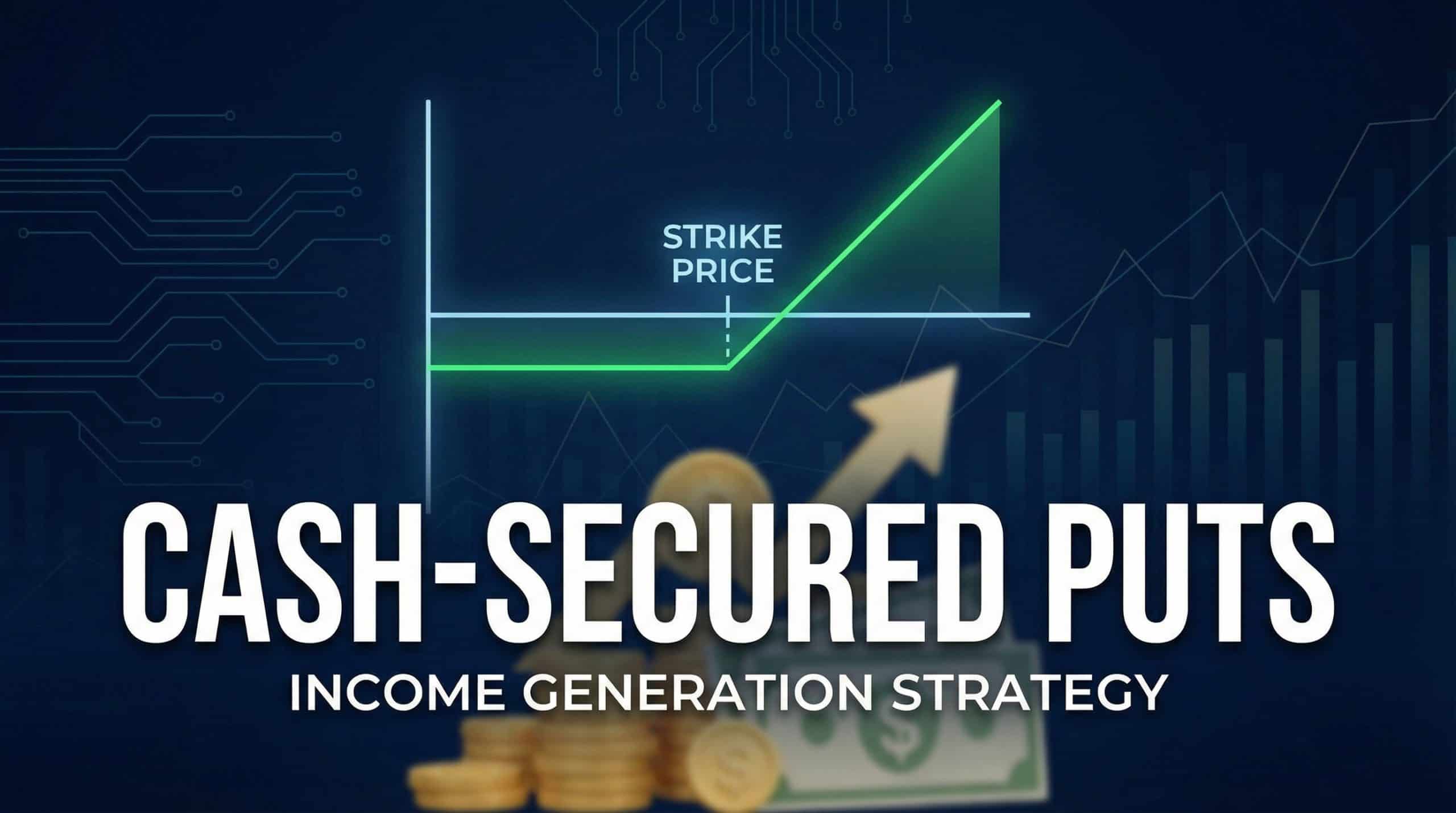
- Choosing the Right Strategies—Traders interested in generating passive income from options should focus on income-producing strategies, such as covered calls, iron condors, and CSPs.
Don’t Quit Just Yet—Trade Smart Instead
To fully understand and appreciate replacing your regular job with a career in options trading, you have to view trading options online as a business. It’s up to you to make money using a trading plan (or business model) that ensures long-term profitability and covers expenses like your healthcare or saving for retirement.
As mentioned earlier, options trading can provide a higher income potential in your own time, offering some decent flexibility and freedom as a career choice. However, the freedom that options trading offers is freedom through strategy and not from magical thinking or fantasy. Trading is hard work, and traders must approach it strategically and be smart about how they manage their business.
Key Takeaways
- Options trading can provide income—but it’s volatile and not guaranteed.
- You’re trading one kind of stress (your boss) for another (the market).
- Gradual transition with a safety net is smarter than going all-in.
- Build your skill, track your performance, and treat it like a business.
- Financial freedom through options is possible—but only with a plan.