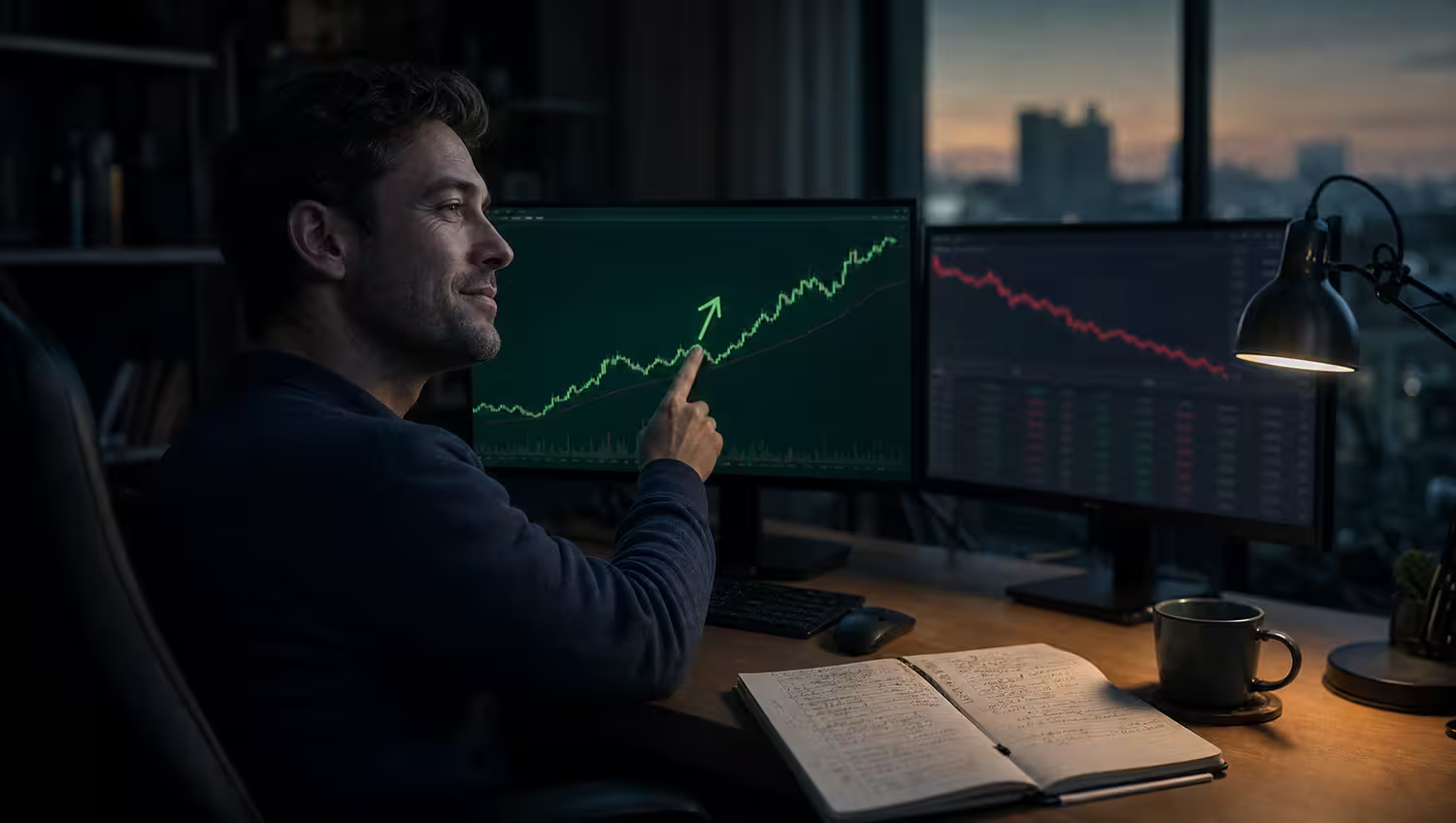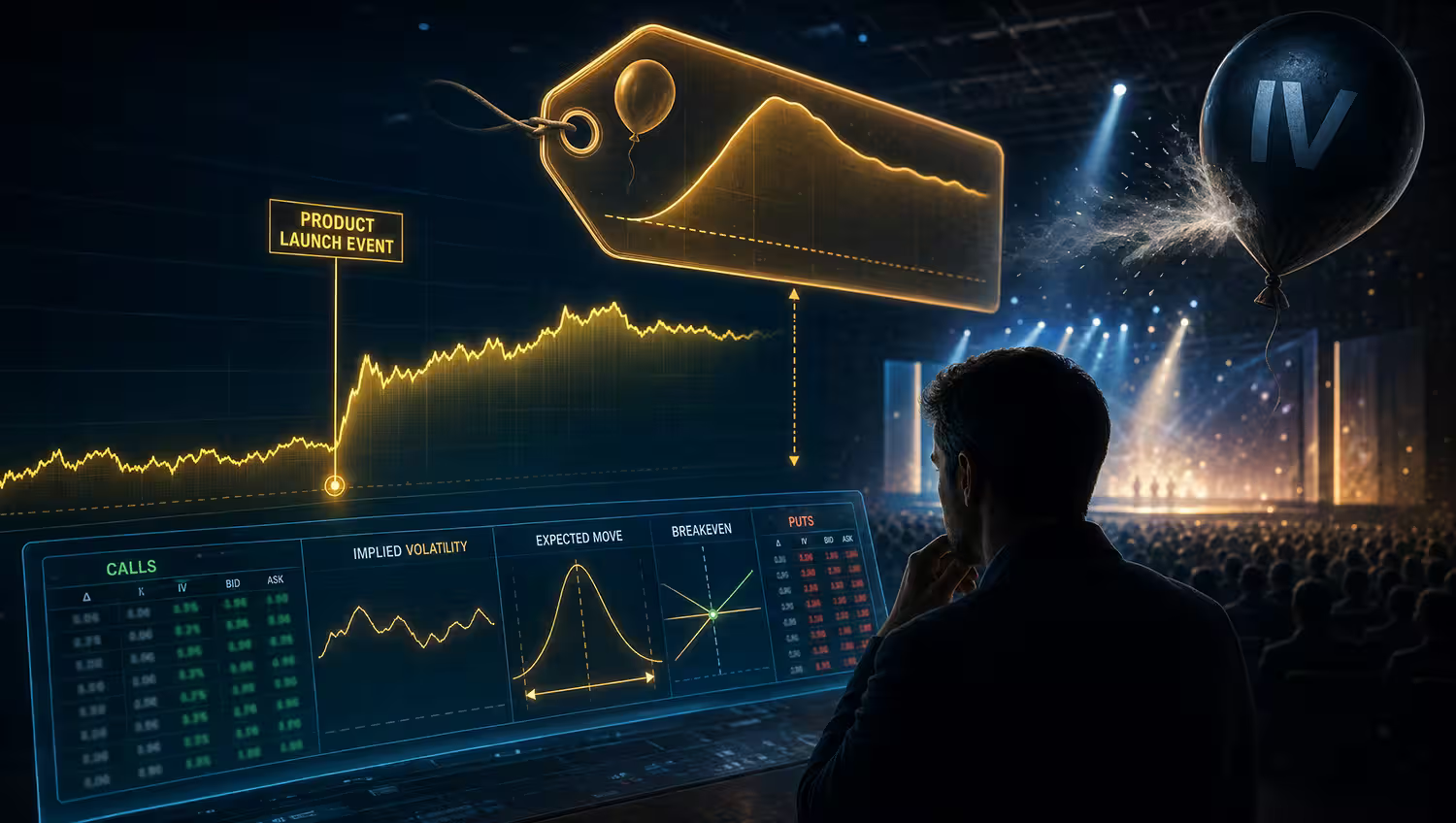
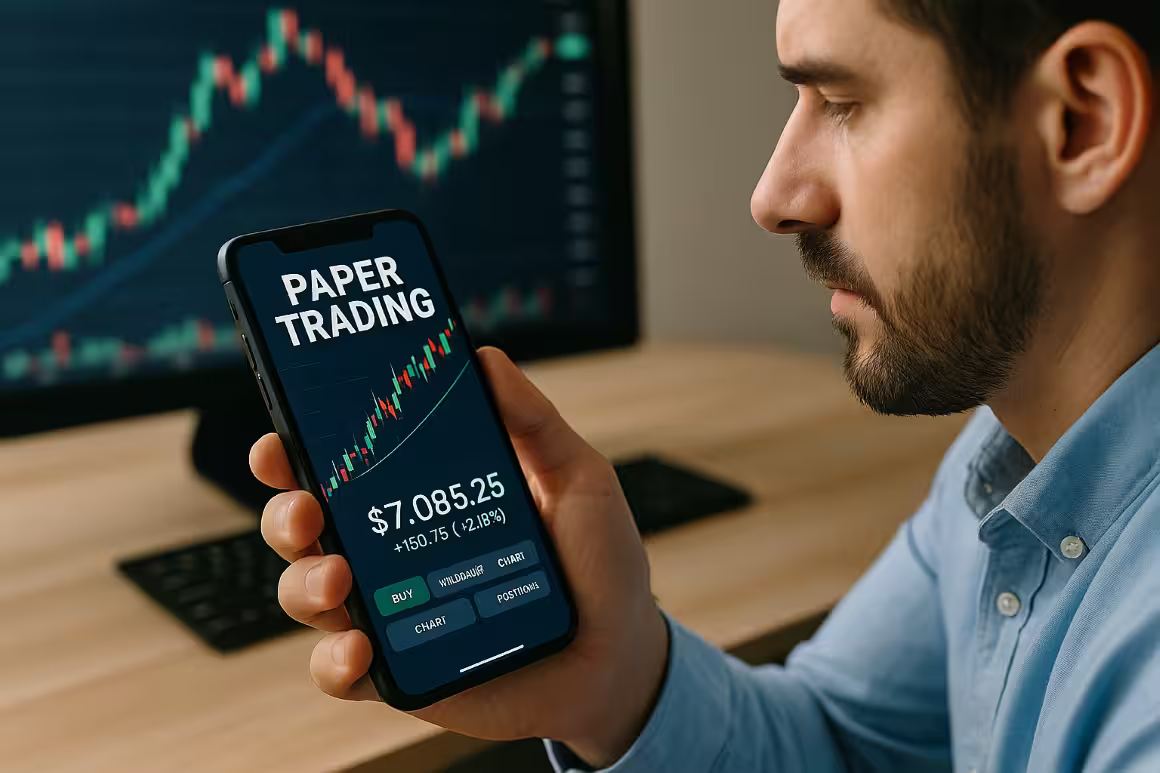
Paper trading is becoming an increasingly common tactic for online options traders to practice buying or selling securities and to backtest strategies before bringing them to a live market. Paper trading apps have tracked along with the rise in demands for settings where traders can practice with a virtual balance. These helpful tools can be found on top-rated broker apps such as Webull, Thinkorswim, and TradingView, which provide simulated trading experiences for a wide range of users.
But what if the tool meant to build confidence sets traders up for failure?
While paper trading has benefits, it may also create a dangerous illusion of skill and readiness. Our guide will highlight how false confidence can creep in and blindside traders when they least expect it. This can result from using paper trading the wrong way—we hope to show you how to use this tool most beneficially and effectively, so you aren’t entirely caught off guard!
What Is Paper Trading?
Also known as simulated trading, paper trading is a way for traders or investors to practice buying and selling options, stocks, or other assets/securities online without risking real money in a live market setting. Paper trading aims to give traders the time and space to practice strategies, learn the markets, and develop their trading skills, all with the help of a virtual balance.
In contrast, a live trading atmosphere is one where you’re using your capital and can use strategies that drive profitability. Still, you also take on the risk of the trade not working out and end up incurring any of the resulting losses.
Purpose: Learn strategies, test theories, and practice execution
Who uses paper trading? You might be surprised to discover that traders from all different backgrounds and experiential levels use paper trading or broker app demo accounts to gain practice or experience.
- You might be a beginner who isn’t too familiar with options, and you’re using the paper trading simulator to learn the platform and gain practice in buying and selling.
- Another widespread use case is for traders with middle-of-the-road experience or advanced traders with a lot of savvy. They might use paper trading to backtest ideas before they proceed with their plans in a live market with real money.
The Psychological Benefits (and Risks) of Paper Trading
Paper trading or using broker app demo accounts has its benefits, but there are also some risks that traders or investors take on when using these tools. You must know the good and bad of what you’re dealing with when using paper trade simulators.

Benefits
- Risk-Free Practice—Backtest or get familiarity with buying and selling securities without using any of your own capital to test everything out. The paper trading simulators come with virtual balances, allowing options traders to practice and gain experience without incurring real risks.
- Strategy Testing—Paper trading offers an excellent opportunity for traders to test out strategies they might not have a lot of familiarity or experience with to see how easily they can be adopted in their trading plan.
- Gaining Platform Familiarity—On top of getting practice with buying and selling and testing new strategies, options traders can gain familiarity with their trading app in general through time spent on the paper trading feature of their brokerage app.
Risks
- Emotional Detachment From Fake Money—This is where a lot of the false confidence can set in for traders. They are buying and selling using a virtual balance, which means that they aren’t truly familiar with the true risks that come with real trading.
- Unrealistic Execution Expectations—The key risk here is that live markets have execution problems like delays and slippage, not to mention the emotional factors that are present that could cause issues. You might not see some of these factors playing during a paper trading session, but they can catch you off guard when you switch to a live setting.
- Overconfidence After String of “Wins”—Paper trading sessions can give traders a false sense of security and confidence in their abilities, especially when a practice session has gone well. Even if you’ve incurred losses while using a demo account, the sting of the financial loss isn’t truly felt because you’re still using a virtual balance.
“A 50% gain in a paper account doesn’t mean you’re ready for live markets.”
Where False Confidence Creeps In
How do online options traders get false confidence from paper train simulators or practicing with demo accounts on broker apps? We’ve done some digging and discovered the top psychological reasons why inexperienced traders tend to have overconfidence when entering a live market using real money. Though paper trading has its benefits, it can also ill-equip traders for the real-world consequences that come with trading options for real.
1. No Emotional Consequences
You’re dealing with a virtual balance when you’re using paper trading simulators, so you aren’t going to experience the wide range of emotions that come with real money and trading in a real, live market. Paper trading doesn’t have you feeling any negative emotions like fear or greed. Plus, there is little to hesitate about because you can afford to make mistakes working with a virtual balance of money.
2. Unrealistic Fill Assumptions
Paper trading simulators often make mistakes with assumptions about fill prices, which might not truly reflect what you’ll encounter in a live market. Live accounts might generate different fill prices due to live market factors like slippage or execution delays. You also have market vs. limit order execution differences to take into account as well.
3. Overlooking Fees, Slippage & Commissions
When using a paper trading simulator, you’re also not dealing with fees associated with opening new traders or the commissions the broker charges to execute trades for you. A few other factors you don’t see firsthand are moments of slippage or order execution delays. You could enter a live trading session overlooking these aspects of trading, and you might be surprised when they occur if you have not been made aware.
4. Perfect Market Timing Illusion
Traders practicing with demo accounts, using a virtual balance to gain practice with buying and selling, might find it extraordinarily easy to make big moves like “buying the dip” when there’s no real risk. This can embolden them to buy into the perfect market timing being a thing in a live market, which couldn’t be any further from the truth.
Case Study—Paper Trading vs. Live Trading Results
Sit back, and we’ll tell you the tale of a new options trader who excelled in paper trading but crashed in real trading. This will showcase the difference between each form and how paper trading can prepare newcomers, but can also work against them if they don’t know the potential risks beforehand.
The Emotional Aspects
- Paper Trading—In the simulated environment, the trader didn’t have to deal with real-world emotions that many options traders experience, like fear of loss, greed from a string of successes, or anxiety from being on the ball with timing traders or managing risk.
- Live Trading—The trader goes into live trading and isn’t prepared for the emotions of dealing with real money. When the trader lost some money in their first few attempts, they became discouraged and strayed from their original trading plan, operating in fear and making impulsive decisions as a result.
Differences in Execution Experience
- Paper Trading—The trader enjoyed the fact that the trading simulator had speedy execution rates. They never encountered significant issues regarding getting their traders processed at the right price. Still, they didn’t know it was because the paper trading simulator isn’t prone to slippage or execution delays.
- Live Trading—The trader went into the live setting with confidence. Still, they were dealt a blow when they encountered network delays, liquidity issues with specific stock options, and slippages where their orders were executed at the wrong price due to lag time.
Confidence Levels are Different
- Paper Trading—The traders got used to working at their own pace and testing out strategies at a leisurely pace, unaware of what awaited them in the live market. They could take a lot of time to find out what worked for them and to run through multiple techniques and strategies to see what would work for their plan and ultimate goal.
- Live Trading—The trader entered the real market and was disrupted by the fast pace of the market, not quite used to the high speed at which business was conducted. They didn’t take the time to get super familiar with the different strategies they practiced on paper, and they couldn’t adapt quickly enough to the demands of the live market.
The Cost of Trading in the Live Market
- Paper Trading—There were no commissions or fees when the trader practiced on paper. They knew that it would cost money to trade in the live market, but they didn’t fully prepare themselves for how much it would affect the money flow of their available capital balance.
- Live Trading—The trader begins doing business on their first day in the live market, and they make some mistakes with their entry on the first few trades, incurring more costs than they were expecting. This distracted them from monitoring one of these trades, and they got the timing of the sell-off wrong, incurring a further loss. Frustration set in, and the trader began to spiral into bad decision-making.
How to Use Paper Trading the Right Way
We’ve included a few of the best practices for paper trading correctly. Keep reading to learn about the approach to paper trading, which will give you the most realistic expectations possible.

- Validate Your Strategies: Use it for strategy validation, not emotional conditioning. You cannot depend on paper trading to provide the exact experience you’ll get with a live trading market using real money.
- Create Rules: A good rule of thumb when paper trading is to act as if it’s real money. You can begin practicing with position sizing to track how much of your virtual balance could be at stake with each position. Traders can also plan their entry and exit points to determine if they’re entering at ideal prices and exiting with the best possible profit.
- Add Time Pressure: Consider using paper trading tools that simulate real-time market conditions. Create scenarios with limited timeframes to understand what it might be like in a live trading environment.
- Tracking Accountability: Paper traders could keep a journal for their paper trading sessions to determine which strategies are working well and which could be better developed. Enter all the relevant data for your practice trades and any emotions you felt during each step. You can gain insights into what you’re doing well or not so well and find out where emotional trading decisions are occurring.
- Begin Small: Gradually transition to live trading with small amounts. There’s no need to start big. Begin with a small amount of capital that can get you through until you’re used to operating in a live market. After you’ve built some confidence with the real markets, you can add to your balance and continue to make it once you understand how the platform works and which strategies work best for your trading plan.
Tip: “Treat your paper trades like real trades — or don’t expect real results.”
Expert Opinions on Paper Trading’s Limitations
Many expert traders agree that paper trading is a valuable tool, but they know these systems come with some significant limitations. They acknowledge that paper trading or demo accounts generally fall short in these key areas:
- Paper trading has simulated market conditions that differ significantly from real markets, which deal with slippage, market delays, and liquidity issues.
- Simulated paper trading can make investors overconfident in real markets, leading them to critical mistakes if they’re new to options trading.
- Traders using demo accounts don’t get a taste for the real risks and some of the emotions that come from live markets.
- There’s a lack of emotional involvement in paper trading, which means that traders generally don’t feel strong emotions like fear, frustration, or greed, which can lead to issues with emotional trading.
Seasoned traders still generally stand by paper trading simulators, but there are a few things that they recommend newer traders do to get a more realistic view of the live markets, so they aren’t caught off guard when they make the transition:
- Develop a trading plan when you’re paper trading and do your best to stick with it, even when your traders don’t pan out the way you were expecting.
- Paper trade during the real market’s hours to get a more complete and accurate understanding of the market dynamics and conditions at hand. This could lead to better execution over time.
- Keep a trading journal even though you’re only using a virtual balance. It can help you identify patterns over time and gain experience that allows for continual learning.
- Adjust your virtual balance to the capital levels you might see yourself using. This can make the transition to a live market setting that much easier.
Should You Still Use Paper Trading Apps?
We take a more balanced approach to this subject than many others would. Paper trading apps are a good place to use as a training ground, but we would never consider them a predictor of future success.
What we’d like to emphasize about paper trading and taking things to the next level as a new trader is integrating levels of a live market trading routine into a paper trading experience like journaling, analysis, and mindset training.
Don’t Let Practice Become a Trap
Suppose you’re looking to learn some real lessons for your paper trading sessions and don’t want to fall into overconfidence. In that case, you’ll have to begin incorporating elements of live trading into your sessions, like journaling, a trading plan that comes with position sizing and entry/exit parameters, or using a virtual balance that is similar to the amount of real money you’d be using in a real market. Real lessons require some real skin in the game.
You’re looking to make a gradual and wise transition from the paper trading simulator into a live market setting. Traders need to begin seeing paper trading as a window more so than a mirror. It can’t be used as a reliable predictor of success as much as it can be used as a training ground to get you prepared.
Key Takeaways
- Paper trading helps build familiarity, not emotional resilience
- Overconfidence is common without real money risk.
- Transition carefully and use tools like trade journals and risk calculators.
Start practicing correctly — check out our Options Strategy Builder to bridge the gap from simulation to success.