
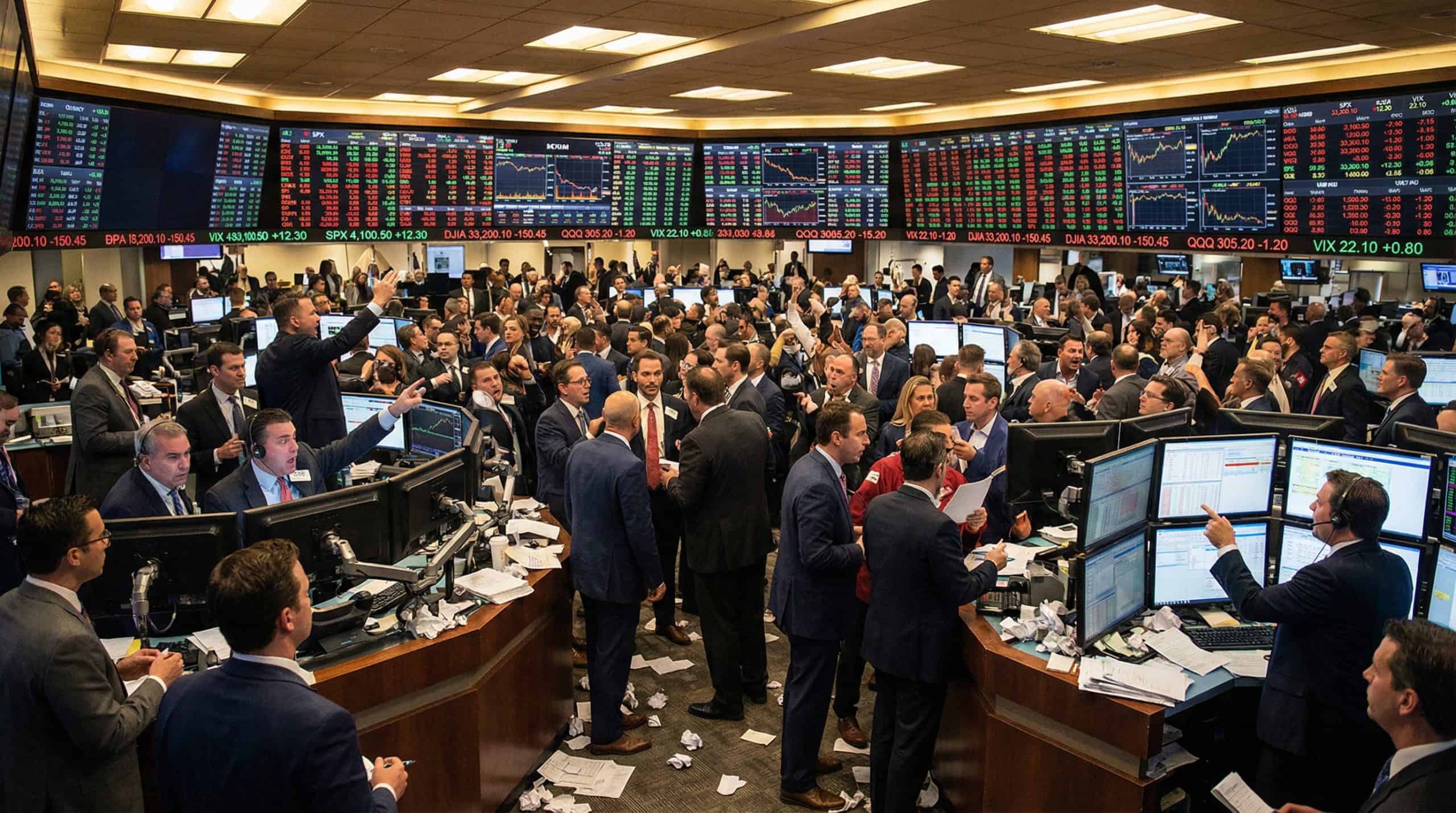
Triple witching options expiration is one of the most misunderstood events on the trading calendar. Four times a year, financial media outlets warn of massive volatility and erratic price swings, leading many retail traders to sit on the sidelines. Yet the mechanics behind this event are well-documented and repeatable.
However, for traders who understand the mechanics driving this event, triple witching creates highly predictable order flow. Instead of avoiding these days, you can use the forced buying and selling of institutional players to your advantage.
In this guide, we will break down exactly what happens during a triple witching expiration, how mechanical flows impact the market, and the specific strategies you can use to trade the event in 2026.
- What is Triple Witching?
- The Mechanics of Expiration Flows
- Pin Risk and Max Pain
- Trading Strategies for Witching Week
- Frequently Asked Questions
- The Bottom Line
What is Triple Witching?
Triple witching occurs on the third Friday of March, June, September, and December. On these four days, three specific types of derivative contracts expire simultaneously:
- Stock options
- Stock index options
- Stock index futures
Historically, this was known as “quadruple witching” when single-stock futures were also traded, but those were discontinued in the US, returning the event to its triple status.
Key Takeaway
The simultaneous expiration forces institutional portfolio managers to roll over their massive futures and options positions, creating a surge in trading volume during the final hour of the session. The resulting theta decay acceleration on expiring contracts adds another layer of complexity.
The Mechanics of Expiration Flows
To trade this event, you must understand that the volume on triple witching days is largely mechanical, not directional. Institutions aren’t necessarily buying or selling because of fundamental news; they are transacting because their contracts are expiring.
The Role of Market Makers
When institutions roll massive index options positions, market makers must take the other side of those trades. To remain delta-neutral, market makers immediately buy or sell the underlying stocks.
This dynamic—where derivative hedging drives the underlying stock price—is known as “the tail wagging the dog.” If a massive block of put options expires worthless, market makers who were short the underlying stock to hedge those puts must buy the stock back, creating a mechanical rally.
Pin Risk and Max Pain
One of the most observable phenomena during a triple witching week is the tendency for heavily traded stocks to gravitate toward specific strike prices. This is driven by two concepts.
Max Pain Theory
Max pain is the strike price where the highest number of open options contracts (both calls and puts) will expire worthless. Because market makers are generally net sellers of options, they have a financial incentive to see the stock close near this price.
Pinning the Strike
As expiration approaches, gamma increases dramatically for at-the-money options. Understanding implied volatility behavior during these periods is essential for managing your positions. Market makers hedging their exposure are forced to buy the stock when it drops below the strike and sell it when it rises above the strike. This continuous hedging acts like a magnet, “pinning” the stock price exactly at the heavy open interest strike. Traders who track their risk-reward ratios can use this pinning tendency to structure high-probability credit spread trades around the expected pin.
⚠️ Risk Warning
Never hold short options into the final hour of a triple witching Friday if they are near the money. The extreme gamma risk can turn a winning trade into a massive loss in minutes.
Trading Strategies for Witching Week
Rather than guessing the direction of the market, the best strategies for triple witching capitalize on the mechanics of the event.
Strategy | Setup Timing | Goal |
|---|---|---|
Iron Condors | Wednesday before Expiration | Profit from the stock pinning near Max Pain. |
Calendar Spreads | Thursday before Expiration | Capitalize on the rapid crush of front-month implied volatility. |
0DTE Mean Reversion | Friday (Witching Day) | Fade extreme mechanical moves in the final hour of trading. |
If you are holding longer-term directional positions, the best practice is simply to roll them to the next month on the Wednesday before expiration, entirely avoiding the Friday chaos. Proper position sizing is especially important during witching week, as the increased volatility can amplify losses on oversized trades.
Our #1 Pick OptionsPro Track open interest clusters, analyze Max Pain levels, and manage your expiration week risk automatically.
Frequently Asked Questions
Here are the most common questions traders have about navigating triple witching expirations.
When is the next triple witching day?
Triple witching always occurs on the third Friday of March, June, September, and December.
Does the market always drop on triple witching?
No. The market does not have a directional bias on witching days. The volume is high, but the price action is usually choppy and mean-reverting rather than a straight trend down.
What happens if I forget to close my options on witching Friday?
If your options are out of the money, they will expire worthless. If they are in the money by even $0.01, the OCC will automatically exercise them, resulting in you buying or shorting 100 shares of the underlying stock per contract over the weekend.
Should beginners trade on triple witching days?
Beginners should generally avoid opening new positions expiring on a triple witching Friday. The extreme gamma risk and mechanical flows make it difficult to trade based on standard technical analysis.
Final Thoughts
Triple witching is a mechanical event, not a fundamental one. The massive volume seen on these four Fridays is driven by institutions rolling their derivative exposure and market makers hedging their books.
By understanding concepts like Max Pain and strike pinning, you can stop fearing expiration week and start using the predictable order flow to structure high-probability trades. Just remember to use your options trading journal to plan your exits well before the final hour of trading. Building a structured trading routine around these quarterly events will help you stay disciplined when the volume spikes.