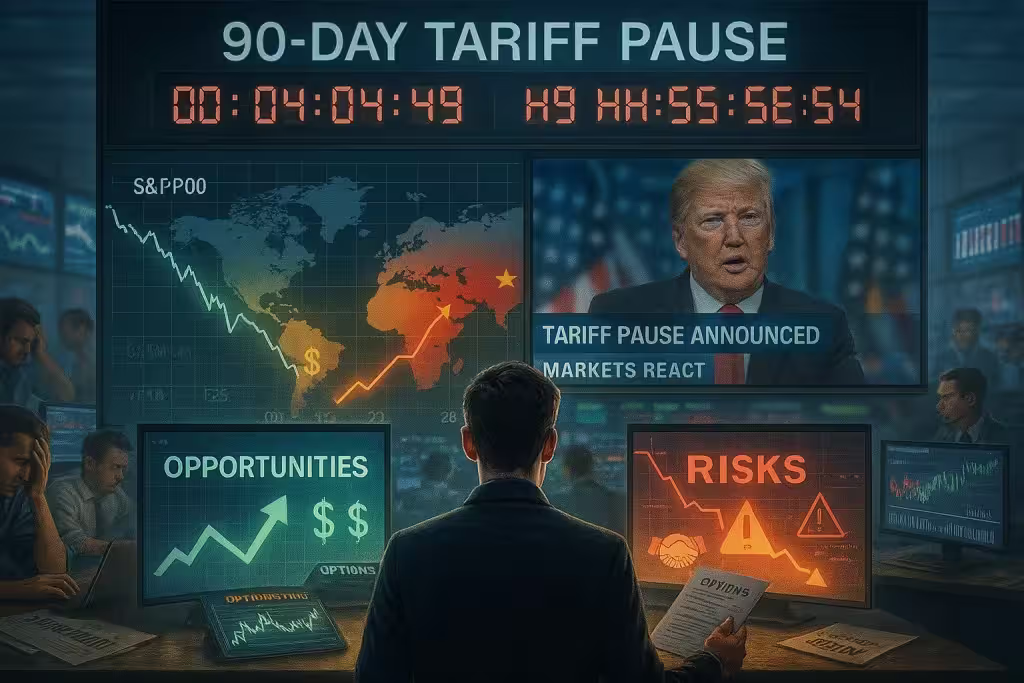
Are you trying to make sense of the recent 90-day tariff pause announced by President Trump? While the stock and option markets have reacted positively to this change as volatility and uncertainty have been reduced, some traders remain skeptical about the future success of the investments in their portfolios. The beauty of trading options, though, is that you can make money even when the future is uncertain and the market outlook isn’t the greatest!
This guide will cover everything you need to know about the significance of Trump’s 90-day pause (for all countries except China) and how you can trade successfully around it. Once you are aware of the risks and opportunities that come with this unique situation, you can begin developing strategies for trading options dynamically during this 90-day period—secure a profit no matter what happens!
Background on the 90-Day Tariff Pause
To understand why Trump has recently instituted a tariff pause for over 75 countries, it’s key to know what Trump’s original intent was behind using these tariffs. They are a negotiation tool. Tariffs can be used as leverage to attain a better trading deal for the United States with its primary trading partners.
Because the US has one of the best positions in the world economy, Trump was in a place where he could raise tariffs on other nations to force them into coming to the table to negotiate a better deal. Too many of these smaller nations are too reliant on the US to be able to ignore these tariffs and stay viable.
Original Tariff Rates
To give you a better idea of the tariff rates we’re referring to, check out some of the countries with the highest tariff rates imposed by the United States:
- Cambodia: 49% tariff
- Vietnam: 46% tariff
- Thailand: 36% tariff
- Taiwan: 32% tariff
- South Africa: 30% tariff
- Japan: 24% tariff
New Rates Following Pause Announcement
These nations, along with many others affected by the tariffs (75 counties in total), contacted representatives in the United States from the Department of the Treasury, Department of Commerce, and the Office of the United States Trade Representative (USTR) earlier this week to work out new trade deals with the US. Because these 75 countries came to the table, Trump implemented a 90-day pause on tariffs for these nations, though everything was brought down to a reciprocal tariff rate of 10% during this period.
Something interesting to point out, however, is that Trump excluded China from this pause. In fact, China got the opposite treatment due to its disrespectful response to Trump’s tariff policy. He increased tariffs on Chinese goods to 125% from 104% earlier in the week. We’ll address this more in a bit.
Rationale behind the Pause
Many have speculated that there are two primary reasons that President Trump put a temporary pause on the tariffs for the 75 countries who came forward to work out new deals.
- Response to Negotiations: The 90-day pause gives the United States the time to work out new trade deals with the 75 countries who willingly came to negotiate new terms. The pause was also designed to give those countries willing to cooperate a reprieve from these costly tariff rates and show the rest of the world that those working with the United States to work out new deals would be rewarded for acting in good faith.
- Aim to Alleviate Market Volatility: Putting a 90-day pause on the tariffs (while still maintaining a smaller reciprocal rate of 10%) helped to put traders and investors in the world markets at ease. Stability came back to these markets when the threat of a continual war was put to bed.
Immediate Market Reactions
The markets mostly reacted positively to the news that Trump was putting a 90-day pause on the new tariff rates while still maintaining the reciprocal rate of 10%. There are still some traders and investors who are wary of what the future holds with China, but many are starting to understand tariffs as a way to negotiate deals.
- The Stock Markets Surged: Traders and investors took well to the news of the 90-day pause. There was an immediate surge in U.S. stock markets following the announcement as traders felt more confident. This reassurance came primarily from the realization that tariffs were being used as a negotiation tool. The high levels of volatility and uncertainty that had come up originally when Trump began implementing the tariffs last week dissipated when the pause went into effect.
- Some Lingering Market Uncertainty: Despite traders and investors taking well to the news of the 90-day pause, there’s still some uncertainty about how Trump is dealing with China. The continued tension between the two countries has many concerns.
Impact on Market Sentiment
In light of Trump’s 90-day pause on tariffs (except for China), market sentiment over the last few days has been a mixed bag. There have definitely been some positive developments that have come out of the events from this week, but there are still some areas of uncertainty for certain investors, especially those who might have money staked on the success of the Chinese economy. We’ll address everything you need to know about current market sentiment and how you can use that to inform your strategy going forward.

Positive Shifts
The good news in all of this is that many traders and investors realized that Trump’s intention with using the tariffs all along was to get other countries to come to the negotiating table, to realize that the United States was serious about wanting to be respected. The 90-day pause was well received, boosting investor confidence as they saw an easing of the trade tensions with multiple countries.
With more certainty about what the future trade relationships might look like between the US and its primary trading partners, it makes it much easier for traders and investors to visualize opportunities for trading options around international trade deals and to bet on which nations are going to experience the most economic growth as a result of these negotiations.
Ongoing Concerns
The primary concern going forward for many traders and investors is China and Trump continuing to double down on them with increased tariff rates when they aren’t submitting to his demands. How long will it take before one party or the other will back down? Trump is determined to get a trade deal with China where the United States isn’t taken advantage of, and China is determined to maintain its status in the world market, despite the new tariff rates.
These concerns aren’t without merit, but there is a good likelihood of China realizing that incurring a larger tariff rate for not cooperating on top of their current economic situation (characterized by deflation and decreased domestic demand) isn’t a viable future for them.
If we continue to see an escalation of trade conflict with China, this could have adverse effects on companies outside of China that rely on the country for its goods. It could lead to increased prices for these countries, which could result in the costs being passed to the consumer and its implications.
In terms of retaliatory measures from China, there are potential scenarios where China could target areas of the United States that stood behind Trump during the 2024 US Election. For instance, China could target the agricultural export sector, affecting places like the Upper Midwest and Rust Belt. China, in fact, has taken action against the Trump tariffs by announcing export control of minerals that are a critical component of the US defense and semiconductor industry.
Volatility Considerations
When it comes to the Trump tariffs, one of the other keys to understanding the current market sentiment is knowing that there are still some fluctuations in market indices and sector-specific impacts. So, across the board, you aren’t seeing the same volatility and uncertainty that you were seeing last week when the higher tariff rates first went into effect. Right now, the volatility considerations are with the affected sectors or industries that are dealing with the 125% tariff rate on China.
We’ll address this point later in the guide, but it’s key for traders to keep a close eye on new geopolitical developments, which can be done with helpful tools like news aggregators, news websites, and news tickers. Keeping in the loop on the events that are most relevant to the Trump tariffs can help traders gauge possible market volatility early and form a plan for dealing with it when it comes.
Opportunities for Options Traders
Let’s talk about some of the positive things that can come out of this Trump tariff situation for options traders. There is plenty of market optimism now that the tariffs have been put on hold to make room for negotiating new deals with 75 nations, plus there are some opportunities to leverage volatility to your benefit. We’ll also talk about some of the changes that options traders have to diversify their investments now that there are reduced tariff barriers for the next 90 days.
Capitalizing on Market Optimism
Look for sectors or industries that are benefiting the most from the tariff pauses and then use some bullish strategies for securing a profit from these positions. For instance, traders might want to sell call options on stocks that are expected to grow in value as a result of the Trump tariff pause. A few examples of industries that did well following the announcement of the pause were the airlines and semiconductor companies, so these might be a few industries to rally around and sell call options on.
Another way to capitalize on market optimism during this time is to identify undervalued options in industries poised for growth. We would point to American manufacturing and energy production as two excellent examples of this, due to the fact that Trump will be focusing on the growth of these sectors during his second term in office.
Leveraging Volatility
Even when the market has its moment of uncertainty over the next 90 days, there are ways for option traders to make money, and they don’t even have to get the direction of the market correct. As long as there’s volatility in certain sectors or industries, traders can use straddle and strangle strategies to profit from expected market swings. A few good examples of volatile sectors would be technology and consumer discretionary.
For options traders to get these volatility plays right and to bring in a decent profit, they must make a priority of monitoring and assessing implied volatility to inform trading decisions. This metric is a representation of the market’s expectation of future price fluctuations in the underlying asset, offering insights into the areas of the economy that are expected to be turbulent.
Diversification Benefits
The next 90 days also provide option traders the time to explore opportunities in international markets with reduced tariff barriers. Traders can begin diversifying their investments while there’s time for foreign sectors to remain profitable with minimal disruption from tariff uncertainties. It’s prime time for anyone to rebalance their portfolios to mitigate sector-specific risks.
Risks and Considerations
Along with the opportunities that come from trading during this 90-day pause, there are some risks that come from trading in this window of time, especially considering the uncertainty around the tariffs that remain on China.
Uncertainty with China
It’s difficult to say what will happen in the continuing trade war between the United States and China. There is the real potential for further escalation as the United States is determined to get fair trade deals with China where they aren’t getting ripped off, while China is digging in its heels and intends to maintain the power, control, and influence it already has in the world market.
There is the possibility that China, like the other countries, caves and finally comes to the negotiating table. Though many officials from China have been signaling that they want this trade war to continue, the Chinese economy isn’t in the best place to take on a challenge like this. They’re still dealing with deflationary pressures that came as a result of their zero-COVID policies in 2021/2022 and the subdued domestic demand (which is typically addressed with money printing to stimulate growth). Pile a tariff rate of 125% from the United States, and it could be a matter of days before they crack and are willing to negotiate a new deal.
In the meantime, what does the impact of increased tariffs on Chinese goods look like for the rest of the world, in particular, global supply chains?
Supply chains will likely be disrupted as companies in other countries have to figure out how they want to proceed. They could still import goods from China, but they’d have to raise their prices to be profitable, passing on the costs to the consumer. This could lead to a reduction in demand for these goods or services. The other scenario is that these companies would have to source from other places or move production closer to home.
Short-Term Nature of the Pause
There is a chance of these tariffs being reinstated if the United States cannot come to agreeable terms with their trading partners. Those who cooperate with the US and hash out a fair deal will likely not see their tariff rate go up, but those who don’t have China as an example of what will likely happen if they don’t play ball with the United States.
Due to the possibility of tariff reinstatement after the 90 days, it’s important for options traders to remain vigilant regarding policy changes and extensions. Use news websites, aggregators, and tickers to keep on top of what might be coming down the line to give yourself enough time to form a strategy to deal with the changes.
Market Volatility
Rapid shifts in investor sentiment have a way of leading to unpredictable market movements. As is the case with other forms of trading online, options traders must have sound risk management practices worked into their trading plan to be prepared for the worst. Traders must use stop-loss orders, conservative position size, and have their investments diversified across multiple sectors and asset classes to hedge against potential losses.
To get an idea of where market sentiment lies, traders can use helpful trading tools like the CBOE Volatility Index (VIX) or news sentiment analysis to find out if the market is feeling bearish or bullish around the economic policies that Trump is implementing around foreign trade.
Strategies for Options Traders
If you’re looking for some guidance on how to proceed with options trades during this 90-day pause on the Trump tariffs, keep reading, and we’ll talk about the importance of staying informed about the latest news developments during this period. We’ll also give you a few tips on developing a portfolio that gives you the flexibility to maneuver in a way to get around new policy changes and the uncertainty or volatility that might come with them. As with any other form of trading, remember to use risk management practices to minimize your potential losses when the markets go against you.

Staying Informed
A good portion of keeping informed on the possible future of the options or stock market is regularly monitoring news sources for updates on trade negotiations and policy changes. One of the most powerful tools for keeping up-to-date on any possible changes to policy or negotiations when it comes to international trade are economic calendars, which allow them to track the most significant events.
There are several other useful tools you could be using, including the following:
- News Tickers—You can find this tool on many trading apps or websites, and they offer real-time news feeds or tickers. They are useful in keeping up to date on the latest developments that could impact your investments.
- Customized Alerts—Traders can use alerts or notifications that they can curate to their specific trading goals and approach. They can set up customized alerts for specific company news, price movements, or events.
- News Aggregators—In addition to the tools provided with a broker app, traders can use new aggregation platforms to compile news from various sources to get the full picture of what’s occurring in the market as a whole.
- News Websites—A few good examples of news websites that can keep you up to date on economic events, market trends, and company news are the Wall Street Journal, CNBC, and Bloomberg.
- Stock Screeners—Identify potential trading or investment opportunities with stock screeners or scanners that let you search based on specific criteria that are rooted in your personal trading plan or strategy.
Flexibility in Positions
Having flexibility in your positions refers to the ability to tailor each of your positions that work well for your investment strategy and your personal tolerance for risk. Flexibility can help traders achieve profit from a wide array of market conditions that could come down the pike, and it even allows traders to benefit when the market is neutral or sideways.
The flexibility that traders can enjoy when adjusting trading strategies in response to new information can be achieved in a few different ways:
- Traditional Options Strategies: Options traders can use options contracts to make money from specific market scenarios using strategies like spreads, combinations, or tailored positions that profit from upward or downward price movements.
- Hedging: Options can be used to protect existing investments from potential losses in addition to bringing in money from price speculation or playing volatility.
- Leverage: Using options, traders can control a larger position in the underlying asset with a smaller initial investment.
- Generate Income From Premiums: Traders can also use options to generate income from strategies like covered calls where they collect a premium upfront from simply selling call options.
The biggest advantage to having flexibility in your options trading positions is to be prepared for any situation that might come your way. Being prepared to hedge positions to protect against adverse movements is a terrific way to protect your investments and still make some money, even if the markets are moving against you.
Risk Management
Good risk management practices cannot be stated enough as a major part of success for online options trading. It’s a significant part of any trading plan, no matter your experience or trading background.
- Set Clear Profit and Loss Targets—For each of the positions that you take on, choose a level of loss you’re okay with taking on if the market moves against you and a profit level that you’re shooting for if everything goes the way you’d like it to. This can help you stay aligned with your strategy and trading goals, giving you a framework to operate under.
- Use Conservative Position Sizes—For each trade, only allocate around 1-2% of your total capital to each position. This allows you to minimize potential losses with time, and having a diversified portfolio helps to ensure that your losses are spread over multiple industries or sectors.
- Diversifying Your Options Portfolio—Spreading exposure across various sectors and asset classes can save you a lot of capital over time in the event that your investments go south. Having too much money tied up in a single area of the economy can lead to you losing most of your money.
Final Thoughts—Navigating the Tariff Pause With Strategy
The 90-day tariff pause for options traders provides several opportunities to make bullish bets on businesses or companies that are expected to benefit from this pause and to use volatility plays on those sectors or industries that are expected to see volatility or uncertainty. There isn’t a whole lot you can control on what Trump decides to do or how China is going to react, but you can control where your money is invested and have it sitting in positions where prices are expected to increase.
Staying informed and adaptable in this dynamic trade environment is your key to keeping one step ahead of what’s coming and forming the best possible trading plan where you can keep your investments safe and still make money, even when the market moves in unexpected ways. Employ prudent risk management practices to navigate opportunities and challenges during this period, and you’ll find yourself on the winning side of the Trump tariff curve more often than not!