
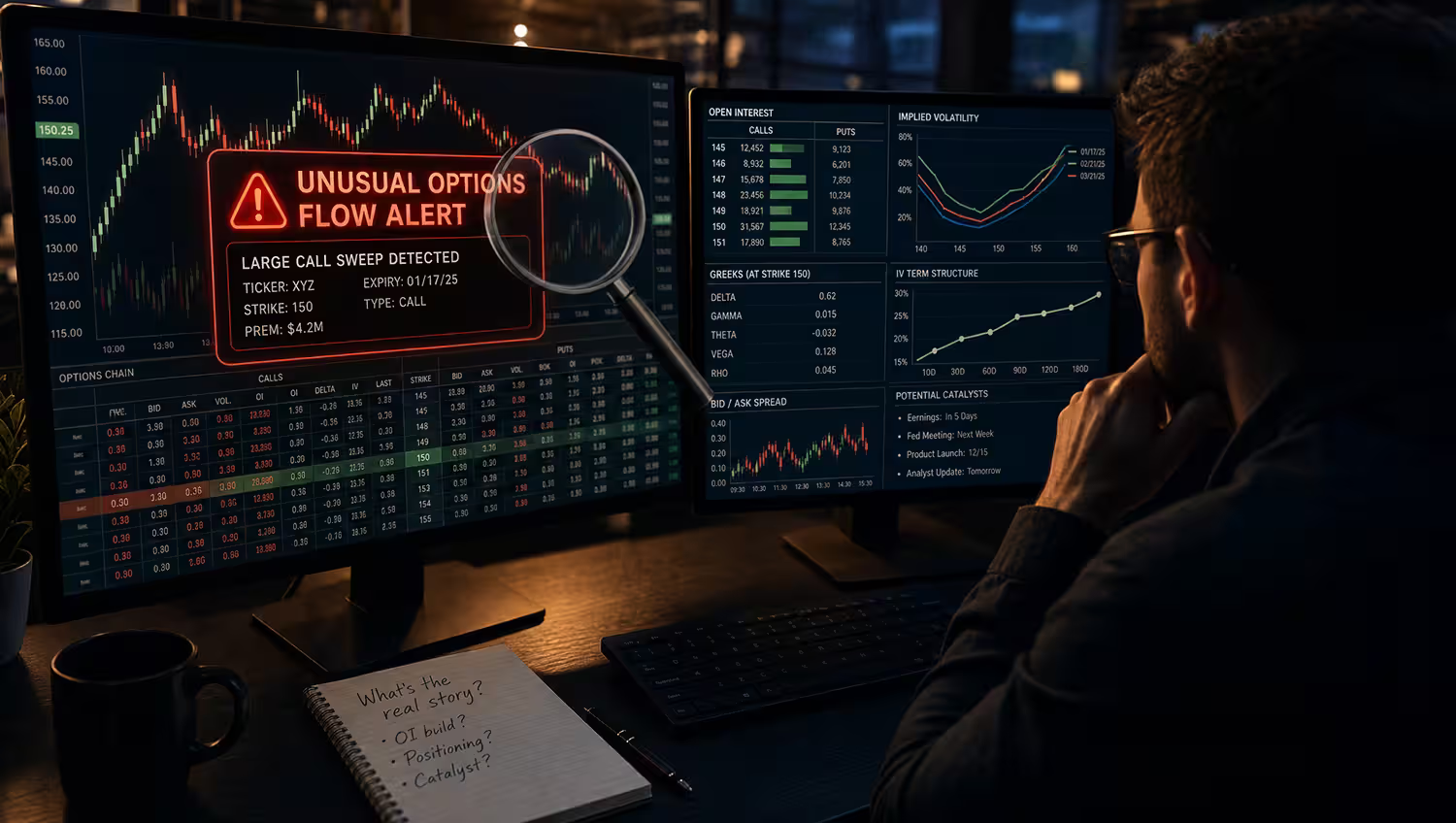
An options flow alert can make a trade feel urgent. A trader sees a large call sweep, an unusual premium number, a strike above the market, and a timestamp that looks fresh. The alert appears to say that somebody with size knows something.
That is the dangerous shortcut. A flow alert can show that contracts traded, but it usually does not explain why they traded, whether the order was opening or closing, whether it was tied to stock, or whether the visible leg was part of a larger spread or hedge.
The better use is slower and more skeptical. Treat the alert as a research prompt, then rebuild the missing context around price, expiration, open interest, implied volatility, bid-ask spread, catalyst, and position risk before deciding whether the information is useful at all. For additional authoritative context, see the Cboe U.S. options daily market statistics.
Start With What The Alert Actually Shows
Most retail flow alerts compress a messy order into a few fields: ticker, call or put, strike, expiration, volume, premium, trade price, bid, ask, timestamp, and sometimes a label such as sweep, block, or above ask. Those fields are useful, but they are only the visible surface of the trade. For a regulator education overview of standardized option basics, see the SEC Investor.gov introduction to options.
A sweep often means the order interacted with liquidity across multiple exchanges or price levels. A block can show size, but not necessarily conviction. An above-ask label can suggest urgency, but it still does not prove the trade is directional, opening, or suitable to copy.
This is why options order types matter. Before a trader interprets an alert, they need to understand how orders can be routed, filled, combined with other legs, or used to manage an existing position.
Alert Reality Check
- A flow alert is a record of activity, not a complete trade thesis.
- The alert may not reveal whether the trade opened a new position or closed an old one.
- A large premium number can reflect contract count, option price, spread width, or volatility demand.
- Sweeps and blocks can be speculative, hedging-related, tied to stock, or part of multi-leg trades.
- The same alert can look different after checking open interest, implied volatility, the catalyst, and liquidity.
- Flow is most useful when it improves research questions, not when it becomes permission to copy a trade.
What The Alert Leaves Out
The most important information is often missing from the screenshot. This table turns the alert into a set of questions before the reader assigns meaning to it.
Alert Field | What It Can Suggest | What Still Needs Checking |
|---|---|---|
Large call sweep | A buyer wanted exposure quickly or liquidity was spread across venues. | Was the trade opening, closing, hedging, or paired with stock or another option leg? |
Premium paid | The transaction had visible dollar size. | Was the option already expensive because implied volatility, event risk, or spread width was elevated? |
Volume above average | Today is busier than normal for that contract. | How does volume compare with open interest and nearby strikes? |
Trade near the ask | The buyer may have crossed the spread to get filled. | Was the quote wide, stale, fast-moving, or affected by another linked trade? |
Short expiration | The trade may be focused on a near-term catalyst. | Does the expected move leave room after premium, time decay, and execution costs? |
A Single Alert, Slowed Down
Imagine a stock trading near $78. A platform flags a sweep of 4,000 weekly $85 calls at $1.20, printed near the ask, with total premium around $480,000. The screenshot looks bullish because the strike is above the market and the size is easy to notice.
Now slow it down. If open interest was already 18,000 contracts, some of that volume could be closing activity. If the bid-ask spread was $1.00 by $1.25, the fill near the ask may say more about liquidity than certainty. If earnings are tomorrow, the premium may include event volatility that can disappear quickly.
The useful conclusion is narrower than the alert suggests: there was notable activity in upside calls. That may be worth researching, but it does not prove the buyer is informed, early, unhedged, or expecting a simple directional move. A reader still has to compare the flow with the stock setup, option price, catalyst, and exit conditions.
Where Flow Alerts Mislead Retail Traders
- Treating a single-leg alert as if it shows the entire position.
- Assuming call flow is bullish or put flow is bearish without checking hedging context.
- Ignoring whether the alert may reflect closing activity, a roll, or a volatility trade.
- Forgetting that crowded alert-driven trades can create reversal risk when the setup becomes too obvious.
- Focusing on premium paid while skipping breakeven, spread width, and implied volatility.
- Copying a trade after the easiest part of the move or volatility expansion has already happened.
- Using a platform label as a signal instead of building an independent risk review.
How To Use Flow Without Copying It
A better process starts by writing down what the alert actually proves. It proves contracts traded at a stated time and price. It may also show urgency, size, or unusual activity relative to normal volume. It does not prove intent.
Next, compare the alert with the chain. Look at surrounding strikes, same-expiration volume, open interest, implied volatility, bid-ask spreads, and whether the trade fits a known catalyst. If the only evidence is that the alert looked large, the research is not finished.
Then compare the contract with alternatives. A different strike, a longer expiration, a defined-risk spread, or no trade may better fit the thesis. The broader options strategies section can help readers think in structures rather than copying a single contract from an alert.
Readers who want a deeper process can compare this article with OptionsTrading.org’s guide to options flow analysis and the related workflow for how to build a watchlist around options flow. The key is to make flow part of the research process, not the research process itself.
Options Flow Alert Triage Checklist
- I identified the ticker, contract type, strike, expiration, trade price, bid, ask, timestamp, and premium.
- Compare volume with open interest and nearby strikes before assuming new demand.
- Check whether the alert could be closing activity, a hedge, a spread leg, a roll, or stock-tied order flow.
- Review implied volatility, expected move, breakeven, time decay, and catalyst timing.
- Check bid-ask spreads and whether execution would be realistic for my account.
- Separate the stock thesis from the option-price thesis.
- Review options risks before treating the alert as useful context.
- Understand that flow alerts are educational context, not personalized financial advice.
FAQ
These questions focus on reading flow alerts without turning a partial data point into a trading instruction.
Are options flow alerts predictive?
Not by themselves. They can show where trading activity appeared, but they do not reveal the full reason for the trade or whether the option is priced attractively.
Does a sweep mean smart money is buying?
A sweep can show urgency or fragmented liquidity, but it does not prove informed buying. The order may be hedged, closing, tied to stock, or part of a larger position.
What should I check first after seeing a flow alert?
Start with volume versus open interest, then review strike, expiration, premium, bid-ask spread, implied volatility, catalyst timing, and whether the print may be part of a larger trade.
Should beginners copy flow alerts?
Beginners should be especially careful. Copying alerts can hide position sizing, execution, volatility, and exit-plan risks. Flow is better used as a prompt for research.
Use The Alert To Slow Down
The best flow alerts do not remove judgment. They create a reason to ask better questions about what traded, what the market already priced in, and what the option still has to overcome.
That shift matters for retail traders. Instead of asking whether the alert is bullish or bearish, ask what it omits. Intent, position structure, volatility, liquidity, and exit risk often matter more than the headline print.
A disciplined trader can still use flow. The stronger habit is to slow the alert down, rebuild the missing context, and decide whether the trade makes sense after the screenshot stops feeling urgent.
Sources Used For Flow And Risk Context
Readers can compare options-flow interpretation with FINRA options education, the OIC overview of the option Greeks, and the OCC options disclosure document. Any live alert, ticker, volume, open-interest, spread, implied-volatility, or catalyst example should include a dated review during final editorial checks.