
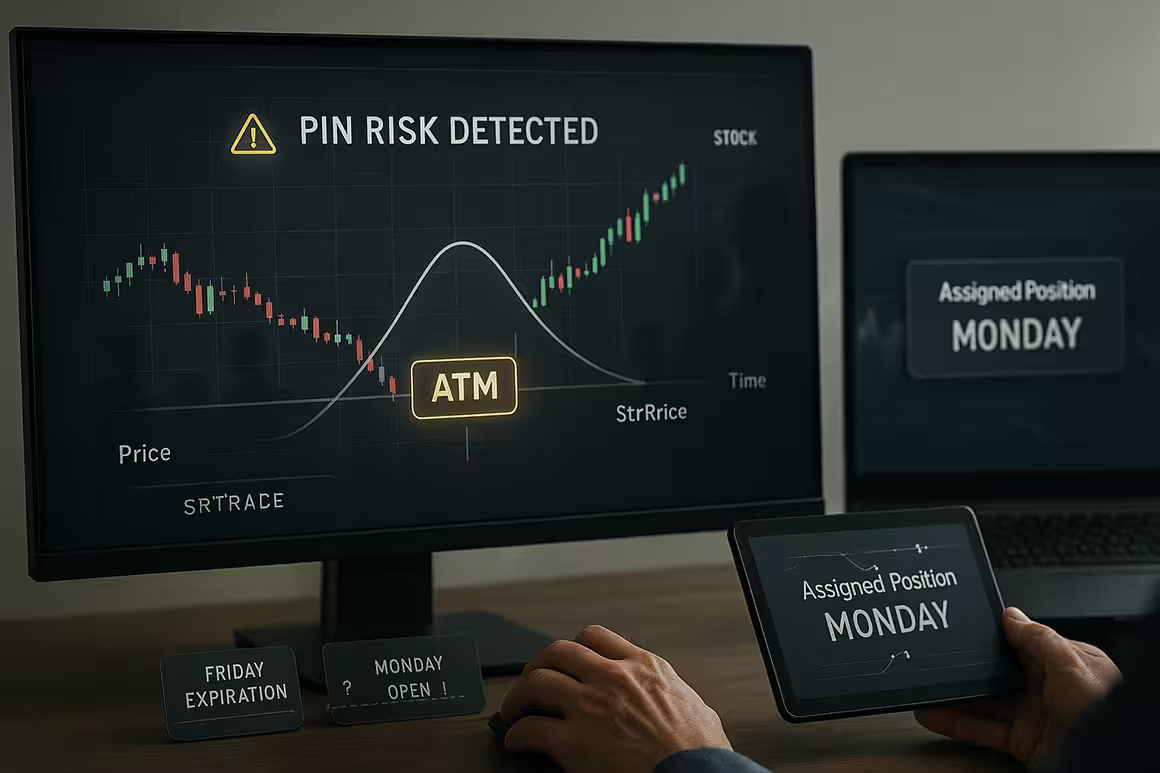
You thought your trade was finished… until it wasn’t.
Many traders underestimate what can happen after options expire right at the money. Pin risk is the uncertainty that arises on whether the option will be exercised or not when the stock price settles right at the strike price. If the option is assigned, the writer may not know that they are assigned on Friday, which could lead to unexpected positions opening on Monday.
Our guide will cover everything you need to know about pin risk. We’ll address what it is, how it happens, and why it ultimately matters in your options trading strategy. You can save yourself a lot of time, uncertainty, and apprehension by making proactive decisions which can keep you away from being in a situation where pin risk could become a factor.
Pin Risk Explained
Pin risk in options trading refers to options sellers experiencing uncertainty when the price of the underlying asset is close to the strike price of the option when the expiration date arrives. The uncertainty in this situation arises from ambiguity of whether the options will be exercised or not, making it unclear as to how many long options should be exercised and how many shorts they will be assigned on.
- When the stock closes at the option’s strike price, this is considered “pin risk” because the seller is unsure if they will be assigned their short option and have to purchase or sell the shares. The trader might not secure a profit in this scenario, due to the stock price being the same as the strike price (or right around the strike price).
- Uncertainty around assignments or exercises can create unexpected exposure. There’s the possibility that the sell might be assigned on their short option which could involve buying or selling shares at the market price. This could be a different outcome than what they had originally anticipated. The result is unwanted exposure (either long delta or short delta) the following Monday.
Real-Life Examples of Pin Risk
What does pin risk look like in the real world? We’ve prepared a few examples of these ambiguous situations that leave a lot of options traders with uncertainty to give you a better idea of how it would work in a real-world scenario.

Example 1
A covered call on AAPL closes at exactly the strike price, which means the stock price at the expiration date is the same as the strike price of the call option. The call option holder wouldn’t profit from exercising the option, even though they have the right to buy AAPL at that strike price. In the meantime, the trader who sold the covered call will probably allow the option to expire and keep the premium they received from selling the call, though it’s not a guarantee. This is where the ambiguity of the situation can create a scenario of pin risk for the trader.
Example 2
A trader holds short puts that expire at the ATM. In this situation, the option will expire worthless and the seller gets to keep the premium they initially received. Because the strike price of the trader’s put option is the same as the underlying asset’s current market price, there’s no reason for the option holder to exercise the option because there’s no intrinsic value.
Example 3
Professional traders facing large open interest near strike prices are a good sign that there’s a strong concentration of investors/traders around that price level, as well as a good chance of market movement around that price. Not only does the high open interest suggest great liquidity, but it also reflects possible market sentiment where traders would take long positions if they had bullish sentiment or take short positions if they had bearish sentiment. Ultimately, this large open interest indicator can clear up a lot of the uncertainty that could come from pin risk.
Why Pin Risk Can Catch You Off Guard
What is it about pin risk that can create such an uncertain and possibly chaotic situation for online options traders? We’ve outlined some of the biggest uncertainties that come with pin risk. As you gain more knowledge and familiarity with pin risk (why it happens and how to possibly deal with it), the less it will catch you off guard and the more you’ll be able to successfully maneuver around the situation. It’s key for traders to investigate how their broker website or mobile app deals with at-the-money options (we’ll address this in more detail below) to clear up another level of uncertainty.
- Uncertainty of Exercise Decisions: You don’t control what the other party does, so this can create a lot of uncertainty for traders. These pin risk situations make it difficult to predict whether the options will be assigned, which can leave the trader exposed until the following Monday.
- Market Movement After Hours: The stock may move post-close but pre-assignment. This means that it could move in price after the regular trading day closes but before the options assignment is processed. If the stock prices move in the trader’s favor before assignment, they could still close their option position for a profit. They can do this even if they don’t know for sure if the assignment will occur.
- Brokers’ Handling of ATM Options: Different brokers may treat near-the-money contracts differently, which can add another level of uncertainty on top of the pin risk uncertainty. It’s best to know how your broker of choice deals with these matters to have a bit more clarity on the situation if it arises.
- Potential for Unhedged Positions: If assigned unexpectedly, you may end up with unintended long/short stock.
How to Manage or Avoid Pin Risk
If it’s at all possible, traders should aim to avoid pin risk, but there are some cases where these situations could creep up unexpectedly. In that case, it’s key to know how to manage pin risk effectively. The following section will go over all the primary ways to avoid pin risk altogether or to effectively manage it if you’re caught up in that situation with a position in your options portfolio.
- Close Positions Before Expiration: Especially for ATM or near-ATM options, traders should close out these positions as soon as possible. Ideally, you’ll want to secure a profit in the process but it doesn’t always happen due to the current market conditions or the strategy that’s being employed. Traders have to decide if they want to deal with the uncertainty of the option being exercised or not, or to possibly take a loss early to avoid the pin risk.
- Use Limit Orders to Roll or Exit: Don’t wait until the last second. You can deal with pin risk by rolling your contract to a further out expiration date to avoid a situation where the stock price settles right at the strike price. This can be accomplished using limit orders where you set a maximum price for a buy order or a minimum price for a sell order. The order will only execute at the specified limit price or better.
- Know Your Broker’s Rules: Understand how your platform handles expiration and assignments. Different brokers may treat near-the-money contracts differently, which can add another level of uncertainty on top of the pin risk. Know ahead of time how your broker deals with these matters to have a bit more clarity.
- Hedge Accordingly: When pin risk gets high and it looks as if the stock price will settle around the strike price, traders can use strategies like spreads or protective options as a hedge against options going to exercise.
Advanced Tips for Experienced Traders
For those who fancy themselves experienced options traders who are looking to improve their approach, we’d recommend checking out these advanced tips for dealing with pin risks and navigating the entire situation proactively. Not only will these help you get around pin risks when the uncertainties arise, but these tips will show you ways to ensure you’ll never get into a pin risk situation.

- Watch Open Interest Around Strike Prices: Because “pinning” can be influenced by market makers, retail traders with considerable experience can make a habit of closely monitoring open interest around strike prices, especially around expiration dates, to mitigate potential pin risks. This gives them the time to plan an early exit or to roll the expiration date out further.
- Understand Gamma Exposure: Knowing how gamma exposure works and its relationship with the option contract’s expiration date can give traders some insight into how to avoid possible pin risk. An increase in market gamma can create dealer hedging, which is when the market makers rebalance their books to neutralize risk. This activity can cause the stock to gravitate back to the pinned strike.
- Use Weekly Options Strategically: Reduce exposure time and gain better control exit points using weekly options, which largely keep you away from getting into scenarios where pin risk becomes a factor.
Final Thoughts on Pin Risk
Pin risk is often overlooked (it isn’t a rare occurrence, but it’s not so common that it’s on every trader’s radar), but can lead to unintended positions and real losses. For those who want to get around the uncertainties tied up in pin risk, it’s best to exercise proactive expiration management:
- Close out positions before the expiration date.
- Use limit orders to roll the contract to a further expiration date.
- Know ahead of time how your broker deals with in-the-money or at-the-money options—most brokers won’t exercise at-the-money options.
- Watch the open interest levels around strike prices.
- Monitor gamma levels. An increase in market gamma could be a sign that the stock price is going to gravitate back toward the strike price.
Any good trader should be using technical analysis tools—they can come in handy when monitoring at-risk trades that could possibly have stock prices that settle at or near the strike price. Options chains can be especially helpful when viewing stats on open interest of gamma levels.
Frequently Asked Questions
Let’s take a look at the questions that were most asked by our readers and customers when it came to pin risk and how to deal with it. Because there’s a lot of discussion around pin risk, we might have missed a few subjects in our guide and we hope these frequently asked questions and our answers can plug some of the gaps we may have glossed over or missed entirely.
Can I Be Assigned Even if the Option Expires at the Strike Price?
Traders can be assigned even if an option expires at the strike price. However, this isn’t a super common occurrence and probably one of the main reasons why pin risk isn’t discussed more in online trading circles. In-the-money options will be automatically exercised at expiration even if the stock price is just slightly above or below the strike. When the stock price resettles right at the strike price, the option holder might not be assigned, but could still choose to exercise. This leads to a potential assignment for the options writer.
What Happens if I Get Assigned Unexpectedly?
This means that the buyer of the option is exercising their right to either buy or sell the underlying asset at the strike price. The option writer is obligated to fulfill the contract. They can buy the share (if they sold a call option) or sell the shares if they sold a put option.
Do All Brokers Automatically Exercise ATM Options?
While the majority of online brokers will automatically exercise in-the-money options, they generally won’t exercise at-the-money options. You have to check each broker’s policy on this matter for a firm answer, one way or the other. Because at-the-money have no intrinsic value, brokers will typically allow the trader to instruct them to either exercise or not exercise the options (both at-the-money and in-the-money options).
What Should I Do if I Suspect Pin Risk Heading into Expiration?
The best thing to do in this situation is to close your positions before the expiration date or to roll your position to a new expiration date. This is a great way to get ahead of the uncertainties of a potential pin risk. By either closing out or rolling the position, traders can eliminate the potential for unexpected losses that come from the uncertainty of assignment.
Can Pin Risk Affect Both Call and Put Options?
Pin risk can affect call and put options alike, but it’s key to note that it’s more directly related to sellers (the short side of options). Call and put options are both subject to unexpected exercises and assignments, which could ultimately result in losses for the seller. It’s important to keep an eye on the stock price and work proactively to close out or roll positions if it looks like the stock price will settle around the strike price.
Does Pin Risk Happen Often—or Only in Rare Cases?
We would say that pin risk is unlikely to happen, but it’s not an exceptionally rare scenario either. It doesn’t happen all the time, but it’s likely to occur when there’s a large amount of open interest in both calls and puts off a specific strike price as the expiration date draws closer.