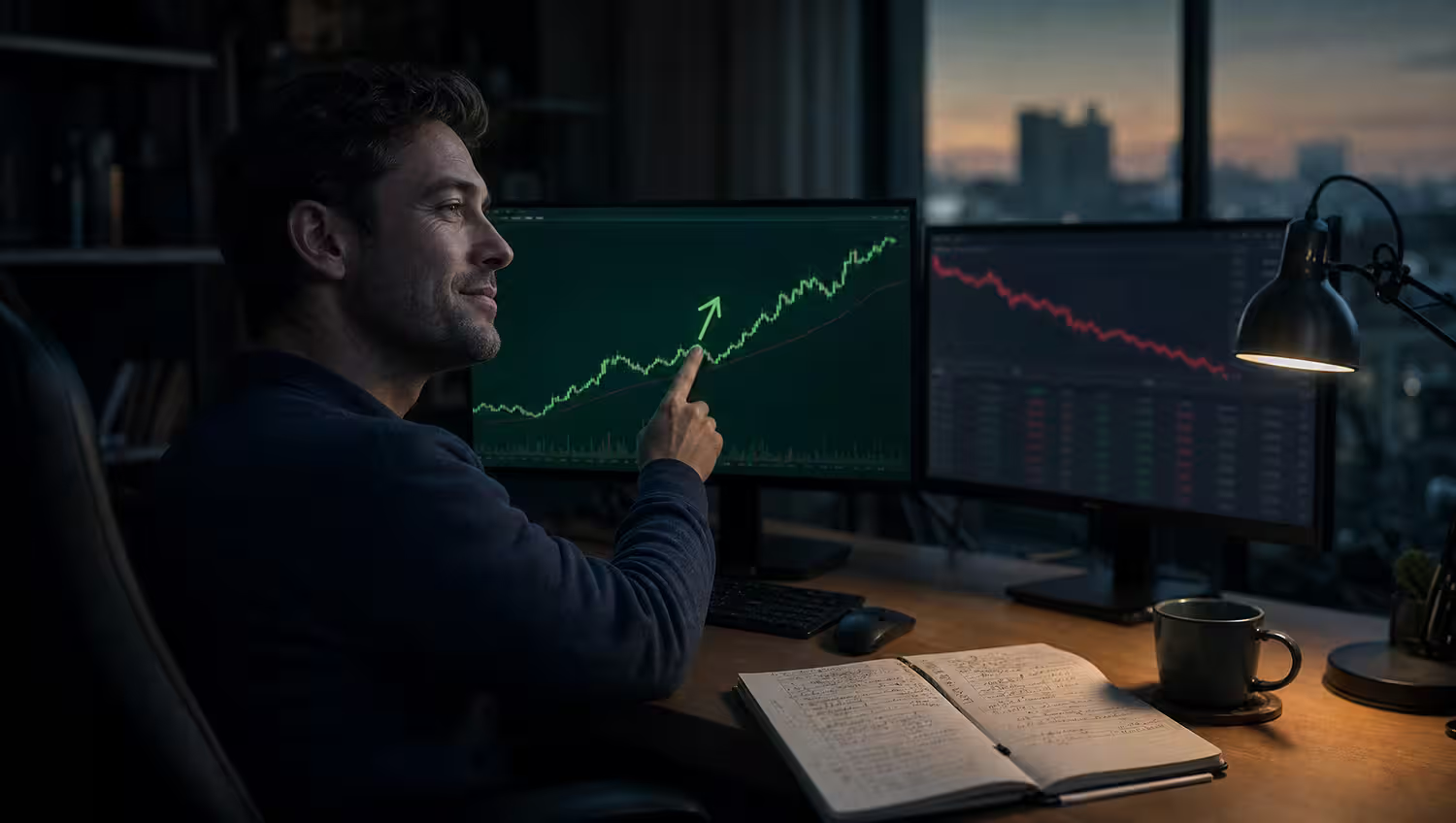
Panic selling during a market dip or buying during a rally—both of these actions go against the age-old advice in trading, which is “buying low and selling high.” Doing either of these things means that you don’t have a clear understanding of how online trading works, or you have terrible timing with trading assets and securities. We hope that this guide will help build mental resiliency against emotional trading decisions.
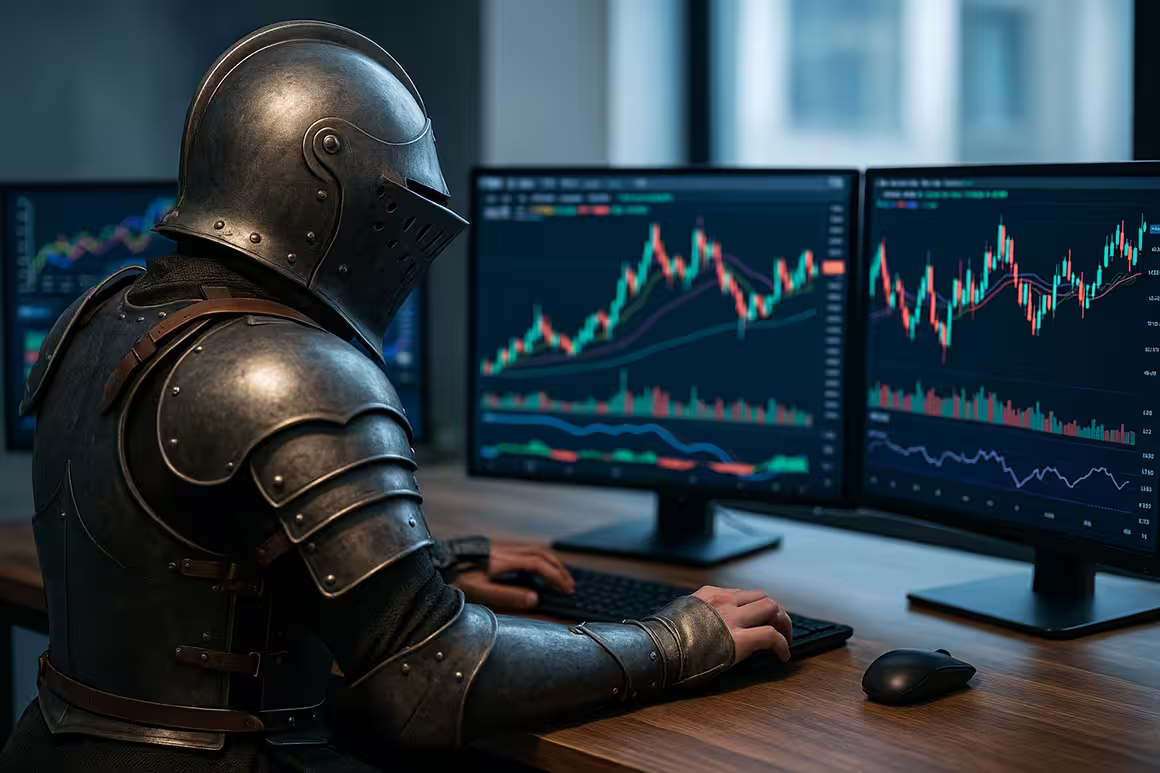
It is no secret that unhealthy emotions and trading are a volatile mix. FOMO (fear of missing out), fear, and greed can ruin trading strategies by causing the trader to stray away from their original plan and letting their emotion dictate the next move. This can result in missing out on profit opportunities and incurring unnecessary losses over time. This post will teach you how to build “emotional armor” to become more resilient and consistent, so keep reading to learn how you can protect yourself!
Understanding the Enemy—FOMO, Fear & Greed
When trading options and other securities online, traders must manage their emotions properly, which is just as important as other key elements, such as having a firm understanding of how options work and the technical skills needed to succeed. We want to touch on the role that FOMO, fear, and greed can play as emotional triggers for traders. It’s critical to not rely on these feelings, but instead create disciplined strategies for improving your trading outcomes.
What Is FOMO in Trading?
FOMO stands for the “fear of missing out,” and this can take on a form of emotional trading where traders and investors feel compelled or pressured to buy assets because they feel that they are missing out on a potential profit if they don’t. The reason that this can be so dangerous is that the fear of missing out leads many traders to enter positions at unideal entry points, which means they are overpaying for new positions at inflated prices.
Real-World Examples
A prime example of chasing trades based on FOMO is when some traders pursue the meme stocks with a lot of fervor. Meme stocks are those that gain a lot of attention from traders on social media and have big price swings that have more to do with online hype and less to do with the actual value of the stock. Without studying the fundamentals of the stocks in question and feeling the pressure of seeing everyone else trading them, some traders can experience the fear of missing out, even though meme stocks tend to be horrible investments for the majority of people who pursue them.
Why It’s Dangerous
- Late Entries: Because traders aren’t considering the historical movement of the stock and are instead being guided by FOMO, they often miss rallies around these stocks and therefore experience late entries that lead them into situations where they are buying high and selling low.
- Bad Risk-Reward Ratios: Traders guided by FOMO tend to ignore risk management and take on more risk than necessary. Not using the correct position size or not setting up stop-loss orders can lead to a risk-reward ratio that is a lot more risk than reward.
- Emotional Burnout: Not only does FOMO take a toll on the trader’s mind, but it has several unintended consequences that add to the stresses the trader is already feeling. Making trading decisions based on FOMO and having them fall through can lead to further anxiety and stress, as well as frustration and regret.
- Getting Away From Your Trading Plan: Straying from your trading plan can lead to inconsistent results. In addition, letting FOMO guide your decisions can result in entering into a higher number of trades than is right for your available capital level or expertise.
Fear—The Paralysis of Loss
The fear of loss in trading can lead many traders to experience something called “analysis paralysis,” which is characterized by traders becoming overwhelmed with too much information on their positions and the broader market. It can lead to a lot of indecision, which can trickle into missed opportunities and inaction due to the trader being apprehensive to make big mistakes with their investments.
Triggers for Fear in Trading
- The Lack of a Clear Trading Plan: When traders don’t set up clear goals for themselves or trading rules to govern their actions, they don’t have a framework of reference to show them that securing a profit is possible in online trading. Having a plan can cut down on a lot of overthinking that comes when trading based on fear and shows a systematic process for trading options and other securities in a way where a profit is likely.
- Perfectionism: Trading can be messy at times, and it’s simply a part of the process. Some traders don’t like the idea of failing, which is different from the fear of losing money. They want to do well in trading, and the thought of not doing so can lead to some paralysis when it comes to decision-making because the trader is afraid of messing something up.
- Too Much Technical Analysis: Another way that fear can be triggered with some traders is that they have done too much research on the markets, and they are constantly monitoring their investments. This can lead to feelings of overwhelm. It is never good to overthink your trading plan—the information overload can lead to a lot of inaction, which could result in missed opportunities.
- The Fear of Losing Money: Some traders are terrified at the thought of losing money while trading, which is an unreasonable way to look at trading. Losing money is a common experience for all traders, regardless of their expertise or skill level. It’s this unrealistic expectation that can paralyze many traders in fear of taking risks that could likely help them secure a profit in the future.
Fear in online trading can often lead to hesitation and inaction in many traders. This can have a significantly negative impact on other areas of their trading plan, like premature exits or entries that can result in the flip-flopped scenario of buying high and selling low. Fear has a sneaky way of burrowing into the minds of traders, and it happens quite often with psychological triggers like recency bias and loss aversion.
- Recency Bias: The tendency to look to recent events as a way of reflecting long-term trends or historical context. For instance, a trader can point to a recent loss as an indicator of poor performance for a certain stock when it might not be the case for its general performance over its history. Recency bias can be amplified by fear, and traders can begin making bad decisions when these two elements join forces.
- Loss Aversion: The tendency to feel the pain of a loss more than any reward that can come from the same situation. Loss aversion and fear are so tightly intertwined because traders suffering from loss aversion are more motivated by fear than by the potential reward.

Greed—The Mirage of Infinite Upside
Greed is another dangerous emotion that should not be a part of anyone’s trading plan, as it can significantly override rational trade management if left unchecked. It can easily become a part of your trading plan if you aren’t careful in ways like ignoring risk management practices (position sizing and stop-loss orders), chasing profits without correct market analysis, and taking on more trades than you can realistically handle.
- Overconfidence Bias: This is a cognitive bias where the trader has more confidence than they should in their abilities and trading knowledge, which can lead to increased risk-taking and less-than-ideal performance with their investments. This is a type of place that traders can find themselves in when they are motivated by greed and getting further ahead in their trades through aggressive means.
- Revenge Trading: Some traders will engage in this practice, where they make emotion-driven, impulsive decisions that stray from their original trading plan in an attempt to recover losses following a trade that went south. Traders can be so driven by greed that they feel they can game the system of options trading and generate enough profits with additional traders to recoup all losses they incur in their sessions.
When trading based on greed is left unchecked, it can lead to outcomes like a depleted account, increased risk-taking, and missing out on certain opportunities, like holding onto positions for too long instead of using the money in a more effective way. Greed can be managed easily when traders recognize the impact it is having on their investments and begin to implement the following steps:
- Sticking to a sound trading plan
- Setting realistic goals for the target profit
- Practicing risk management, such as using correct position sizing and utilizing stop-loss orders regularly
Behavioral Finance Insights
This is an area of study that is a combination of economics and psychology that looks into how biases, emotions, and cognitive limitations can lead to some predictable deviations from rational thinking when people are dealing with investments in the financial markets. Understanding the concepts behind behavioral finance insights can offer us some insights into why the natural inclination of the trader isn’t to follow logic or a well-rounded trading plan, but instead to rely on their emotions.
Cognitive Biases
Several cognitive biases fuel these emotions, such as:
- Herd Mentality: Instead of making independent decisions for themselves, traders will see what others are doing in terms of the investments they’re chasing or the strategies they’re using to take advantage of the current market conditions. They’ll base their decisions on the actions of the majority instead of making their own moves based on their own analysis of the markets.
- Overconfidence: It might be due to a recent string of successes, or it could be the trader placing too much belief in their abilities or their knowledge of trading. This can lead to traders taking on more positions than they can reasonably handle and taking excessive risks, often leading to overleveraging.
- Loss Aversion: Some traders will hold onto their investments for too long and sell winners too early because they are afraid of the pain that comes from losing. Instead of being guided by the possibility of gaining a profit from their trading strategies, these traders are motivated by pain and the fear of losing their investment.
- Anchoring: Some traders can become fixated on a certain piece of information or data from the market and use it disproportionately to inform their strategy, even when events change in the market that make that piece of information less relevant. Relying too heavily on that data can result in the trader’s decisions not matching what is happening in the markets, leading to losses or missed opportunities.
For additional insights on this topic, check out this behavioral finance guide to learn more about how easily emotions can work their way into a trading plan and cause the trader to become derailed while pursuing their goals and objectives.
System 1 vs System 2 (Daniel Kahneman)
Author of the book “Thinking, Fast and Slow,” Daniel Kahneman is an Israeli-American psychologist who posits the theory that human thinking operates through System 1 and System 2, which are models to understand how the mind makes decisions and processes the information needed to inform those decisions.
System 1: This model of the brain operates using emotions and intuition, which can often work at a faster pace than System 2. It works more effortlessly and quickly because its way of operating is based on mental shortcuts and relying on past experiences for decision-making.
System 2: On the flipside of the coin, System 2 of the brain is the part that deals with information at a much slower pace, often deliberately and with a focus on conscious effort and mental energy. This side is good with logical reasoning and analysis that come into play when setting up trades or analyzing the markets to decide the next best move.
With Daniel Kahneman’s work on System 1 vs System 2 thinking, we can conclude that each of these systems works together, but each is prone to its own special errors and shortcomings. For instance, System 1 can lead traders to make emotional and impulsive decisions, which could ruin their trading plan, while System 2 can be inefficient and could lead to traders missing out on opportunities because they didn’t act quickly enough.
The Cost of Emotional Trading
Emotional trading comes as a result of traders getting away from the fundamentals and principles that undergird their trading plan. Being guided by FOMO, fear, or greed can hurt decision-making as well as leave a negative effect on the trader’s emotional and mental well-being. On top of all this, it can lead to inconsistent performance when it comes to trading strategies and activity.
Let’s take a deeper dive into the costs of emotional trading:
- Missed Opportunities: Traders can miss out on profitable entries or exits when they hesitate due to their fears. FOMO, analysis paralysis, and overthinking all play a critical role in traders experiencing missed opportunities because they are making impulsive decisions rooted in emotions and not a sound trading plan.
- Actual Realized Losses: Big losses can result for traders who panic sell during a market downturn instead of riding it out or being guided by greed and over-leveraging their position. Another good example is a trader who holds onto a position for too long, hoping that the market will turn around, but they end up losing more than they bargained for.
Building Emotional Armor—Practical Techniques
How can you stay away from emotional trading decisions and be guided by principles that keep you profitable long-term? Keep reading to find out a few practical techniques for building up the emotional armor needed to keep rooted in your trading plan and away from the disastrous results that come from being guided by FOMO, fear, or greed.
1- Create a Rule-Based Trading System
Predefined entry/exit rules are an important element of a rules-based trading plan, which ensures traders are entering a position at a lower price and exiting the position at a higher price to secure a profit. Sticking with a logical strategy is the key to avoiding impulsive entries or exits that are driven by emotion and not market analysis.
Stop-loss and take-profit mechanisms can be super beneficial for traders as they keep them from losing too much on any given position and allow them to exit at a profitable point before the trade could possibly take a turn for the worse.
2- Journaling & Post-Trade Analysis
Keeping a trading journal for reflection and pattern identification can help traders to understand which parts of their trading plan and approach are working for them and which areas are either delivering lackluster results or harming their investments. When traders have all the relevant information about their trades in writing, it can be much easier to pinpoint what is working and what could be made better over time.
What to Post about Each Trade
- Date and Time
- Market Conditions
- Position Size Used
- Profit or Loss
- Price Entered
- Price Exited
- Trade Duration
- Risk Management Techniques Used
- Long or Short Direction
- Emotions Felt During the Process
Going off the last point of the list, we’d like to emphasize the importance of emotional logging alongside technical analysis. It’s just as much about improving your mental state and attitude toward trading as it is about improving your performance in the technical sense.
3- Use of Risk Management Tools
Part of developing emotional resiliency involves using risk management tools, which can leave a lot of your trading decisions automated or in a defined parameter, which can eliminate a lot of the possibilities for emotions to slip into a trading plan. Check out some of the most common risk management tools that traders use every day to ensure they are trading as objectively and logically as possible.
- Risk/Reward Ratios: A comparison between the profit potential of the trade and the potential loss that could be incurred if the trade does not go according to plan. The reason that this can be an effective tool for traders to build up their discipline and manage their emotions is that they can make an accurate assessment of opportunities being worth the pursuit.
- Position Sizing: Some traders might not think of this element of risk management at first, but its benefits become quite obvious the more you think about it. Any new positions that you take should not comprise more than 1% or 2% of your total capital balance. By keeping your position size to a conservative level, you can keep losses to a minimum over time, leaving more money available for further opportunities.
- Max Drawdown Limits: This tool defines the maximum loss that a position can experience before it triggers a stop, and it remains one of the most effective elements of a trading plan for preventing excessive losses. Max drawdown limits can be helpful with traders who are expecting a certain level of consistency.
4- Mindfulness and Mental Training
Even though you might have a trading plan in place to make sure you stay accountable to your goals and objectives, there are a few additional steps you can take to prepare mentally for the trading day. You can consider doing a few breathing exercises to calm yourself and bring clarity and perspective into the morning before the market opens. Meditation is another good practice to get into, reminding yourself of your trading goals to keep your mind focused on the task at hand.
Practicing “pause” before executing trades is another good practice you can begin adopting into your trading routine. Take a minute to think about whether the trade aligns with your current plan. The idea is to not jump impulsively into new positions but to instead be mindful of what you’re doing and if it goes along with your trading principles and your ultimate objectives.
5- Set “Cooldown” Periods
Taking breaks after a big win or loss is a terrific way to reset emotionally. Stepping away from your trading session for even a few minutes can help with regaining perspective and giving yourself the time to process what has happened. You might have experienced a loss, and taking that time allows you to remind yourself that this is a part of trading and that it won’t distract you from your goals or cause fear to well up inside.
Develop a Resilient Trading Mindset
How can you go from trading based on your emotions to adopting the resilient trading mindset that will help you in the long term? We have included several key points below to show you how this is possible even when it might become tempting to let FOMO, greed, or fear guide your trading decisions.
Long-Term Thinking
Traders need to view success in trading as a long-term game and not to become so fixated on reaching short-term goals that they do something foolish like burn through all their capital in just a few days. Trading is much more of an endeavor of incremental growth over a long period, instead of winning short-term trades.
Short-term results don’t define success, mainly due to the random distribution of wins and losses that occur over a short-term timeframe. A long string of wins doesn’t mean that a strategy is flawless, and a series of losses doesn’t mean that the strategy is working perfectly. The only way to truly know how successful or unsuccessful a trade might be is to test it out over the long term.
Embrace Losses as Tuition
Reframe losses as part of the process. There is a lot that traders can learn from their losses, and a great method for keeping track of it all is through the use of a trading journal that documents all wins and losses, as well as the emotions that were felt during that session. Part of the success that many people experience with trading is to learn from their mistakes and make continual improvements to their strategy and technique until they begin getting into the right practices.
You can look at countless stories of well-known traders who didn’t always use the correct methods or have the proper mindset, but learned from their mistakes over time.
- These include people like Gon Gajala, who began his career as a revenge trader but recently went on to be an elite performer in the US Investing Championship in 2023.
- Another good example is a forex trader by the name of Bill Lipschutz, who lost tons of money in the beginning, a lot of it being his family’s inheritance, but he persevered and eventually learned the right disciplines and risk management practices to become one of the world’s most dynamic forex traders.
Build an Identity Around Process, Not Profits
Getting ahead in online trading when you’re new and still figuring out your system of operation involves a profound psychological shift from outcome-based validation to process-based confidence. Traders who develop a plan for how much they are willing to take in profit or lose with each session and how much capital is going to be allotted to each position are putting their faith in a process that will likely guarantee them long-term sustainability, so long as they are making continual improvements along the way based on their progress. Getting away from operating based on emotions like FOMO, fear, or greed is a pivotal step in detaching from the short-term methods and embracing the process.
Rely on Process and Not Emotions
FOMO, fear, and greed are natural—but beatable with emotional discipline. Traders must shift their focus away from the short-term successes and failures to instead direct their attention to developing a trading plan strategy that works to increase profits and minimize losses over time. If you’re new to trading and you’re interested in embracing a trading plan and getting away from emotional trading patterns, we would encourage you to read the entire guide (if you haven’t already) or to download a free trading journal template. You could even subscribe to mindset coaching resources.