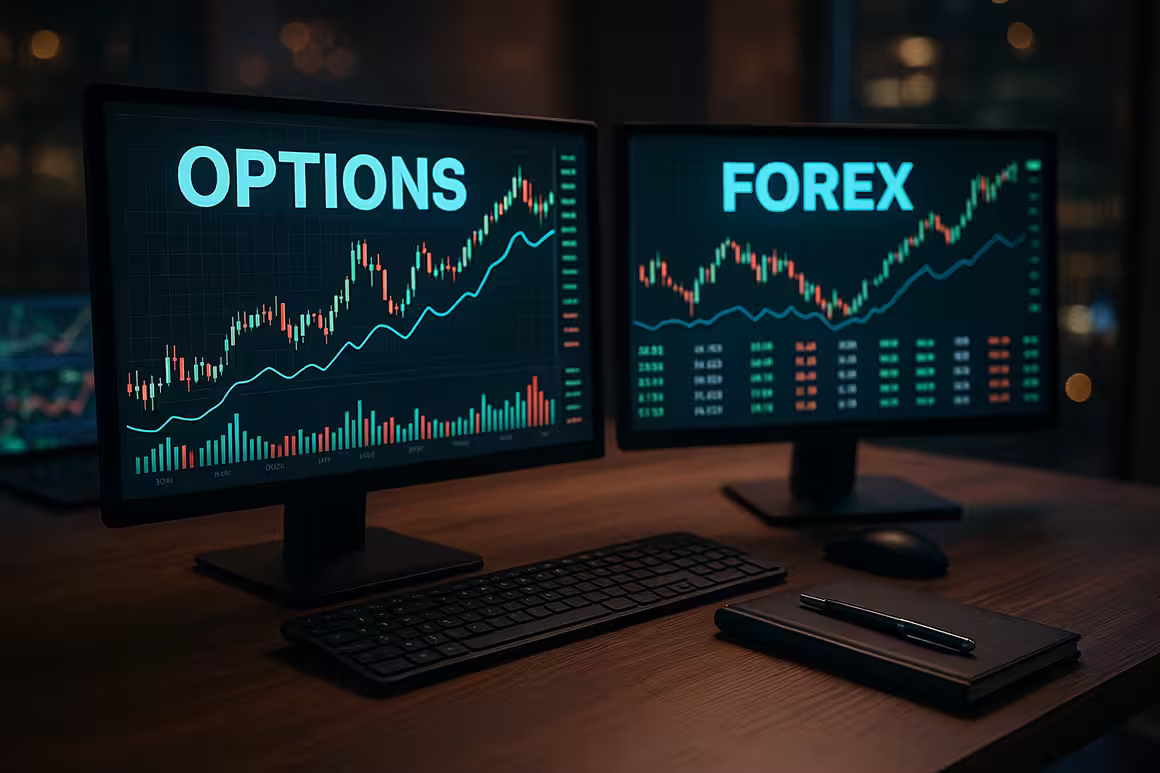
Imagine using the power of both options and forex to amplify your trading returns. But how can you harness the leverage of two powerful markets?
Options trading involves buying and selling contracts that give the holder the right to buy or sell assets like stocks, commodities, ETFs, and indices at a specific price by a certain date. On the other hand, you have forex trading, which is where investors are speculating on the price movements of currencies and are looking to secure a profit from these price fluctuations. While there are some similarities between these two forms of trading, there are some notable differences, and traders can combine them to form a powerful strategy!
Our goal with this guide on options and forex is to show how traders can combine both markets for maximum leverage and increase profitability. We’ll reveal how to combine these two forms and then manage the risks to see through a successful trade. Check out some tools and resources for exchanging these combination traders, too. Anything you need to know about pairing options and forex, we’ll cover it in this guide!
Understanding the Basics of Forex and Options Trading
Options and forex trading are alike in a few ways, but they are also two different things altogether. To understand the basics of these forms of trading, we’ve outlined the key components of each to give you a clear picture of forex and options as two separate, but similar markets.
What Is Forex Trading?
Short for foreign exchange, forex trading is a market where one currency is traded for another. Trillions of dollars are traded daily, and forex is so big because it’s one of the most liquid financial markets in the entire world. When trading forex, investors are speculating on the currencies’ price movements and are looking to secure a profit from these price fluctuations.
The forex market is a global market where all kinds of international currencies can be traded. Those trading forex include businesses, banks, governments, and individual investors. Just like online options trading, forex traders can buy and sell currencies.
Leverage in Forex Trading
Just as with options trading, there’s leverage in forex, which lets the trader control a larger position with a smaller amount of their capital—it can magnify profits as well as losses, so it must be used wisely.
How It Works
- The trade needs to deposit a margin with their broker app of choice.
- Traders need to check the leverage ratio on each of their positions. For instance, if they’re dealing with a ratio of 1:100, this means that they can control a position that is 100 times larger than their initial deposit.
- To use leverage effectively, traders must look for small price movements and use the right strategy to gain a profit. If they get the direction or the level of volatility incorrect, they could incur larger-than-usual losses.
What Is Options Trading?
Options trading involves buying and selling of contracts that give the holder the right (not the obligation) to buy or sell a certain asset (stock, commodity, ETFs, indices, and forex) at a specific price (the strike price) by a certain date (the expiry). The value of the contract is derived from the underlying asset, which is subject to changes in valuation based on market events, which makes options contracts “derivatives.”

Key Concepts of Options Contracts
These terms are the basics of options trading that anyone should know before they begin trading options online:
- Calls: These option contracts give the holder the right to buy the underlying at the pre-set price on or before the expiration date.
- Puts: These option contracts give the holder the right to sell the underlying at the pre-set price on or before the expiration date.
- Premiums: This refers to the price the holder of the contract pays the seller. The holder is known as the buyer, and the seller is known as the option writer.
- Strike Price: In the event that the option is exercised, this is the price at which the underlying asset can either be bought or sold.
- Expiration Date: This is the date on or before that the option contract can be exercised.
- Underlying Asset: The underlying asset will be different for certain options contracts, and it’s the factor that gives the contract its value. The underlying for a contract could be a stock, commodity, ETF, index, or forex.
The Basic Mechanics
How does options trading ultimately work? Check out the basic mechanics for a better insight as to the multiple parts and how they all fit together.
- Holders and Writers: The option holder pays the premium to gain the right to buy or sell the contract, while the writer gets the premium but falls under the obligation to fulfill the contract if it’s exercised.
- Leverage: This refers to the idea that the trader can control a large position with a relatively small capital investment.
- Buying and Selling Options: Traders buy or sell options contracts to either make money from price fluctuations (price speculation) or to manage the risks of their portfolio.
- Profits and Risks: Options are profitable when the underlying asset moves in the direction that the trade is predicting. On the other hand, there are some risks with options, including having the contract expire as worthless or predicting the wrong direction and losing their premium (or more).
How Leverage Works in Both Markets
We’re going to take a much closer look at how leverage works in the forex markets and the online options trading world. This section of the guide will take a deep dive into the differences in using leverage for these two forms of trading. Hopefully, we can offer some insights as to which form of investing and use of leverage might be best for your trading goals or long-term investment strategies.
Leverage in Forex Trading
How does leverage work when trading options on foreign currencies? We’ve outlined everything you need to know below!
Typical Leverage Ratios
When dealing with forex trading, you’ll run across different leverage ratios, and the best ones to use all depend on what kind of trader you happen to be. Conservative traders will prefer to use a ratio that’s between 1:10 and 1:50. Aggressive traders with much more experience and a deep understanding of forex will prefer higher ratios between 50:1 and 100:1.
Pros of Using Leverage
- Better Capital Efficiency: Traders can take on more trading opportunities by being able to control a large position with a smaller investment.
- Magnified Gains: Traders have the ability to make much larger profits, but it depends on the leverage ratio used. An aggressive trader using a ratio of 50:1 can get a 50% return on their initial investment for a 1% price movement.
- Hedging: Leverage can be used for hedging purposes as well, allowing traders and investors to protect against potential losses on other option positions.
- Flexibility: Because traders are able to take advantage of large and small market movements using leverage, it gives them the flexibility to make money in a wide range of scenarios.
- The Chance to Trade Larger Positions: The power of leverage lies in allowing traders with smaller capital balances to be able to control a larger position than they’d usually be able to. The key is getting the trade right so as not to incur a big loss.
- Lower Amount of Capital Needed: Forex traders don’t have to make a big capital commitment to trade options on foreign exchange.
- Trade Around the Clock: The forex market is open 24/5, and leverage lets traders to take advantage of multiple market opportunities all throughout the business week without skipping a beat.
Cons of Using Leverage
- Bigger Losses: On the flip side of being able to profit big from leverage in forex, the potential losses are also magnified to the same degree. It’s key for traders to get their strategy correct to avoid these losses.
- Risk Management is Limited: These moves in forex trading come with few risk management measures, and big losses can happen if the trader even makes a small mistake when conducting their analysis or placing the trade.
- Margin Calls: The broker might ask the trader for additional funds to cover any possible losses if the equity of the account drops below the margin level that’s required to keep the account open.
- Liquidation: When a margin call is requested and the trader cannot satisfy the request, the broker has the right to liquidate the position to reduce the risk.
- Fast Pace Environment: Traders are more likely to make mistakes trading forex with a high amount of leverage due to the fast-paced nature and the trader possibly feeling compelled to act quickly.
- Complexity: Making the right decisions while trading forex with a high amount of leverage can be difficult because of rapid account fluctuations.
- Psychological Impacts: Because of the fast pace of forex trading and the high stakes involved, traders might fall into emotional trading patterns, including intense emotional reactions.
Leverage in Options Trading
Learn everything you need to know about using leverage in options trading right here!
How Options Traders Use Leverage Through Contracts
Leveraged positions are created through options contracts because the premium (the cost to enter the trade) is a fraction of what it would cost to buy the shares of the underlying asset outright.
Let’s look at a leverage ratio to give you a better idea of how leverage works in options trading. In the case of a 1:50 ratio, for every dollar you deposit in your trading account, you can trade with a position worth $50. This gives the trader the ability to control a larger position with a smaller amount of capital.
How Leverage in Options is Calculated
In options trading, leverage is calculated by comparing the value of the underlying asset to the cost of the option. It begins with calculating the delta value of the contract and then multiplying it by the underlying asset price. Then you would divide the result by the price of the option itself.
Risk Management for Using Leverage
- Plan your trade carefully.
- Use a stop-loss order.
- Calculate your margin.
- Use a sound position size for the trade.
- Know the risk-to-reward ratio.
- Determine your risk per trade.
Leverage in Options Trading
Find out how the strike price, the expiration date, and the premium paid for an option contract can have a big impact on the leverage potential:
- The Strike Price—The difference between the contract’s strike price and the market price can influence the degree of leverage. Smaller differences increase the amount of leverage the trader can enjoy in the contract.
- The Expiration Date—The level of leverage can diminish as the time value of the option decreases. This means that a longer expiration date gives the contract more time to be profitable, increasing the leverage potential. If the contract is closer to expiration, its leverage dwindles.
- The Premium—If you’re paying a lower premium to enter a trade, you’re using a small initial investment to get in on the contract, and therefore, you’re controlling a smaller position. The higher the premium, the more leverage you’ll have. The opposite is true with a lower premium to enter.
Combining Forex and Options Trading for Maximum Leverage
What happens when you join together the forces of forex and options trading? The result is that the trader can experience an even higher level of leverage and enhance the results of the options strategies that they opt to use. Let’s dive into combining these two forms of trading for maximum leverage.

Benefits of Combining Both Markets
Check out the best benefits of pairing forex and options traders together for maximum impact.
- Mixing the forex and options markets results in higher profit potential with combined leverage.
- Use forex market movements to enhance options strategies (e.g., forex-based options).
Strategies to Combine Options and Forex
What are the best strategies and moves for traders to use when they trade options and forex simultaneously? We’ve outlined them below to give you a few ideas of the possibilities.
- Hedging Forex with Options: There are scenarios where you can use options as a hedge to limit risk when trading forex positions. However, these hedges are imperfect, and they aren’t guaranteed to cancel out 100% of the losses on either side of the trade. Depending on the investment the trader makes, they can limit a substantial amount of the potential losses using options for hedging.
- Leveraged Forex and Options Plays: Options can also be used to leverage currency pairs in the forex market. This allows the traders to make more profit, but the risk levels increase as well. Simply buy call options, and you can profit from a currency that’s expected to go up in value. Or you can buy out options to make money when the currency’s price declines.
- Building a Dual Strategy: Though it’s not a direct one-to-one mapping, traders can use the strategy of combining long/short forex positions with options spreads for maximum leverage. Options spread can be used to manage risk around currency positions, where traders can benefit from mimicking long or short exposure through a synthetic position. A good example of this strategy would be using a long currency position and combining it with a protective put spread to minimize the impact of downside risk.
Examples of Combined Strategies
Let’s look at a case study of a forex trader using options for leverage. Not only will we set up the scenario, but we’ll also show how cover leverage can enhance the potential returns and the limited risks that come with the trade.
The Example
The scenario is that the trader is interested in dealing with the EUR/USD currency pair, and they expect it to increase in value soon. In regular forex trading, someone would buy a large amount of this pair directly, but it’s different when the trader combines forex with options. Instead, they would buy call options on this forex pair with a strike price near the current market price.
Leverage
The trader can enjoy increased leverage with the position because the call option lets the trader control a larger position with a smaller upfront expense. For instance, the trade could buy only one call option for an investment of $1,000, and they could potentially control a position that is worth $100,000.
Profit Potential And Risk Involved
The profit potential is found when the call option increases in value. The size of the profit increases the more that the call option increases. The maximum loss involved with this position is the premium paid for the option position. This limited loss scenario makes the idea of using options for leverage highly appealing to a lot of traders or investors.
Managing Risks When Combining Both Markets
Combining options and forex trading comes with plenty of risks. Check out what kind of risks you run with these scenarios and some of the best ways to manage these risks as you attempt to reach your trading goals. Position size, diversification, protective strategies, and stop losses can all play a major role in running risk management, as is the case with traditional options trades.
Increased Risk with Leverage
Leverage can result in increased risks for online traders and investors—they’re worth knowing before combining these two strategies.
- Risks of Using High Leverage: If the underlying stock price does not rise or fall as expected, the leverage could magnify the percentage loss of the position.
- Volatility Risks: Implied volatility can have a big effect on combined strategies. An elevated level of volatility will result in higher options prices. On the flip side, a lower level of implied volatility will result in lower options prices.
Risk Management Techniques
Now that you’ve been clued into the risks of combining options and forex, let’s talk about some of the risk management techniques that are best for traders that will increase their likelihood of profiting while also minimizing potential losses.
- Setting Stop-Losses—For forex and options positions, traders should be using stop-losses, which are orders to automatically sell a security if the price falls to a predetermined level. They’re a good way to limit potential losses over time.
- Position Sizing—Another significant risk management technique is correct position sizing where the trader allocated only 1% to 2% of their available capital to each position. If they incur a loss on their trade, it’s not a big deal for the trader because it’s only a small fraction of the money they have in their account.
- Diversification—Remember to have your investments spread out across multiple asset classes (stocks, ETFs, commodities, and forex) as well as spread across different sectors or industries of the economy. If one area of your portfolio is slow in producing profits, you can make up for this with other investments in other areas.
- Protective Options Strategies—A proactive approach to risk management is to use protective strategies, like protective puts in the forex market. These strategies have built-in risk management that add another layer of protection in addition to the points listed above.
Understanding Correlations
Some markets are naturally correlated. For instance, if you’re interested in trading the forex pair USD/JPY, you might want to be keeping an eye on S&P 500 options. When stocks sell-off on the S&P, USD/JPY tends to sell off too. It works the other way around, too! Because the Yen is considered by many to be a very safe asset, traders tend to pair the USD/JPY pair with trading on the S&P.
Pro Tip: As you learn more about these correlated markets, you begin taking a proactive approach by monitoring geopolitical and economic events that impact both forex and options.
Tools and Resources to Enhance Combined Trading
To enhance the results of your combined trades in the forex and options markets, you can use tools and resources to make the process much more robust than it could be if you weren’t using them. Check out the best platforms out there for combining the best of these two markets and some additional tools for tracking price movements and market volatility.
Platforms that Support Both Options and Forex Trading
Some of the best tools we’re aware of for combining options and forex trading are broker apps, which offer both markets to their users. And trust us, there are plenty of great platforms where you can make this happen, and there are some of our favorite picks from OptionsTrading.org.
Recommended Trading Platforms
Analytics Tools
Use these trading instruments and techniques to analyse market data and historical traders to improve your trades’ performance over time and to make better informed trading decisions.
- Charts—A visual representation of an asset’s price movements over time, which can be used to analyze trends and identify patterns.
- Indicators—These refer to mathematical calculations that help traders pinpoint signals, trends, or shifts in momentum within a specific market.
- News Feeds—Real-time streams of market data and financial news that traders can use to keep track of what’s going on in the forex and options markets.
- Volatility Tools—Technical analysis indicators that can measure and understand price fluctuations for certain assets or the market as a whole. Traders can gauge the level of risk and find the potential opportunities within the price movements they run across.
- Economic Calendars—A tool that traders can use to track and anticipate upcoming data releases and economic events that could impact the financial markets that you’re dealing with, including the forex and options trading markets.
Automation and Algorithmic Trading
Automated trading systems and algorithmic trading can greatly help traders manage their options and forex trades simultaneously. These systems can analyze market conditions and then execute trades quickly, in some instances, within milliseconds. While there’s definitely a place for manual trading, you cannot be the execution speed that some of these automated systems can deliver. It’s a tool that’s worth considering to ensure that all your options and forex trades can be seen through successfully.
What Does the Speed of These Systems Ensure?
- Traders can enter positions at the best prices.
- Exit a position and capture the correct amount of targeted profit.
- Take full advantage of multiple market opportunities.
- Pinpoint positions that fit your trading criteria quickly.
Getting Started with a Combined Strategy
Check out a few of the best tips and tricks for getting started with a combined strategy and then seeing those positions through to a successful end. If you’re looking for a good place to begin with combining options and forex, we’ve got you covered—keep reading to learn the best approach.

Developing a Trading Plan
The first step is to create a trading plan that incorporates both forex and options strategies. Then you must begin setting goals for each market and deciding on risk tolerance.
- Correlation: Find underlying assets and currency pairs that have a strong relationship to one another. For instance, the USD/JPY forex pair has a strong correlation with the S&P 500.
- Income Generation: Use strategies for trading options to generate income from your forex trading endeavors. These include strategies like covered calls or straddles.
- Hedging: Begin hedging your forex positions through options traders to protect against potential losses.
- Diversification: Combining forex and options is a great way to reduce your overall portfolio risk through having investments in multiple asset classes and sectors of the economy.
Testing Your Strategy
It is important to backtest your strategy, where you’re comparing it against market data to assess the potential performance, before forward testing it in either a demo account or a live trading setting.
For forward testing, we highly recommend using paper trading or demo accounts for testing combined strategies. You can use a virtual balance to practice strategies without risking any of your capital in a live market setting.
Monitoring and Adjusting Your Approach
Keeping an eye on your investments is important as you see them through. You can make the necessary adjustments in the live market to work your investment toward profitability. After the trading day is over, a good way to assess your strategy performance is to keep a trading journal that you can review and find areas of strength or weakness with your current plan. It’s a powerful tool for adjusting future positions and continuously improving your strategy as market conditions change.
Unlocking Dual Market Potential: Combining Forex and Options Trading
A balanced approach with a combination of both the options market and the forex market can lead to higher rewards.
Using leverage in both forex and options is a powerful combination that can amplify a trader’s profit potential over time, though it can result in bigger losses too if the market moves against the trader. Leverage allows the trader to control a larger position with a smaller amount of money, and combining leverage with both forex and options can expand the amount of leverage in the trade!
Because there’s the chance of bigger-than-usual losses, an important element of trading forex and options at the same time is to use strategic risk management. Remember to diversify your investments into multiple sectors and asset classes, use a 1-2% position size for each trade, and use stop-loss orders to minimize potential losses. As you trade options and forex, it’s key to make continued learning a priority and to experiment through demo trading accounts.