
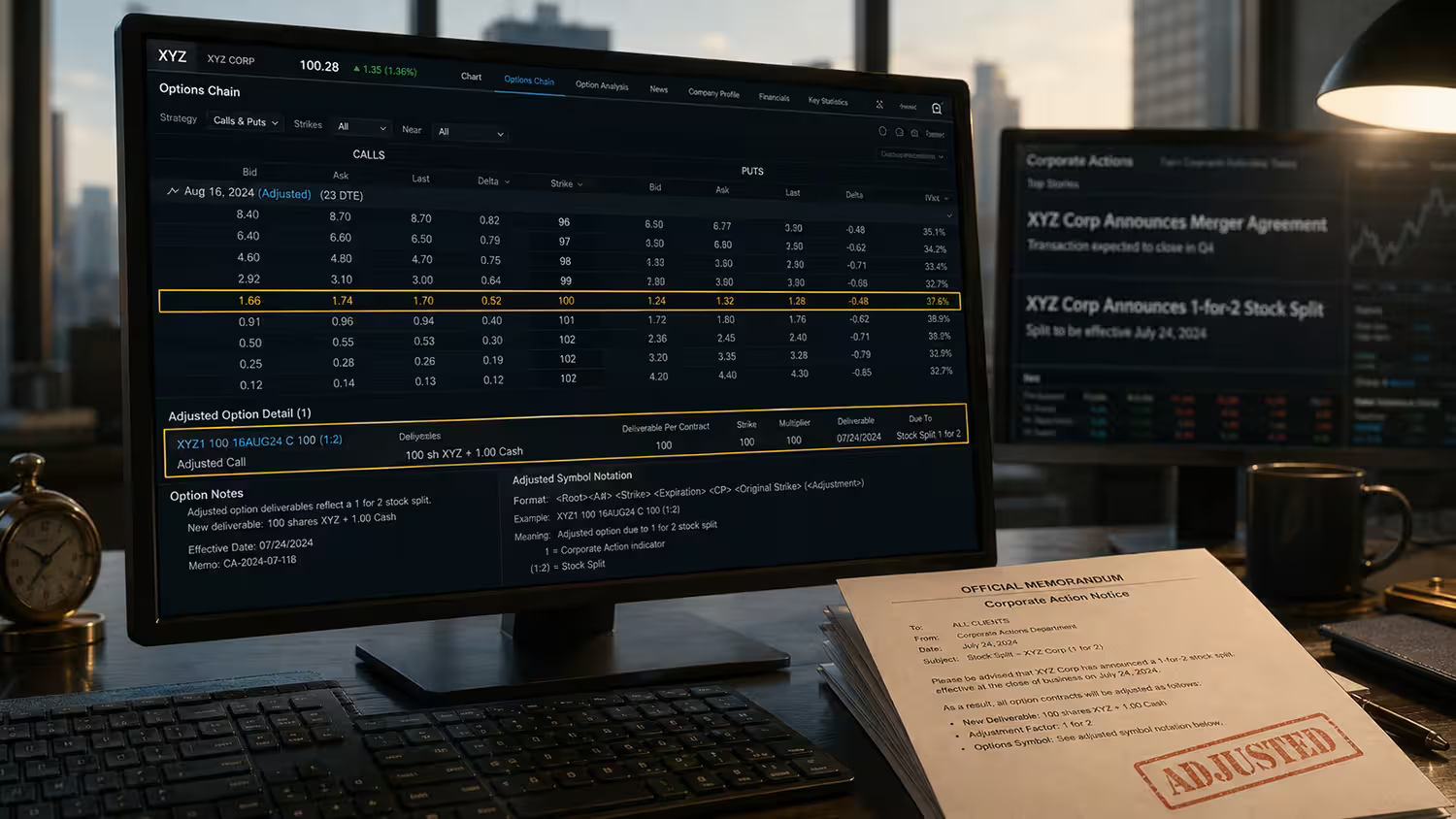
Adjusted options can look strange on an option chain. The symbol may have a number at the end. The strike may look wrong. The premium may seem too cheap or too expensive. The contract may deliver cash, fewer shares, another security, or a basket instead of the standard 100 shares.
That is the moment to slow down and check the OCC memo.
OCC information memos are not casual market commentary. They are the practical notice source traders use to understand how a listed option contract is being treated after a corporate action, liquidation, merger, split, spin-off, symbol change, or other event. A broker screen may summarize the result, but the memo is where the details usually start.
The goal is simple: before trading an adjusted option, know exactly what the contract represents, when the adjustment is effective, how the deliverable is valued, whether trading is restricted, and what exercise or assignment could create in the account.
What An OCC Memo Tells You
An OCC information memo is a notice about an event affecting listed options or futures. For adjusted options, it may describe the adjusted symbol, effective date, deliverable, cash-in-lieu amount, settlement method, strike or multiplier treatment, pricing formula, expiration acceleration, exercise considerations, or related follow-up memos.
The public OCC information memo search lets traders search for memos by keyword, memo number, date, symbol, or topic. Search results can include notices for reverse splits, mergers, ETF liquidations, cash settlement, broker-to-broker settlement, symbol changes, and further adjustments.
The memo is not a trade recommendation. It is a contract-mechanics reference. The trading decision still belongs to the investor, and the broker’s live contract details, account permissions, and order ticket should be checked before any order is sent.
Quick Takeaways
- Adjusted options should be checked against the OCC memo before trading.
- The most important fields are option symbol, adjusted symbol, effective date, deliverable, settlement terms, pricing formula, and follow-up memo references.
- A nonstandard option may not deliver 100 ordinary shares.
- A quote that looks wrong may be correct once the adjusted deliverable is included.
- Broker order tickets can lag, summarize, or display nonstandard contracts differently, so the memo and broker contract detail screen should agree.
- If exercise, assignment, or settlement is unclear, the trade is not ready.
Why OCC Memos Matter Before You Trade
A standard equity option is easy to summarize. OCC’s equity option product specifications state that each standard equity option covers 100 shares of the underlying security, and that exercise or assignment results in acquisition or delivery of the underlying shares.
Adjusted options break that shortcut. A corporate action can change the contract’s deliverable, symbol, pricing relationship, or settlement treatment. The old mental model of one contract equals 100 shares may no longer be right.
The Options Industry Council explains that corporate actions can change option contract terms, including cases where the option reflects a new underlying asset. OIC also notes that when an adjustment is warranted, OCC posts relevant details on its website.
That is why a trader should not rely only on the option chain. The chain may show a price, but the memo explains what the contract is attached to.
Before The Memo Vs. After The Memo
The memo changes the question from “does this option look cheap?” to “what exactly am I buying or selling?”
Question | Before Checking The Memo | After Checking The Memo |
|---|---|---|
What does one contract deliver? | Assume 100 shares. | Confirm the exact deliverable, including cash, fractional-share treatment, or other securities. |
Is the symbol standard? | Assume the root symbol is enough. | Check whether the series uses an adjusted symbol or new option root. |
Is the strike meaningful? | Compare strike with the common stock price. | Compare the exercise obligation with the value of the full deliverable package. |
Can I open or close trades? | Assume the chain is fully tradable. | Check for closing-only treatment, accelerated expiration, or broker restrictions. |
What happens if assigned? | Assume a normal 100-share transaction. | Confirm the adjusted delivery or settlement obligation. |
Step 1: Search The Exact Symbol And Event
Start at the OCC information memo search page. Search the current ticker, the old ticker, the adjusted option symbol, and the company or fund name. If the broker platform shows a contract like ABC1, search both ABC and ABC1.
Corporate action chains can have multiple memos. There may be an original adjustment memo, a further adjustment, a cash-in-lieu settlement update, a broker-to-broker settlement notice, or an expiration acceleration notice. The newest memo may refer back to earlier memo numbers.
The search page also supports memo-number searches. When a broker notice or market bulletin mentions a specific memo number, use that number directly instead of guessing by ticker.
The key habit is to match the exact contract in the account. Similar tickers, old symbols, adjusted roots, and leveraged ETF share classes can produce confusing search results.
Step 2: Confirm The Memo Date And Effective Date
The posted date tells when the notice appeared. The effective date tells when the contract treatment changes. Those are not always the same thing.
This matters near expiration. A trader might be looking at an option that is adjusted today, cash-settled tomorrow, or subject to accelerated expiration after a liquidation. A contract that looks alive on the chain may have a very different decision window once the memo is read.
If the memo references a future date, do not assume the current order ticket already reflects the final treatment. If the memo references an immediate effective date, do not assume an old screenshot or saved watchlist still reflects the contract correctly.
For time-sensitive situations, the broker’s current platform notice and OCC memo should be checked together.
The Fields To Check
A good memo review is not about reading every legal phrase with equal weight. It is about finding the fields that change the trade.
Field | Why It Matters | What To Write Down |
|---|---|---|
Memo number | Lets you find the same notice again and follow references. | The memo number and any related memo numbers. |
Option symbol | Shows whether the standard or adjusted option root is involved. | Old symbol, new symbol, and adjusted symbol. |
Effective date | Tells when the new terms apply. | Date and whether the memo says effective immediately. |
Deliverable | Defines what exercise or assignment transfers. | Shares, cash, other securities, ratios, and cash-in-lieu notes. |
Pricing formula | Explains how the adjusted underlying value may be calculated. | Any formula such as old stock plus cash or another security component. |
Settlement or expiration change | Can alter the final outcome and timeline. | Cash settlement, acceleration, broker-to-broker settlement, or exercise considerations. |
Step 3: Read The Deliverable Like A Receipt
The deliverable is the heart of most adjusted-option memos. It tells what one contract represents after the adjustment.
A normal contract might deliver 100 shares. An adjusted contract might deliver 33 shares plus cash in lieu of a fractional share. Another might deliver 100 shares of the original company plus shares of a spun-off company. Another might cash settle after an ETF liquidation.
OCC memos often show this in a numbered list. Do not summarize it from memory. Write it down exactly and compare it with the broker’s contract details screen.
This is where many mistakes start. A trader sees a low premium or strange strike and assumes the market is mispricing the option. In reality, the option may simply have a different deliverable. The strike price and common stock quote are only useful after the deliverable is understood.
Example: Reading A Nonstandard Deliverable
This example is simplified to show the reading process. It is not based on a live trade recommendation.
Memo Line | What It Might Say | How A Trader Should Read It |
|---|---|---|
Adjusted option symbol | XYZ1 | This may not be the same as the standard XYZ option class. |
Deliverable | 25 XYZ shares plus cash in lieu of 0.5 share | One contract no longer represents 100 full shares. |
Pricing | XYZ1 = 0.25 x XYZ + cash component | The adjusted underlying value needs a formula, not a simple stock-price comparison. |
Effective date | Effective at market open on a stated date | The trader must know whether the current chain is pre-adjustment or post-adjustment. |
Settlement note | Cash-in-lieu amount to be determined | The final account result may depend on a later update or broker processing. |
Step 4: Check For Follow-Up Memos
Adjusted options often have more than one memo. The first notice may describe a reverse split or merger. A later notice may update cash-in-lieu amounts, settlement dates, deliverables, or exercise considerations.
Search results may show phrases such as further adjustment, settlement update, broker-to-broker settlement, anticipated cash settlement, cash in lieu, liquidation, or acceleration of expirations. Those phrases are not decoration. They can change the practical trade result.
If a memo says see another memo number, open that earlier memo too. If a later memo appears after the first one, read the later memo before trading. The latest notice may supersede or refine a detail that matters.
A stale memo can be as dangerous as no memo.
Step 5: Compare The Memo With The Broker Screen
The memo is not the only screen to check. The broker’s contract detail panel should show whether the option is adjusted, what the deliverable is, whether the trade is opening or closing, and whether exercise or assignment has unusual handling.
If the broker screen and the memo do not seem to match, do not force the order. The mismatch may be a platform display issue, a timing issue, or a sign that the wrong option class is selected.
This is especially important when using multi-leg orders. A trader may accidentally combine one adjusted leg and one standard leg, or compare a standard option chain to an adjusted option root. That can make the trade’s risk look cleaner than it really is.
Leon Moyer’s execution rule for this kind of contract is simple: if the order ticket cannot explain what the contract delivers, the trader is not ready to click.
Mistakes That Can Get Expensive
- Assuming every option still controls 100 shares.
- Reading the current stock price against the strike without valuing the adjusted deliverable.
- Missing a later memo that changes cash settlement, expiration, or exercise treatment.
- Trading the adjusted root when the intended order was the standard root, or the other way around.
- Ignoring closing-only restrictions or broker order-ticket warnings.
- Assuming assignment will create a normal 100-share stock transaction.
- Trusting the midpoint price when the adjusted series has little volume and a wide market.
Exercise And Assignment Need A Separate Check
The memo review is not complete until the trader knows what exercise or assignment would create.
OCC’s options disclosure document is the core risk document for listed options, and the OIC has long emphasized that exchange-listed options involve specific exercise and assignment mechanics. With adjusted contracts, those mechanics can be less intuitive because the deliverable is not always ordinary shares.
A short option can still create an obligation. A long option can still require a decision. Assignment can change the account in a way the trader did not intend if the deliverable, settlement, or broker processing is misunderstood.
For positions near expiration, the memo should be read alongside broker cutoffs and account requirements. A trader who waits until the final hour may discover that the practical choice set is smaller than expected.
Liquidity Still Matters After The Memo
Knowing the contract terms does not make the market liquid. Adjusted series often trade with lighter volume than standard series, especially after new standard contracts are listed.
That can make the quoted mark price misleading. The midpoint may look reasonable, but the real exit may be closer to the bid for a long option or closer to the ask for a short option.
The bid-ask spread is part of the trade cost, not a small detail. In adjusted options, the spread can widen because fewer traders understand or want the nonstandard contract.
A memo tells what the contract is. It does not guarantee a clean fill.
OCC Memo Checklist
- Search the current ticker, old ticker, company or fund name, and adjusted option symbol.
- Confirm the memo number, posted date, effective date, and related memo references.
- Write down the exact option symbol or adjusted option symbol.
- Copy the deliverable exactly, including shares, cash, other securities, ratios, and cash-in-lieu language.
- Check whether there is a pricing formula for the adjusted underlying value.
- Look for settlement notes, acceleration of expirations, closing-only status, or exercise considerations.
- Compare the memo with the broker’s contract details screen before entering an order.
- Check volume, open interest, bid, ask, and whether the quoted market is realistic.
- Understand what exercise or assignment would create in the account.
- Read the current OCC options disclosure document before trading unfamiliar adjusted contracts.
So, When Should You Walk Away?
Sometimes the best result of checking the memo is deciding not to trade.
That may be the right call when the deliverable is unclear, the broker screen does not match the memo, the option is closing-only, the market is too wide, the contract has a pending cash settlement update, or exercise and assignment consequences are not understood.
Adjusted options can be perfectly legitimate contracts. They can also be poor candidates for casual trades because the usual shortcuts fail. A trader who cannot explain the deliverable, pricing formula, expiration treatment, and assignment result does not really understand the position.
The memo is not there to slow traders down for no reason. It is there because the contract changed.
FAQ
These answers are educational and reflect public information reviewed on July 7, 2026. OCC memos, broker displays, option chains, and contract terms can change.
Where do I find OCC memos for adjusted options?
Use the public OCC information memo search page. Search by ticker, company name, adjusted option symbol, memo number, or event keywords such as reverse split, merger, liquidation, or cash settlement.
What is the most important part of an OCC memo?
For an adjusted option, the deliverable is usually the first field to understand. It tells what one contract represents after the adjustment. Effective date, adjusted symbol, settlement notes, and related memos are also important.
Can a broker screen be enough by itself?
A broker screen is important, but it should be checked against the OCC memo when a contract is adjusted. If the broker screen and memo appear inconsistent, the trader should pause and contact the broker before trading.
Why does an adjusted option sometimes look mispriced?
It may look mispriced because the trader is comparing the strike to the common stock price without valuing the adjusted deliverable. The contract may represent fewer shares, cash, another security, or a mixed basket.
Do OCC memos tell me whether to buy or sell?
No. OCC memos are contract-mechanics notices, not trade recommendations. They help explain what the contract is, but they do not decide whether the trade is suitable.
Source and Freshness Note
This article was reviewed on July 2026 using public information from OCC information memos, OCC equity option specifications, The Options Industry Council’s corporate-action education, and the current OCC Characteristics and Risks of Standardized Options. It is educational only and is not personalized financial, legal, tax, or trading advice. Traders should verify current OCC memos, broker contract details, option-chain data, and account restrictions before trading any adjusted option.