
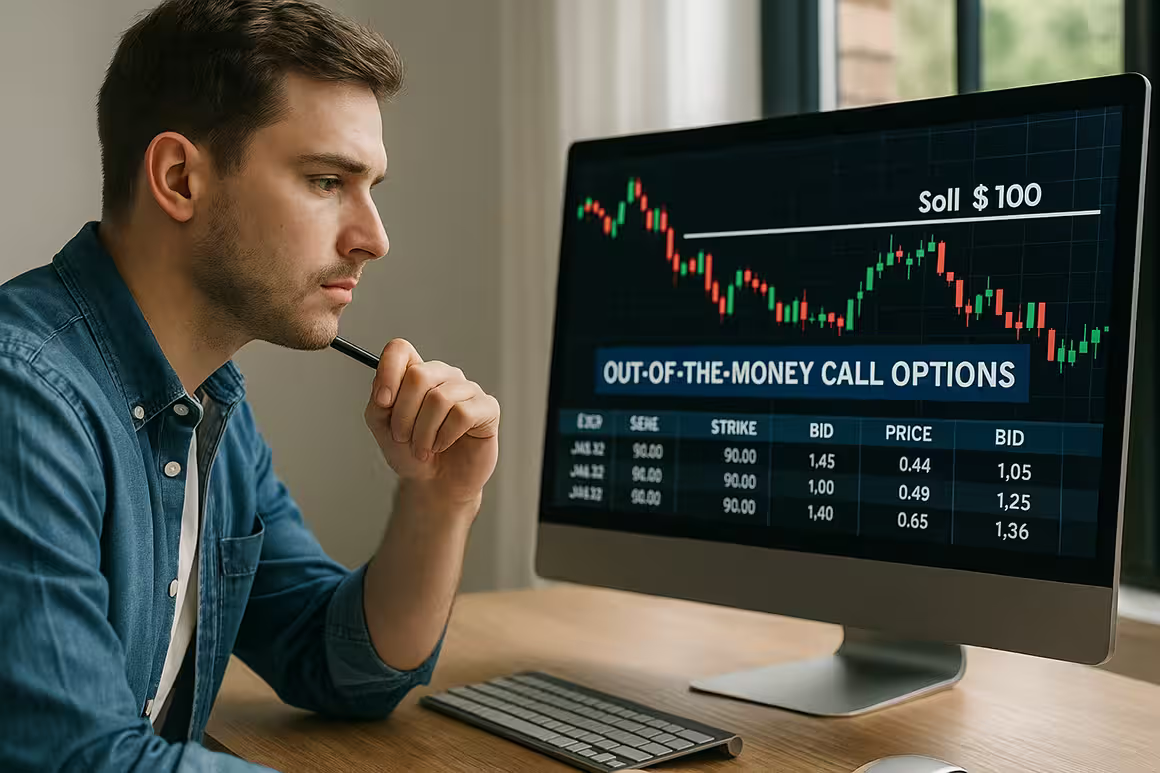
Have you ever seen a super cheap option and wondered if it could turn into a big win?
Out-of-the-money call options (OTM options) can be an enticing prospect for traders because they offer some lucrative opportunities with their low cost and high reward profile. However, they lack intrinsic value and, therefore, come with some inherent risks that any trader should be aware of before pursuing them.
Keep reading this guide to find out what OTM call options are, how they work, real examples, and when to consider trading them. We’ll show you how to strike a delicate balance between pursuing leverage and high percentage returns, and dealing with the possible outcome of these options expiring worthless.
What Is a Call Option? (Quick Refresher)
Call options are contracts in options trading where the buyer has the right (not the obligation) to buy the underlying asset at a strike price on or before the expiration date set in place. To acquire the right to buy the asset from the seller, the buyer pays a cost known as the premium. Call options are a suitable choice for traders who anticipate that the price of the asset will rise above the strike price.
Key Terms
If you aren’t familiar with some of the terms discussed above, we have included a brief list of definitions to clarify everything.
- Strike Price—If the buyer chooses to exercise the option, this is the price at which the buyer can buy the asset.
- Expiration—Each contract comes with a date by which the option can no longer be exercised.
- Premium—This is the price that the buyer pays the seller for the right to buy the asset.
Example
A solid way to illustrate the concept of buying call options on stocks with a bright future is with this example: a trader buys a call on Apple stock at a strike price of $200 when it’s trading at $180. This is done in an attempt to profit from the asset’s price going over the strike price. The trader is likely to make money because Apple stock is well-known for going up in value during periods of strong growth.
What Does “Out-of-the-Money” Mean?
A call option is OTM (out-of-the-money) when the strike price is higher than the current stock price. If the option were to be exercised at that moment, it would be worthless because it has no intrinsic value. This would result in a loss for the trader.

Visualization of Moneyness
Understanding out-of-the-money, at-the-money, and in-the-money options is a relatively straightforward concept. For your convenience, we have outlined the difference between these states to show you the various places where options contracts can end up by their expiration dates.
- Stock price = $90 → Call strike at $100 = OTM
- Stock price = $100 → Call strike at $100 = At-the-money (ATM)
- Stock price = $110 → Call strike at $100 = In-the-money (ITM)
Real-World Example
Let’s take a look at an example involving the Tesla stock. If it’s trading at $600 and you end up buying a call at $650, you’re dealing with an out-of-the-money call option. For the position to become profitable, the Tesla stock would have to increase in value by $50 by the expiration date to end up in the money.
Why Traders Buy Out-of-the-Money Call Options
What is the main appeal of purchasing out-of-the-money call options? You’ll find that there are several good reasons for using OTM calls, despite some inherent risks associated with time value and the fact that the contracts have no intrinsic value. We have outlined the main perks of buying OTM calls to help you understand the appeal that many traders see in them.
- Low Premium: OTM calls are significantly cheaper than ITM or ATM options, as they require a much larger price shift to become profitable for the trader. Naturally, call options that are closer to becoming profitable will be more expensive to purchase.
- High Leverage Potential: Since traders are dealing with a significantly smaller initial investment for OTM call options, even small moves can yield substantial percentage gains. There is also the benefit of the trader being able to manage a larger position in the underlying asset at a relatively lower cost.
- Speculative Bets: Out-of-the-money calls are an excellent tool for capitalizing on opportunities for profit around key events, such as earnings reports or momentum plays, when the markets are driving stock prices upward in value.
In addition to the three key points we’ve already covered, OTM call options are notable for being a trading strategy where the losses are limited to the premium paid to enter the trade, which is already low compared to the size of the position being managed. The other major appeal for traders to enter OTM calls is the unlimited potential gains that are associated with the strategy. However, it’s best to use them only in situations where the stock price is expected to rise significantly beyond the strike price.
Risks of Out-of-the-Money Calls
What are the significant downsides to taking up the OTM call approach to trading options? Check them out below and know the risks involved with taking on these positions, even if you’re experiencing an ideal entry point and a high level of leverage.
- Time Decay (Theta): One of the key downsides to trading OTM options is that value erodes relatively fast, especially close to expiration. OTM options lose value more rapidly in the final weeks, making it increasingly likely that they will expire worthless. It is due to the dwindling time value that occurs even when the asset’s price is moving favorably.
- Low Probability of Profit: There’s a reason why these options are so easy to obtain when it comes to how much they cost. Most of these options expire worthless unless the stock moves significantly, which means that they have a relatively low chance of being profitable.
- False Confidence: Just because it’s cheap doesn’t mean it’s a good trade. The fact that they are getting the options for an affordable price can give traders the impression that they have an excellent opportunity to profit. However, many of these strategies fail due to the low probability of success.
When Do Out-of-the-Money Calls Make Sense?
Obviously, there are times when OTM call options can be effective, even if they generally have a low likelihood of yielding the profits that traders envision. But when are the best moments to strike with this strategy? Check out the best opportunities for using OTM calls to know for sure when you can use them to maximum effect.

- Strong Bullish Outlook: Call options make the trader money when the asset price goes up, so OTM calls are best used when you expect a sharp move up. This means that traders must keep a close eye on the assets they want to trade and identify places in the market pricing where certain stocks are being undervalued. These are the places where true profit potential can be experienced.
- Events: In addition to pinpointing opportunities where stocks are being undervalued, traders should be on the lookout for events that are likely to drive the stock price upward, such as earnings report releases, product launches, or other market catalysts.
- Defined Risk Trading: Although they have a small likelihood of resulting in a profit in most cases, OTM call options are a good choice for those who are willing to risk small amounts for larger upside. These OTM calls enable traders to enjoy a low level of risk, with the potential for a profitable outcome if the trader enters to capitalize on a significant market event or a potential stock mispricing.
Case Study
A situation where a trader might consider buying an OTM call would be with a stock that has a good chance of going up in price, like NVIDIA. It could be an excellent opportunity to buy an OTM call on NVIDIA in advance of an earnings report release, with an expiration date set for right after earnings. If the report is positive, the stock price should increase, and it would push the OTM call beyond the strike price, ensuring a profit.
Alternatives to Buying OTM Calls
If you aren’t sure about buying OTM calls, several alternatives offer some of the perks of this strategy while also providing a higher likelihood of profitability. Continue reading to discover some more profitable options to OTM calls that could be a better fit for your overall trading plan.
- Call Spreads: While the call spread is similar to OTM calls in that it’s a bullish strategy, the structure and risk-to-reward profile are different. The call spread comes with a more limited risk/reward (capped at the cost of the spread) and a lower breakeven point.
- ITM or ATM Calls: Both of these options contracts have ahigher chance of profit, but at a higher cost. They cost more than OTM options because they have a higher likelihood of becoming profitable, which makes them more desired and more sought after by traders or investors.
- Buying Stock: Traders who purchase the stock outright have less leverage, and a larger capital commitment is associated with this move. However, traders don’t have to worry about an expiration date because they own the stock outright.
Tips for Trading OTM Calls Successfully
If you aren’t interested in the alternative to trading OTM call options, but you want to increase your chances of trading OTM calls successfully, check out some of our best tips for the best results. The more you can work these practices into your trading routine with OTM calls, the more often you can end up on the winning side of the curve more often.
- Don’t Go Too Far Out-of-the-Money: The point is for the trader’s position to end up in the money, so you’ll want to choose a position that is out-of-the-money enough to get an ideal entry point but not so far out-of-the-money that there’s no chance of the stock price will move beyond the strike price.
- Choose Longer Expirations to Reduce Theta Decay: OTM calls will decline significantly in value in the days and weeks leading up to the expiration date. Traders need to choose a far-out expiration date to avoid this extreme theta decay. It’s a delicate balance, but traders need to increase their chances of having the call option end up in the money while minimizing the loss in value due to time decay.
- Use Proper Position Sizing: Never bet the farm—use conservative position sizes where you’re only using around 1-2% of your available capital. Over time, this can help traders and investors minimize their level of risk. Your growth will be incremental, but the losses traders could rack up will be minimal.
- Have a Defined Exit Strategy: As with any other form of trading, it is crucial to have a plan for exiting the OTM call. Traders should have a target price set up in terms of profit and loss. In some cases, traders may want to plan their exit around an event where the stock or asset prices are driven significantly above the strike price.
Should You Trade OTM Call Options?
We completely understand why out-of-the-money options draw in traders. Because they have no intrinsic value, OTM options are a lot more affordable than options that are either in-the-money or at-the-money. OTM options become enticing because they offer a great entry point for traders and promise unlimited returns, as long as there is an event that drives the stock price above the strike.
However, cheap options don’t always mean good value. As you grow in your trading experience, you have to begin looking for stock misvaluations where using an OTM call might work to your advantage. A trader with a keen eye and knowledge of the markets can also find OTM calls that work well for stocks that experience upcoming events that will drive the value up and result in a profit for the associated call option.
If you’re new to trading OTM options, we’d encourage you to keep reading and learning as much as you can about these contracts before working them into your trading plan. It’s a good idea to do some paper trading before risking real money.
Want help spotting smarter options trades? Explore our Options Trading for Beginners PDF so that you can download and have it readily available to help you at anytime..