
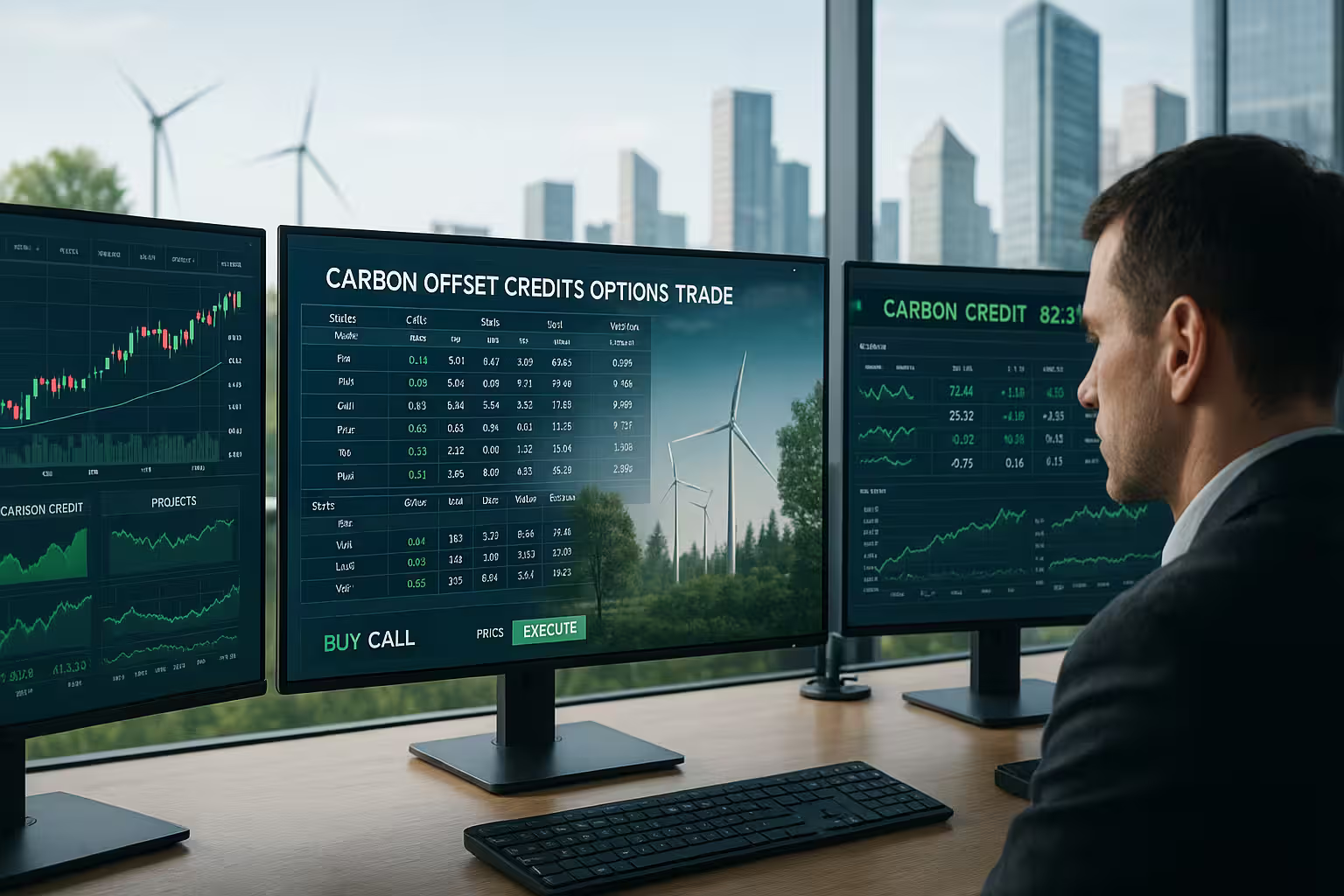
Carbon credits, or “carbon offset credits,” are tradable certificates that represent a reduction in carbon dioxide emissions, which are used to compensate for emissions that are difficult or unavoidable to reduce. Online traders can combine carbon credits with options trading by buying and selling options contracts where the underlying assets are carbon offset credits, which lets them speculate on the credit’s future price without owning them.
Why does options trading using carbon credits matter in today’s financial markets?
The growing focus on sustainability is creating opportunities for traders. Carbon offset credit trading allows individuals and companies to participate in mitigating climate change by buying and selling the right to offset greenhouse gas emissions. As more companies focus on sustainability, the demand for carbon credits goes up, which presents some prime trading opportunities.
Keep reading, and you will learn the fundamentals of carbon credits, how options work in this space, and tips for getting started!
What Are Carbon Offset Credits?
We’ll start this carbon credits guide by addressing what they are, touch on the types of credits, run through a few examples of carbon markets, and discuss some market dynamics that are at play when it comes to pricing and trading them.
Definition
Carbon offset credits are tradable certificates that represent a one-ton reduction of carbon dioxide or other greenhouse gases. Carbon offset credits are used to compensate for emissions that are generated from companies, individuals, and institutions.
To create carbon credits, project developers must meet the rules put forth by the government or the certification body. These credits are then verified by a third-party auditor. The revenues that come from carbon offset credits go toward funding projects that reduce emissions. When individuals or organizations purchase carbon credits, they essentially “reduce their carbon footprint.”
Several carbon markets seek to address the carbon issues and find a solution to reduce greenhouse gas emissions:
- Carbon Dioxide—Gas emitted through cellular respiration (the most common greenhouse gas)
- Nitrous Oxide—Use in rocket propellant and laughing gas
- Hydrofluorocarbons—Compound found in refrigeration units
- Perfluorocarbons—Compound found in aluminum smelting
- Methane—Natural gas (cows)
- Sulfur Hexafluoride—A man-made and natural compound that is used in the electric power industry
Types of Carbon Credits
You’ll find two types of carbon credit markets: Voluntary Carbon Markets (VCM) and Emissions Trading Systems (ETS).
- Voluntary Credits: These tradable certificates are bought and sold in the Voluntary Carbon Market (VCM). They’re purchased by individuals and companies for climate action.
- Compliance Credits: These differ from voluntary credits as they’re required to meet legal emissions reduction targets. Compliance credits can be found in mandatory markets that are managed by governments or governing entities. The way it’s set up is that carbon allowances are determined on an annual basis, and they’re distributed based on the location and the industry of the entity.
Market Dynamics
The carbon credit market is largely determined by supply and demand. Several factors cause prices and volumes to fluctuate, and they include the following:
- Market Trends—The carbon credit market is growing due to supply chain emissions reduction, carbon pricing initiatives, and climate finance instruments.
- Project Quality—Carbon credits’ value is rooted in the perceived quality of its issuing company.
- Media Criticism—Carbon credit prices can reach historic lows when voices in the media are critical.
- Government Policies—Demand for carbon credits goes up when there are regulations to reduce greenhouse gas emissions.
Carbon credits are traded on specialized markets where individuals or companies can buy or sell them to offset their carbon emissions. It’s done through purchasing credits, which indicate emissions reductions from other projects. Carbon credit trading lets investors buy the right to emit a certain amount of carbon dioxide by funding emissions reduction activities elsewhere.
The demand for carbon credits has been growing in recent years due to global environmental regulations and entities that push for businesses to reduce their carbon footprint. What this has led to is a greater need for these businesses to buy carbon credits to meet their emissions targets.
Basics of Options Trading
Options trading is the act of buying or selling “option contracts,” which give the buyer the right to buy or sell an asset like stocks at a specific price (the strike price) by a certain date (the expiration date). Unlike stock trading, where you’ve bought an ownership stake in the company, options allow investors or traders to bet on the price movements of stocks, and they come with a finite timeline.

Options 101
Let’s run through a quick overview of the basics of trading options online, including the components of the typical options trade. Learn about the strike price, the concept of moneyness, expiration dates, and what call or puts contracts are.
Strike Price
The strike price is the fixed price set when the option is bought. It dictates the price at which the asset can be traded when the opportunity comes to exercise the contract. It’s the predetermined price at which the option holder can buy or sell the underlying asset when exercising the contract.
The strike price determines the potential profit or loss of your trader, and it’s dictated by the difference between the strike price and the current market price of the underlying asset in question. In the case of a call option, the strike price is the price where the holder can buy the asset. With put options, it’s the price where they can sell the asset.
Moneyness
This refers to a way to describe the relationship between the current price of the underlying asset and the strike price of the option. There are three forms of moneyness: in-the-money (ITM), at-the-money (ATM), and out-of-the-money (OTM). The type of moneyness is determined by where the current market price falls about the set strike price.
Expiration Date
This is the specific date and time when the options contracts expire and become invalid. It’s the last day of the contract where the investors can exercise their right to buy or sell the underlying securities at the designated strike price. Following the expiration date, the options cannot be traded anymore as it’s worthless.
As an option contract gets closer to its expiration date, the value decreases due to time decay. What this refers to is the portion of the premium that’s tied to the remaining time which diminishes. If an option is in-the-money, it means that the trader should exercise the option upon the expiration date. If the option is out-of-the-money at the expiration date, the option is worthless and the premium paid is lost.
Calls
These are options contracts that give the buyer the right to purchase a specific underlying asset at a certain strike price on or before a certain expiration date. Traders use call options when they believe that the price of the underlying asset is going to go up, letting them profit by buying the asset for a lower price than the current market price if they choose to exercise the option.
Buying options contracts is considered a bullish strategy due to the investors expecting the price of the underlying asset to increase. There’s a scenario where the underlying asset will rise above the strike price in which case the buyer can choose to exercise the call option and buy the asset at the strike price.
Puts
These options contracts give the buyer the right to sell an underlying asset at a predetermined strike price on or before a specific expiration date. A put contract is the trader predicting that the underlying asset will decrease in value, the exact opposite of a call contract. This means that these trades profit when the price falls below the strike price by the expiration date. Puts are a great insurance policy for traders to guard against a decline in an underlying asset’s price.
Why Trade Carbon Credits with Options?
One of the best reasons for companies to trade carbon credits with options is to manage their carbon emission liabilities with great flexibility. The nature of options trading means that companies have the right (not the obligation) to buy or sell carbon credits, which can lead to effective price volatility risk mitigation. There are plenty of other great reasons to use options to trade carbon credits, including the following:
- Price Speculation: Companies can buy call options if they are confident that the carbon credit price will rise considerably in the future. This can lead to profit from price increase,s and traders don’t have to worry about buying the credits upfront.
- Profit Potential: There’s a scenario where the carbon credit prices fall, and companies can sell put options. These let them generate income due to the declining price.
- Risk Mitigation: Options are great for trading carbon credits because they provide a hedge against sudden price fluctuations. Options can give companies the chance to lock in prices for future emissions needs. It’s all done without being fully exposed to market volatility.
- Emissions Management Flexibility: Companies can adjust their carbon offsetting strategies based on the actual market conditions and emissions levels. This flexibility can potentially reduce investors’ overall carbon footprint cost.
Key Terminology
- Strike Price: The fixed price at which an underlying security can be bought or sold when the option’s contract is exercised. With call options, the strike price is the price at which the security is bought, while the strike price is the price at which the security is sold when it comes to put options.
- Expiration Date: This refers to the last day (the specified date and time) that an options contract becomes invalid. It’s the last opportunity that traders have to exercise their right to buy or sell the underlying security at the predetermined strike price.
- Premium: This refers to the price paid to buy an options contract. It’s the fee that gives the buyer the right to buy or sell an underlying security or asset at a certain strike price.
How to Trade Carbon Offset Credits with Options
Follow the step-by-step guide below to begin trading carbon offset credits using options contracts. We hope that this will clear up a lot of the questions that newcomers might have about where to begin and how trading these credits works using an online trading app.
Step 1—Choose the Right Platform
The first step is to choose a trading app that carries carbon credit options. A few credible carbon credit brokers include the Carbon Trade Exchange, Toucan Protocol, AirCarbon Exchange, and Xpansiv. Choose a trading app that offers transparent project details and those that are verified by reputable standards like Verra or the Gold Standard.
It’s key to also choose trading apps that come with the price per credit or the flexible options that work well for your budget needs.
Step 2—Analyze the Market
The next step is to do an analysis of the market. How in demand are these carbon credits currently? If the price is on the higher end, it’s a sign that there’s a demand for carbon credit options. When the demand is low, the price tends to be lower too. It works like any other commodity.
Another great factor for analyzing the market is following compliance regulations. Some companies have to offset their emissions by purchasing credits when they exceed their allocated emissions allowance. This can drive market dynamics, so it’s important to factor this into your analysis of the market.
Step 3—Develop a Strategy
Once you’ve studied the market conditions, you must put together a viable strategy that works for your capital balance and your personal risk tolerance.
A good place to start would be using the long calls or long puts for speculation. This move lets investors make a profit by correctly predicting the movement of the commodity’s price. Covered calls can be used for generating income by collecting the premiums from selling these commodities. Protective puts are another great place to begin for newbies where they can protect themselves from downside risk.
Step 4—Monitor and Adjust Your Trades Based on Market Conditions
Keep a close eye on the carbon credit market to see where your current trading strategy might need to be adjusted. Analyze the market conditions throughout your sessions to find out if you need to pivot to other strategies.
Benefits and Risks of Trading Carbon Offset Credits with Options
Check out the pros and cons of trading carbon offset credits using options—these are the primary benefits and risks associated with combining options trading with carbon offset credits. You can get a good idea of whether or not this type of trading is for you, and you can become familiar with the risk that could occur along the way.

Benefits
- Exposure Without Full Asset Purchase—Using options to trade carbon offset credits lets you gain a decent amount of exposure to this growing market, but you don’t have to fully commit to purchasing the asset outright. Traders can gain a profit using options, but their level of risk is much lower than it would be with owning the asset.
- Higher Returns Due to Leverage—By using carbon offset credits strategically, traders have the chance to achieve significantly higher financial gains. Higher returns can be leveraged by investing in high-quality carbon offset projects that are likely to appreciate over time due to climate regulations becoming stricter and the increasing demand for these credits.
- Sustainability-Focused Investment Opportunity—Purchasing these credits helps to fund projects that actively reduce greenhouse gas emissions. They are investments in initiatives like renewable energy development, reforestation, or energy efficiency upgrades. If you’re into these sorts of investments, they’re a good way to put your money to work for causes you support.
Risks
- High Volatility in Carbon Markets—Carbon markets are subject to high volatility as they are influenced by factors like climate change, allowance allocation, and political change. This leads to price instability and risk spillover.
- Regulatory Uncertainties—Perhaps the biggest weakness of all in this form of investing, there’s a lack of clear and consistent rules that govern the carbon trading systems. Long-term investments can be at risk due to potential policy changes, enforcement methods, and standards.
- The Complexity of Pricing Mechanisms—Pricing carbon markets is a complex endeavor as there is a wide range of different carbon offset projections, which all range in quality, location, and verification standards. Varying levels of regulatory oversight, the supply and demand dynamics of each market, and the various environmental/social co-benefits also make pricing carbon markets a challenge.
Factors That Influence Carbon Credit Prices
How are carbon credit prices determined? Check out the factors that influence the pricing process to get a better understanding of how carbon offset credits work in the trading world.
Regulations
Government policies and international agreements like the Paris Agreement are part of the regulatory world that can significantly influence carbon credit prices. These entities set a lot of the framework for carbon credits. It includes the allocation of credits, the overall cap on emissions, and the primary regulations governing the trade of these credits.
Market Demand
As there are more corporations and industries aiming for net-zero emissions than there have ever been, the demand for these carbon credits has gone up in recent years. When there are many companies or individual investors looking for these, the price goes up accordingly, as is the case with any other tradeable commodity in real-world exchanges or on trading apps.
Supply Dynamics
Another of the primary factors determining the price of carbon credits is market demand. The balance between supply and demand influences price like any other commodity. When the demand for these credits goes up, so does the price. When demand is down, the price goes down too.
External Factors
There are several other external factors that are worth considering when having the conversation about what determines the price of carbon offset credits. These include factors like energy markets and natural disasters.
Energy markets influence the prices for these credits since the demand is directly linked to emissions produced by energy companies. Fluctuations in energy production and energy prices can impact the price of carbon credits with the emissions trading system.
Natural disasters can affect pricing too as they can invalidate credits or make them less useful. This is largely tied to where the project is located and how susceptible that site is to natural disasters that are common to the region or locale.
Tips for Success
Follow these helpful tips and tricks to successfully trade options with carbon offset credits. When you first start, it’s best to begin small and work your way up. Plus, we cannot say enough about developing a well-diversified portfolio and keeping yourself informed of the latest industry trends or developments.
- Start Small – Before using your capital to trade options on carbon offset credits, we would advise newcomers to begin a demo account if their trading app provides one. You can use a virtual balance to get familiar with how trading options on these credits work and gain some general experience with online trading. If your trading app doesn’t have a demo account, you can always start with small investments to gain practice and experience without burning through all your available capital.
- Stay Informed – Knowledge is power. Keeping up with carbon market regulations and news is key to succeeding in options trading in this realm. You can use a dedicated tracker like Gold Standard Carbon Market Regulations Tracker to follow relevant news from environmental organizations. You can access other resources too, like industry newsletters, or attend webinars/in-person conferences to keep actively engaged with industry experts or those who work for the relevant regulatory bodies.
- Diversify – Don’t solely rely on carbon credits; include other assets in your portfolio. You would be doing yourself a disservice by relying on any one industry or sector to carry your portfolio, but carbon credits would be one of the worst choices due to their volatile price movements, regulatory uncertainties, and the complexity of their pricing mechanism. Keep your portfolio hedged against market downturns by including plenty of investments across a broad range of industries, sectors, or markets.
- Learn Continuously – Regularly review strategies and learn from successful traders. You can learn more about trading strategies or techniques by using demo accounts or by reading online guides talking about the best options trading strategies. Some trading apps allow users to view successful traders’ sessions to pick up knowledge from their trading decisions.
Frequently Asked Questions
What are some of the other important things you should know about trading options using carbon credits as the underlying asset? We’ve taken a few of the questions we’ve gotten from our customers and readers, answered them, and included them in the following FAQ section to cover any of the gaps we might have missed in our guide.
What Are Carbon Offset Credits, and How Do They Differ from Other Commodities?
Carbon offset credits are tradable certificates that represent a one-ton reduction of carbon dioxide or other greenhouse gases. Carbon offset credits are used to compensate for emissions that are generated from companies, individuals, and institutions. They differ from other commodities in that they represent an intangible asset, and their value is based on the environmental impact of projects that reduce greenhouse emissions.
Can I Trade Carbon Credits without Owning Them Directly?
Yes, you can trade carbon credits without owning them directly, and you can do this through brokers, exchanges, or retailers. For instance, carbon credits are sold by project developers who work in conjunction with online broker apps. When it comes to exchanges, these platforms allow traders to buy or sell carbon credits.
How Do I Find the Best Broker for Trading Carbon Credit Options?
You’ll have to search for a trading app that offers carbon credits and then look at what it can offer you in terms of fees, features, or other available trading markets. Finding the best broker comes down to your personal needs, so do some research to find out which is the best fit for you.
Is Options Trading on Carbon Credits Risky for Beginners?
Trading carbon credits is usually riskier for beginners to engage in compared to other forms of online trading. It’s not a great place for new traders due to the price volatility, the lack of clear regulations, and the complexity of the pricing mechanism. It’s best to look into other forms of options trading before getting into carbon credits.
Make Some Money Trading Carbon Credits
As there are increasing regulations around emissions and sustainability for companies in certain industries, the demand for carbon credits in options trading has gone up in recent years, and this poses an opportunity for traders to make money by speculating on the price movements of these commodities in the options market.
While there’s the potential for higher returns due to leverage and the ability to get exposure to this market without owning the underlying asset, carbon credit traders run the risk of volatility due to major price swings and uncertainties surrounding the regulations of this newer industry. You can always explore this exciting intersection of finance and sustainability by starting with small, informed trades.
Continuous learning is one of the keys to succeeding in trading options on carbon credits. Keep in the know by reading guides such as this online, connecting with traders who have experience in this arena, and, of course, investing in other sectors and industries to keep your portfolio well-diversified as a hedge.