
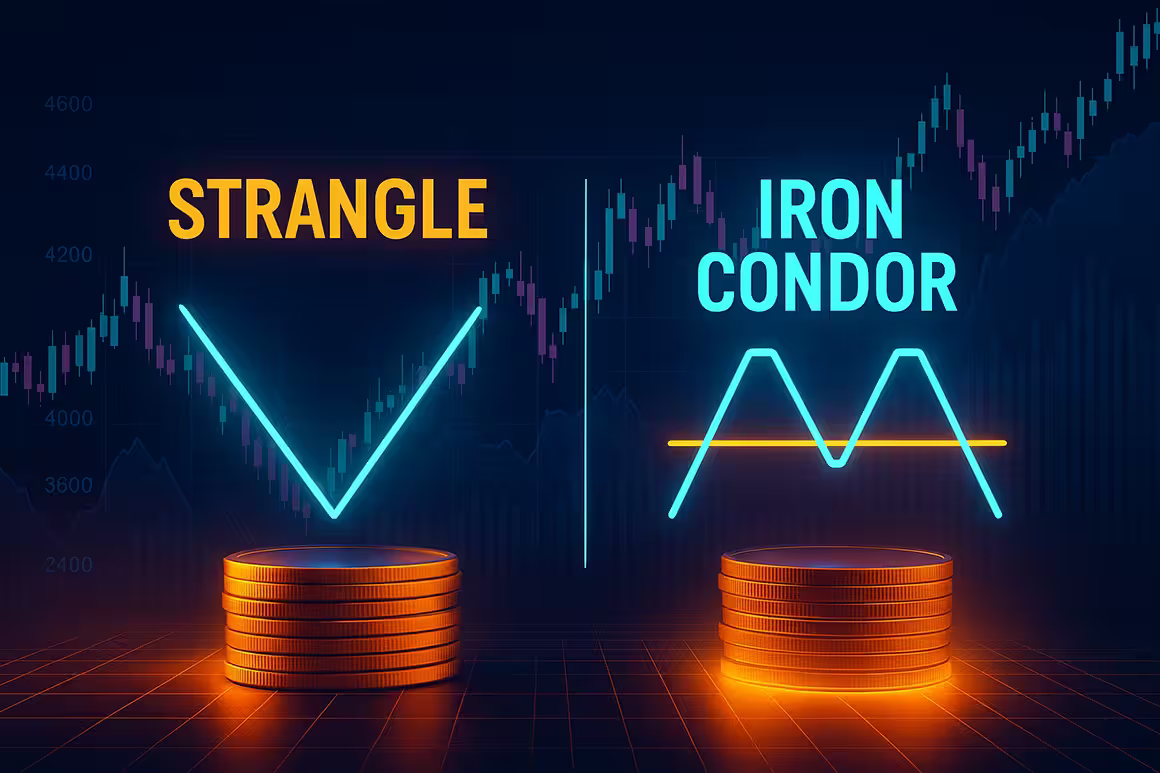
The beauty of options trading is that there are plenty of strategies that a trader or investor can use to turn a profit, even when there’s uncertainty amongst other investors or volatile markets are to be expected in the near future. Two such strategies are the long strangle and the iron condor, which have their own approach to turning levels of volatility into dollars.
Our strangle vs. iron condor guide will cover each strategy in depth, outline its differences, and show you when the best times and conditions are to use each. You can learn about the main pros and cons of each approach. We recommend considering your own risk management practices and the potential profits you would like to secure in trading before committing to either the long strangle or the iron condor.
Understanding the Strangle Strategy
Strangles come in two varieties, but we’ll be primarily focused on the long strangle technique, which is heavily reliant on volatility to be successful. This section of the guide will address how the long strangle works, which we’ll review with a hypothetical example. You can also learn the primary advantages and disadvantages that come with this trading move.
Definition
The strangle strategy involves buying an out-of-the-money (OTM) call and an OTM put on the same underlying asset, with the same expiration date. The idea with this trading technique is to take a bet that there will be market volatility, and a trader can profit from the strangle if the stock price moves significantly in either direction. It doesn’t matter if the price goes up or down, so long as it moves considerably either way.
Purpose of the Strategy: Profit from large price movements in either direction.
The strangle strategy comes in two flavors: the short strangle and the long strangle. When you’re betting on volatility to significantly impact the stock price, you’re using a long strangle move. The opposite approach is the short strategy, and it’s best used when you’re expecting the price of the underlying asset to stay within a narrow range, which is a bet against price volatility. Each of these are “volatility plays,” but they’re two different approaches for betting on volatility impacting your overall investment.
How It Works
We’ve put together two examples of the long strangle and short strangle as a way to illustrate the basic setups for each of these trades. You can gain some insights into the profit and loss potential in both cases for a better idea of the strategy as a whole.
Long Strangle
Let’s look first at the long strangle with an example illustrating how traders can secure a profit from volatile market conditions having a significant impact on the stock price. There’s a stock that’s trading at $100 per share—you need to buy a call option with a strike price of $105 and a put option with a strike price of $95. For the sake of argument, let’s say that you pay $3.50 to enter the trade (the premium). The premium for the put option, on the other hand, is $3.
We need to talk about the breakeven points now, the upside and downside of the long strangle. To cover the initial cost of entering the call option, it needs to increase in value by at least $3.50 plus the strike price amount ($105). To break even on the call, the stock price has to go up by $108.50. The breakeven point on the put option is the strike price minus the premium ($95-$3=$92).
- The biggest loss you’ll incur with the long strangle is the premiums paid for the call and put options ($3+$3.50=$6.50).
- The biggest profit a trader can enjoy with the strangle strategy is technically unlimited because the price could theoretically deviate away from the strike prices of the call and put options by any amount.
Short Strangle
If there’s a stock trading at $100 per share, a trader could set up a short strangle by selling a call option at $105 while also selling a put option at $95. So long as the stock price remains within this narrow range, the trader can secure a profit from this short strangle move.
What Needs to Happen for Success
The key factors affecting the success of a strangle include volatility and large price movements in the case of the long strangle. On the other hand, the short strangle profits from a lack of volatility and minimal price movements. In the case of each of these strangle approaches, the conditions mentioned need to happen for the trade to work. You could hypothetically set up a long strangle, but if there’s no volatility and the stock price remains the same, you’re going to incur big losses on the trade.
Advantages of the Strangle Strategy
What are the top reasons that traders choose to use the strangle strategy in their options trading sessions? We’ve outlined the primary advantages of using the long strangle specifically to give you a good idea if it’s a strategy that would align well with your market outlook and trading goals.
- Good for Volatile Markets—Volatility in options trading can often be synonymous with uncertainty and risk. However, the long strangle lets traders take advantage of market uncertainty and the possible price fluctuations that come with events like earnings announcements or geopolitical occurrences. Use the strangle to make money on volatility!
- Potential for Significant Profit—So long as the price of the underlying asset moves sharply due to market volatility, the strangle will secure a profit for the trader or investor. The profits are technically unlimited because the stock price could deviate greatly from the strike price of either the call or put option, which makes up the trade.
- Flexibility—The long strangle can be used in a variety of market conditions, especially when anticipating volatility. You could have a bearish or bullish outlook on the market, but so long as volatility occurs, which greatly impacts the value of the underlying asset, the long strangle can help you make a profit.
- Limited Risk—The maximum loss for this trading strategy is the premium you paid for the call and put option.
Disadvantages of the Strangle Strategy
Traders might want to avoid using the strangle strategy if they’re concerned about the following risks:
- Time Decay Concerns—Your overall profit potential from the long strangle could be eroded by the time value of the option decreasing as it gets closer to its expiration date. Time decay can have a significant impact on your bottom line, so it must be managed carefully.
- Requires a Big Movement in Stock Price—Losses are imminent with the long strangle trade if the price stays within a narrow range and doesn’t move significantly. It’s useless to try this move if volatility isn’t going to happen to move the stock price far away from the call or put strike prices.
- Expensive Premiums—To acquire the out-of-the-money options that are needed to pull off the long strangle move, traders have to pay premiums that are more expensive than other trades. It can become costly for some traders, especially those with smaller amounts of capital to work with.
Understanding the Iron Condor Strategy
Now that you know all about the long strangle and its success in producing profits for investors who are facing market volatility, let’s move on to the iron condor strategy, which is similar to the short strangle, a move which profits from low volatility and price movements with a specific price range. To help you understand the iron condor better, we’ve included an explanation of how it works and outlined the advantages and disadvantages of using the strategy.

Definition
The iron condor strategy involves the trader selling an out-of-the-money (OTM) put and an OTM call while simultaneously buying a further OTM put and call. What this trade setup accomplishes is creating a range of profitability where price movements can occur that will help the trader secure a profit.
Purpose of the Strategy: Profit from low volatility and price movement within a specific range.
We mentioned earlier that the iron condor is extremely similar to the short strangle, however, it comes with an added layer of protection that is worth noting. The iron condor has you betting on the underlying asset staying within a specific price range. It’s a good move to use in relatively stable markets (“sideways markets”) where the stock prices aren’t expected to fluctuate too much. Only a minimal amount of fluctuations is needed to make the iron condor profitable.
How It Works
If you’re interested in seeing a step-by-step breakdown of how the iron condor works, we’ve included one below for your convenience, including the premium collection and potential outcomes.
For this example, let’s look at a stock where the trader is expecting the price to stay between $90 and $100. To use the iron condor strategy, the trader would sell a call option at $100 and buy a call option at $110 as a way to limit risk on the upside, while also selling a put option at $85 and buying a put option at $80 in an attempt to limit the downside risks.
When Does It Profit?—So long as the stock stays within this range by the time of the expiration date, all the options would expire as worthless, and the trader gets to keep the premiums that they received upfront from selling them. Iron condors also benefit from time decay, where the short options in the trade lose value faster than the long options, which helps to increase the overall profits.
Key Factors Affecting Its Success—When it comes to using an iron condor, the price has to stay within the specific range which is determined by the two spreads that make up the trade. Time decay also works in the favor of the iron condor. If you don’t have the combination of minimal market volatility keeping the stock price fluctuating within the narrow range and time decay pushing the profit potential upward at the same time, the iron condor is doomed to fail. Needless to say, it’s a move that’s better suited for advanced traders with more experience.
Advantages of the Iron Condor Strategy
What are some of the perks and benefits that come from using the iron condor and its use of two spreads combined with time decay? We’ve outlined these advantages below, which go over the perfect conditions for this strategy and some of the possible beneficial outcomes with traders.
- Limited Risk—While the profit potential is capped, the potential risks are also super limited with the iron condor. It’s a good strategy choice if you’re looking for a way to maintain steady profits in a sideways market while also limiting possible losses.
- Higher Probability of Small, Consistent Profits—One of the big appeals of the iron condors is the ability of the trader to rake in small, steady profits over time. Just as the risks are limited with this move, the profits are limited, but they’re super consistent as well.
- Profit Potential from Time Decay (Theta)—While time decay is a factor that can work against a lot of trading strategies, the iron condor thrives from time decay because it can help the options to expire faster before the stock price moves out of the desired range.
- Benefits from Stability of the Underlying Asset—The iron condor is designed to profit when the price of the underlying asset stays within a specific range, which makes it a good strategy to do if you’re dealing with an underlying that is known for being relatively stable in relation to market fluctuations or volatility.
Disadvantages of the Iron Condor Strategy
We cannot tell you about the good of the iron condor without also covering the negative parts of using the strategy. These disadvantages are worth noting, and any trader should consider these factors before using this strategy as a part of their trading plan.
- Limited Profit Potential—The hope with the iron condor is that the stock price trades within a narrow range, and time decay keeps the price from moving too much before the expiration date. When the option expires as worthless, the trader gets to keep the premium they get upfront from setting up the iron condor, however, this premium is all the profit that comes from the strategy, which is limited compared to other moves.
- The Price Must Stay Within the Range—Unless this happens, the iron condor cannot be a profitable move for the trade. It’s a delicate balance of choosing the right strike prices and expiration date, which allows the stock price to stay within a narrow range. It ultimately makes the iron condor better for advanced traders with a firm understanding of how the markets work.
Comparing Strangle and Iron Condor in Uncertain Markets
How does the long strangle compare against the iron condor strategy when it comes to dealing with market uncertainty and possible price fluctuations? This part of the guide will go over the best market conditions for using each move, the ultimate profit potential, and some of the capital requirements or risk management principles that need to be exercised to achieve the best results.
Market Conditions for Each Strategy
What are the ideal conditions that the market has to be in for each of these strategies to work? Each has its own unique strength, and it’s important to note that the iron condor is essentially a short strangle that simply has a bit more protection behind it.
- Strangle: Best used when expecting significant volatility or a major price movement in either direction.
- Iron Condor: Best used when expecting low volatility and a market that remains relatively stable within a defined range.
Both of these strategies are banking on market volatility in one form or another. Strangles thrive from high volatility that pushes the stock price significantly in either direction, while the iron condor performs strongly from a lack of market volatility, allowing traders to keep their premiums when the options expire as worthless.
Profit Potential in Volatile Markets
Each of these strategies provides a unique way to profit, and which one is “better” depends on what kind of trader you are and how you like to make your money trading options. In one case, you’re making more profit, but the outcome is more uncertain due to volatility, while the other scenario is a more predictable, steady approach with limited risk but limited profit.
- Strangle: High potential profit if the price moves significantly in either direction.
- Iron Condor: Limited profit potential but safer in environments where price doesn’t move much.
Before choosing either the long strangle or the iron condor, it’s key to consider your risk tolerance. Are you willing to take on a greater amount of risk to rake in a bigger profit? Or do you prefer to collect small, steady premiums in a lowkey fashion?
Risk Management and Capital Requirements
Now, let’s take a look at each strategy from the standpoint of capital requirements and any kind of needed risk management practices. A lot of choosing the trading technique that best fits your plans and needs comes down to the amount of capital you have available to trade with.
- Strangle: Requires more capital for the upfront premium costs. The risk can be higher if the market doesn’t move as expected.
- Iron Condor: Lower capital requirements, but the profit potential is capped, and there’s still a risk if the price moves outside the range.
Traders with limited funds might consider sticking with iron condors. Even though the profits are limited, they offer a way for traders to collect steady premiums as long as the stock price stays within range. The iron condor could be the ticket to a trader with limited capital to build their account balance to tackle more ambitious trades like the long strangle!
Strangle vs. Iron Condor – Which Strategy Is Better for Uncertain Markets?
Between the long strangle and the iron condor, which is the better strategy for dealing with market uncertainty? In certain circumstances, one can work better than the other, and vice versa in other scenarios. It really depends on the situation. We’ve outlined a few factors to consider before placing either trade, including the current market conditions, your personal risk tolerance, and how much capital you have on hand.

Factors to Consider
- Market Volatility: Long strangles may be better for highly uncertain or volatile markets because they make the most money when the stock price deviates wildly from the strike prices of the trade. Significant changes as a result of volatility can produce hefty returns.
- Risk Tolerance: If you’re a more conservative trader (meaning that you’re less likely to take risks), then the iron condor may be your best choice. The approach with this one is a more predictable, lower-risk strategy that banks on minimal volatility and the options expiring as worthless, so you can collect the premiums.
- Capital Availability: Strangles might require more capital due to higher option premiums. Plus, you need to have more money on hand to perform strangles because the risks can be higher if the volatility isn’t there to make the strategy work.
Scenario-Based Recommendation
If you’re curious about some good examples of when to exercise either of these strategies in your trading session, we’ve prepared a few scenario-based recommendations to give a bit more real-world context to using these trade moves.
- When to Choose Strangle: A significant earnings report, geopolitical events, or news that could trigger large price movements. Remember that the long strangle thrives when the markets are volatile. How else can you achieve the major price move needed to profit?
- When to Choose Iron Condor: If you expect the market to trade within a narrow range, such as during periods of low volatility or post-earnings calm. The iron condor works best in calm, stable markets using underlying assets that are known for not changing too much in value due to market volatility.
To Strangle or to Iron Condor? A Final Word
Long strangles are a good option trade when it comes to making money from market volatility. If there’s a big price fluctuation between the strike price and the stock price by the expiration date due to market volatility, the trader can bring in big profits, though they could incur big losses too if there’s not a significant price shift.
The iron condor thrives when the markets are stable and the stock price remains in a narrow range between two strike prices, allowing the trader to keep the premiums they gained from setting up the iron condor once the expiration date hits.
If you’re interested in trading based on market volatility and possible price fluctuations, it’s key to choose the strategy that fits in with your current market outlook, your personal appetite for taking risks, and how much capital you have to fund your trading session. Analyze your market expectations and trading goals before deciding which strategy to implement.
Further Reading
Are you interested in learning more about each of these volatility plays? Check out our comprehensive guides on long strangles and iron condors!