
Good online traders and investors enter each trading session with a plan in mind and goals or objectives to achieve. A strategy for minimizing losses, maintaining the majority of your capital, and increasing profits are the hallmarks of a practical trading plan. Using an options trading strategy can significantly increase the success of your online portfolio. Once you learn how to use some of these approaches, you’ll know just how flexible they can be worked into your next session and the potential for profits they offer.
Straddles and strangles are two popular options strategies commonly used in volatile markets but often misunderstood. Our guide helps readers understand the differences between these two trading strategies, their pros and cons, and how to decide which plan best fits their trading style. Though they have unusual names, you’ll find soon enough that straddles and strangles will allow traders to harness market volatility or stable conditions to their advantage effectively.
What Are Straddles?
There are a few ways that traders and investors can incorporate a straddle into their options trading strategy. As we review the main differences between a long straddle and a short straddle, we’ll also discuss when the market conditions are best for each and the primary pros and cons of each strategy.
Definition and Key Features
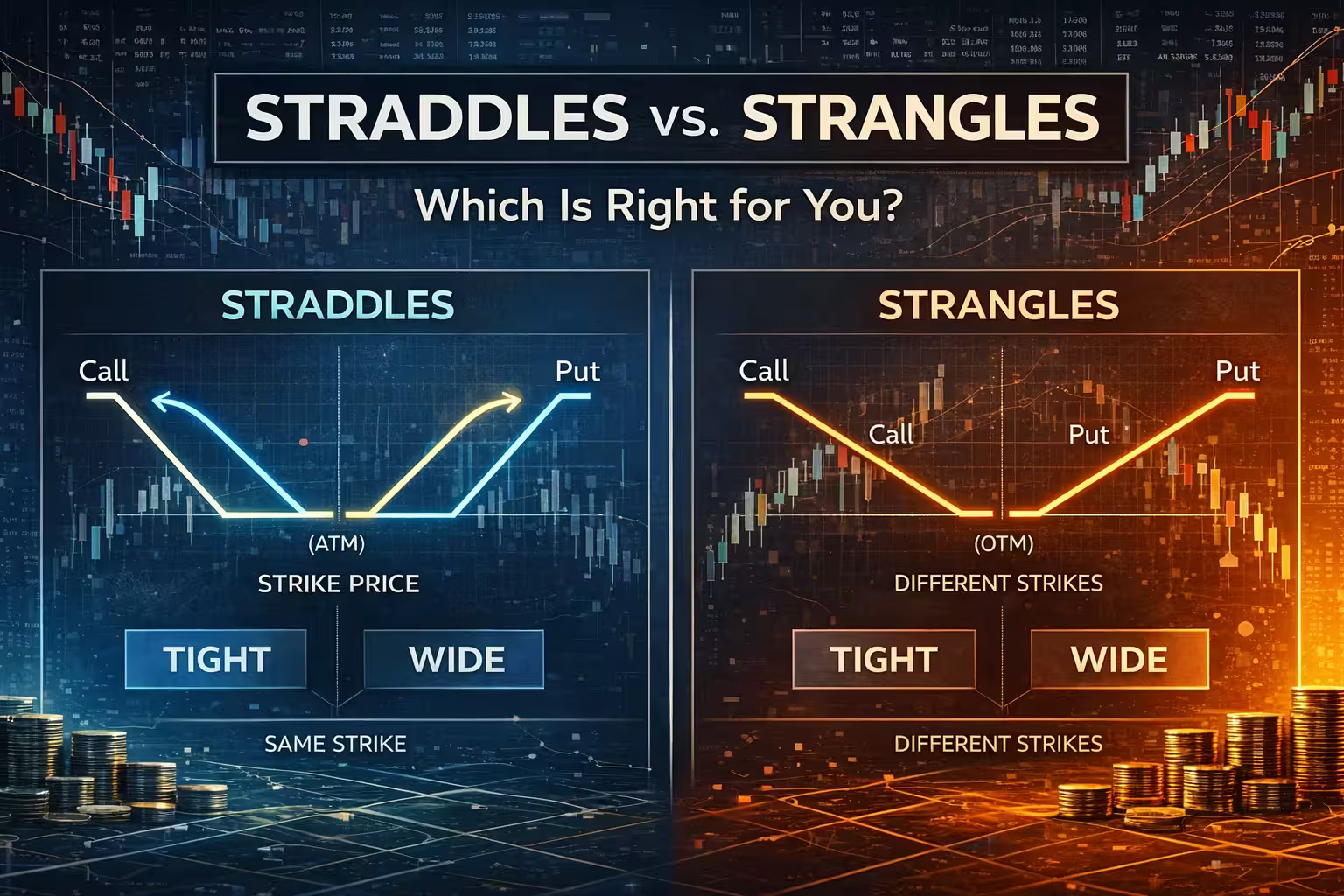
The straddle trading strategy involves buying and selling a call and a put option at the same strike price and expiration date. Straddles allow traders and investors to take advantage of a volatile market without having to correctly predict which direction the price will go. This strategy only works if the stock price moves more than the total paid for the option (the premium). With no strong price movement, the premium can be far more valuable than any profit that might be gained using a straddle.
Straddles come in two varieties: the long straddle and the short straddle.
Long Straddle
A long straddle consists of a call-and-put option where investors or traders anticipate significant price movements but aren’t sure of the direction. While traders don’t have to worry about correctly predicting which way the market moves, they need to be right about the market moving significantly regarding stock prices. Otherwise, the long straddle is useless. There’s another significant risk. Long straddles are more sensitive to Theta decay (time erosion), which results in the trade losing money quickly if the stock price remains stable.
Short Straddle
Short straddles are the same (selling one put option and one call option), but traders expect the market to remain stable. These aren’t sensitive to the time decay factor, so there’s some upside for investors worried about that specific risk. Traders can earn a net credit and profits if the underlying stock trades within a narrow range between two breakeven points.
When to Use Straddles
Since this strategy works best when traders or investors anticipate a large price change in the stock, the long straddle is best used before major earnings reports, company announcements, product launches, or other market-moving events. The good thing about long straddles is that the maximum risk is the premiums paid for the call and put, so investors and traders can also lose money if volatile market conditions don’t set in before the stock’s expiration date.
Short straddles are best to use when there’s low market volatility, neutral price action, and no significant upcoming events that could cause sharp price fluctuations. With the maximum possible gain being the two premiums on the put and call, trades can collect these premiums upfront and succeed in this strategy so long as the market stays range-bound. Suppose the market moves away from these two breakeven points. In that case, it begins experiencing high volatility, and the risk starts to kick in. Maximum losses can be up limits—it all depends on how far the market moves out of the expected range.
Pros and Cons of Straddles
Using straddles can be a huge benefit for some investors, but there are certain conditions under which they’re less than ideal. There are some limited upsides to using them, and there are some risks to using them as well. It’s best to know this strategy’s primary pros and cons before employing it in your next trading session.
Advantages
- Potentially high returns in volatile markets
- You don’t have to correctly predict which way the price is going (equal exposure to upside and downside price trends)
- Straddles improve portfolio diversification
- Straddles help lower a trader’s overall risk exposure
- The gains significantly outweigh the premium to enter the trade
- Hedge risk due to holding underlying stocks for a long period
- Staddles leverage exposure to upside and downside price swings
- The maximum loss is the total premium paid (long straddle)
- The breakeven points improve as time decay accelerates
- Straddles let traders benefit from wide price ranges and extremes
Disadvantages
- The put option has limited potential profit
- The max loss on a long straddle is the total premium paid if the market doesn’t become volatile
- The maximum loss is highly probable
- There need to be strong price movements for a straddle to profit the trader
- Straddles are more expensive than buying options alone due to high commissions on multiple legs
- Calls and puts in a straddle decay as they approach expiration
- Traders tie up their capital in straddles in such a way that makes it difficult to allocate funds elsewhere
- Traders run the risk of getting unwanted stock positions if the short option legs are assigned early
- Straddles need to be closely monitored
- Straddles can be costly due to maintaining margin requirements (short straddles)
- Traders have to deal with a more complex trade structure with straddles
- The timing of straddles can be challenging to put off successfully
What Are Strangles?
Let’s look at the strangle trading strategy. In this strategy, traders feel their stocks have a better chance of moving in a specific direction, unlike a straddle strategy, where they must correct the volatility conditions. Strangles are helpful for traders who desire protection in the case of an adverse market movement. They are typically cheaper to execute than straddles, but we’ll get into the finer details of this strategy below.

Definition and Key Features
The strangle trading strategy involves buying a call and put option with different strike prices but the same expiration date. The call and put have the same maturity and underlying asset. Strangles are executed by choosing strike prices that are out of the money, which is significantly cheaper than purchasing options at the money or in the money.
Just as there are long and short straddles, there are long and short strangles.
Long Strangle
Long strangles are best used when investors expect a significant price change in their stock but are unsure of the exact direction in which it will move. This strategy can be used in a wide range of market conditions. Put options profit when the stock falls, while there’s some limited upside with the call option if the stock price increases. The maximum loss potential is limited to how much the investors paid for the options (the premium).
Short Strangle
The short strangle has a call with a higher strike price and a put with a lower strike price. Both options are out-of-the-money; the maximum profit is the total premiums received (subtract commissions). Strangles benefit from Theta decay, where the extrinsic value of the stock falls over time. Traders and investors can keep all the credit received if both options expire as worthless, so that’s the best-case scenario using a short strangle. The potential losses are unlimited if the stock price goes up or down, though it’s especially bad if it rises.
When to Use Strangles
The market conditions must be right to use either a long or short strangle. A long strangle is best when the investor expects a price to change significantly on a stock but isn’t sure which direction that price movement will go. This means that long strangles are best in volatile markets because strong price movements are needed for the strategy to take shape. Long strangles are advantageous because traders bet on volatility without committing to a specific price point.
On the other hand, the short strangle is best when the market is calm, and investors want the prices to stay within a specific range. In these conditions, investors can profit on both the call and put, trading sideways. The term “trading sideways” refers to buying and selling assets when their prices fluctuate between a high and low point, known as the support and resistance levels. Short strangles are, therefore, subject to the downsides of sideways trading practices, including increased transaction fees and a big time commitment.
Pros and Cons of Strangles
Because strangles come in two forms, we’ll highlight the pros and cons of the short and long strangle. These strategies have some advantages, but there are some risks that are important to keep in mind before giving them a whirl.
Strategy | Advantages | Disadvantages |
|---|---|---|
Long Strangles | – This strategy can be used in a wide range of markets – Limited risk—the most significant loss is the premium paid on the call and put – Unlimited profit potential – Profit no matter which way the prices go | – Significant price movements due to market volatility are needed for this strategy to work – The longer you hold long strangles, the more you lose in premium (time decay) – Options can expire as worthless in stable markets |
Short Strangles | – Traders can profit regularly from the premiums that come from selling calls and puts – Short strangles can be used in a variety of market conditions – This strategy doesn’t rely on volatility but a stable market – Traders have a high probability of profiting using a short strangle | – Short strangles come with unlimited risk, especially if the asset moves significantly in one given direction – Some traders can be disadvantaged by higher margin requirements that come with short strangles – Limited profit potential (the premium that comes from selling the call and put option) |
Key Differences Between Straddles and Strangles
We’ve provided you with a lot of information about the straddle and strangle trading strategies, but how do they differ from one another? We’ll examine these differences below as we review strike prices, cost of entry, the size of the market movement to prove each strategy effective, and the risk/reward potential.
Strike Prices
The main difference here is that the straddle uses a call-and-pull option with the same strike price and expiration date, while the strangle uses a call-and-pull option with the same expiration date but a different strike price. Traders prefer to use straddles when they’re sure of significant price movement but are unsure of the direction, while strangles are used in the event that the trader knows the direction the market will go but still wants to hedge their position.
Cost of Entry
The premium costs of straddles and strangles differ—this is how much it costs the investor to enter the trade. Straddles have higher premiums and a higher cost to enter due to the intrinsic value of the call and put options at the at-the-money strike price. With strangles, you’re dealing with out-of-the-money calls and puts, so they have lower premiums and are generally more affordable to enter than a straddle.
Required Market Movement
One of the major factors that sets straddles and strangles apart from one another is the size of the market movement needed for each strategy to be profitable. Long straddles work best when there’s high volatility and big shifts in the market, while short straddles are ideal when market conditions are relatively stable. Prices fluctuate between a short range (resistance and support levels). Short and long strangles work best in a wide range of markets but are best in sideways markets where investors are confident which market is going.
Risk and Reward Potential
The potential for risk and reward is also different depending on what kind of straddle or strangle you choose to incorporate into your options trading session. Each is designed with certain upside and downside rewards, as well as its own unique risks posed to investors.
– Long Straddles: There’s unlimited profit on the upside and substantial profit on the downside (the stock price call falls to zero). Using this strategy, the best thing to happen is for the stock to move significantly in either direction. The profit is the difference between the stock’s price at expiration and the strike price. The maximum loss is the premium paid on the call and put if the underlying asset’s price remains stable (you subtract commissions).
– Short Straddles: The total profit for a short straddle is greater than one strangle, though the profits are limited to the premiums received at the outset. The potential loss is unlimited, so short straddles are usually only used by advanced traders because they are more challenging to execute correctly.
– Long Strangles: If the underlying stock moves enough to put one of the options in-the-money, the long strangle can generate considerable profits with unlimited potential profit. Conversely, the maximum loss is limited if the underlying stock stays in the range between the two strike prices until the expiration date.
– Short Strangles: The total profit potential is limited to the premiums received on the call and put options minus commissions. Traders can earn the maximum profit if the stock price closes at or between the strike prices and both options expire as worthless. The maximum loss is unlimited as the short strangle has unlimited upside risk.
How to Choose Between Straddles and Strangles
Consider these factors when determining if a straddle or strangle would best benefit your options trading strategy: market conditions, personal risk tolerance, and trading goals. After you’ve taken some time to think about these aspects of trading, you can decide if the straddle or strangle strategy is best, along with taking a “long” or “short” approach.

Assessing Market Conditions
When straddles or strangles are appropriate, a key to understanding is looking at the market’s volatility and which direction it could go. If the markets are expected to be volatile, resulting in major price movements, it’s best to use a long straddle. Calm markets where there isn’t much happening regarding price swings are best for short straddles. Strangles can be used in either market because the focus is on getting the direction right instead of the volatility level.
Evaluating Your Risk Tolerance
Traders should assess their risk tolerance when choosing between a straddle or strangle. Straddles have a higher risk-to-reward profile because the strike price is the same between the call and put option. They are also more expensive to enter than strangles and are subject to more volatility. The initial investment cost is much higher for straddle overall, so they might not be the best for beginners or traders who don’t have the resources to maintain them.
It’s important to note, however, that short strangles have unlimited upside risks that can lead investors and traders to experience unlimited losses. That makes this type of trade a risky endeavor as well. The best strategy for minimal risk of the four is the long strangle.
Understanding Your Trading Goals
Consider your trading goals before committing to a straddle or strangle trading strategy. Your goals can greatly influence your ultimate choice. Some traders and investors like maximizing short-term profits, while others are more concerned with hedging longer-term positions.
Examples of Straddle and Strangle Trades in Action
For your convenience, we’ve included a few examples of when to use straddles and strangles when trading options online. It can be difficult to know when to incorporate these strategies into different trading scenarios, so we’ll outline a few circumstances when they’re ideal.
Real-World Example of a Straddle Trade
The best time to use a straddle trade would be approximately three to four weeks before a company’s earnings announcement. Options pricing is much lower during times of low volatility. If you enter traders three to four weeks out, you get in for a better price before the typical daily fluctuations leading to a major announcement kick in. If you enter the trade when implied volatility is setting in, you could end up overpaying for those options, so it’s best to enter the trade during the low-volatility period to earn a profit.
Settle up the Straddle
- The first step is to compare the current implied volatility (IV) to the past year during the weeks leading up to the earnings announcement. It should be lower, showing a pattern of increased IV as the announcement gets closer.
- Next, you’ll want to choose a call and put options close to the current underlying price. To avoid significant theta decay (time decay), an investor will want to select an expiration date more than 30 days past the company’s earnings announcement. Ensure the expiration date is the same for both the call and put options.
- Take a look at the price movements that have occurred in the past when the company released its earnings report. Investors need to make sure the average movement surpasses any price movements needed to exceed the breakeven points.
- Consider risk management in the trade by looking at the two breakeven points. The combined premium is the total risk of the trade. The upward breakeven point is the strike price plus the premium, while the downward breakeven point is the strike price minus the premium.
Exiting the Straddle
- Traders should exit the straddle if one of the options appreciates in value and the other depreciates in value. They need to sell these at the same time to recoup any time value that might be left on either. In this scenario, the trader or investor doesn’t make a profit.
- A significant rise in implied volatility, which boosts the options value, is another good moment to exit the straddle. It’s best to cut out early to lock in a profit and not experience a sharp downswing in prices.
- Securing a profit occurs when both the call and put option can be sold at a higher combined price than the premium the investor paid at the trade’s opening. Investors can exit the trade by selling the call and putting options simultaneously. The overall profit is the premium that comes from selling the straddle, plus you would have to subtract the cost to open the trade (minus possible commissions or fees).
Real-World Example of a Strangle Trade
Strangle trades are best employed before a major economic event like a Federal Reserve announcement. Let’s look at an example of how this trading strategy could play out before such an announcement.
Investors will want to buy a call option with a higher strike price and a put option with a lower strike price on a stock market index if they catch wind of the Fed doing a potential interest rate hike. The idea of the strangle strategy is benefiting from significant price volatility in either direction following the Fed’s announcement without getting the direction correct.
The ideal time to execute the strangle would be several weeks before the official announcement and to set the strike price for two weeks following the announcement date. The call and put options need strike prices that are the current price on the stock market index. Any significant price swings in either direction due to the announcement will allow the investor to profit from holding both a call and put option simultaneously.
Comparing the Outcomes
There are some critical differences between straddles and strangles, especially in terms of outcomes:
- Straddles: Investors are unclear of which direction the stock price will move. This means that traders and investors are protected regardless of the overall outcome.
- Strangles: Investors believe that the stock price will move significantly in one direction, but they use strangles to protect themselves if the price does not move significantly.
Common Mistakes to Avoid
It’s critical to be aware of the most common mistakes that can be made when using straddles and strangles in options trading. Right up front, these mistakes include overpaying on premiums, not correctly accounting for time decay, and choosing the wrong strike price. Straddles and strangles can be done right, but there are certain things you’ll want to avoid. Let’s take a deeper look at these mistakes and how you can avoid them to save some pain and heartache later.

Overpaying for Premiums
As we discussed before, straddles are generally more costly to enter than strangles. A considerable risk of using a straddle trading strategy is paying too much premiums. Think about it. The maximum risk involved in a long straddle strategy is the premiums paid for the call and put. Ultimately, investors and traders can also lose money if volatile market conditions don’t set in before the stock’s expiration date, and they can lose more than is necessary if they pay too much to enter the trade. Paying just the right price on the put and call option premiums can help traders minimize risk if the right market conditions don’t set it.
Failing to Account for Time Decay
Time decay impacts the straddle and strangle strategy, particularly in low-volatility environments. In short strangles, options’ value decreases with time decay, but these conditions allow the investor to buy options contracts for less than they initially sold them for, so time decay is a good thing for this strategy. In a long strangle, however, time decay works against the option’s value, especially if the stock price doesn’t fluctuate slightly during that time.
If an investor is using a long straddle strategy, they must take time decay into account because both the call and put options are susceptible to decay in value as they approach their expiration date. With short straddles, traders must be cautious about time decay because it cannot fully offset potential losses if the underlying asset moves significantly beyond the breakeven points.
Choosing the Wrong Strike Prices
Selecting the right strike prices and expiration dates is one of the most important decisions in a straddle or strangle trade. The strikes you choose determine both your cost of entry and how far the underlying has to move before you start making money.
Get the strike price wrong and you end up in one of two traps. Pick strikes too close to the current price and you’ll pay a steep premium for options with a lot of intrinsic or near-intrinsic value, raising the bar for what counts as a profitable move. Pick strikes too far out-of-the-money and while the premium is cheaper, the underlying has to make a much larger move before either leg pays off. In both cases, the most common outcome of a poorly chosen strike is the options expiring worthless and the trader losing the entire premium paid.
For long straddles, you’ll generally want strike prices close to the current market price so that even a moderate move in either direction can push one leg into profit. For long strangles, the calculus is different: you’re intentionally choosing out-of-the-money strikes to lower your upfront cost, which works well in high-volatility conditions where a large price swing is likely. The tradeoff is that wider strikes require a bigger move to break even, so the expected size of the move should drive how far OTM you go.
The key is matching your strike selection to your outlook. If you expect a big move, wider strikes on a strangle keep your cost down. If you expect a sharp but less dramatic move, tighter strikes on a straddle give you a better shot at profit without needing an outsized swing.
Understand Straddles and Strangles Before Using Them in Your Strategy
Straddles and strangles can be helpful for investors who want to profit from significant stock price movements that occur when volatility sets in. Still, it’s critical to only use them when you understand how they work and when they’re appropriate to use! Remember to assess the current market conditions, evaluate your personal risk tolerance, and the potential for risk or reward to determine if a long, short, long, or short strangle is the best course of action.
Be sure to avoid the common mistakes beginners make: don’t overpay for premiums, account for time decay, and choose the right strike price for the best results! Feel free to refer to our guide as you delve into using these trading strategies—getting these techniques correct comes with practice and experience.
Frequently Asked Questions
We compiled a list of the most common questions from our customers and readers about straddles and strangles in online options trading. If you want to learn the key highlights of what we discussed in this review, we encourage you to look through these questions and our answers so you don’t have to read the entire guide.
What Is the Difference Between a Straddle and a Strangle in Options Trading?
Straddles are when traders buy and sell call and put options at the same time with the same strike price and expiration date, while strangles are when traders buy and sell call and put options at the same time with the same expiration date but a different strike price.
Which Strategy Is Better for Beginners: Straddles or Strangles?
Strangles are generally seen as the best of the two options for newer traders because they don’t cost as much to enter and aren’t as risky as straddles. However, they require a bigger price movement to be successful. Straddles protect investors regardless of market outcomes because they don’t have to get the market’s direction correct in their prediction. They can still be profitable with a smaller price change.
Can I Use Straddles and Strangles in Low-Volatility Markets?
Straddles can be used in low-volatility markets, but it’s only in the case of a short straddle. Traders expect the market to remain stable in this scenario. Traders can earn a net credit and profits if the underlying stock trades within a narrow range between two breakeven points.
What Happens if the Stock Price Doesn’t Move after I’ve Initiated a Straddle/Strangle Trade?
Traders would likely lose money under these circumstances because the price paid for the options (premiums) erodes over time due to time decay,, resulting in a net loss. This is true when the stock price stays precisely where it is at expiration. For nearly every interaction of these strategies, investors will want big price movements, except for short straddle trades where the market needs to remain stable.