
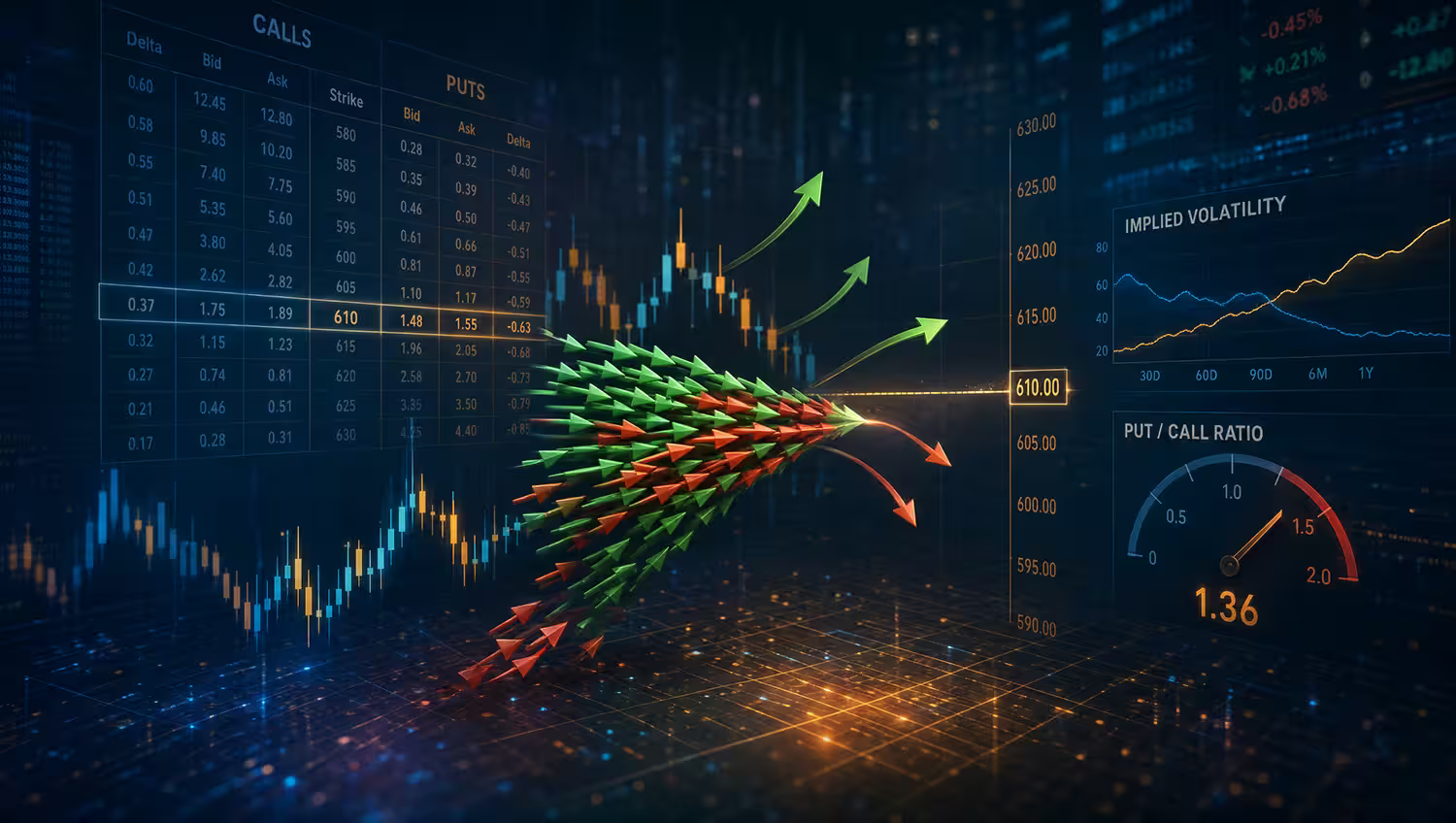
A crowded options trade usually looks convincing before it looks dangerous. Volume is heavy, one strike is getting attention, the story is easy to repeat, and a sharp move in implied volatility makes the setup feel urgent.
That evidence matters, but it does not tell the whole story. Options flow can reflect speculation, hedging, closing trades, rolls, or portfolio adjustments that are invisible from a headline screenshot.
The better question is whether the trade has become too obvious, too expensive, or too dependent on perfect timing. That turns crowding into a risk review instead of a trading signal.
Quick Takeaways
- Crowded options trades are not automatically wrong, but crowded positioning can make a setup more fragile.
- Options volume should be compared with open interest, the catalyst, expiration, and normal activity for that contract.
- Put-call ratios and strike concentration describe pressure; they do not explain intent by themselves.
- Implied volatility and skew show when traders are paying up for one side of the move.
- Reversal risk rises when a trade needs continued new buyers, a larger move, or perfect post-catalyst timing.
- Use flow to sharpen the risk review, not to replace an independent thesis and exit plan.
What Crowding Means In Options
Crowding means many traders appear to be concentrated around the same underlying, direction, strike area, expiration, or catalyst. In options, it often shows up as unusual volume, large open interest, aggressive call or put demand, steep implied-volatility changes, or repeated attention around the same trade idea.
Volume and open interest are related, but they answer different questions. Volume counts contracts traded during a session. Open interest counts contracts that remain open after prior trading. A volume surge can reflect new positions, closing trades, rolls, spreads, hedges, or market-maker activity.
The key is interpretation. A visible trade deserves extra review when entry prices get richer, exits look thinner, or the expected catalyst is already widely anticipated.
Five Clues A Trade May Be Getting Crowded
The first clue is volume that is large relative to open interest and normal activity. A single busy session matters more when it appears at a specific strike or expiration instead of across the chain.
The second clue is strike concentration. If attention piles into one call strike just above the stock price or one put strike just below it, small changes in price, volatility, and dealer hedging can matter more than late buyers expect.
The third clue is a stretched put-call ratio. A high or low reading can describe sentiment pressure, but it can also reflect hedging, spreads, index activity, or event positioning.
The fourth clue is premium that rises faster than the thesis improves. Before earnings, litigation news, product events, macro data, or meme-driven moves, option buyers can be right about direction and still overpay for the contract.
The fifth clue is narrative saturation. When the same trade appears everywhere, late entrants may be buying from earlier traders who are already preparing to reduce risk.
A Quick Example: When The Crowd Is Late
Imagine a stock trading near $50 two days before earnings. The weekly $55 calls suddenly trade 20,000 contracts against 4,000 contracts of open interest, implied volatility is near the high end of its recent range, and most of the attention is clustered in that one upside strike.
That setup does not prove the calls are wrong. It does say the trade now needs more than a mildly good earnings report. Late buyers may need the stock to move quickly, clear the strike, hold enough volatility premium, and leave enough liquidity for an exit.
A disciplined trader would slow down here. They would compare the new volume with prior activity, inspect nearby strikes on the options chain, check the bid-ask spread, and ask whether the expected move is already reflected in the option price.
Crowded Trade Review Framework
Use the framework below to turn a visible trade into a repeatable review. It will not predict the reversal point, but it will show whether the setup still has evidence, liquidity, and risk control behind it.
Most of these checks start with the options chain, where volume, open interest, strikes, expirations, and bid-ask spreads are visible together.
Signal | What To Check | Why It Matters |
|---|---|---|
Options volume | Compare today's volume with open interest and recent average activity. | High volume alone cannot show whether traders are opening, closing, hedging, or rolling. |
Open interest | Look for large positions around one strike or expiration. | Concentration can make the trade more sensitive to price levels and expiration timing. |
Put-call ratio | Compare current readings with the underlying's normal range and the market backdrop. | Sentiment indicators need context before they are useful. |
Implied volatility | Review whether option premium rose before the expected event. | A crowded trade can lose if implied volatility falls even after the stock moves. |
Liquidity | Check bid-ask spreads, volume across nearby strikes, and exit conditions. | Crowded attention does not guarantee a clean exit at a fair price. |
Where Crowding Analysis Can Mislead
- A large trade may be a hedge, not a directional bet.
- High options volume does not reveal whether traders are opening, closing, hedging, or rolling.
- Open interest updates with a delay and should not be treated as a live position map.
- A stretched put-call ratio can persist longer than a trader expects.
- Implied volatility can fall after a catalyst even when the stock moves the expected direction.
- Crowded attention does not guarantee a clean exit if liquidity thins or bid-ask spreads widen.
Why Crowded Trades Can Reverse
Crowded options trades reverse when the trade runs out of fresh fuel. If many traders already bought calls before the catalyst, the next buyer must accept richer premium and a tougher breakeven. When demand slows, the contract can stop responding the way late buyers expected.
The catalyst itself can also reset expectations. A popular earnings call trade may need a large stock move and stable implied volatility. If the report is good but less surprising than expected, the stock can rise while the call premium falls. Crowded put trades can behave the same way when fear was already priced in.
Dealer hedging and expiration effects can add complexity, but the core lesson is simpler: crowded positioning changes the starting price of risk. The more obvious the trade becomes, the less forgiving timing and execution become.
Readers who need the vocabulary can review OptionsTrading.org resources on options volume, open interest, and implied volatility before treating flow as a decision tool.
Crowding Review Checklist
- I compared unusual options volume with open interest and normal activity.
- I checked whether activity is concentrated in one strike, expiration, or direction.
- I reviewed put-call ratio context instead of treating one reading as a signal.
- I checked implied volatility, skew, and whether premium already reflects the expected catalyst.
- I reviewed bid-ask spreads and exit conditions.
- I asked whether the trade is likely speculative, hedging, closing, rolling, or unclear.
- I separated crowding evidence from my independent stock or volatility thesis.
- I wrote down what would invalidate the trade before entering.
- I understand that options flow is context, not personalized financial advice.
FAQ
These questions cover the practical limits of using options crowding as part of a trading or research workflow.
Does crowded options activity mean a reversal is coming?
No. Crowding can raise reversal risk, but it is not a timing signal by itself. Price, catalyst, volatility, liquidity, and risk controls still matter.
Is unusual options volume bullish or bearish?
Not automatically. Unusual volume may come from speculation, hedging, spreads, closing trades, or rolls. Directional interpretation requires more evidence than volume alone.
Why does implied volatility matter for crowded trades?
When many traders demand the same options, implied volatility may rise. If that demand fades or the event passes, option premium can fall even if the underlying stock moves favorably.
Can open interest show where everyone is positioned?
Open interest shows outstanding contracts, but it updates with a delay and does not reveal every trader's intent. Use it as context, not a complete position map.
Use Crowding As A Risk Check
The practical value of crowding analysis is restraint. Heavy options activity can point to a story worth investigating, but it can also show that the easy part of the trade has already happened. The more visible the setup becomes, the more important price, premium, liquidity, and exit planning become.
A strong process asks whether the crowd is early or late, whether the option premium is still reasonable, and whether the trader can define the risk before chasing the flow. That keeps options activity in its proper role: useful market context, not a substitute for evidence.
For readers, the next step is to build a repeatable review habit: compare volume with open interest, read sentiment in context, check implied volatility and bid-ask spreads, then decide whether the trade still makes sense after the crowd has arrived.
Sources Used For Risk And Market Context
This article uses official and regulator-oriented sources to keep the discussion educational rather than promotional. The OCC options disclosure document is the baseline risk reference, the FINRA options basics and Greeks overview supports terminology and risk concepts, and Cboe U.S. options daily market statistics can help readers check current volume, open interest, and put-call data before relying on market examples.
Current options-flow examples should always be reviewed with an as-of date because volume, open interest, volatility, and catalyst expectations change quickly.