
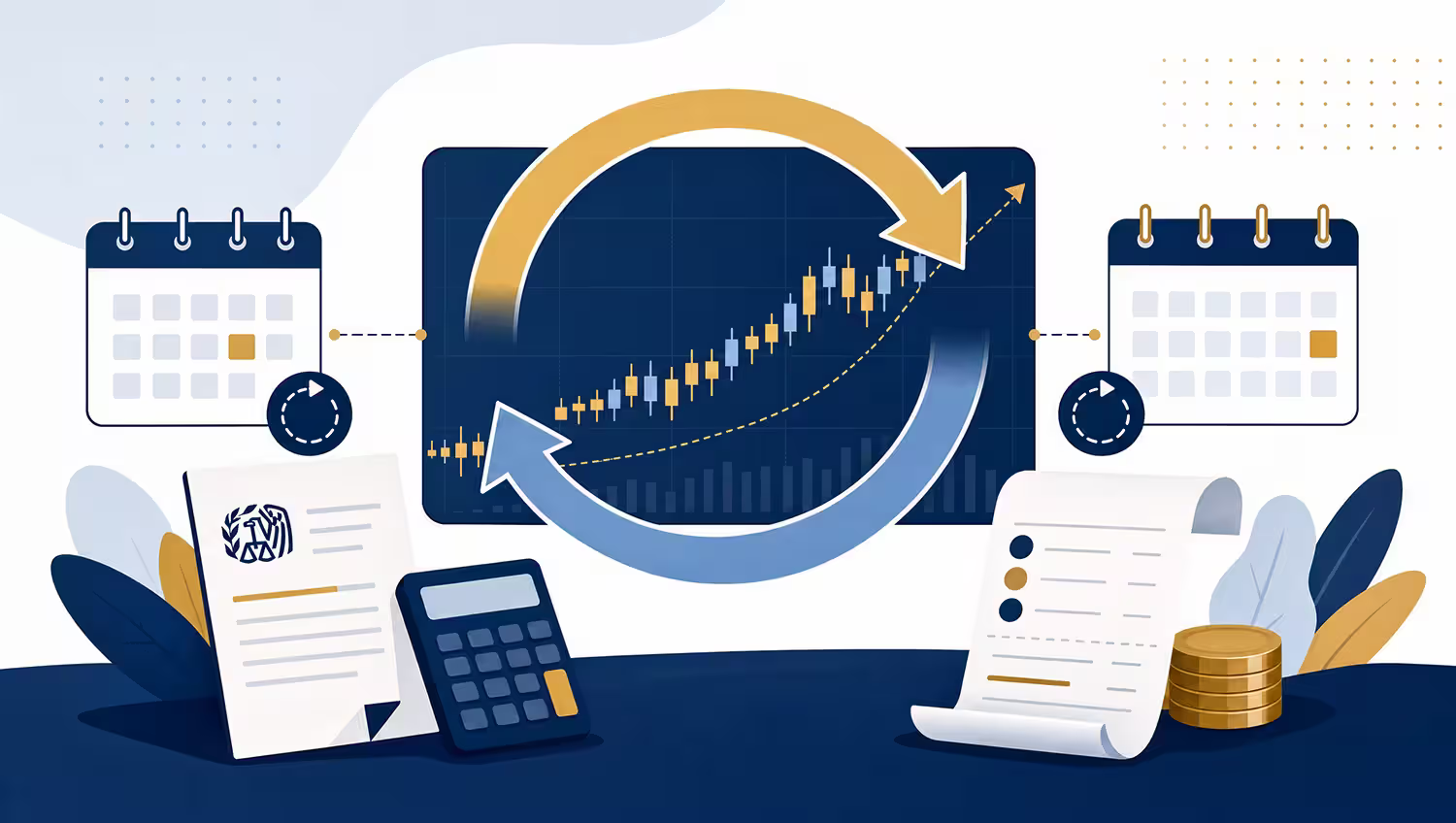
Rolling a covered call can sound like a simple repair: move the option to another strike or another expiration and keep the trade going. The more useful beginner view is that rolling is a new decision layered on top of an existing covered call.
This guide explains rolling covered calls in plain language. It focuses on what changes when an investor closes the current short call, sells a replacement call, and decides whether the new obligation still fits the stock plan.
Quick Takeaways
- Rolling a covered call usually means buying to close the current short call and selling a replacement call.
- A roll can move the expiration, the strike price, or both, but it does not erase the original trade-off.
- A roll can create a net credit or a net debit, and that cost or credit should be part of the decision.
- Rolling does not remove assignment risk, capped upside, or the stock downside risk that remains in the shares.
- Beginners should compare rolling with accepting assignment, closing the option, or simply changing the stock plan.
What Rolling a Covered Call Means
In beginner terms, rolling a covered call means adjusting an existing covered call by buying to close the short call that is already open and then selling a replacement call. The replacement call may use a later expiration, a different strike price, or both.
The word roll can make the adjustment sound automatic, but it is really two option trades that create a new covered-call position. The investor still owns the shares, still has a short call obligation, and still needs to decide whether the new strike and expiration match the reason for holding the stock.
How Rolling Changes the Covered Call Decision
A standard covered call starts with a stock position and a short call option. The investor collects premium but accepts capped upside and the possibility of assignment at the strike price. Rolling begins after that original call no longer fits the investor’s plan, or after the investor wants to compare a new option against assignment or expiration.
The first leg of the roll is usually to buy to close the existing short call. That trade removes the current call obligation, but it may cost more than the premium originally collected if the stock has moved higher or the option has gained value.
The second leg is to sell a replacement call. The new call creates a new premium, a new strike price, and a new expiration date. After the roll, the investor has not escaped the covered-call structure. The investor has created a revised version of it.
A roll out usually means moving to a later expiration. More time may increase the premium available, but it also extends the period when the shares may be called away and the upside may be capped.
A roll up usually means moving to a higher strike. That can give the stock more room to rise before assignment, but the higher strike may produce less premium or require accepting a smaller credit than a closer strike.
A roll down usually means moving to a lower strike. That may collect more premium in some situations, but it can also cap the stock at a lower exit price and may conflict with a bullish stock thesis.
The combined roll can produce a net credit or a net debit. A net credit means the replacement call brings in more premium than it costs to close the old call. A net debit means the investor pays more to close or adjust than the new call brings in. Neither result is automatically good or bad; the important question is whether the new position improves the plan after costs, spreads, taxes, and risk are considered.
Rolling also does not erase assignment risk. If the new call finishes in the money or is assigned early, the shares may still be sold at the new strike. Dividend timing, earnings, liquidity, and account rules can all matter when evaluating whether a roll is worth making.
Tax Considerations Before Rolling
A rolling decision can create several tax records at once. The buy-to-close leg is a closing transaction for the existing short call, and the replacement call starts a new option position with its own premium, strike, expiration, and eventual tax result.
Beginners should avoid treating the new premium as the whole story. The closing transaction may realize a gain or loss on the option leg, while later assignment can affect the sale price and tax reporting for the shares. The stock lot, cost basis, and holding period can matter, especially when the shares have a large unrealized gain or loss. For additional authoritative context, see the IRS Publication 550 tax guidance.
Current IRS Publication 550 discusses puts, calls, straddles, and qualified covered call rules, but the details can be situation-specific. A covered call that is not a qualified covered call may interact differently with holding period and straddle rules than a simple income trade a beginner has in mind.
Wash sale and loss-deferral questions can also appear when a trader closes option positions, opens replacement positions, or trades the underlying stock around the same period. This article cannot decide those issues for a reader; it can only flag why current IRS guidance and a qualified tax professional should be part of the workflow before repeated rolls become routine.
Tax Records to Keep With Each Roll
A practical rolling log should preserve the original call sale, the buy-to-close price, the replacement call sale, commissions or fees, dates, expirations, strikes, assigned or expired status, and the stock lot connected to any assignment. Without those details, the investor may not be able to reconstruct whether the roll was a net credit, a net debit, or a taxable event that should have been reviewed sooner.
The log should also separate investment judgment from tax reporting. A roll can be reasonable as a trading adjustment and still create tax friction. It can also look attractive before taxes and less attractive after the closing cost, holding-period impact, and potential share sale are included.
Rolling Decision Framework
This framework gives readers a practical way to compare the roll before focusing only on the extra premium. Numbered examples are strongest when they use current option quotes, clear dates, and reviewed assumptions.
Situation | Possible Roll | What to Check |
|---|---|---|
The stock is near or above the strike. | Roll out, roll up, or accept assignment. | Compare the cost to buy to close with the premium from the replacement call. |
The investor still wants the shares. | Roll up or out if the new strike fits the stock plan. | Confirm the new strike is a price where selling would be acceptable. |
The investor mainly wants more premium. | Consider whether the roll creates a net credit. | Check whether the credit is worth extending capped upside and assignment risk. |
The stock thesis has weakened. | Avoid rolling automatically. | Compare rolling with closing the option, selling shares, or changing the position. |
Risk Warning
- Rolling covered calls do not eliminate stock downside risk.
- A roll can keep upside capped for longer or cap upside at a different strike.
- Rolling can create a net debit, and repeated debits can reduce returns.
- Assignment can still happen after the replacement call is sold.
- Taxes, dividends, liquidity, spreads, commissions, and account rules may affect the outcome.
When Rolling May Fit and When It May Not
Rolling may fit when the investor still wants to own the shares, still accepts a covered-call obligation, and can move to a strike and expiration that better match the current stock plan. In that case, the roll is not a rescue attempt. It is a deliberate adjustment.
Rolling may also make sense when the investor would be comfortable selling the shares at the new strike and the net credit or net debit is reasonable for the risk being accepted. The decision should account for bid-ask spreads and the possibility that the new call could be assigned.
Rolling may be a poor fit when the only goal is to avoid realizing that the first call moved against the investor. If the stock thesis has changed or the investor no longer wants capped upside, rolling can simply delay a decision that should be made directly.
It can also be a poor fit when a later expiration ties up the shares through an important earnings date, dividend date, or other event. More premium is not automatically better if the obligation now conflicts with the investor’s real objective.
For beginners, these alternatives need to stay visible. The reader should understand that rolling, accepting assignment, closing the call, and changing the stock position are different choices with different trade-offs.
Common Rolling Mistakes to Avoid
One mistake is treating every roll as a win because it brings in another premium. The premium has to be compared with the cost to buy to close, the new assignment risk, and the time added to the position.
Another mistake is ignoring a net debit. Paying to roll can be reasonable when it supports a clear plan, but it should not be hidden by focusing only on the premium from the replacement call.
A third mistake is rolling down without accepting what the lower strike means. A lower strike may collect more premium, but it can also make it easier for the shares to be called away at a price the investor dislikes.
A fourth mistake is forgetting early assignment risk and dividend timing. Short calls can be affected by dividends and other contract details, so the investor should review the option’s characteristics instead of waiting until expiration as if assignment cannot happen earlier.
A fifth mistake is rolling a position because the investor does not want to admit the stock plan changed. If the shares are no longer worth owning, a roll may only preserve exposure to a position the investor should review more directly.
Beginner Checklist
- I know why the current covered call no longer fits the plan.
- I reviewed the cost to buy to close the existing short call.
- I reviewed the premium, strike, and expiration for the replacement call.
- I know whether the roll creates a net credit or a net debit.
- I understand the difference between a roll out, a roll up, and a roll down.
- I would be comfortable with assignment at the new strike price.
- I checked liquidity, bid-ask spreads, dividends, earnings, and tax considerations.
- I understand that this is education, not personalized advice.
FAQ
These common questions should help beginners separate the mechanics of a roll from the decision about whether the new covered call is actually worth holding.
Are rolling covered calls a way to avoid losses?
Not by themselves. Rolling can change the strike, expiration, and net premium, but it does not remove stock downside risk, capped upside, or assignment risk.
Can rolling a covered call create a net debit?
Yes. If buying to close the old call costs more than the premium from the replacement call, the roll creates a net debit. That cost should be included when comparing outcomes.
What is the difference between rolling out, rolling up, and rolling down?
Rolling out usually moves to a later expiration, rolling up moves to a higher strike, and rolling down moves to a lower strike. A single roll can combine more than one of those changes.
Is accepting assignment sometimes better than rolling?
It can be. If the investor was already comfortable selling the shares at the strike, accepting assignment may be cleaner than extending the trade only to avoid having the shares called away.
Thinking Through the Next Covered-Call Decision
The useful way to approach rolling covered calls is to treat each roll as a fresh covered-call decision. The investor is not just moving a trade forward. The investor is choosing a new strike, a new expiration, and a new set of risks.
That choice can be reasonable when it matches the stock plan and the net credit or net debit is acceptable. It can be frustrating when the investor rolls only because assignment feels uncomfortable or because another premium looks tempting.
For a beginner, the right next step is to slow the decision down. Compare the roll with assignment, closing the option, and changing the stock position. Then ask whether the new covered call is a position the investor would choose on purpose today.
Source and Freshness Note
Readers should compare rolling examples with authoritative options education, the OCC options disclosure document, exchange or broker materials about closing and opening options, and current tax guidance. Examples that use prices, premiums, expirations, dividends, or tax assumptions should include current data and a recent review date. For an authoritative risk reference, review the OCC options disclosure document.