
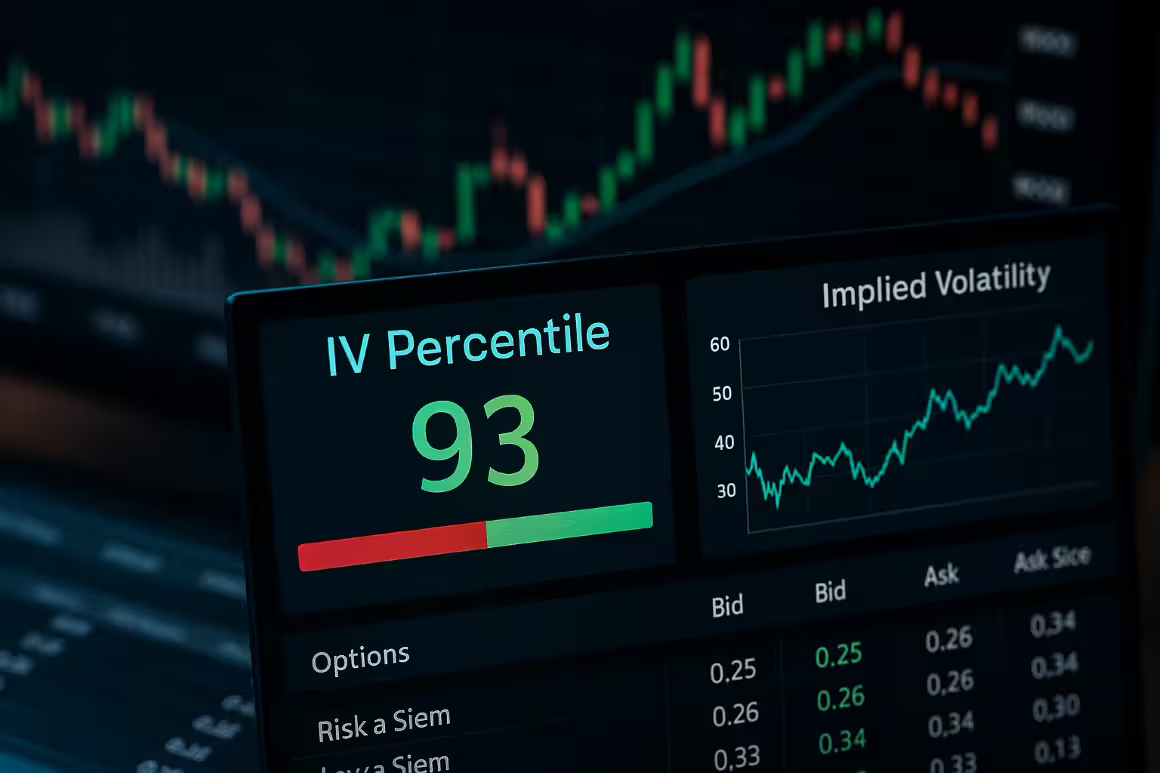
Volatility can be a trader’s ally—or their downfall. Many professional traders would consider volatility to be the heartbeat of the market, something that isn’t just a background metric that can be disregarded. Keeping an eye on volatility levels using a tool called the “IV percentile” is how experienced traders and those with foresight manage the risks associated with their options trades, ensuring they can be profitable in the long term.
In using “IV percentile,” traders can get a good gauge for where the current IV levels are in relation to the year before. The reason that many experienced traders like using this metric in their sessions is that it can tell you if an option is expensive or cheap based on its prior history. Using IV percentile can help you enter trades at a low price and therefore gain an edge, instead of overpaying for premium, which can greatly help long-term with risk-based options trading.
What Is IV Percentile and Why Does It Matter
To understand how IV percentile works, you need to have a clear understanding of implied volatility or IV. This refers to a measure of the market’s expectation for future price movements, while the IV percentile tells you how the IV of today is in comparison to the IV historical range over the last year.
Example
Let’s take a look at a hypothetical scenario that could give you a better idea of these concepts and how they work in the real world. A trader using IV percentile finds out that the stock they’re examining has an IV range that is between 30% and 60% based on a 52-week average. The IV today for the stock is 58% and this means that the IV percentile is at an all-time high compared to last year. It wouldn’t be a good idea for the trader to enter a position at this price. They should wait for the percentage to come down in the 30s.
IV Rank and IV Percentile Compared
Now that we’ve given you an example of how IV percentile and IV rank work hand in hand, let’s compare them side by side to give you a better idea of how these two concepts differ from one another. Understanding the difference is important for traders to know to help them use the correct strategy that is suitable for the current volatility conditions they might be seeing in the market.
- IV Rank: This is a measurement of how far the current IV is between its highest and lowest point over a historical period, typically the prior year. IV rank is a forward-looking measure that differs greatly from IV percentile, which looks to the past to collect its data.
- IV Percentile: This refers to the percentage of days from the prior year that had a lower IV than the current level today. IV percentile looks to the past to inform the future.
Risk-First Trading—The Rationale Behind the Approach
You see so many experienced traders prioritize managing volatility risk—why is that the case?
The reason behind this is that a lot of traders are motivated by risk-first approaches, which put a big emphasis on studying implied volatility and how that can influence losses or gains over time. IV Percentile becomes a “market sentiment” thermometer with this approach to options trading, and it’s a tool that helps traders prioritize risk management to achieve steadier profits.
IV percentile is a workhorse for traders who think about risk first and profits second:
- Low IV percentile readings are an indicator that options are cheap, and these conditions are ideal for entering long-term trades that can benefit from a rise in IV over time.
- A high IV percentile, meanwhile, can be a warning sign that premiums are too expensive and that some more time needs to pass for volatility to collapse and open the door for a better entry price.
- In short, IV Percentile helps you align your strategy with the volatility cycle, giving you a higher probability of consistent, risk-adjusted returns.
Using IV Percentile to Time Strategies
Perhaps the most significant perk to using IV Percentile as a steady tool in your online options trading regimen is to make sure you’re using the right strategy that matches the current market environment in which you find yourself. Check out the best strategies you can use when the IV Percentiles are high or low.
High IV Percentile Strategies
- Credit Spreads: Selling an option with a higher premium and buying an option with a lower premium in the same underlying and with the same expiration date (all at the same time). Traders generate income by collecting premiums when options are relatively expensive.
- Iron Condors: Traders sell two out-of-the-money credit spreads, including a bull put spread below the current stock price and a bear call spread above the stock price. Each has the same expiration date. Traders profit when the stock price stays within the range of the short strikes until the expiration date.
- Strangles: This strategy is popular with high-IV environments due to the fact that they work well when traders are expecting sideways or rangebound movement with the underlying. Volatility will contract before the expiration date (if all goes well), and this leads to lower option prices and an increased probability for the seller.
Low IV Percentile Strategies
- Long Calls or Puts: These strategies are attractive in low IV Percentile environments because the premiums for options are much cheaper, and they can offer a better entry point for traders looking to maximize their profitability.
- Calendar Spreads: These spreads are set up through buying and selling options on the same underlying asset with the same strike price simultaneously, but there are different expiration dates being used. The goal is to profit from shifts in implied volatility and time decay. Traders can get in at a good entry point when IV is low and can benefit when that IV begins to rise.
- Debit Spreads: Traders using this strategy buy an option and sell another option with the same underlying and expiration date, but a different strike price. This strategy is to be used in low IV environments due to the cost-effectiveness that comes from the cheap entry point and the potential for the trade to increase from a rise in IV over time.
Case Study Example
Remember that risk-first options traders are going to be thinking about risks ahead of profits. These are proactive traders who are thinking several steps ahead and are interested in long-term success that comes from having diversified investments in their portfolios.
Let’s say one of these proactive traders finds a stock whose IV Percentile is at 85%. A money-motivated trader who is interested in generating a profit might go ahead and buy calls on this stock, benefiting from its strong performance and rise in value. However, the trader who is focused on prioritizing risk will sell an out-of-the-money credit spread to take advantage of inflated premiums.
How IV Percentile Prevents Overpaying for Options
Traders who are risk-conscious and looking to make the most of their profit margins in trading should be making IV Percentile a consistent part of their trading routine. Options prices are driven heavily by volatility expectations on the part of traders and investors. A good case-in-point is that option premiums are much higher when the IV Percentile is high.
So how can IV Percentile prevent options traders from overpaying for the options contracts they choose to trade? You can use IV Percentile as a filter to complete these tasks when trading:
- Analyze the cost of premium in high-IV environments.
- Choosing not to go long in options if IV is historically expensive.
- Becoming a premium seller that performs well in high-volatility markets.
- Entering traders at a historically low price to improve profitability, using IV Percentile as a guide.
- Contrast risk-adjusted returns when trading during high vs. low IV percentiles.
It is key for traders to understand that IV must continue to rise for option premiums to continue staying high. There is a strong correlation between IV levels and option pricing. The higher they are, the more expensive it is to trade, and vice versa. Using IV Percentile as a tool to inform your strategy can go a long way toward helping you not overpay for contracts. It’s an especially important tool for new traders just starting, and it can keep them from burning through their money.
Common Pitfalls When Misusing IV Percentile
While IV Percentile can be a strong and dynamic tool that keeps traders from overpaying for options contracts, there are some major mistakes that traders can make when they’re using this tool to inform their strategy. Common mistakes include the following:

- Misreading IV Rank vs. IV Percentile: Not knowing the difference between these two tools can result in a trader using the incorrect strategy for the situation at hand. Distinguishing between IV Rank and Percentile is key for understanding what kind of market context you’re up against and choosing a strategy that is a good fit for that environment.
- Over-Optimization Based Solely on Volatility Metrics: Traders can make a critical mistake when they ignore other factors in the markets that give them a work context as to what is going on. For instance, only looking at volatility metrics and ignoring things like macroeconomic events, delta skew, or earnings report releases can give traders a false sense of what is going on and result in some surprises.
- Not Adjusting For Product Behaviors: You must keep in mind that some underlyings have consistent high or low volatility due to their nature, so you could be using IV Percentile on an underlying where it isn’t going to deliver accurate insights.
Tools to Track IV Percentile
If you’re interested in integrating IV Percentile into your online trading routine, several great trading platforms have the modern features necessary for tracking IV in the investments you’re interested in adding to your portfolio.
- Market Chameleon: Professional options traders might find this platform to be the best fit for their goals as it provides in-depth volatility analysis, offering a more advanced experience.
- OptionStrat: This platform might be a good choice for newer traders who are using IV Percentile for the first time. OptionsStrat includes a user-friendly visualization for IV data, making it one of the easiest options to use out there.
- Tastyworks: This platform has a handy feature where traders can enjoy built-in IV Percentile tracking that keeps them up-to-date on the latest changes in implied volatility with the underlying they’re examining.
- Thinkorswim: Traders can access IV history charts that can give them insights into where the current IV levels stand compared to the same time last year.
Premium Vs. Free Services
The market has plenty of free and premium data sources for tracking IV Percentile, but using a free vs. a paid service has its own special pros and cons that traders must consider before committing to one or the other.
Premium Data Sources
Pros
- Better quality and accuracy for data.
- Access to premium features like advanced charting tools, real-time data access, extensive historical data, and more.
- Contact customer support for any questions, comments, or concerns.
- More reliable and accurate calculations of IV Percentile.
Cons
- Complexity comes with the more advanced platform functionality and the advanced tools.
- Premium services come with a subscription cost, but you get a more advanced and accurate experience for the price you pay.
Free Data Sources
Pros
- No subscription fees, which can be perfect for traders with only a limited budget.
- Free data sources are much easier to access as they aren’t behind a pay wall.
Cons
- Free data sources don’t include a guarantee for data accuracy, support, or speed.
- These sources typically don’t have the in-depth historical data or the advanced analytic tools that you find with the premium services.
- Free data tends to be less accurate or reliable compared with premium data.
Final Thoughts: Building IV-Aware Risk-First Habits
IV Percentile is a favorite tool of the risk-first trader because it can help them to manage risks pragmatically while still pursuing profits in the long term. No matter what kind of trader you might be, it is important to always check the IV Percentile before placing trades.
Coming up with a pre-trade checklist could be beneficial to helping you reach your goals as it can help you do the following things:
- Use the correct trading strategies that align with the current market conditions and larger context.
- Increase your consistency with entry and exit points.
- Help you not to overpay for a premium when entering a new trade.
We would encourage you to think about including IV Percentile into your trading plan in the near future and ask yourself if the current levels warrant the strategy you’re currently using for that trading environment. Taking a long-term mindset on the markets and your choice of trading strategy can improve your consistency as a trader over time!
If you’re interested, we’d invite you to leave comments or trade examples of times when you used IV percentile to your advantage and the results. We would love to hear your feedback.