
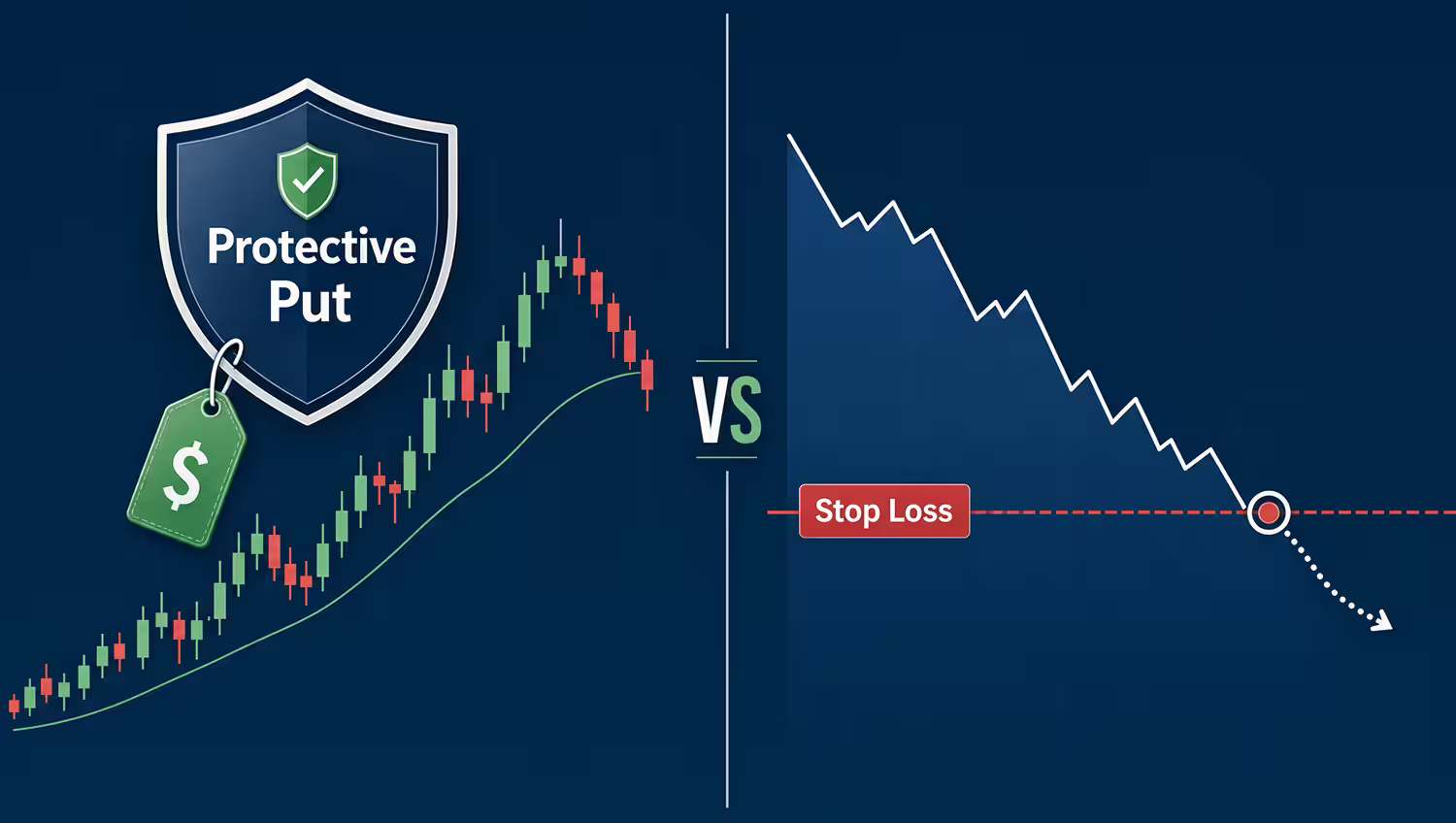
Protective Puts vs Stop Loss Orders is a practical risk-management comparison, not a contest with one automatic winner. Protective Puts and stop loss orders can both be used by investors who want a plan for downside risk, but they work through different mechanics and create different trade-offs.
This guide explains the comparison in plain language. It focuses on how each approach behaves, what a beginner should verify before using it, and why the best fit depends on the investor's objective, time horizon, account rules, tax situation, and willingness to pay explicit or implicit costs.
Quick Takeaways
- Protective Puts use an options contract to define part of the downside for a limited period.
- Stop Loss Orders are order instructions that may trigger a sale, but execution can depend on market conditions.
- The comparison criteria should include cost, certainty of execution, gap risk, time horizon, liquidity, and taxes.
- A protective put keeps upside exposure while adding a premium cost; a stop loss may remove the stock position entirely.
- The use case matters: temporary protection, emotional discipline, event risk, and taxable-account planning can point to different choices.
- Neither approach makes a position risk-free or suitable for every investor.
What Each Approach Means
In beginner terms, the protective puts approach means owning shares and buying a put option on the same underlying security. The put gives the holder the right, but not the obligation, to sell shares at the option's strike price. The premium paid for that put is the explicit cost of the protection. For an authoritative overview of the concept, see the OIC protective put strategy guide.
Stop Loss Orders are different. A stop loss order is an instruction to sell if the stock reaches or passes a selected stop price. Depending on the exact order type and market conditions, the eventual execution price may differ from the stop price, especially during fast moves, overnight gaps, or thin trading.
That difference is the heart of the topic. A protective put is an options position with a known premium and an expiration date. A stop loss is an exit instruction for the stock. Both can support discipline, but they do not solve the same problem in the same way.
How the Mechanics Work Differently
A protective put starts with a stock position and a purchased put option. The investor chooses a strike price and expiration date, then pays the option premium. If the stock falls sharply, the put may gain value because it gives the investor the right to sell at the strike.
At expiration, the basic maximum-loss framework for a newly protected stock position is stock purchase price – put strike + premium paid, before commissions, bid-ask spreads, taxes, and early-exit decisions. A simple example is a stock bought at $50 with a $45 put bought for $2; the rough expiration loss floor would be $7 per share before those real-world costs.
A stop loss order does not require an option premium. Instead, the investor chooses a price level where the order should activate. That can help remove hesitation, but it does not guarantee that the sale will happen exactly at the stop price. The order may trigger after the stock is already lower.
The two approaches also handle upside differently. With a protective put, the investor still owns the shares and can generally participate if the stock rises, although the premium reduces the total return. With a stop loss, a triggered sale may move the investor out of the position before a rebound.
Most listed U.S. single-stock equity options are American-style, meaning they can generally be exercised on any business day up to and including expiration. European-style options are exercised only at expiration. Order rules, option exercise style, and account procedures should be confirmed before relying on either approach.
Comparison Criteria for Beginners
These criteria give readers a practical way to compare the two choices before assuming one is safer. The right answer depends on the specific use case, the cost of protection, and the risk being managed.
Criteria | Protective Puts | Stop Loss Orders |
|---|---|---|
Upfront cost | Requires a put premium, plus spreads and commissions where applicable. | Usually no option premium, but execution price can still create a cost. |
Downside boundary | Can define a strike-based floor for the protected period, before costs and taxes. | May trigger a sale, but the fill can be below the stop price in fast or gapped markets. |
Upside participation | The investor keeps the shares unless they sell, exercise, or otherwise adjust. | A triggered sale may remove the position before a recovery. |
Time horizon | Protection lasts only until expiration unless renewed or adjusted. | The order can stay active according to broker order rules, but it may trigger at any time. |
Best fit | Often fits investors who want temporary protection while keeping upside exposure. | Often fits traders who prefer a predefined exit and do not want to pay option premium. |
Risk Warning
- Protective Puts do not make a stock position risk-free.
- The put premium can reduce or eliminate gains if the stock rises only modestly.
- Stop Loss Orders can trigger during temporary price moves and may execute below the selected stop price.
- Both approaches can be affected by liquidity, bid-ask spreads, order handling, account rules, and taxes.
- Repeated hedging or repeated stop-outs can create a meaningful drag on long-term results.
Who Each Choice May Fit
Protective Puts may be the best fit for an investor who wants to keep holding shares through a specific risk window. Examples might include an earnings period, a tax-sensitive holding decision, or a temporary concern where selling the shares outright is not the preferred first step.
Stop Loss Orders may fit investors or traders who want a clear exit rule and are comfortable leaving the stock position if the price breaks a selected level. This use case is more about discipline and position removal than about keeping upside exposure through a purchased hedge.
The reader-use-case fit becomes clearer when the question is framed as a trade-off. If keeping the shares matters, paying for a put may be easier to justify. If owning the shares no longer makes sense below a certain price, a stop loss or a direct sale may be simpler.
A careful reader should also ask whether the concern is temporary or permanent. Temporary event risk may call for time-limited protection. A broken investment thesis may call for reducing or closing the position instead of buying more structure around it.
Common Mistakes to Avoid
One mistake is treating the protective put as free insurance. The premium is real, and repeated hedging can become expensive if the stock does not fall during the protected period.
Another mistake is treating the stop price as a guaranteed sale price. A stop order can become active when the stop is reached, but the actual execution can depend on price movement, liquidity, and the specific order type.
A third mistake is ignoring taxes and holding periods. Protective puts, married puts, stop-loss sales, and other offsetting decisions can affect taxable outcomes, so readers should review current tax guidance and consult a qualified tax professional.
A fourth mistake is choosing either tool without a plan. The investor should know the risk being managed, the time horizon, the acceptable cost, and what action they will take if the market moves quickly.
Beginner Checklist
- I know whether I want to keep owning the stock or exit if a price level breaks.
- I compared the explicit put premium with the possible execution uncertainty of a stop loss order.
- I reviewed the maximum-loss framework for a protective put: stock purchase price – put strike + premium paid.
- I understand that a stop loss can trigger and still fill below the stop price.
- I checked liquidity, bid-ask spreads, expiration, strike price, and broker order rules.
- I considered whether the risk window is temporary or whether the stock thesis has changed.
- I reviewed tax and account-rule issues before relying on either approach.
- I understand that this is education, not personalized advice.
FAQ
These common questions clarify the comparison beginners usually need before choosing a risk-control method.
Are protective puts safer than stop loss orders?
Not automatically. A protective put can define part of the downside for a limited period, but it costs money. A stop loss may be simpler, but it can trigger and execute at a worse price than expected.
Can both approaches still lose money?
Yes. A protective put still leaves the investor with premium cost and possible losses above the protected level. A stop loss can also lose money if the sale happens below the purchase price or below the selected stop.
What is the simplest way to compare them?
Start with the use case. If the investor wants to keep the shares while defining temporary downside, compare put strikes and premiums. If the investor wants to leave the position below a chosen price, review stop order behavior and execution risk.
Choosing a Risk-Control Method Carefully
The useful way to compare protective puts and stop loss orders is to focus on the job each tool is being asked to do. One creates an options hedge with a defined premium and expiration. The other creates an exit rule that depends on order behavior and market execution. For an authoritative risk reference, review the SEC Investor.gov introduction to options.
Neither choice removes the need for judgment. The investor still has to define the risk, review the cost, understand the mechanics, and decide whether holding the stock still makes sense.
For beginners, the strongest next step is to practice the comparison on paper: choose a stock price, a possible put strike and premium, a possible stop level, and several outcomes. That exercise makes the trade-offs more concrete before any real order is considered.
Source and Freshness Note
Readers should compare these explanations with authoritative options education, OCC risk disclosures, broker order-type documentation, and current tax guidance. Examples that use option premiums, stop levels, expirations, or tax assumptions should include current data and a recent review date. For an authoritative risk reference, review the OCC options disclosure document.