
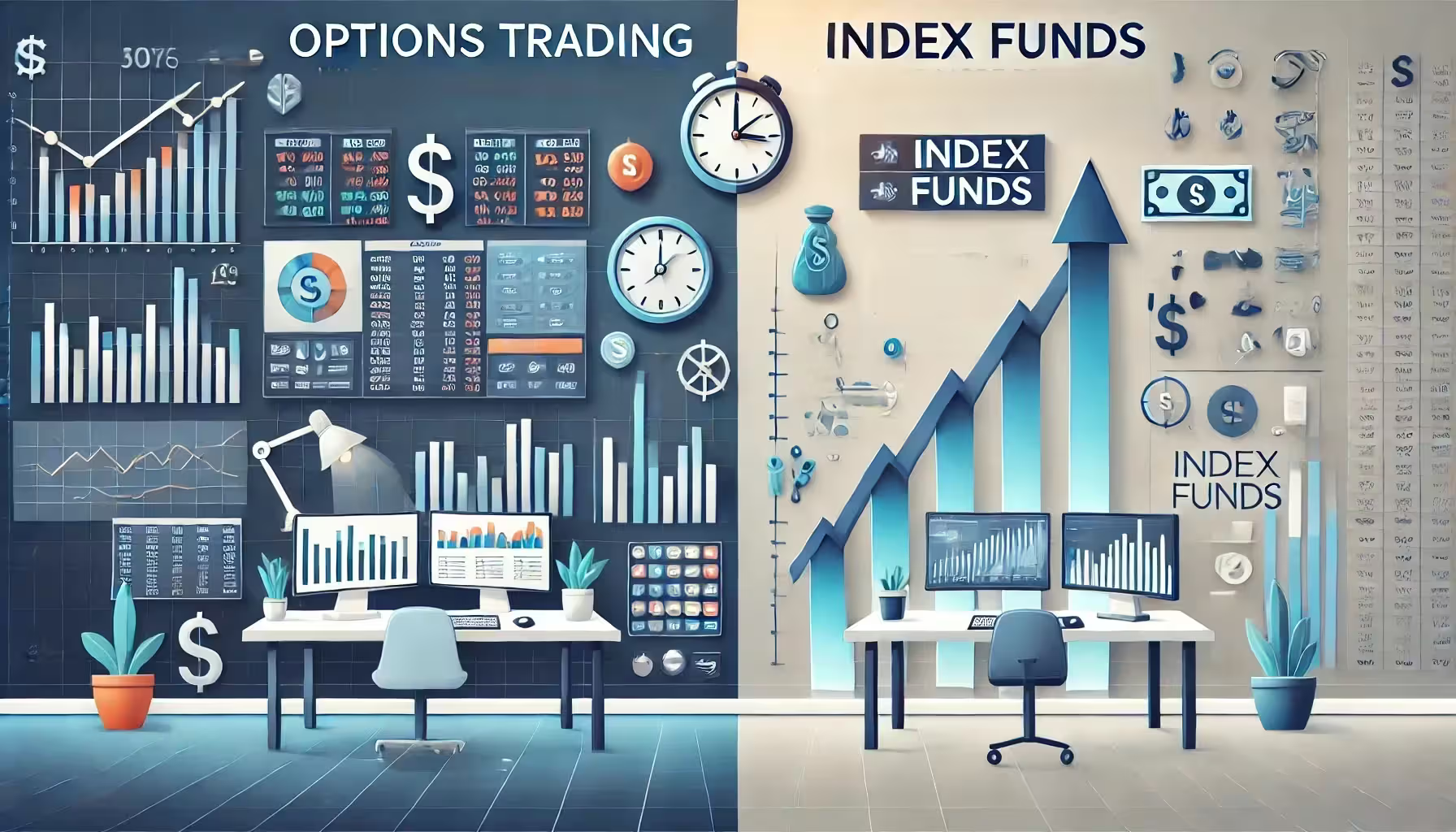
What is options trading? What are index funds? Which one is more profitable? Which is best for me?
Our comparison guide will answer these questions and many more as we compare options trading and index funds to determine which can be more profitable. Trading options are best for those who are hedging investments, looking to profit, or speculating, while index funds are best for people who don’t want to keep a close eye on these long-term investments and don’t want to deal with excessive fees.
The goal of the options trading vs. index funds guide is to help our readers and customers make informed decisions based on their risk tolerance, financial goals, and time commitment. Keep reading to learn which types are best for you or how you can use both together to benefit your online portfolio and investments!
What Is Options Trading?
To understand the rest of our guide (if you aren’t familiar with options trading), we first have to define options trading and the key components that go into this activity. We’ll also highlight the different strategies that options traders use in their sessions and the primary pros and cons of trading options online. If you’re figuring out if options trading is something that you could get into, we’d encourage you to read this section before diving into the others.
Definition and Explanation
Options trading is the buying and selling of options contracts. Trading options give the buyer the right to sell or buy an asset at a certain strike price by a certain expiration date. Options can be used by investors for generating income or profiting from stock swings—they are a financial derivative and they don’t require the investor to own the underlying stock. Trading options involve risk, but traders can benefit greatly if they keep a diversified portfolio and enter or exit positions when the conditions are right.

Key Components of Options Trading
What are the key elements that make up the options trading experience? This section will focus on the basic concepts you’ll encounter along the way!
- Call Options: These options give the buyer the right to buy an asset at a specific time and within a certain period.
- Put Options: These options give the buyer the right to sell an asset at a specific time and within a certain period.
- Expiration Dates: This is the date and time when options contracts expire (become invalid). It means that options can no longer be exercised or traded. It defines the time frame for investors and traders to exercise their rights. The further away the expiration date of an option, the more time the trade has to become profitable.
- Strike Prices: Sometimes called the “exercise price,” this is the price at which an option can be exercised, plus it also indicates the potential profit or loss and the value of the option. Options are “in-the-money” if the strike price is profitable compared to the stock price, while they are “out-of-the-money” if they aren’t.
- Premiums: The premium in options trading is the price paid to purchase an options contract. By paying this price, the buyer has the right to buy or sell an underlying asset at a certain price (strike price).
Types of Options Trading Strategies
Let’s look at some of the most popular strategies that investors and traders like to use when managing options in their online portfolios.
- Covered Calls: This options trading strategy involves selling call options on an asset, while at the same time owning a long position with that same asset. The key idea in using a covered call is to generate additional income from stocks’ or exchange-traded funds’ premiums.
- Protective Puts: This strategy involves buying a put option on the same asset that you already own. Protective puts can be done by purchasing both at the same time as well. If the stock’s value increases, investors can profit from this appreciation. The appreciation also offsets any losses that traders might experience if the stock price drops.
- Straddles: Investors sell and buy a call and a put option for the same underlying asset with the same strike price and expiration date. The goal with this strategy is to profit from price volatility, and you don’t have to correctly predict which direction the market will move!
- Strangles: These are a lot like straddles, but they involve the investor selling and buying a call-and-pull option for the same underlying asset with the same expiration date but with a different strike price.
Pros and Cons of Options Trading
Pros | Cons |
|---|---|
– High potential for profits in a short time – Flexible strategies can make options profitable – Leverage —control a large position for a small amount of money – Trading options provide increased cost-efficiency – Options are less risky to trade than equities – They are a good strategic alternative for investors – Options buyers can only lose the value of the bought premium | – High risk – Complexity—you must understand the regulations and technical language associated with options trading – Lower liquidity options make it difficult for some investors to enter and exit the market – There’s a need for active management and market knowledge – Commissions costs can become expensive |
What Are Index Funds?
Now, let’s go over index funds and how these compare to trading options. Online investors can trade both at the same time. It’s a common strategy where they use options on an index to manage risk or to enhance the returns on their index fund holdings. Let’s get into index funds, what they are, and the pros and cons you’ll experience when making these investments.
Definition and Explanation
These investments track specific indices, and these investments aim to match the performance of the index in question. An index is a group of assets. Index funds are a passive investment technique where investors can experience low costs. The S&P 500 is a good example of a market index that a mutual fund or ETF would track.
Types of Index Funds
Index funds aim to track the returns of a market index like the S&P 500, and they come in a few varieties, including the following:
- International Index Funds: Investments in companies outside of the United States
- Sector Funds: Investing in specific sectors of the economy, like financials, healthcare, or technology
- Debt Index Funds: Invest in the same debt securities as the index it’s tracking
- Broad Market Index Funds: Track a large market index (this leads to increased market exposure)
- Equal Weight Index Funds: This type of index fund gives every stock and investment the exact weighting (this is done regardless of the market capitalization or the company’s size)
- Bond Index Funds: These funds track the performance of specific types of bonds (they’re sometimes called fixed-income index funds)
- Market Capitalization Index Funds: These index funds weight companies based on the market value of their debt or stock
Pros and Cons of Investing in Index Funds
Pros | Cons |
|---|---|
– Low Cost: Index funds don’t involve managers selecting stocks and selling them, so index funds are lower cost compared to other investments – Diversification: Traders and investors can diversify their investments along a wide range of securities, making index funds a cost-effective way to develop a robust portfolio – Passive Investing: Index funds don’t require frequent buying and selling, making them a good option for newer investors who don’t have to keep an eagle eye on the market or their portfolio – Low-Risk: Investors can get in on these low-risk investments and enjoy high returns over time – Lower Taxes: Enjoy lower transaction costs due to index funds holding the investment until the index changes – Fewer Fees: Index funds require less ongoing management, which results in fewer fees over time | – Limited Upside: Index funds offer limited potential for outsized returns because they are designed to match the performance of their benchmark index – Vulnerability to Market Downturns: Index funds don’t protect from market corrections and crashes when the investor has a decent amount of stock index fund exposure – No Customization: Investors and traders cannot choose which stocks are included in the index, which means less customization in this realm of investments – No Downside Protection: Index funds don’t offer protection from downside risk for investors |
Comparing Profitability: Options Trading vs. Index Funds
While you can trade both at the same time, there are some primary differences between options and index funds when it comes to profitability. We’ll address the potential for gains, the time commitment, risk/volatility, and the costs or fees associated with these investments below.
Potential for Gains
The potential for gains looks a bit different between trading options, stocks, or ETFs and doing so using index funds. One option offers smaller gains in a shorter timeframe, while the other is a long game where the potential could be double or triple the amount expected in the shorter timeframe.
Options Trading
The ultimate profit potential with options trading is achieved when the underlying asset’s price closes above the higher strike price upon the expiration date. Stock options offer generally higher returns compared to index funds due to individual stock volatility.
Index Funds
Index funds differ from option trading where they can provide double or triple the returns but it’s done over a long period and with lower risk. Some examples of index funds that offer steady, compounded returns over time are the Schwab S&P 500 Index Fund, the Vanguard 500, Index Fund Admiral Shares, or the Fidelity Enhanced Large Cap Growth ETF.
Risk and Volatility
Options and index funds also differ in the risk they’re subject to and how market volatility ultimately affects them. Options are short-term investments and they’re riskier, while index funds are long-term investments that deliver predictable, steady returns.
Options Trading
Options trading can be more profitable than buying the stock itself but it’s a risker proposition, making it more volatile than investing in index funds. The value of options declines over time and options cease to exist after the expiration date. Investors run the risk of possibly incurring major losses if their investments expire as worthless or are sold at a loss before the expiration date. In options trading, investors must closely monitor market swings and employ risk management strategies when needed.
Index Funds
Steadiness is the name of the game when it comes to index funds. They are lower-cost investments than options and they let investors get in on a broad market where the investment’s performance is relatively predictive. It’s a more passive investment where traders don’t have to keep a close eye on market conditions. They can check in now and again on these long-term investments, but there aren’t too many factors that put them at risk.
Time Commitment
The time a trader or investor commits to options or index funds will also be different. Options require more monitoring and managing, while index funds are a lower time commitment for investors. We’ll discuss why this is below.
Options Trading
Options are more time-consuming compared to index funds because they need to be monitored closely, plus there’s more research that goes into choosing the right positions that will best benefit the portfolio. Options are short-term investments and they must be watched because they are subject to volatility based on market conditions. The value of options can be drastically affected by the price of the underlying stock, so investors need to commit more time to maintain them.
Index Funds
Index funds are more of a set-it-and-forget-it investment. They profit relatively predictably over a long period, so traders and investors don’t have to constantly monitor them. They aren’t subject all that much to market volatility which means that they aren’t a big time commitment.
Costs and Fees
Investors will deal with different costs and fees when trading options or investing long-term in index funds. We’ll address some of these key differences in the next section.
Options Trading
Options have higher transaction cost ratios, due to them being actively managed funds that look to outperform the market. This results in higher or lower volatility in the call and put options that investors are dealing with. The margin requirements, however, are lower with options than they are with index funds.
Index Funds
The nature of index fund investments is that they are a form of passive investing that aims to reduce the costs of choosing instruments. Index funds usually come with higher margin requirements than options trading, but they have much lower transaction costs. Index funds are ideal for investors who want to invest without a big time commitment and do so with minimal fees.
Factors to Consider When Choosing – Options Trading vs. Index Funds
While investors are more than welcome to invest in both options and index funds, some investors might want to trade one or the other. These are the top factors you’ll want to consider when choosing between the two. Investors must keep the following in mind: investment goals, tolerance for risk, trading knowledge or experience, financial situation, and time/resources.

Investment Goals
Think about your overall investment goals. If you’re looking for quick profits where your investments have a chance of outperforming the market, you should definitely trade options, stocks, or ETFs online. Someone interested in building wealth long-term through steady investments might want to look into index funds as they require little monitoring, aren’t subject to market volatility, and deliver steady returns without the need for a big-time commitment.
Risk Tolerance
Any trader should take the time to think about how much they are willing to risk with each online investment. Each investor’s personal taste for risk will look a bit different. Those who are more willing to go out on a limb might like options trading for the fast-paced action and for the ability to take advantage of the market swings. Options are riskier investments, but there’s the potential for bigger returns more quickly.
If your comfort level with risk isn’t that high, we’d recommend investing in index funds where you can expect steady, reliable returns without market volatility playing too much of a factor. The downside is that you have to wait a longer time for your returns to be realized, but you’re generally not risking much going with index funds.
Knowledge and Experience
Intermediate or advanced traders will enjoy options trading a lot more, mostly due to their fast-paced nature and the need for the investor to maneuver around market volatility to produce healthy returns. Options can also outperform the market because they are actively managed investments, which is a much better fit for traders who have a lot of experience and knowledge of the stock market—especially those exploring advanced options trading techniques.
On the other hand, index funds can be ideal for beginners or those seeking passive income because they don’t have to be actively managed all the time. Managing index funds doesn’t require investors to have the experience and knowledge that active, seasoned investors might have. Index funds are a “set it and forget it” investment where you can achieve steady gains over a long period.
Time and Resources
Options trading is more time-consuming compared to investing in index funds. If you’re a part-time trader who is balancing some occasional trading with your primary job and other responsibilities, managing index funds might be a better fit for your investment goals. Those who have the time to dedicate to active trading and are looking for larger gains in a short amount of time might find options trading to be the ideal investment.
Financial Situation
Options trading requires more active capital management, so we’d recommend it only to investors who have the resources to do so. Traders or investors who don’t have much capital on hand might like to invest in index funds due to their relative stability and minimal management. Something else to consider is that options trading has more fees than index funds, while index funds have higher margin rates.
Pros and Cons Summary Table
If you want to get a snapshot of the primary pros and cons that come with options trading and index fund investments, we’ve prepared a comparison table to showcase the primary differences between the two. Anyone who wants to know the key differences between options trading and index fund investments can find out here and get the main highlights of the guide.
Criteria | Options Trading | Index Funds |
|---|---|---|
Time Commitment | Short-Term Investments + Active Management | Long-Term Investments + Minimal Management |
Cost and Fees | More Fees + Lower Margin Requirements | Fewer Fees + Higher Margin Requirements |
Potential Returns | Significant Returns in a Short Amount of Time | Significant Returns in a Longer Amount of Time |
Risk Level | Higher Risk Due to Market Volatility | Low Risk Investments with Steady Returns |
Knowledge of the Market | Best for Experienced Investors | Best for Newer Investors and Those with Intermediate Exp. |
Outperforming the Market | Option can outperform the market | Index funds can match the market but not outperform it |
Choosing Between Options and Index Funds
Options trading and index funds can be used simultaneously by savvy investors, but there’s a chance that investors might want to focus on one or the other. Choosing the right kind of investment depends on factors like your investment goals, knowledge or experience, time commitment, financial situation, and personal risk tolerance.
Here are the key takeaways from our guide:
- Options trading helps investors realize significant returns in a shorter period. They require active management, and they can outperform the market. Options come with much more considerable fees, but the margin requirements are lower. Options are subject to market volatility, so they are the risker of the two investments, though the potential gains can be much better.
- Index fund investing is a long game where investors can make a lot of money, but it’s done over a longer period. These investments can only match the market, but they come with fewer fees along the way. Investors can realize steady gains and their investments aren’t as vulnerable to market movements in the way that options are.
We’d encourage anyone reading this guide to carefully consider each option before deciding and to consult a financial advisor if needed.