
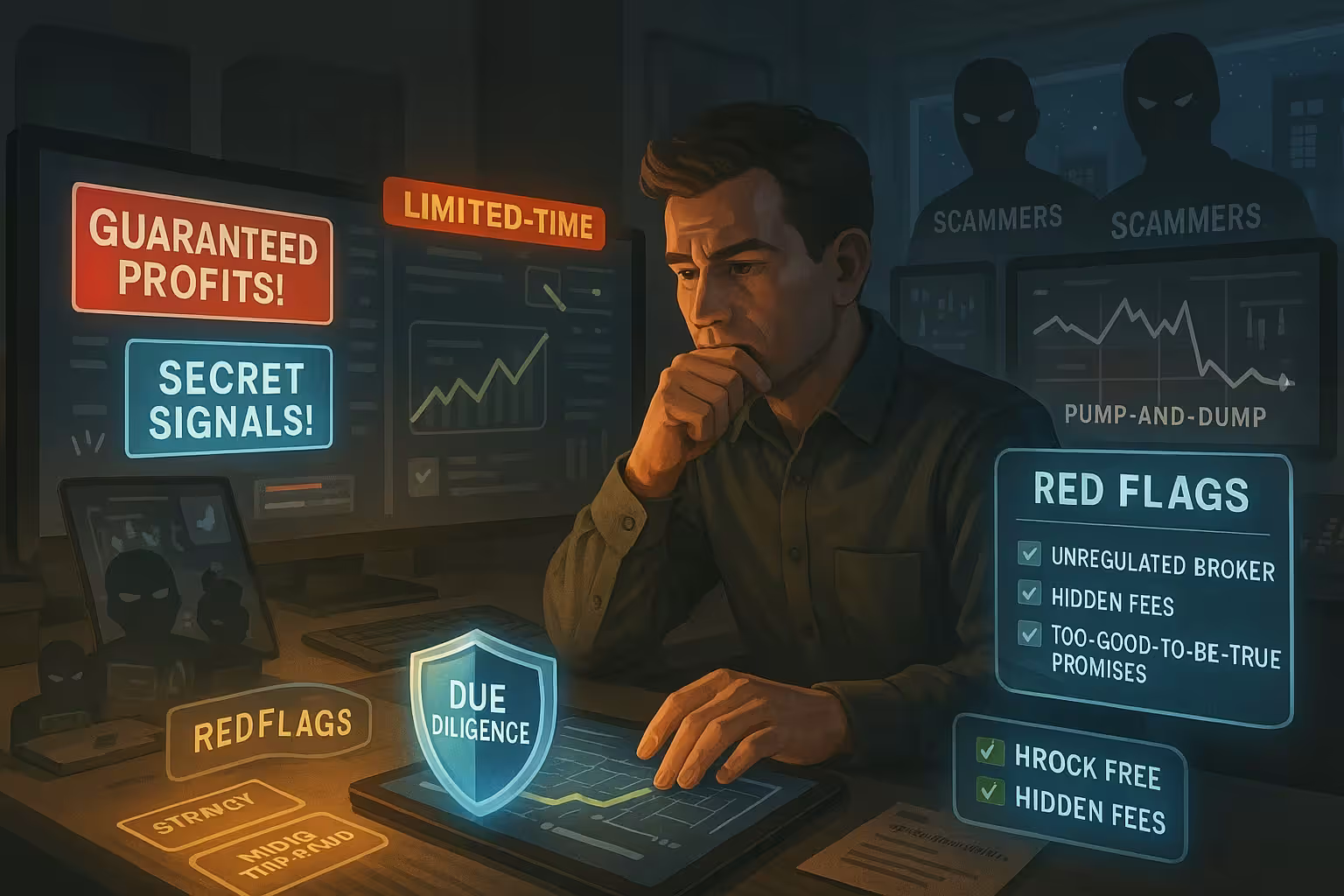
You could say that options trading has gone viral. Its popularity among everyday investors in the last few years has skyrocketed, and it’s due to super accessible platforms that are user-friendly apps and, of course, the success stories of big gains.
It’s a legit market with so many opportunities to profit from stocks, but it’s also somewhat complicated if you’re new—not to mention risky by nature.
And because there’s been a surge of new retail traders getting into the options arena, there’s been an upsurge in scams that prey on their enthusiasm. In 2024, there were around 39 million options contracts traded daily on average—a 35% jump from 2033. The rapid growth in participation unfortunately comes with scammers who are looking (and find) for easy targets.
Why are we telling you this? To help you protect yourself! We want to shed light on the most common options trading scams so that you don’t get cheated. Before you hand over any money to a trading platform, signal service, or “mentor,” you need to do your due diligence. Knowing what red flags to watch out for will mean the difference between growing your investment and losing it to a scam.
Here is what we are going to cover in this article:
- With more traders getting into options, scams are becoming more frequent.
- Some of the most common schemes involve fake trading signals, pump-and-dump tactics, unregulated brokers, and Ponzi-style investment fraud.
- Watch out for red flags like promises of guaranteed profits, platforms without proper regulation, hidden fees, and aggressive sales tactics.
- Protect yourself by researching brokers, confirming credentials, and using well-established trading platforms.
- If you are the victim of a scam, take immediate action—report it, secure your funds, and explore all of your legal options for possible recovery.
Why Options Trading Scams Are Prevalent
A high-risk, high-reward environment? Well, that makes it a magnet for get-rich-quick schemes. Options trading generates huge returns in a short time, and scammers know it. Swindlers will dangle the promise of quick profits because they know that some beginners are hoping to turn a small stake into a fortune overnight. Because newer traders don’t have much experience and knowledge, they’re easy targets for sophisticated cons. It’s really easy to fall for a slick sales pitch when you don’t fully understand how options work or what realistic returns look like.
Technology has also supercharged the scammer’s armory. The internet and social media mean that con artists are able to create fake personas, websites, and “success story” testimonials in a few hours. When you see a decent website, staged screenshots of big gains, and a catchy social media profile, a scammer looks totally legit.
They lurk in trading forums, Discord groups, and YouTube comments in an attempt to lure victims with hype and insider-sounding tips. In volatile markets—like during meme stock crazes—the draw of the “get rich quick” becomes even harder to resist. When people see others supposedly making a killing on options, fear of missing out (FOMO) kicks in. And the scammers? They capitalize on that urgency and convince traders that they have to act fast on a hot tip or secret strategy. All of these factors combine to create a perfect storm for scammers and their schemes to flourish in the options trading world.
The Most Common Options Trading Scams
Options trading scams come in a lot of different flavors, and the following are some of the most common ones to be on the lookout for, how they usually operate, and tips on spotting and steering well clear of them!

1- Fake Trading Signal Groups & Paid Discord/Telegram Channels
How the scam works: In this scam, the crooks charge traders for access to “exclusive” trading signals or alert groups, which are usually hosted on Discord, Telegram, or WhatsApp. They promise that their expert picks will make you easy money—all you have to do is follow their buy and sell alerts. Scammers running these groups will showcase cherry-picked past wins or use fake screenshots to tempt subscribers. And once you fork over the money for the premium signals, you find the calls are random, losing, or too late to matter. In the worst cases, the scammer won’t give customers any actual service at all after collecting fees.
Red Flags
– Be cautious of services that guarantee profits or claim extremely high success rates (e.g., “95% win rate!”). No one can guarantee profits in the market.
– A lack of a verifiable track record is a major warning sign. If they can’t provide audited results or real-time performance data? Their claims are bogus.
– Watch out for high-pressure upsells, such as constant pushes to upgrade to a pricier “VIP” tier for supposedly better signals.
– Be super skeptical of groups that refuse to offer a trial period or money-back guarantee—this usually means that it’s a scam.
– Regulators warn that scammers promote trading algorithms or signal strategies with unrealistic, risk-free return promises, and those are major red flags.
How to Avoid It
– Thoroughly research before paying for any trading signals.
– Look for independent reviews from trusted sources or public trading communities.
– A legit signal provider will be transparent—check if they publish past trade results in real-time or provide third-party verified track records.
– Verify that any and all claimed results weren’t just luck during a hot market phase.
– Start with free or trial versions before you commit to a paid service.
– Most high-quality trading insights are available for free on reputable forums or educational websites.
– Until you’re confident in a service’s legitimacy? Don’t open your wallet!
2- Pump-and-Dump Schemes
How the scam works: Pump-and-dump schemes are a classic form of fraud that have wormed their way into options trading circles. It’s when a group of scammers will hype up a particular stock (usually a low-priced or obscure one) and encourage as many people as possible to buy its shares or call options. An artificial buying frenzy “pumps” up the price of the asset. The scammers, who most likely got in early, then “dump” their holdings by selling them at the inflated price. Once they sell, the buying hype stops, and the price of the stock (and its options) plummets, leaving the latecomers with heavy losses. In options, the window is even tighter—the scammers will tout far out-of-the-money calls on a penny stock, driving them up for a brief time before they crash.
Red Flags
– Sudden, unexplained price spikes in obscure stocks with no real news.
– Really aggressive promotion on social media (Reddit, Twitter, Discord, Telegram) with urgency like “This is about to explode!”
– Anonymous influencers or disclaimers pushing a trade with no clear credentials.
– No fundamental analysis, just hype like “This stock will go to the moon!”
– False or misleading info spreads like wildfire, and once the scammers exit, the price collapses.
How to Avoid It
– Verify claims through reputable financial news sources.
– Check SEC filings (EDGAR) for real company updates.
– Analyze trading data—sudden spikes in volume or open interest could indicate manipulation.
– Be skeptical of hot stock tips from social media, especially if no real news backs them.
– Don’t chase the hype—by the time you hear about it, scammers have already cashed out.
3- Unregulated or Offshore Brokers
How the scam works: Not all trading scams involve specific trades! Some involve the platforms themselves. In this scheme, fake online brokers (they’re usually based overseas) attract traders with promises of great trading conditions, like ultra-high leverage, big sign-up bonuses, zero commissions, or guaranteed returns on managed accounts. They make claims like “Trade options with 100x leverage, profit guaranteed!” In reality, the entities are unlicensed, and many are just front operations to steal deposits.
A common scenario is that a trader opens an account, deposits funds, and might even see some initial trades or paper gains. But when they try to withdraw money, the broker comes up with excuses or outright refuses. The scam brokers also manipulate account balances (showing false profits to try to get you to deposit more) and then disappear once you’ve put in substantial funds. Countless complaints to regulators describe how these fake brokers encourage extra deposits and then block withdrawal requests or stop responding altogether. Because they operate outside of regulated channels, it’s really hard for victims to recover their money.
Red Flags
– No regulatory registration with the SEC, CFTC, or a comparable authority.
– Offshore brokers in jurisdictions with weak oversight or fake addresses.
– Unprofessional websites with vague company details or poor English and grammar.
– Odd payment methods like crypto-only deposits or wire transfers to individuals.
– Withdrawal issues, like unexpected fees or blocked access to funds.
– Huge deposit bonuses that have hidden terms that lock in your money.
How to Avoid It
– Only use regulated brokers that are registered with FINRA, SEC, or CFTC.
– Verify credentials using FINRA’s BrokerCheck or the SEC’s database.
– Check the CFTC Red List for foreign entities illegally soliciting U.S. traders.
– Read independent reviews and disregard any overly positive ones that are posted on the broker’s own site.
– Test withdrawals early with a small amount before you commit any more funds.
– Don’t use brokers that promise guaranteed returns or risk-free trading—it’s a scam.
4- Ponzi-Style Investment Schemes (Managed Accounts & Automated Bots)
How the scam works: In this one, the scammers will promise a hands-off investing experience with fabulous returns. They’ll offer to personally manage an options trading account for you or sell you access to an “automated trading bot” or algorithm. The pitch is that their expertise or technology can generate profits reliably while you sit back and collect income.
The schemes advertise fixed high returns, like, “Earn 10% per month guaranteed” or “Double your money in 3 months, risk-free.” No one can guarantee any returns in a genuine market; the scammer is either lying about the source of returns or running a Ponzi scheme. In a Ponzi setup, the scammer uses new investors’ money to pay “returns” to earlier investors, which creates the illusion of a successful system—until it collapses. They may also pressure members to recruit others (turning it into a pyramid hybrid) by offering referral bonuses or commissions.
Red Flags
– Guaranteed high returns with no risk—legitimate investments always acknowledge the very real possibility of losses.
– Lack of transparency—scammers won’t explain their strategy or provide any verifiable performance history.
– No third-party oversight—funds are held in a pooled account or a personal wallet instead of a regulated brokerage.
– Pressure to recruit others—schemes with MLM-style testimonials are usually Ponzi scams.
– Unregistered operations—investment services not registered as advisors or fund managers should raise your hackles.
– Fake testimonials and complicated language—scammers will use vague explanations and fabricated success stories in an attempt to appear legit.
How to Avoid It
– Any investment promising “guaranteed” returns, especially high ones? That’s a scam.
– Demand transparency—ask where funds are held, if trades can be monitored, and for an audited track record.
– Run in the other direction from evasive answers—legitimate traders and services always give you clear info.
– Manage your own account or stick to regulated investment services.
– Double-check with independent sources before you join any investment opportunity, even if a friend recommends it.
– Search for scam reports online—adding “scam” or “fraud” to the program’s name will reveal past complaints if there are any.
– Consult a licensed financial advisor before investing in any automated system, trading guru, or AI bot.
5- Paid ‘Mentorship’ Scams
How the scam works: Not all scammers ask you to invest money for trades! No, some will ask you to invest in them as a teacher. In a paid mentorship scam, an individual advertises themselves as a super successful trader who is willing to teach you their secrets…but for a hefty fee. You’ll see these “mentors” on YouTube, Instagram, or finance forums, and they’ll be flaunting a luxury lifestyle (rented cars, mansions, stacks of cash) as evidence of their trading prowess. They’ll promise to turn you into a profitable trader with one-on-one coaching, VIP chat rooms, or an exclusive course. Once you pay—sometimes hundreds or thousands of dollars—you’ll find that the mentor’s “strategy” is either extremely basic (something you could learn for free) or plain ineffective.
In some cases, the mentor barely gives any time or guidance at all after collecting your payment. They may blame you for not succeeding (“you didn’t follow the strategy correctly”) or just ghost you. The end result is you’re out a large sum for education that didn’t actually teach you anything useful. And the so-called mentor? They make their money not from trading but by recruiting new paying “students.”
Red Flags
– No proof of success—legitimate traders should provide brokerage statements or audited records.
– Fake testimonials and paid reviews—glowing feedback with no verifiable sources is a red flag.
– High upfront costs with no refund policy—scammers want full payment locked in immediately.
– High-pressure sales tactics—phrases like “Only 5 spots left!” or “Buy now or miss out!” are manipulative.
– Lack of real identity—mentors who are operating under aliases or only on social media? That’s a big fat “nope.”
– Simulation accounts or fake screenshots—some scammers pretend to trade live when they actually don’t.
How to Avoid It
– Start with free, reputable educational resources from brokerages, industry organizations, and respected platforms.
– Thoroughly vet any mentor—look for independent references or verified track records.
– Judge by substance, not good marketing—a real mentor focuses on education and not trying to sell clients a “lifestyle.”
– Clarify what’s included—ask about sessions, materials, and realistic learning outcomes.
– Don’t work with anyone who discourages outside knowledge—legitimate educators encourage learning from lots of sources.
– No one has the “Holy Grail” of trading—anyone claiming to sell a foolproof strategy is lying to you.
How to Spot a Scam Before It’s Too Late
Scammers are always coming up with new ways to scam, but all of their schemes tend to have similar warning signs. When you know what the red flags are, you can see a scam a mile away before you get sucked in. Below are the dead giveaways that an options trading opportunity is actually a trap!
- Unrealistic Profit Claims: Be super wary of ads or those who are promising huge, fast profits like “Turn $500 into $50,000 in a month!” Scammers use these claims to attract traders, but consistent, risk-free gains simply don’t exist. If it sounds too good to be true, it is.
- No Transparency about Strategy or Credentials: Legitimate traders explain how they make money and provide proof of their success. Be suspicious of anyone who says things like, “It’s just too complicated to explain” or ones who dodge questions. Anonymity is another big red flag—if someone only goes by a username (e.g., “CryptoKingDaddy”) and hides their real identity, think twice (or three times).
- High-Pressure Sales Tactics: Scammers push urgency with lines like “Act now or miss out!” or pressure you to deposit more money. Legitimate investments don’t rush you or your decisions, so take your time and research before handing over your money.
- No Regulatory Oversight or Unclear Company Details: Check if a broker or platform is registered with the SEC, CFTC, or FINRA. Most of these scams operate overseas, don’t have a real business address, or use P.O. mailboxes in an attempt to appear legitimate. If a quick search turns up nothing, it’s a scam.
- Excessive Fees or Withdrawal Restrictions: Scam brokers make it really easy to deposit but impossible to withdraw. Watch for hidden fees, sudden “taxes,” or endless excuses like “technical delays.” If a broker won’t let you access your own money, it’s a scam.
If you see any of these warning signs, abort! Don’t allow the fear of missing out to override your caution. It’s better to miss out on a possible opportunity than to fall victim to a scam. If you have any doubt about a trading offer, talk to someone you trust or run it by a financial professional. A second opinion will save you from a costly mistake.
What to Do If You’ve Been Scammed
So you’ve been scammed. Don’t beat yourself up over it because you are far from alone. Even the most cautious traders have fallen victim to a well-crafted grift. Yes, it’s a really scary and upsetting experience, but don’t sit around wallowing—you have to act quickly. If you realize you’ve been scammed in an options trading scheme, do the things listed below.
Immediate Steps
- Stop funding the scam: Cease all payments immediately. If you’re in a signal group or managed account scam, stop sending money or crypto. Don’t let the scammer convince you to “invest” more to get your money back—that’s a really common trap. Cut off any access they have to your funds (if you gave a scam broker your credit card or bank debit authorization, inform your bank that those charges are fraudulent).
- Contact your bank or payment provider: Report the fraudulent transactions to whatever financial institution or service you used to send money. This could be your bank, credit card company, wire service, or cryptocurrency exchange. Ask if a chargeback or reversal is possible. A lot of credit cards have fraud protection, and if you act quickly, you could recover your funds that way. If you sent a wire transfer, notify the bank of the fraud—sometimes they can recall the transfer if it’s done soon after. For crypto, the options are unfortunately limited, but still report it to the exchange you sent from; give them the scammer’s wallet address, and they might flag it. The sooner you report, the better your chances of getting any money back or preventing more loss.
- Report the scam to authorities: Not only can this help you get your money back, but it also can help stop the scammers from harming others. In the United States, you have several avenues:
- SEC (Securities and Exchange Commission): The SEC has an online tip and complaint form for securities fraud (which options trading scams often fall under). They specifically handle things like Ponzi schemes, market manipulation, and unregistered offerings. Provide as much detail as possible.
- CFTC (Commodity Futures Trading Commission): If the scam involved options on commodities, forex, or cryptocurrency, the CFTC would be interested. They encourage reporting of fraudulent platforms, especially those dealing in options/futures without registration.
- FINRA (Financial Industry Regulatory Authority): FINRA can investigate misconduct by brokers or unregistered trading operations. You can file a complaint via their website; FINRA is empowered to take disciplinary action against firms or individuals violating rules.
- You can also report to the FTC (Federal Trade Commission) or your state securities regulator or attorney general’s office, especially for general investment fraud. And if the loss is substantial, filing a report with local law enforcement will create an official record.
Legal & Recovery Options
You should look into getting legal counsel for large losses: If you lost a significant amount of money, it is worth consulting with a lawyer who specializes in financial fraud or securities law. They’ll be able to advise you on the possibility of suing the perpetrators or any third parties that are involved. In some cases, there may be class-action lawsuits or collective actions if multiple people were defrauded by the same scheme. A lawyer can also help communicate with regulators on your behalf. But if the scammers are overseas or anonymous, recovering funds via legal action is a long shot, so weigh the potential costs and outcomes with a professional.
- Leverage community forums and support groups: Sadly, you won’t be the only person who was scammed by that particular outfit. Search online for others who have encountered the same fraud (web forums like Reddit or specialized sites like ForexPeaceArmy, or even Facebook groups for scam victims). By connecting with others, you can share info, like the identities the scammers used, bank accounts or crypto addresses they provided, etc., and that could help track them down. At the very least, warning others in these communities can prevent additional victims from falling victim. There’s emotional support to be found as well; being scammed can be really traumatic, and talking with people who understand what you’re feeling helps.
- Beware of “recovery scammers”: It’s gross, but scammers sometimes target their victims again with so-called recovery scams. They may contact you (knowing you lost money), pretending to be an asset recovery company, a lawyer, or even a government agency. They’ll promise to get your stolen money back—for an upfront fee. This is almost always a scam on top of a scam. Regulatory agencies like the CFTC have warned that fraud victims are usually revictimized by these advance fee schemes. They know you’re desperate to recover your loss, which makes their false promise sound like a dream come true. Do NOT pay anyone who cold-contacts you and guarantees that they can recoup your money for a fee. Real law enforcement or regulators do not charge victims money to investigate or return funds. If you’re approached by a supposed recovery service, do your homework: check if they are registered, search for any history of complaints, and consult with a trusted professional before handing over more money. It’s heartbreaking to see people scammed twice, so please don’t let it happen to you!
Above all, do not blame yourself for being scammed. The criminals are professionals at deception—they spend all day, every day, figuring out how to trick people. What’s important now is taking action to protect yourself. Even if you can’t get your money back, you can cut your losses, help authorities build a case, and use the hard lesson to be more vigilant in the future.
How to Trade Options Safely
Being super cautious about scams doesn’t mean that you should not trade options—it just means you have to approach it safely and smartly! The following are guidelines that will help you engage in options trading with a way lower risk of fraud and costly mistakes.

Only Use Regulated Brokers
Your choice of broker is perhaps the most important decision if you’re trading options. A legitimate, regulated broker provides a level of security and recourse that you’ll desperately wish for if something goes wrong. Always trade through brokers that are properly regulated in your jurisdiction. In the U.S., this means the broker should be registered with the SEC or CFTC and be a member of FINRA.
These brokers are subject to strict rules and oversight—they have to segregate client funds, adhere to capital requirements, and are regularly audited. If a broker is on FINRA’s or the SEC’s radar, you can rest easy that they’re not a fly-by-night operation. Verify a broker’s credentials before depositing money—you can use tools like FINRA’s BrokerCheck and the SEC’s advisor database to confirm the firm’s registration status. A check takes only a minute, but can save you from scam companies.
Also, pay attention to the broker’s reputation. How long have they been in business? Do they have credible reviews? Major brokerage firms (like Charles Schwab, Fidelity, Interactive Brokers, etc.) have been around for years and have millions of clients. In contrast, if you come across a new online platform that is touting unbelievable trading conditions, be suspicious. Don’t be seduced by extreme leverage or bonuses that are offered by offshore brokers. It’s better to have slightly less leverage with a regulated U.S. broker (who will also provide SIPC insurance on your account) than to have sky-high leverage with a company that could vanish overnight.
Use Trusted Educational Resources
One of the best defenses against scams is knowledge. The more you understand options trading yourself, the less likely you’ll fall for someone’s false claims. There is a wealth of trusted, high-quality educational resources that are available for free or at a low cost. Start with official sources, like the Options Industry Council (OIC), an industry organization backed by the options exchanges, which has a ton of great educational content that includes free webinars and courses for beginners. Reputable brokers will have an education section on their websites with articles and videos on how options work, strategies, and risk management. The SEC’s Investor.gov and FINRA’s website also give primers on options. They might not teach any advanced strategies, but they do cover the fundamentals and the risks, which is really important.
Before you start trading with real money, you should practice with paper trading! Most broker platforms have a simulated trading account where you can execute option trades with fake money. It lets you get a feel for how options behave—how quickly their value can change, how trades are executed, etc.—without a financial risk. It’s an excellent way to apply what you’ve learned from educational materials in a real-market environment. Paper trading can also expose you to scenarios that scammers might exploit.
Develop a Risk Management Strategy
Success in options trading isn’t only about picking winners—you also have to manage risk! A sound risk management strategy will keep you in the game for the long run and help you steer clear of catastrophic losses, whether it’s from legitimate trades gone wrong or ill-advised ones that are pushed by hype. Below are a few important risk management principles:
Avoid Taking Trades Based on Hype
In the age of social media, it’s normal to get swept up by the next “big trade” everyone is talking about. But basing your trades on hype or tips from others is a fast track to trouble. By the time a hot tip is widely known, the advantageous entry point will probably have passed, or the info might be false (in the worst case, it could be part of a pump-and-dump scam as discussed earlier). If you see everyone on a forum piling into a certain option, ask yourself if the enthusiasm is justified by real data or if it’s just speculation feeding on itself.
Use Stop Losses and Protective Orders
Options move fast, and sometimes, it’s against you. Before you enter any trade, have an exit plan for the worst-case scenario. Set a stop-loss order on the stock underlying your option (if you have a position in the stock), or mentally decide to sell your option if it loses a certain percentage of its value. Some brokers allow stop orders on option contracts themselves. You could also use strategies like spreads to define your risk! Instead of buying naked calls, buy calls and simultaneously sell higher strike calls to limit potential loss. The exact method can differ, but the principle remains the same: decide in advance how much you’re willing to lose on a trade and stay the course. Don’t let a hopeful gamble turn into a disaster because you couldn’t cut it off in time.
Manage Your Position Sizes
A really common mistake for beginners is going “all in” on a single trade that they feel sure about. Don’t do this! No matter how confident you are, only risk a small portion of your total trading capital on any one trade. A classic guideline is to risk no more than 1-5% of your account on a single options trade, depending on your risk tolerance. Even if the trade goes wrong, your overall portfolio survives to trade another day. Diversify your trades, and don’t put all of your eggs in one basket. It’s also smart to balance high-risk plays with some conservative ones. Maybe you allocate part of your portfolio to selling covered calls or cash-secured puts (which are lower risk) to generate income and use another part for more speculative buys. By scaling your position size to the risk of the trade, you won’t lose any sleep (or your shirt) over one single bet.
Be Cautious, Be Smart: The Best Defense Against Trading Scams
Options trading is a legitimate way to invest, but there are scams everywhere. Knowing this, if an opportunity sounds too good to be true? It is. Always research brokers, trading groups, and investment programs before you commit any money. The best advice we can give you is to stay informed and be cautious—it’s the best way to protect your money and build a solid options trading strategy.