
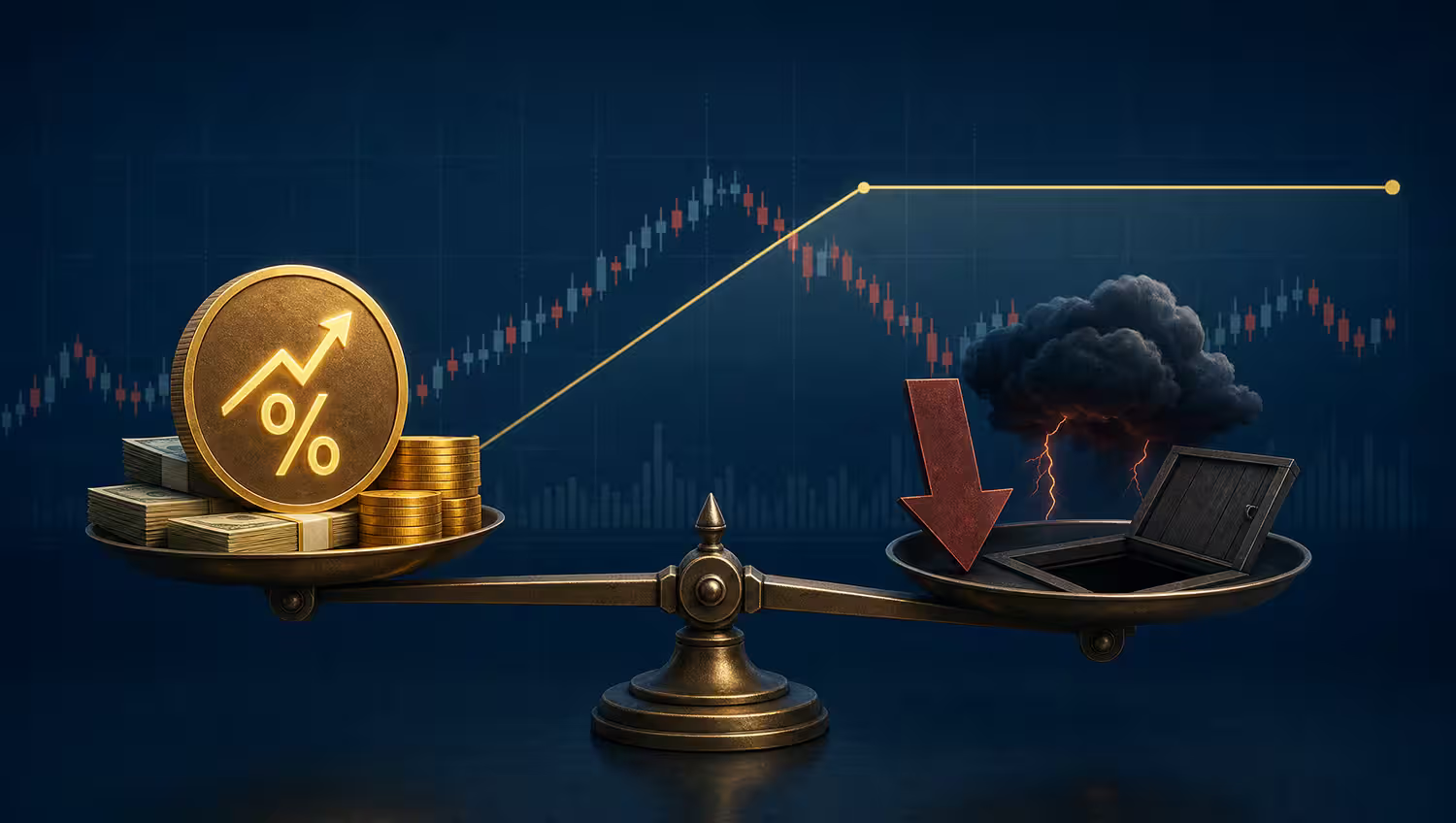
An options income ETF can make option premium look simple. The fund packages an option-overlay process, pays distributions, and lets the investor buy shares instead of opening option trades directly.
The part that deserves slower review is the word income. A high stated distribution rate is not the same thing as a guaranteed return, a bond coupon, or protection from losses. The fund can still lose value, cap upside, distribute capital in ways that affect tax treatment, and lag a strong stock market.
This article treats options income ETFs as fund products first and options strategies second. The useful question is not whether the yield looks attractive. It is what the fund owns, how the option overlay is managed, what trade-offs support the distribution, and what risks remain with the shareholder.
The Yield Number Is Only the First Clue
In plain English, an options income ETF means an exchange-traded fund that uses an options overlay, often a covered-call or buy-write style process, to generate cash flow from option premiums. The exact strategy can vary by fund, index, manager, and prospectus.
That structure can be convenient because the investor does not need to select strikes, manage assignments, or trade contracts directly. But the convenience does not remove the underlying trade-off: option premium usually comes from accepting some combination of capped upside, market exposure, volatility exposure, fees, and tax complexity.
Related concepts include covered calls, buy-write indexes, option premium, total return, return of capital, and fund NAV. Readers who want the strategy foundation can compare the fund wrapper with the main OptionsTrading.org guide to covered calls and the glossary explanation of option premium.
Quick Takeaways
- Options income ETFs may use option premiums to support regular distributions.
- Distribution yield and total return are different measurements.
- Covered-call style funds can cap upside when the underlying market rallies strongly.
- The fund can still decline when the underlying stocks or index fall.
- Fees, taxes, return of capital, NAV behavior, and strategy rules matter before comparing yields.
- The product can be easier than trading options directly, but it is not automatically lower risk.
What Options Income ETFs Usually Own
Many options income ETFs begin with a stock or index exposure, then add an option overlay. A common version owns a basket or index exposure and sells call options against some or all of that exposure. The option premium can help fund distributions, but the short call can also limit how much the fund participates if the market rises above the call strike.
Other products may use index options, cash-settled contracts, synthetic exposure, active strike selection, fixed distribution policies, or different overwrite percentages. Those details are not decoration. They determine how much upside is sold, how much downside remains, whether the distribution is stable or variable, and how the fund may behave in a sharp rally or selloff.
This is why the fund documents matter. The ETF wrapper tells the investor how shares trade. The strategy rules explain what the fund is trying to do inside the wrapper. The options disclosure explains the contract risks that sit underneath the income story.
Yield, Upside, and Downside Are Different Questions
A simple review separates three ideas that often get blended together in marketing copy or yield screens.
Question | What the Investor Is Really Checking | Why It Matters |
|---|---|---|
How is the distribution generated? | Option premiums, dividends, interest, realized gains, return of capital, or a mix. | A distribution can look similar on the screen while coming from very different sources. |
What happens in a strong rally? | Whether sold calls cap part of the fund’s upside. | Income can come with an opportunity cost when the underlying market rises quickly. |
What happens in a selloff? | How much underlying downside remains after premiums are collected. | Option premium may cushion a decline, but it usually does not eliminate equity-market risk. |
What is happening to NAV? | Whether the share price is holding up, drifting lower, or compounding over time. | A high distribution is less useful if total return is weak or capital is being eroded. |
What is the tax character? | Ordinary income, qualified dividends, capital gains, return of capital, or other classifications. | After-tax results can differ from the headline yield, especially in taxable accounts. |
Where the Hidden Risk Can Sit
- A high distribution rate can distract from weak or negative total return.
- Covered-call overlays may underperform in strong uptrends because some upside is sold away.
- Premium income may not offset a large decline in the underlying holdings.
- Return of capital can make cash payments feel like income while changing cost basis and tax reporting.
- Fees and turnover can reduce the benefit of the option overlay.
- The fund’s option approach may work differently across calm, volatile, sideways, and trending markets.
A Simple Fund-Review Example
Imagine two funds both showing attractive trailing distribution rates. Fund A sells calls on part of a broad equity index and lets some upside remain. Fund B sells a heavier call overlay and targets a larger monthly distribution. The yield screen may make Fund B look better at first glance.
The trade-off may appear later. If the market rallies, Fund B may collect more premium but give up more upside. If the market falls, both funds may still decline because the underlying equity exposure remains. If distributions include return of capital, the cash payment may not mean the fund earned that amount through investment income.
The review is not simply higher yield versus lower yield. It is distribution source, upside participation, downside exposure, NAV behavior, tax character, expenses, liquidity, and whether the investor actually wants an option-income product instead of a simpler equity or income allocation.
What to Check Before Buying
This checklist-style table is intentionally fund-focused. The goal is to read the ETF like a product document, not like a single option trade.
Review Area | Better Question | Possible Red Flag |
|---|---|---|
Strategy rules | What options are sold, on what exposure, and how often? | The investor only knows the yield, not the overlay method. |
Distribution source | How much came from option premium, dividends, gains, or return of capital? | Cash payments are assumed to be pure income without checking fund reports. |
Total return | How has NAV and market price performed after distributions? | The yield looks high because price or NAV has fallen. |
Market regime | Does the strategy fit sideways, rising, falling, or volatile markets? | The fund is judged from one market environment only. |
Costs and liquidity | What are the expense ratio, spreads, assets, and trading volume? | The ETF is easy to buy but costly or inefficient to trade. |
Options Income ETF Review Checklist
- I read the fund’s strategy summary before comparing distribution rates.
- Check whether the fund uses covered calls, index options, active management, or another option overlay.
- Compare distribution yield with total return and NAV behavior.
- Review how much upside may be capped in a strong market.
- Check whether downside risk remains if the underlying holdings fall.
- I looked for return-of-capital, tax, fee, expense, spread, and liquidity details.
- Compare the fund with simpler alternatives, including direct equity exposure, income funds, or learning an options strategy directly.
- Understand that this product is educational context, not personalized financial advice.
FAQ
These questions focus on the fund wrapper, the option overlay, and why yield should be reviewed carefully.
Are options income ETFs safer than trading covered calls directly?
They can be easier to access because the fund handles the option overlay, but easier does not automatically mean safer. The investor still has fund risk, market risk, strategy risk, fees, tax questions, and possible upside caps.
Does a high distribution yield mean the ETF is earning that much?
Not necessarily. A distribution can come from option premiums, dividends, capital gains, return of capital, or a mix. Total return and NAV behavior should be reviewed alongside the distribution rate.
Can an options income ETF lose money?
Yes. The ETF can decline if the underlying holdings fall, if the strategy lags a rally, if volatility changes, or if costs and distributions exceed the fund's economic return over time.
Why do covered-call ETFs sometimes lag in strong markets?
A covered-call overlay may sell away part of the upside above the call strike. That premium can support distributions, but it can also create opportunity cost when the underlying market rises sharply.
What should I read before buying one?
Start with the fund prospectus or summary materials, distribution history, holdings, option-overlay rules, expense ratio, tax documents, bid-ask spread, and broader options risks.
The Better Question Is Not Just Yield
Options income ETFs can be useful educational products to study because they show how option premium can be packaged inside a fund. They may also be practical for investors who want fund-level access instead of managing option contracts directly.
But the product still deserves a full risk review. Yield, total return, upside participation, downside exposure, tax character, fees, liquidity, and strategy rules all matter. A fund can make income look easy while leaving the harder risks in the background.
For readers comparing access and execution, OptionsTrading.org also maintains resources on options trading brokers and broader options strategies so the fund wrapper can be compared with the underlying choices it packages.
Source and Freshness Note
Current source context was checked as of July 2026 against SEC Investor.gov ETF education, FINRA ETF education, Cboe S&P 500 BuyWrite Index material, and the OCC options disclosure document. Any named ETF, distribution rate, fee, tax character, asset level, or holdings example should be rechecked against the fund’s current documents during final editorial review.