
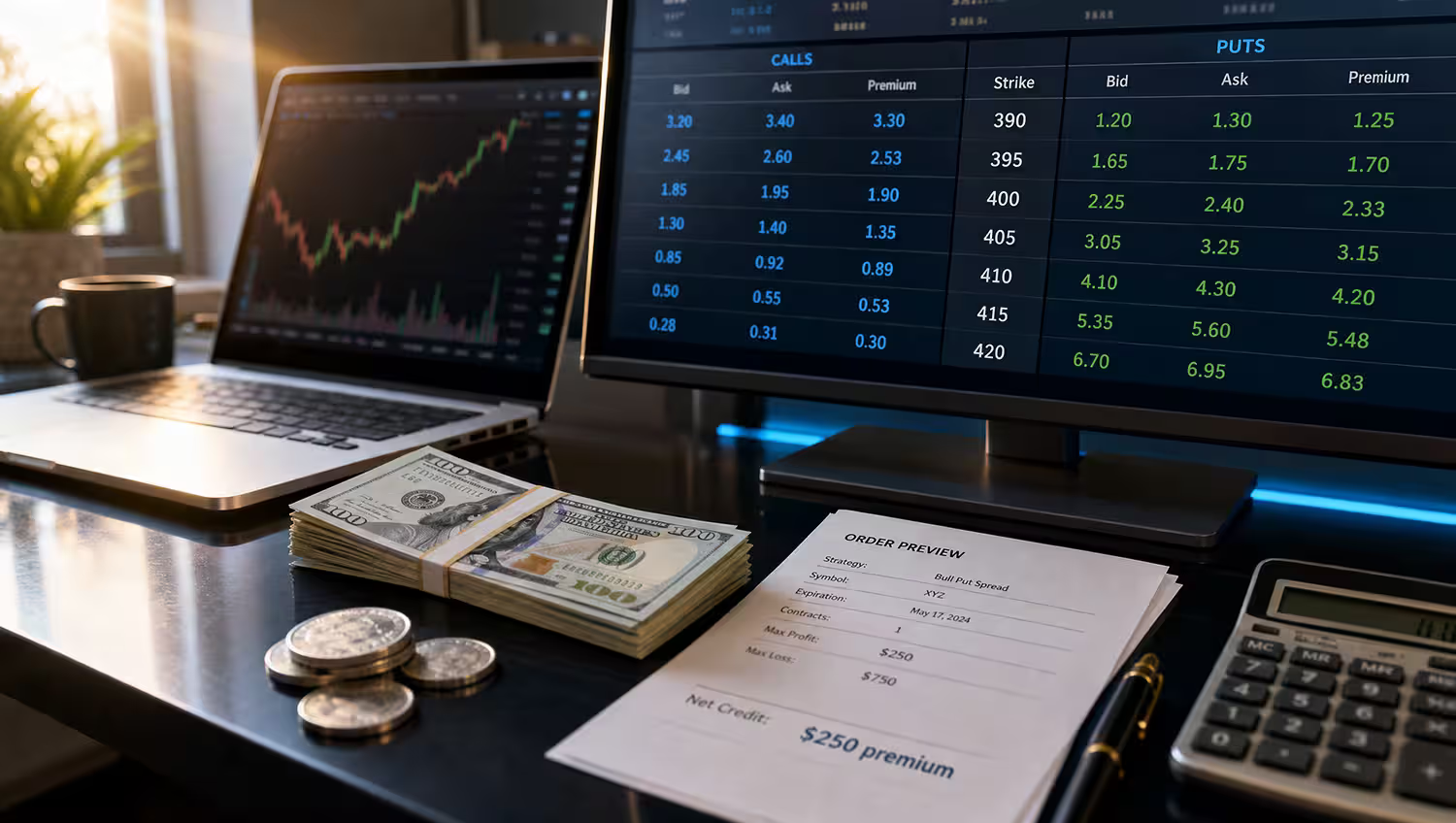
The number beside an option in an option chain is usually not the total amount that will leave your account. If a standard stock option is quoted at $2.50, buying one contract will generally cost $250 in premium, not $2.50, because the quote is per share and the contract typically represents 100 shares.
The quick formula is: option quote x contract multiplier x number of contracts. For one standard equity contract, that is $2.50 x 100 x 1 = $250. Commissions and other transaction fees, if any, are added separately.
That simple calculation answers the entry-price question, but it does not answer every question about cash or risk. Exercising a call, being assigned on a short put, opening a spread, or trading an adjusted contract can involve amounts that are very different from the premium shown on the order ticket.
The Quote Is Usually A Per-Share Price
An option’s price is called its premium. The Options Industry Council’s options basics explains that equity-option premiums are priced on a per-share basis and that an equity option contract usually represents 100 shares.
The OCC’s equity option specifications describe a standard equity contract as 100 shares and state that premium quotations are expressed in points, with one full point equal to $100. That is the convention behind the familiar 100 multiplier.
One contract is the unit being traded; the displayed premium is the price for each underlying share represented by that unit. Keeping those two ideas separate prevents the most common beginner calculation error.
Three Numbers To Check Before You Calculate
- Quantity: Confirm that the order ticket says one contract rather than multiple contracts.
- Limit or expected fill price: Use the actual order price, not automatically the last trade or the midpoint.
- Multiplier or deliverable: Standard equity contracts usually use 100, but adjusted and specialized products can differ.
Use The Premium Formula First
For a typical stock or ETF option, the calculation is straightforward: total premium = quoted price x 100 x number of contracts. A quote of $0.45 represents $45 for one standard contract. A quote of $3.20 represents $320. A quote of $12.00 represents $1,200.
Buying to open creates a debit. If one contract fills at $3.20, the premium debit is $320 before transaction charges. Selling to open creates a credit. If one contract sells at $3.20, the premium credit is $320 before transaction charges, but that credit is not the seller’s maximum possible loss and may not be fully available as withdrawable cash.
Your broker’s order preview is the best place to confirm the expected debit or credit because it can apply the correct multiplier, quantity, commissions, and fees to the exact order. The preview also helps catch a quantity mistake before the order is sent.
Turning A Quote Into The Contract Premium
These examples are hypothetical and use a standard 100 multiplier. They show aggregate premium only, before any broker commission or per-contract, exchange, or regulatory charge.
Displayed Quote | Contracts | Calculation | Aggregate Premium |
|---|---|---|---|
$0.45 | 1 | $0.45 x 100 x 1 | $45 |
$2.50 | 1 | $2.50 x 100 x 1 | $250 |
$3.20 | 3 | $3.20 x 100 x 3 | $960 |
$12.00 | 1 | $12.00 x 100 x 1 | $1,200 |
Why The Fill Price May Differ From The Number You See
An option chain normally shows a bid, an ask, a last trade, and sometimes a calculated mark or midpoint. A buyer is competing with the ask side of the market; a seller is competing with the bid side. The distance between them is the bid-ask spread, and it is a real execution cost even when a broker advertises zero commissions.
Suppose the bid is $2.30 and the ask is $2.70. A displayed midpoint of $2.50 does not guarantee a $250 fill. A market order to buy may fill near $2.70, making the premium $270, while a patient limit order at $2.50 may fill later or may not fill at all. The order type changes execution control, not the contract multiplier.
The premium itself can move with the underlying price, the strike price, time to expiration, interest rates, expected dividends, moneyness, and implied volatility. Delta, time decay, and volatility sensitivity can all change the quote while an order is waiting.
That is why the contract-cost calculation should use the intended limit price or the actual fill. It should not rely on a stale last trade, especially in a thin market.
The Same Contract Has More Than One Cost
The word cost can refer to different account effects. Keeping them separate makes an order easier to evaluate.
Cost Layer | What It Means | Typical Calculation |
|---|---|---|
Entry premium | The debit paid by a buyer or credit received by a seller | Quote x multiplier x contracts |
Transaction charges | Broker commissions and applicable per-contract, exchange, or regulatory fees | Shown in the broker’s order preview |
Exercise or assignment cash | Cash or shares required to fulfill the contract terms | Strike price x deliverable, subject to product terms |
Risk or buying power | Capital the broker requires to support a short option or spread | Depends on strategy, account type, holdings, and broker rules |
Premium Paid Is Not The Same As Exercise Cost
Imagine buying one standard $50-strike call for a $2.50 premium. The option purchase costs $250 before fees. Exercising that call is a separate transaction: buying 100 shares at the $50 strike price requires $5,000. The $250 premium is not credited against the $5,000 exercise payment by the clearing process, even though both amounts matter when calculating the trade’s economic breakeven.
FINRA’s options overview uses the same distinction when explaining that exercising one $100-strike call can require $10,000 to buy 100 shares. A broker may close an option, issue an exercise notice, or take another risk-control action when an account cannot support exercise, depending on its agreement and procedures.
A long put has a different right: it can allow the holder to sell the contract deliverable at the strike. A short option creates an obligation rather than a right. Assignment on a short put can require buying shares at the strike, while assignment on a short call can require delivering shares. Those obligations can be much larger than the premium initially received.
Buying One Contract And Selling One Contract Are Not Symmetric
For a plain long call or long put, the buyer’s maximum loss is generally the premium paid plus transaction charges if the contract expires worthless. Paying $250 for one contract therefore creates a defined premium at risk, but it does not mean the trade has a high probability of success or an attractive breakeven.
For an option seller, the premium is money received for accepting an obligation. A short put can require substantial cash or buying power because assignment may force the purchase of 100 shares at the strike. An uncovered short call can have theoretically unlimited loss potential as the stock price rises. The $250 credit is therefore not a useful stand-alone measure of the position’s risk.
Broker approval level, cash-secured or covered status, margin rules, and portfolio holdings can change the buying power needed for a short option. A trader should not infer the requirement from the option quote; the broker’s strategy-specific order preview and account agreement control.
A Spread Uses The Net Price Of Multiple Legs
One spread order can contain two or more option contracts called legs. The spread’s quoted price is normally a net debit or net credit for the package, and the multiplier still applies. If a one-lot vertical spread is entered for a $1.40 net debit, the aggregate debit is generally $140 before fees.
Do not add the full ask price of every leg and call that the spread’s cost if the order ticket quotes a net package price. One leg is bought and another is sold, so the premiums offset. The net debit or credit, strike width, and contract quantity are the relevant starting numbers.
Fees may be assessed per contract on each leg. A one-lot two-leg spread contains two option contracts for fee purposes even though it is submitted as one strategy order. Maximum loss can equal the net debit for some long spreads, while credit spreads can have loss exposure based on the strike width less the credit, subject to settlement and assignment risks.
The 100 Multiplier Has Important Exceptions
Most standard equity and ETF options use a 100 multiplier, but the contract specifications always win. Corporate actions such as splits, mergers, spinoffs, or special distributions can create adjusted contracts with a deliverable other than 100 ordinary shares. The OCC specification explicitly warns that adjusted contracts may represent something different from the standard unit.
The Options Industry Council’s explanation of what happens when stock splits affect options shows why the multiplier and the deliverable should not be treated as the same field. An adjusted contract may continue to use a 100 premium multiplier while delivering fewer shares, cash, or a package of securities.
Some specialized index products use a different multiplier by design. Cboe’s Nanos multiplier guide, for example, describes a product with a one multiplier, where a displayed $3.20 price represents $3.20 rather than $320, plus applicable charges. This is an exception that reinforces the rule: check the product specifications on the exact contract.
A nonstandard ticker suffix or an unusual deliverable should pause the calculation. Review the contract details and the relevant OCC information memo instead of assuming one contract represents 100 current shares.
What Actually Makes One Contract Expensive Or Cheap
The multiplier converts the quote into dollars, but the quote itself comes from option-pricing inputs. A contract can cost more because it has more intrinsic value, more time until expiration, higher implied volatility, or a strike that gives it a different probability profile. A lower-priced contract may simply be farther out of the money or closer to expiration.
Cost alone cannot tell you whether a contract fits a thesis. A complete review connects the premium to breakeven, implied volatility, time decay, delta, moneyness, and liquidity. It also checks the bid-ask spread and likely slippage because a theoretical mark is not the same as an executable price.
The practical comparison is not merely ‘$45 versus $250.’ It is what each contract needs the underlying to do, how much time it has, how the market is pricing expected movement, and how much of the premium could be lost if the move never arrives.
One-Contract Cost Check
- Confirm the order quantity is one contract.
- Identify the limit price or realistic fill price rather than relying on the last trade.
- Check the contract multiplier and the exact deliverable.
- Multiply quote x multiplier x contract quantity to calculate aggregate premium.
- Add commissions and applicable per-contract, exchange, or regulatory fees shown in the preview.
- Distinguish the premium debit or credit from exercise, assignment, and buying-power amounts.
- For a spread, use the net package price and count the number of legs when reviewing fees.
- Review strike, expiration, breakeven, implied volatility, delta, time decay, bid-ask spread, volume, and open interest.
- If the contract is adjusted or specialized, verify the official product specifications before placing the order.
- Size the position for the amount that can actually be lost, not just the attractive-looking quoted price.
FAQ
These answers cover the pricing mistakes that most often appear when a trader moves from an option chain to an order ticket.
If an option costs $1, how much is one contract?
For a standard equity or ETF option with a 100 multiplier, a $1.00 quote represents $100 in aggregate premium for one contract, plus any applicable transaction charges. Verify the multiplier because adjusted or specialized products can differ.
Does one options contract always represent 100 shares?
No. Standard equity contracts usually represent 100 shares, but corporate-action adjustments and specialized products can have different deliverables or multipliers. Check the exact contract specifications.
Is the premium the most I can lose?
For a plain long call or long put, maximum loss is generally the premium paid plus transaction charges. Short options and some multi-leg positions can have losses or obligations that are much larger than the premium received.
Why did my contract cost more than the midpoint?
The midpoint is only a calculation between the bid and ask. It is not a guaranteed fill. A market order may execute closer to the ask when buying, and the quote can move while the order is active.
Does exercising a call cost another 100 times the strike price?
For a standard physically settled equity call, exercising generally requires paying the strike price times the share deliverable. A $50-strike call covering 100 shares therefore involves $5,000 to buy the shares, separate from the premium originally paid.
Price The Contract, Then Price The Obligation
For one standard equity option, start with the simple formula: quote x 100. A $2.50 quote usually means $250 in premium for one contract, before transaction charges.
Then go one step further. Confirm the fill price, multiplier, deliverable, and fees. Separate the entry premium from exercise cash, assignment exposure, and broker buying power. If the order has multiple legs or an adjusted symbol, use the package price and exact contract terms rather than the shortcut.
That two-layer habit turns an option-chain number into a realistic account decision. It does not make options low risk, but it makes the dollars, obligations, and potential loss much harder to misunderstand.
Source and Freshness Note
Source review completed July 2026. Contract-size and premium mechanics were checked against Options Industry Council, OCC, and FINRA education. Adjusted-contract and nonstandard-multiplier examples were reviewed using OIC and Cboe education. The supporting links appear beside the claims they document. All dollar examples are hypothetical; broker charges and buying-power rules vary.