
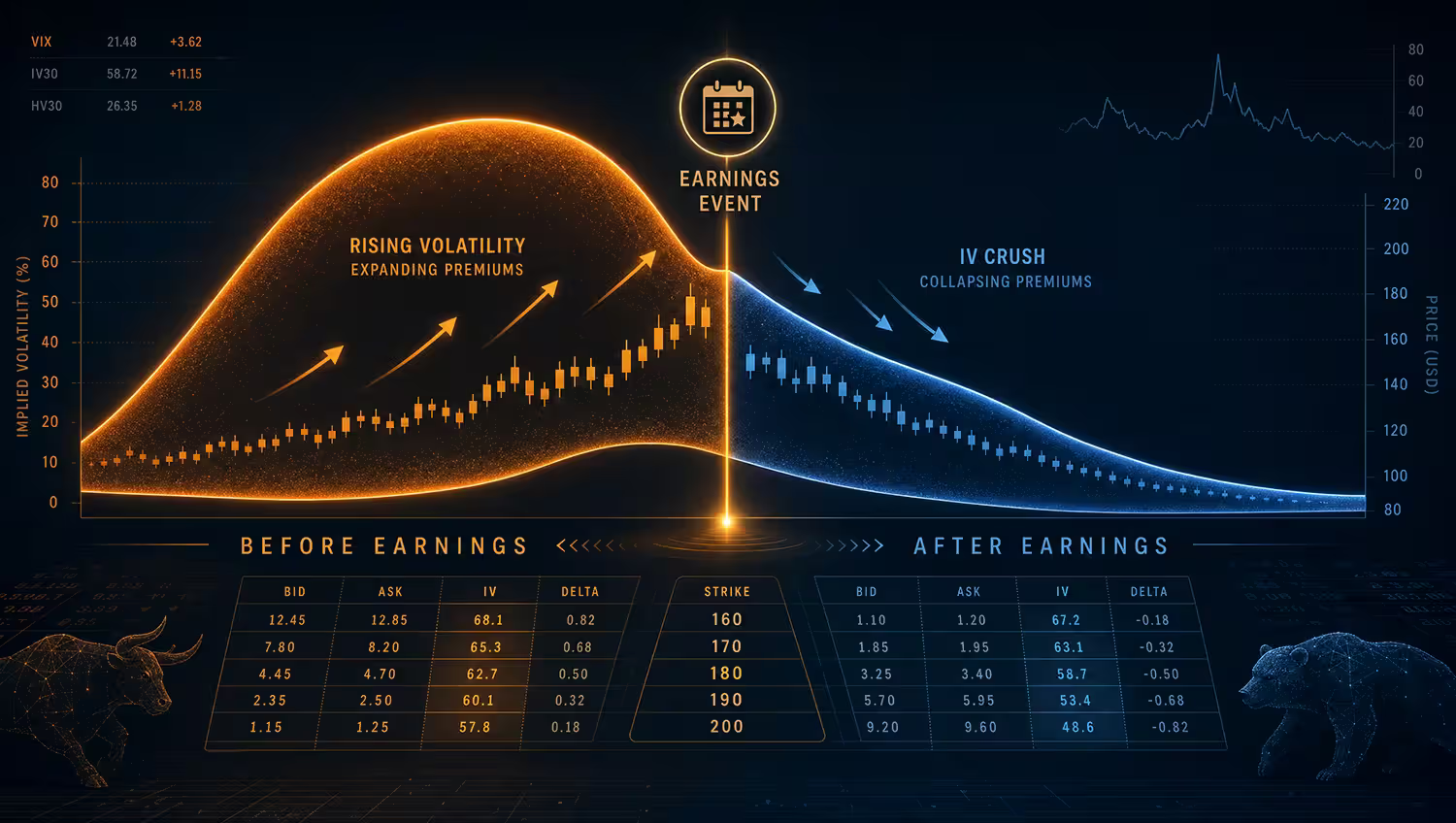
Before an earnings report, an options chain is pricing uncertainty as much as direction. The market does not know whether the company will beat expectations, miss guidance, gap higher, sell off, or barely move, so option premiums often carry extra event premium into the announcement.
After earnings, that uncertainty changes shape. The stock may still move sharply, but one major unknown has been resolved, and implied volatility can fall as the event premium comes out of the contract. That before-and-after shift is why an earnings option can behave differently from a normal directional trade.
The useful question is not simply whether implied volatility is high. It is whether the premium, expected move, expiration, liquidity, and post-report volatility risk fit the trade a reader is considering. Earnings season rewards that kind of pricing review and punishes shortcuts.
Quick Takeaways
- Implied volatility often rises before earnings because traders are pricing uncertainty around the report.
- After earnings, implied volatility can fall quickly when the event uncertainty is resolved.
- IV crush can hurt long calls and long puts even if the stock moves in the expected direction.
- The expected move helps show how much movement may already be embedded in option prices.
- Premium buyers usually need direction, timing, and volatility to cooperate; premium sellers still face gap and assignment risk.
- Earnings-season options should be reviewed with breakeven, vega, time decay, liquidity, and exit rules visible before entry.
Before And After Earnings Volatility
Implied volatility is the market’s forward-looking volatility input inside an option price. It is not a promise that a stock will move by a specific amount, and it is not a forecast that says which direction the stock will go. It is one part of the price traders are willing to pay or accept for uncertainty.
Before earnings, uncertainty is concentrated. The company may report revenue, margins, guidance, product commentary, regulatory issues, or management tone that changes how investors value the stock. That concentration can lift option premiums because both call buyers and put buyers may be willing to pay for protection or speculation.
After earnings, the market can replace one unknown with a known result. Implied volatility may fall because the report is no longer ahead of the contract. The remaining option value then depends more heavily on the actual stock move, time left, moneyness, and demand for the contract. For related background, see implied correlation in options pricing.
Readers who want a deeper foundation can review the OptionsTrading.org guide to implied volatility and the options vega page before comparing earnings contracts.
A Simple Earnings Volatility Walkthrough
Imagine a stock trading near $100 a few days before earnings. The simplified example below is not a recommendation. It shows why a trader needs to compare the stock move with the premium and volatility change already priced into the option.
Moment | What The Option Market Is Pricing | Why It Matters |
|---|---|---|
Several days before earnings | The stock trades near $100, a weekly $100 call costs $5, and implied volatility is elevated. | The buyer is paying for uncertainty before the announcement, not just for a normal stock move. |
Expected move | The combined option pricing suggests the market already expects a meaningful post-report move. | A bullish trader may need the stock to rise more than the move already embedded in the premium. |
After the report | The stock rises to $103, but implied volatility drops because the report is now known. | Direction helped, but the volatility drop can remove enough extrinsic value to limit or erase the option gain. |
Exit review | The trader compares the bid, ask, breakeven, days left, and remaining implied volatility. | The result depends on realized price and execution, not only on whether the stock moved higher. |
Why Event Premium Builds
Earnings is a scheduled information event. Traders know when the report is coming, but they do not know the size or direction of the reaction. That makes the event different from an ordinary trading day. The uncertainty is visible on the calendar, and option prices can adjust before the news arrives.
Demand can come from many groups at once. A shareholder may buy puts to limit downside through the report. A short seller may buy calls to cap upside risk. A speculator may buy out-of-the-money options for a large move. A spread trader may sell one strike and buy another. All of that activity can affect premium without creating a clean directional signal.
The expected move is one practical way to frame the problem. It gives a rough sense of how much movement the option market is pricing for the event. If an option buyer’s thesis only calls for a move that is smaller than the priced-in move, the trade may need more than correct direction to work.
That is why earnings options should be analyzed as a package: direction, magnitude, timing, implied volatility, spread width, and expiration all interact. A clean headline reaction does not automatically mean the option contract was priced attractively.
Premium Buyer Versus Premium Seller
Earnings volatility affects both sides of the trade. Buyers and sellers are exposed to different risks, so the same implied-volatility setup can mean different things depending on the position.
Trader Role | What They Usually Need | Main Earnings Risk |
|---|---|---|
Premium buyer | A move large enough, soon enough, to overcome the premium paid and any post-event volatility drop. | IV crush, time decay, and a move that is directionally right but too small. |
Premium seller | The realized move to stay within a tolerable range after collecting elevated premium. | Gap risk, losses that exceed the credit, assignment, and fast changes in delta or gamma. |
Spread trader | The selected strikes and expiration to match the expected move and risk budget. | Defined-risk spreads can still lose most or all of the debit or hit max loss after a sharp move. |
Stock holder using options | The option position to fit the stock thesis, hedge need, and willingness to cap upside or pay for protection. | Using a hedge that is too expensive, too short-dated, or misaligned with the risk being hedged. |
Where Earnings Volatility Can Mislead
- High implied volatility does not mean the stock must make a large move in the direction a trader expects.
- A low-priced out-of-the-money option can still be expensive relative to its probability and breakeven.
- IV crush can affect calls and puts after the report because both sides lose event uncertainty.
- Selling premium because implied volatility looks high can still create large gap risk.
- A tight theoretical payoff can look worse after bid-ask spreads and fast post-report repricing.
- This framework is educational context, not personalized advice to buy or sell earnings options.
How To Review An Earnings Option Chain
Start with the calendar. Confirm the earnings date, the expiration being considered, and whether the option expires before or after the report. A contract that misses the event does not have the same exposure as one that carries through the announcement.
Next, compare premium with the expected move and breakeven. For a long call, that means asking whether the stock can rise enough to overcome the strike plus premium. For a long put, it means asking whether the stock can fall enough to overcome the strike minus premium. Before expiration, the analysis also needs vega, theta, delta, and liquidity.
Then look at the market quality. Volume, open interest, and bid-ask spreads help show whether the contract can be entered and exited realistically. The broader options strategies section can help readers compare whether a simple long option, a spread, or no trade at all better matches the risk they are trying to take.
Finally, write down the post-earnings plan before entering. Decide what happens if the stock moves the right way but implied volatility collapses, if the stock gaps against the trade, or if the option has a theoretical gain but the spread makes the exit unattractive.
Earnings Volatility Review Checklist
- Confirm whether the option expires before or after the earnings announcement.
- Compare the premium with the expected move and simplified breakeven.
- Review implied volatility and whether a post-earnings IV crush is possible.
- Check vega, theta, delta, and time to expiration before relying on direction alone.
- Review volume, open interest, and bid-ask spreads for realistic execution.
- Separate the stock thesis from the option-pricing thesis.
- Consider whether the trade depends on direction, volatility, timing, or all three.
- Write down an exit plan for both favorable and unfavorable post-report reactions.
- Remember that options education is not personalized financial advice.
FAQ
These questions focus on the practical mechanics behind implied volatility during earnings season.
Why does implied volatility often rise before earnings?
Earnings creates a known uncertainty window. Traders may buy options for speculation or protection before the report, and that demand can raise the volatility input embedded in option prices.
What is IV crush after earnings?
IV crush is the drop in implied volatility that can happen after the earnings uncertainty is resolved. It can reduce option premium even when the stock moves.
Does high implied volatility make selling options safer?
No. Higher premium can come with larger event risk. Selling options into earnings can still produce large losses if the stock gaps beyond the expected range.
Can a call lose money after a bullish earnings reaction?
Yes. A call can lose money if the stock move is smaller than the premium implied, if implied volatility falls sharply, if time decay is heavy, or if execution costs are wide.
What should traders check first?
Start with the earnings date, expiration, premium, expected move, implied volatility, breakeven, liquidity, and the plan for what happens after the report.
Treat Earnings Volatility As A Pricing Problem
Earnings season changes implied volatility because it changes how the market prices uncertainty. Before the report, the uncertainty is still ahead. After the report, the market has new information, and option premiums can reprice quickly.
That does not make earnings options good or bad by default. It means the trade has to be judged by more than a directional opinion. The premium buyer needs enough movement and timing to overcome the price paid. The premium seller needs the collected credit to justify the gap risk and management burden.
A stronger process keeps the before-and-after volatility shift visible. Check the expected move, breakeven, vega, time decay, liquidity, and exit plan before treating the earnings setup as attractive.
Sources Used For Risk And Pricing Context
Readers can compare earnings-volatility explanations with the FINRA options basics and Greeks overview, the OIC overview of the option Greeks, and the OCC options disclosure document. Live examples should clearly label the date used for premiums, implied volatility levels, expected moves, bid-ask spreads, and expirations.