
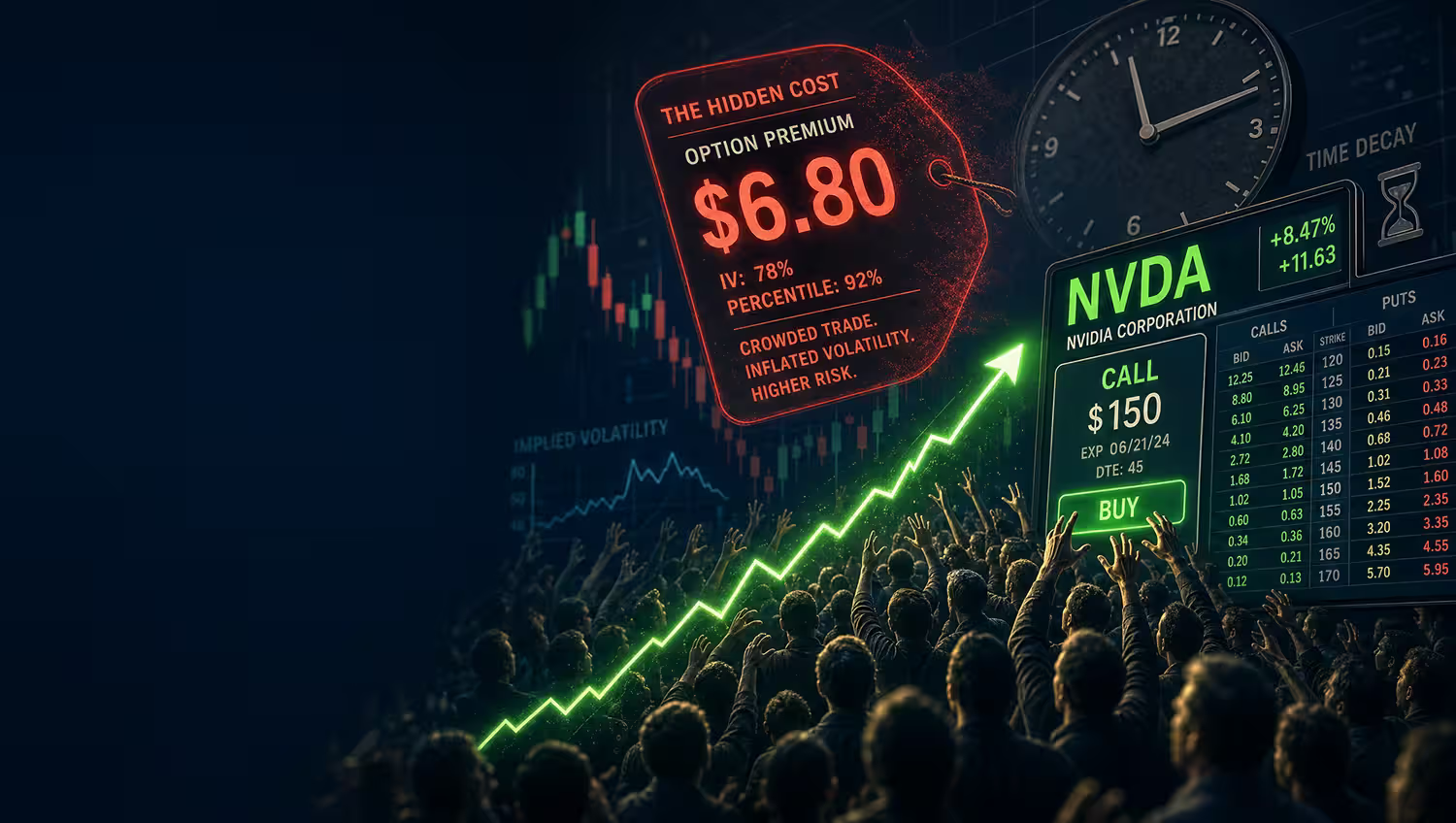
Purchasing call options in a widely followed stock can feel cleaner than doing the same in an obscure name. The company is familiar, the story is visible, the option chain is active, and the stock may already be moving in the direction traders want.
The hidden problem is that attention can make the contract expensive before the buyer enters. Heavy demand can lift implied volatility, push breakevens higher, draw traders into short-dated out-of-the-money contracts, and make a reasonable stock idea depend on an unusually strong move.
That does not make a long-call trade wrong by default. It means the call has to be judged as a priced contract, not as a simple vote that a familiar stock will keep rising.
Quick Takeaways
- A widely followed stock can become a crowded options trade even when the company itself is high quality.
- Call buyers need the stock to rise enough, soon enough, to overcome the premium paid.
- Implied volatility, expected move, and breakeven often matter more than the headline stock story.
- Short-dated out-of-the-money contracts can look cheap while still requiring a large move to work.
- High volume does not prove the call is early, underpriced, or suitable for every trader.
- A stronger review separates the stock thesis from the option-price thesis before entry.
Why Popular Call Contracts Can Be Expensive
A call option gives the buyer the right, but not the obligation, to buy the underlying stock at the strike price before expiration. The buyer pays a premium for that right. If the stock does not rise enough relative to the strike, premium, expiration, and exit price, the call can lose value.
Crowd-favorite names often attract call buyers because the story is easy to understand. A widely followed earnings report, product launch, artificial-intelligence theme, index move, or social-media narrative can make the same strike interesting to many traders at once.
That demand can increase option premium through implied volatility. A trader may be directionally right about the stock and still overpay for the call if the expected move was already embedded in the contract price.
Readers who want the foundation first can review the OptionsTrading.org pages on implied volatility, options delta, and time decay.
A Popular Stock Call-Buying Example
Imagine a heavily watched stock trading near $100 after a strong rally. The example below is simplified for education, but it shows why a familiar company story can still create a difficult call purchase.
Trade Detail | What The Buyer Sees | Hidden Risk |
|---|---|---|
Stock setup | The stock has rallied from $90 to $100 and traders expect more upside. | The easy part of the move may already be reflected in option demand. |
Call contract | A 30-day $105 call costs $4. | The simplified expiration breakeven is $109 before trading costs. |
Popularity effect | Volume is high and implied volatility is elevated. | The contract may be priced for a large move, not just a modest continuation. |
Stock outcome | The stock rises to $106 two weeks later. | The call buyer was directionally right, but the move may still be too small or too slow. |
Exit quality | The bid-ask spread widens during fast trading. | The realized sale price can be worse than the midpoint shown on the chain. |
The Stock Thesis Is Not The Option Thesis
A stock thesis might be simple: the company has momentum, a strong product cycle, or a catalyst that could keep buyers interested. An option thesis needs more detail. It must explain why this strike, this premium, this expiration, and this implied volatility level make sense.
That distinction matters most in crowded names because the crowd can be right about the company and still make the option unattractive. If many traders are already chasing the same upside, call premiums can rise enough that the buyer needs an unusually clean continuation.
Breakeven is the first reality check. A call buyer is not only asking whether the stock can rise. They are asking whether it can rise far enough and fast enough relative to the premium paid. Before expiration, changes in implied volatility, delta, theta, and liquidity can move the option price even if the stock direction looks helpful.
This is also why the cheapest call is not automatically the safest call. A far out-of-the-money contract may have a low dollar premium, but it may also have low delta, heavy time pressure, and a breakeven that requires a much larger move than the buyer realizes.
What Call Buyers Should Compare
Use the call contract as the object of analysis. The familiar stock story belongs in the background, but the contract terms decide the trade result.
Input | Reader Question | Why It Matters |
|---|---|---|
Premium and breakeven | How far must the stock move before the call has a realistic profit path? | A good stock idea can fail if the premium requires too much upside. |
Implied volatility | Is the contract expensive because many traders already want exposure? | High implied volatility can hurt buyers if expectations cool or a catalyst passes. |
Delta | Will the option respond enough to a moderate stock move? | Low-delta calls may need a larger move before gains become meaningful. |
Time decay | How many days are left, and how fast is extrinsic value eroding? | Short-dated calls can lose value quickly if the move stalls. |
Liquidity | Are volume, open interest, and bid-ask spreads good enough for a realistic exit? | Even active options on heavily watched names can have worse execution in fast markets. |
Where Crowd-Favorite Contracts Can Mislead
- Assuming a familiar company makes the option contract less risky.
- Treating high call volume as proof that the trade is early or informed.
- Choosing a low-priced out-of-the-money call without checking breakeven and delta.
- Ignoring implied volatility after a stock has already attracted heavy attention.
- Using the midpoint as if it were guaranteed execution during a fast move.
- Letting the stock story replace a written exit plan and loss limit.
- Treating this framework as personalized advice instead of educational context.
How To Make The Trade Review More Honest
Start by writing the stock thesis and the option thesis separately. The stock thesis might say the company can keep rising. The option thesis should name the strike, premium, expiration, breakeven, implied volatility, delta, and exit plan.
Then compare the contract with alternatives. A different strike, longer expiration, smaller position, defined-risk spread, or no trade may better match the account budget. The broader options strategies section can help readers compare structures before defaulting to a long call.
For a related beginner-focused review, the OptionsTrading.org article on common mistakes when buying calls can help readers compare this crowding problem with other long-call errors.
Finally, decide what would make the call wrong. That may be a volatility drop, a stalled stock move, a loss threshold, a catalyst passing, or the spread becoming too wide. The point is to define the failure mode before the popular story becomes harder to question.
Call Buyer Review Checklist
- Calculate the simplified breakeven before buying the call.
- Compare the premium with the expected move and recent stock range.
- Review implied volatility and whether demand has already inflated the contract.
- Check delta to see how much the call may respond to a moderate stock move.
- Review time decay and the number of days left until expiration.
- Check volume, open interest, and the bid-ask spread for realistic execution.
- Separate the stock thesis from the option-price thesis.
- Write down the exit plan before entering the trade.
- Remember that options education is not personalized financial advice.
FAQ
These questions focus on why call purchases in familiar names can be harder than the headline stock story suggests.
Are long calls in widely followed stocks safer than long calls in smaller stocks?
Not automatically. Heavily traded stocks may have deeper option chains, but call buyers still face premium exposure, time decay, implied volatility changes, and execution costs.
Why can a call lose money if the stock rises?
The stock move may be too small, too slow, or already priced into the premium. A drop in implied volatility or a wide exit spread can also reduce the option's value.
Does high call volume mean informed traders are buying?
No. High volume can come from speculation, hedging, spreads, closing trades, or market-maker activity. It is useful context, not proof that the trade is attractive.
What should a beginner check first?
Start with premium, strike, expiration, breakeven, implied volatility, delta, time decay, volume, open interest, and bid-ask spread before deciding whether the call fits the thesis.
Price The Call, Not Just The Story
The main trap is not that familiar, widely watched companies cannot keep rising. It is that the option contract may already price in a lot of optimism.
A disciplined call buyer asks whether the stock can rise enough, soon enough, after accounting for premium, implied volatility, time decay, delta, and execution quality. That question is less exciting than the headline story, but it is much closer to how the trade will actually be judged.
Familiar names can still create useful options opportunities. The stronger habit is to slow the trade down, price the contract carefully, and avoid confusing attention with an edge.
Sources Used For Options Context
Readers can compare long-call and options-risk explanations with FINRA options education, the OIC overview of the option Greeks, and the OCC options disclosure document. Live examples should clearly label the date used for premiums, implied volatility, volume, open interest, bid-ask spreads, and expirations.