
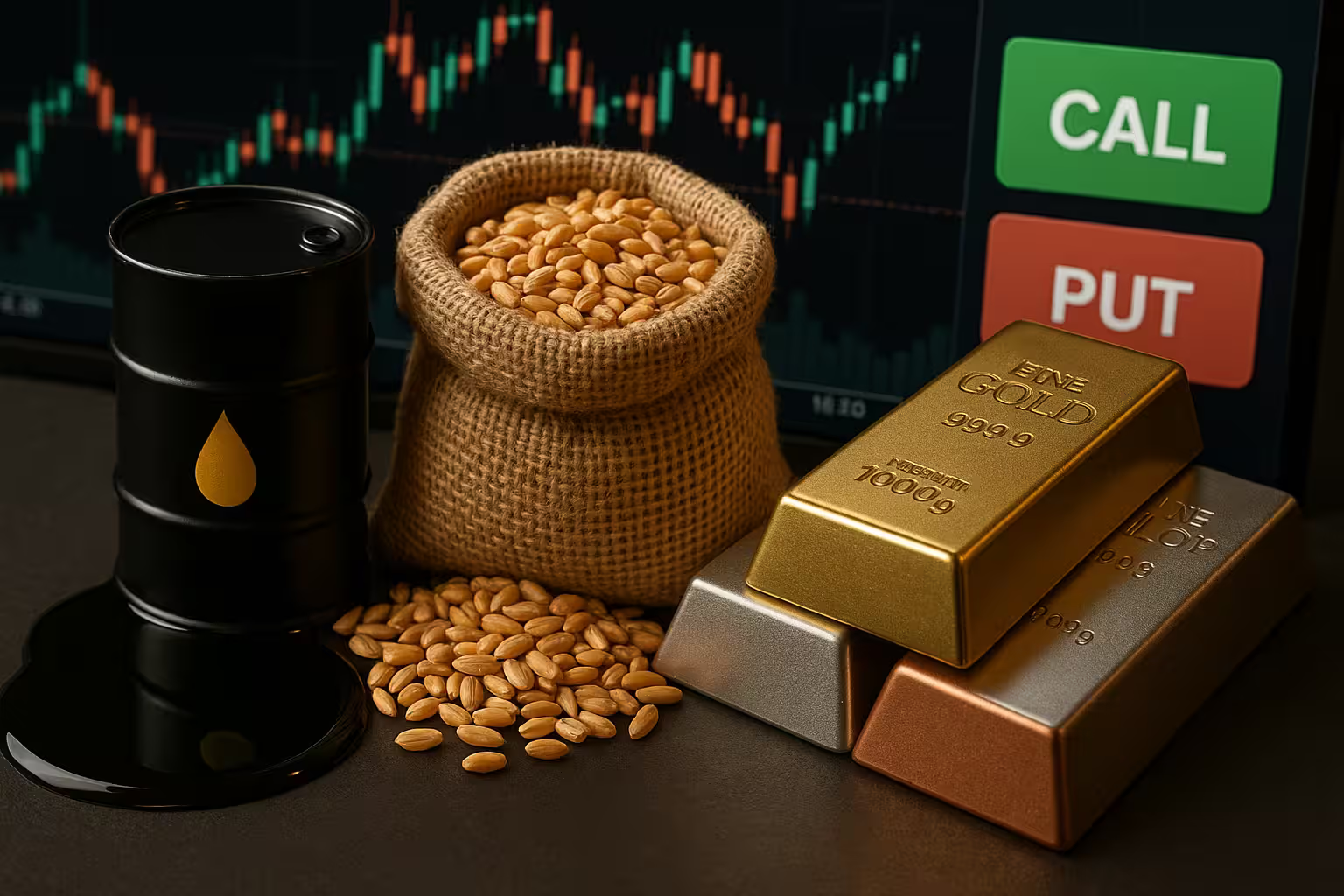
By focusing on market movements of some of the world’s most essential assets, including metals, energy, grains, and other agricultural commodities, traders can capitalize on opportunities to secure profits and manage risks within their portfolios. Trading options on commodities is somewhat similar to stock options, but instead of being tied to company shares, commodity options are contracts that are linked to hard goods.
Being physical products, commodities are how they trade are deeply influenced by geopolitical events, the laws of supply and demand, and seasonality. A big incentive for options traders to delve into trading commodity options is to gain exposure to these hard goods without having to directly buy, store, or deliver them. Our guide outlines the unique opportunities that commodity options can offer traders and how they can use commodity options trading strategies to maximum effect.
Commodity Options Basics
If you’re already familiar with options trading, understanding the basics of commodity options should come rather easily. You’re dealing with a lot of the same concepts, but the biggest key difference is what drives the volatility that ultimately affects the price of the underlying, which we’ll discuss in more detail as we dive into the subject.
What Are Commodity Options?
Check out the fundamental elements that make up a typical commodity option contract—trading commodities with options is going to involve the same principles that you see with options contracts on traditional stocks.
- Calls—This option type gives the buyer the right (not the obligation) to buy commodity futures contracts at a set strike price.
- Puts—This option type gives the buyer the right to sell the commodity future contract at a set strike price.
- Expiration Date—This date varies from one contract to another, and they’re often linked to the expiration of the underlying futures contract for that commodity. If the contract is in-the-money by this date, the position becomes profitable for the trader.
- Strike Price—The fixed price at which the option’s owner can buy or sell the underlying security or commodity.
- Premiums—This element of the commodities contract is influenced by volatility as well as the supply-demand relationship for the underlying commodity market and the time until the expiration date hits.
As we mentioned before, commodity options differ greatly from stock options due to what drives the volatility behind them. Stock options and their pricing are mostly driven by events like corporate earnings or new product releases, while commodity options are largely influenced by seasonal factors like crop cycles or weather, as well as geopolitical events like decisions from OPEC or global trade patterns.
If you’re interested in trading commodity options, timing and using the right strategy are everything as far as ensuring a profitable outcome goes. This is mostly due to the commodity market being sensitive to a wider range of factors. Keep reading our guide for additional insights into which strategies are best for leveraging options contracts on commodities like energy, metals, or agricultural products.
Energy Options—Crude Oil, Natural Gas & Beyond
What is it about energy commodities that makes them such heavily traded assets? The truth of the matter is that these are some of the most liquid assets that there are, even though many of them are susceptible to volatile swings in price based on the factors we’ve already mentioned. Energy options can be unpredictable, but there is a high level of interest in trading these commodity options, meaning that there are almost always buyers and sellers readily available.
Why Energy Commodities Are Highly Traded
- Gasoline and heating oil options are commonly used for hedging purposes by traders and investors due to their use with airlines and in utilities.
- Crude oil options are highly liquid, but they are subject to volatility that comes from OPEC announcements or global supply and demand dynamics.
- Natural gas options are known to swing back and forth based on the weather, so you see traders use a lot of seasonal trade plays when there are heat waves in the summer or cold snaps in the winter.
Crude Oil Options Strategies
Energy options trading around crude oil can be quite effective, but you have to use the proper tactics and strategies to realize a profit along the way. Check out the best plays you can make around crude oil options.
- Straddles/Strangles: These can be good moves for traders to take advantage of volatility around inventory reports, especially long straddles. Large price swings typically result from weekly EIA petroleum reports, leading traders to buy calls and puts as a way to secure a profit from the ensuing volatility.
- Protective Puts: This move is more commonly used by producers and energy companies, which lets them lock in minimum selling prices. Another good reason for a protective put in this case is to protect against potential downturns.
Natural Gas Options Tactics
Trading tactics around natural gas are a bit different than trading options on crude oil. Let’s go over some of these differences and a few of the nuances to keep in mind when trading in this market.
- Calendar Spreads: Traders can take advantage of spread trading when the seasons roll around. For instance, they can capture the differences between summer and winter futures using spreads.
- Covered Calls: This move is ideal for market conditions that are sideways. For instance, traders can generate a steady income by writing calls on long positions when there are periods of the price trading within a narrow range.
Grain Options—Corn, Soybeans, Wheat
Grain options can be highly volatile, mostly due to grain markets being driven by the seasons. Traders dealing with options on commodities like soybeans, wheat, or corn are at the mercy of the supply and demand reports from the USDA, planting conditions for the season, and overall harvest yields.
Grain Options Strategies
While the name of the game with grain options is the seasonal impact of planting and harvesting cycles, some good trading strategies work better for certain grains than they do for others.
- Corn Options Trading: One of the best moves a trader can make with corn options is to use ratio spreads, where they can benefit from range-bound moves post-harvest. Corn prices are known to consolidate at the end of the season when the harvest has been reaped, and savvy traders know to sell multiple calls against fewer long calls to take advantage of the price trading within that narrow range.
- Soybean Options: Weather-driven volatility plays like straddles and strangles are preferable during the planting and growing season to capture sharp movements in price that are brought on by weather conditions like excessive rainfall or an unexpected drought.
- Wheat Options: Global trade and supply disruptions can lead to wheat prices going way up, so this commodity option becomes a hedger’s best friend. Traders and investors can secure minimum prices while keeping exposure to upside by using protective puts against trade risk.
Metal Options—Gold, Silver, Copper
Options traders can also enjoy trading contracts on metal commodities like gold, silver, or copper. It involved buying and selling physical metals or derivatives on the global market to ultimately profit from the ensuing price fluctuations.
- Gold Options Strategies: One typically sees bull call spreads and protective puts used on gold options as this metal is widely considered the world’s “safe haven.” Both tactics can be great hedging tools in times of uncertainty, especially during Fed rate cuts, inflationary cycles, or when there is macro uncertainty.
- Silver Options: Short-dated straddles are good to use on silver options as they can be more volatile than gold, due to its dual use in industrial and investment demand. Using a volatility play like the short straddle on silver options works well around the time of inflation reports being released or Fed meetings being announced.
- Copper Options Trading: Tied to industrial demand, copper works as a barometer for the industrial sector. You see it traded in tandem with movements in the construction world or global manufacturing contexts. Traders can use diagonal spreads during economic cycles when they’re betting on long-term economic recovery. Trading copper options also sees an increased use in protective puts from industrial users who are attempting to hedge raw material costs.
Risk Management in Commodity Options
Commodity options trading involves the use of good risk management principles if traders are looking to enjoy long-term success. A good understanding of how it all works comes down to knowing the difference between hedging and speculation, using each at the right moment and in the right situation.
Good Risk Management Practices
Trading commodity options without a firm plan of risk management can be dangerous, so we encourage you to consider these things before moving forward:
- Hedging or Speculating: Are you trying to reduce risk in a trade because securing a profit is unlikely, or are you willing to take on risks to achieve a profitable outcome for the trade? Hedging with options can be a more conservative approach, while pursuing risk for the benefit of profiting can be seen as more aggressive. One isn’t inherently good or bad, but each has its time and place.
- Using the Greeks: Using the Option Greeks can quantify the risks you see when IV begins spiking around market events like FOMC announcements, OPEC meetings, or USDA reports.
- Risk Controls: Traders must be diligent in using correct position sizing to avoid unnecessary losses and use risk management tools like stop-loss orders or protective spreads to ensure that traders are sized relative to the account equity they currently hold. Having these risk controls in place can safeguard against adverse price swings.
Example
Now, let’s look at a good example of risk management practices being used in commodity options. An energy producer is using collars in crude oil options to protect against downside risks while also offsetting their costs through call selling. The protective collar is done with buying puts, and the complementary selling calls help greatly to balance the risks and rewards.
Advanced Tactics & Institutional Flow
What are some of the more advanced strategies that you can be using when trading commodity options? We’d love to run through a few of these high-end tactics and the bug role that institutional flow can play to ensure that experienced traders have a few more avenues of strategies that they can use to secure a profit.
- Options Skew in Commodities: Since farmers and producers hedge downside risk when trading grains, puts end up being overpriced relative to the call options. Traders who sell overpriced puts or set up risk reversals can take advantage of skew.
- Calendar & Diagonal Spreads: Traders can use these two strategies to take advantage of seasonality in energy and grains. When it comes to energy options, they can trade long winter natural gas spreads. Grain options can be traded with spreads that are around cycles with planting or harvesting.
- Options Flow Analysis: Reading block trades in crude oil and gold, institutional investors often leave behind footprints that retail traders can use to their advantage. They can track these orders to gain insights into volatility expectations in the market or to realize market sentiment among other investors.
Case Study
A good example of using advanced commodity options strategies would be when an experienced trader uses speculative bets on gold volatility during Fed rate shifts. Some traders would consult options flow tools for getting the job done. They could end up making a lot of money if they get the gold’s price direction correct. Unlike seasonal commodity traders, speculating on gold’s price movements can be done at any time the Fed is getting ready to announce changes to interest rates.
Practical Tips for Retail Traders
Following a few of these helpful tips and best practices might be your best play if you’re new to this form of trading. Keep in mind that trading commodity options is somewhat different from trading traditional stock options, so it’s going to require a different approach. Consider these our best beginner commodity options strategies that will show you how to trade commodity options better and with more consistency over time.

Step #1: Choose Your Market
To begin, choose a sector of the economy that you’re interested in trading around. You have your choice of metals, grain (and other agricultural products), and metals. Choosing a market can help you out with learning about the seasonal drivers.
Step #2: Select Key Reports
Traders who are dealing with energy options need to keep a close eye on the EIA inventory releases. On the other hand, grain traders need to follow WASDE reports, and metal traders must track Fed minutes as well as CFTC positioning data.
Step #3: Choose the Right Broker
It is going to be different from one trader to the next as to which platform works best for their online options trading needs. On top of selecting a broker that ticks all the boxes for your trading needs personally, it’s also important to consider that not all broker apps or websites offer deep liquidity in futures options. Choose a broker that offers this function if you’re interested in adding commodity options to your investment portfolio.
Step #4: Be Aware of the Common Mistakes and Do Your Best to Avoid Them
As with any other form of trading, there are some common mistakes you’ll want to know about and some best practices for navigating around situations that would cause you to stumble into these pitfalls. For instance, overleveraging yourself by using too much borrowed money can get you into trouble. Another big mistake is ignoring the seasonality behind certain commodities—it’s a fatal mistake that could end up costing you a lot of money.
Key Takeaways on Commodity Options
Any trader who is interested in profiting from volatility can add a great diversity element to the investments that make up their portfolio by delving into trading commodity options on hard goods like metals, energy, and grains. In addition to profiting from volatility, traders and investors can diversify beyond equities, and they can hedge real-world risks. Trading commodity options well comes from striking a good balance between understanding volatility pricing, seasonality, and global macro events, which presents a new kind of challenge for traders who might have only traded traditional stock options up until this point.
If you’re brand-new to trading commodity options, we’d encourage you to explore structured options tactics in commodities. For energy, focus on crude oil and natural gas spreads. In grains, exploit weather-driven volatility. In metals, trade gold as a macro hedge, silver for volatility, and copper for industrial cycles.
The big takeaway from our guide, we hope, is that you apply strong risk management tactics to any sort of investment you make when trading commodities. Keeping risk management at the forefront of your priorities can help keep you in the game!