
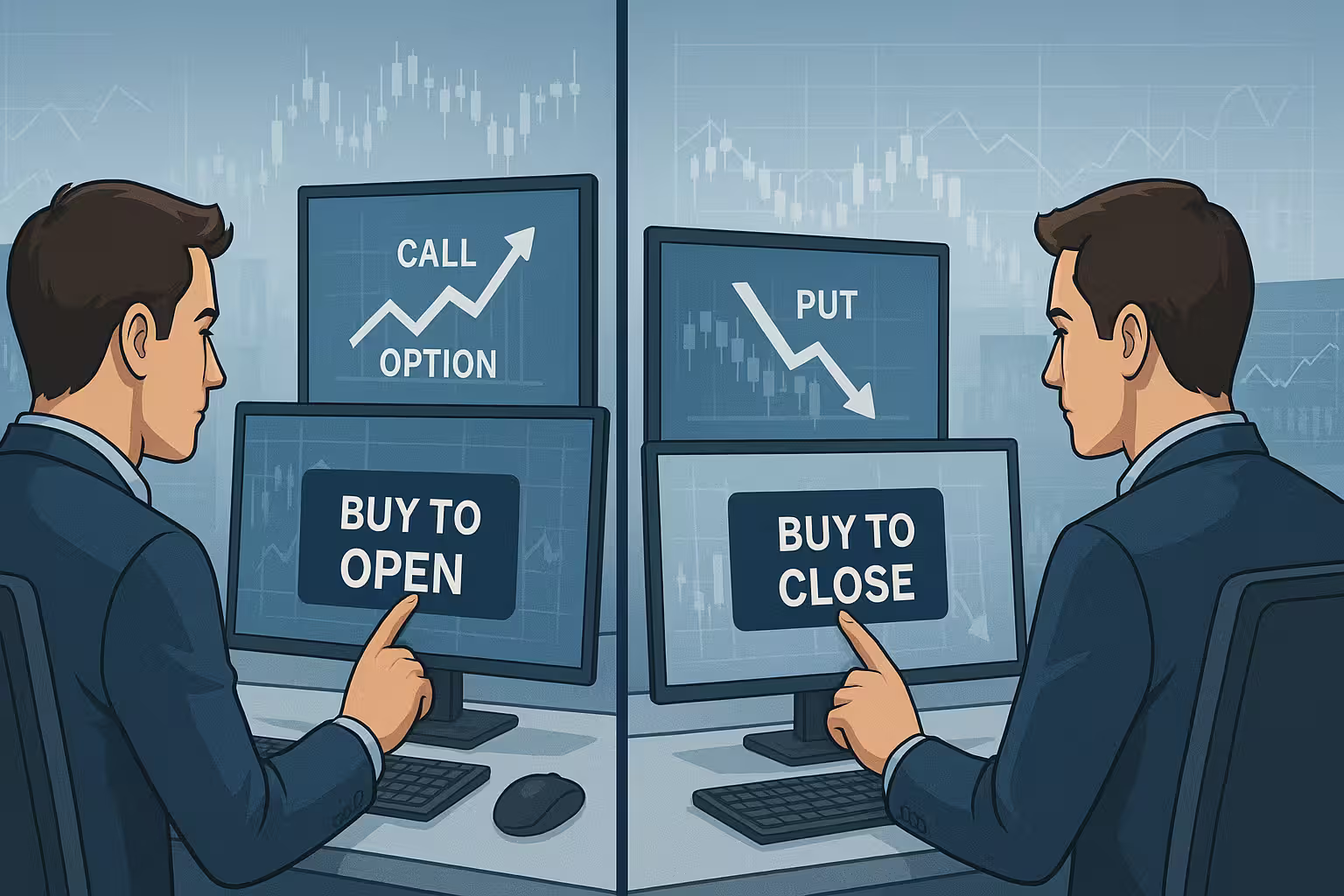
“Buy to Open” refers to a trader opening a new position by purchasing an asset with the expectation that the price will rise, and “Buy to Close” refers to a trader closing a short position by purchasing the same asset that was previously sold with the expectation that the price will drop. Traders must understand these two concepts to successfully execute trades where the trades are buying at the lowest possible price and selling at the highest possible price.
Our guide on Buy to Open and Buy to Close orders will address what these orders are and how they work. Readers can get insights on when it’s best to use Buy to Open or Buy to Close trades. Another key aspect of these trades we’ll highlight in the guide are the primary risks and benefits associated with each and the best practices that traders can get into when using Buy to Open or Buy to Close. When you learn these principles, you can get a much firmer grasp on the logistics of options trading in general.
What Does ‘Buy to Open’ Mean?
“Buy to Open” is a way of referring to purchasing an options contract to establish a new position in the market. By buying a call or put option, the trader is initiating a long position with the left so that the underlying asset’s price will move in a certain direction. It’s all based on the trader’s current market outlook. Traders buying a call see the market as going up while buying a put is the outlook that the market will be moving down.
By and large, traders who initial a “buy to open” are expecting the price of the underlying asset to increase over time. Hypothetical situations include when a trader is predicting that the company is going to be experiencing some positive growth, when they believe that the broader market is going to trend upward, or when they feel that a particular stock is being severely undervalued.
ExampleA good example illustrating a Buy to Open scenario and how it might play out in the real world would be a trader believing that a certain stock is likely to go from a value of $70 to $90 by this time next year. To secure a profit from this hypothetical scenario, the trader would first buy to open a call for that stock. They would set a strike price of $80 and set up the expiration date for a year from now.
What Does ‘Buy to Close’ Mean?
The opposite of “buy to open,” “buy to close” is when a trader is buying back an options contract that sold in order to close out their position and exit the trade. It’s an important way for traders to lock in profits or limit their losses, while neutralizing their exposure to the underlying asset. “Buy to close” helps traders to offset the original position with the purchase of the same option contract.
ExampleLet’s look at a practical example that illustrates the Buy to Close in action. The current price of a stock is $100 at the time the trader sells put on the stock. By making this move, the trader is under the belief that the stock price will either increase or remain flat. The day before the expiration date, the stock is sitting at $101, which causes the put’s contract value to drop off. To secure a $4 profit, the trader can buy to close at $1.
Key Differences Between Buy to Open and Buy to Close
The best way to understand these orders is to look at what each one is primarily used for and what kind of impact each can have on a trader’s strategy going forward and on market risk.

Opening vs. Closing Positions
When traders get into a Buy to Open order, they’re initiating a new options contract with the expectation that the option price will rise. These are significantly different from Buy to Close orders, which are used by traders who want to get out of an existing options contract because they believe that the option’s price will go down.
Impact on Market Risk and Strategy
Buy to Open orders have a high risk of expiring as worthless, though the position creates great opportunities for large gains with minimal losses, in general. Due to this risk, Buy to Open orders can be switched over to Buy to Close orders before the expiration date, so traders can exit these short positions before the market moves against them.
Using Buy to Open orders and Buy to Close orders can be used in conjunction with one another in a strategic sense for traders who want to experience the large gains and risk almost nothing, but still give them a way to get around the short position expiring as worthless. Making the switch over to a Buy to Close position lets them manage this risk effectively by getting out the trade earlier than planned following an unfavorable market movement.
Buy to Open and Buy to Close Compared
Comparison Point | Buy to Open | Buy to Close |
|---|---|---|
When to Use | Getting into a long position Starting a new position altogether Hedging purposes | To lock in a profit Closing out a short position about to expire as worthless Limiting potential losses |
Benefits | Unlimited profit potential (technically) Increased leverage Flexibility | Limiting losses by exiting the trade early Locking in gains before the expiration date |
Risks | You could potentially lose your premium Volatility can lead markets in an undesirable direction | Traders could be missing out on profitable turnaround by exiting the trade early |
When Should You Use Each?
Timing is everything when using Buy to Open or Buy to Close trades. There are certain times when it’s better to use one and not the other, which we’ve outlined in great detail below. Find out when the best and most appropriate times are to use either of these order types, so you can use them to benefit your online options trading experience.
When to Use Buy to Open
- Getting Into a Long Position: Traders should enter a Buy to Open position if they feel the price of the underlying asset will increase in the future. It includes stocks or the underlying asset of an option. Buy to Open trades are great for long positions in financial instruments like options or stocks.
- Forming a New Position: “Buy to Open” signifies that traders are entering into a new contract in the market or a new position.
- Hedging Purposes: Buy to Open trades can also be used to offset other portfolio risks. Traders can use these orders to great effect, especially when they are worried that a stock they own will fall off greatly in value due to market movements.
When to Use Buy to Close
- Securing a Profit: Traders who sold an option and they believe that the underlying asset is going in a direction they weren’t originally expecting should do a Buy to Close. Traders doing this can secure themselves a profit before the market direction starts to become more unfavorable.
- Limiting Potential Losses: Using a Buy to Close trade can reduce possible losses in the case that the option price increases significantly and the underlying asset begins embarking in a direction that doesn’t bode well for the trader.
- Closing a Short Position: Traders can exit short positions like a sold call or put option when using a Buy to close order. By executing this move, the trader can offset the initial sale of the short position.
Benefits and Risks
“Buy to Open” and “Buy to Close” trades each have their own sets of unique benefits and risks, which we’ve outlined below to give you a clear picture of where traders can enjoy prominent advantages, but areas where they need to exercise some extra caution.

Advantages of Buy to Open
- Leverage—Using Buy to Open can lead to greater potential profit in comparison to short selling when the stock’s value goes down. The leverage is created by allowing the trader to control a larger position in the underlying asset with a small upfront cost.
- Potential Profits—The maximum profit secured is technically unlimited, but it depends on the market conditions and the option type. Buying a call option could secure unlimited profit potential due to the fact that the underlying asset price can rise indefinitely. It’s key to note that the trader’s profit potential is capped between the strike price and the current price of the underlying asset.
- Flexibility—Traders have the flexibility to predict either rising or falling prices in the underlying asset when they use a Buy to Open move. They can choose between call or put options. Ultimately, traders are only risking the contract’s premium (the price paid to enter the position), and they aren’t risking the full value of the asset itself.
Risks Associated with Buy to Open
- Potential Losses—The losses that a trader will experience with a Buy to Open trade are limited to the premium they paid for the option.
- Market Volatility—Traders are exposed to risks associated with market volatility with these Buy to open trades. With the higher increase in profit potential comes this increased risk of losses due to volatile markets moving in the non-desired direction.
Benefits of Buy to Close
- Limiting Losses—These orders can be used by traders to limit losses by cutting underperforming positions from their portfolios. Buy to Close offers traders a flexible way to close out losing trades before their expiration date to limit the potential losses and possibly secure a small profit.
- Securing Gains—Through the repurchasing of options contracts by executing a Buy to Close order, traders can safeguard their gains by locking in the profits before the expiration date, where the contract would otherwise expire as worthless. Buy to Close can prevent potential reversals where profits would be eroded under normal circumstances.
Risks Associated with Buy to Close
- Opportunity Cost—Some benefits or returns are forgone when the traders choose to close out their short position early. They could allow it to continue and there’s a chance they could lose money, but there’s a good chance too of the position making money. Buying back the stock and closing out the position early can lead to some missed opportunities.
Best Practices for Traders
We’d encourage any readers, regardless of their experiential background in options trading, to look at the best practices to use for Buy to Open and Buy to Close trades. The more you’re able to develop these habits when dealing with these orders, the better you’ll become at timing your trades to minimize potential losses and lock in potential profits.
Tips for Buy to Open Transactions
Follow these strategies and techniques for effectively entering Buy to Open trades at the best possible prices:
- Use limited orders for Buy to Open trades instead of market orders which execute at current market price. Limit orders allow the trader to dictate the max price they’re willing to pay which prevents scenarios in volatile markets where traders are overpaying for their positions.
- Diversify your portfolio by spreading the risk across multiple options contracts and different assets. It’s best not to rely on a single trade when Buying to Open.
- Keep a close eye on the current market conditions, so you can adjust your Buy to Open strategy in the most effective way possible.
- It’s key for traders to do some good, thorough research before submitting any Buy to Open orders. Look at factors like market trends, any relevant news, and technical indicators.
Tips for Buy to Close Transactions
If you want to execute these orders effectively, you’ll want to follow these steps for the best possible results:
- Make clear the number of contracts and the order type when placing a Buy to Close trade. Be sure to use limit orders as well to manage the transactional costs.
- Keep an eye on the market conditions to track the performance indicators of the underlying asset.
- Before placing any Buy to Close orders, it’s key for traders to get familiar with how to execute these trades on their trading app or website of choice. Another important consideration is knowing about other key concepts like stop-loss orders, market orders, or limit orders.
- Timing the order is another key factor in securing a profitable position. Track asset volatility and the remaining time value of the option to find out when the best times are to both open and eventually close out the order.
- Reviewing the entire process of the Buy to Close trade and learning about what you might have done right or wrong can give you key insights into how to hone your approach in future trades and transactions.
Common Mistakes to Avoid
Buy to Open
– Not Understanding Volatility and Underlying Asset: Traders can make big mistakes with Buy to Open positions when they ignore the fundamentals of the underlying stock, misinterpreting volatility ranges, and conduct improper technical analysis leading to poorly timed trades.
– Illiquid Options: Another trouble that inexperienced traders might run into is trying to trade options with wider bid-ask spreads, which are illiquid options that are much more difficult to buy or sell as they have little trading volume.
– Emotional Trading: There’s a wide range of problems that traders can run into when they fall into emotional trading habits. Fear, greed, laziness, or overconfidence can lead traders to missed opportunities trying to capture the ideal entry or exit points, overtrading which can lead to eroding profits, or by concentrating on investments in one area leaving them vulnerable to big losses without a diversified portfolio.
– No Risk Management: Traders dealing with Buy to Open contracts can run into problems when they refuse to use basic risk management techniques such as conservative positions sizing, diversifying their portfolios, or using stop loss orders to minimize the impact of potential losses.
Buy to Close
– Not Monitoring Market Conditions: Having a misunderstanding of what’s going in the market currently can come from not keeping an eye on market trends or other important factors like the time value left on options or underlying asset performance indicators. You cannot expect to make the right moves financially if you don’t take the market context into account.
– Poor Timing: To get the timing right on Buy to Close orders, traders must look into factors like the time to expiration, their personal risk tolerance, and asset volatility to correctly time either buying or closing the order. If they get the timing wrong, the trader could lose their premium when the contract expires as worthless.
– Not Understanding How Your Trading Platform Functions: Traders can make the mistake of not being familiar with the different order types such as stop-loss, market, or limit orders. Another problem would be not knowing how to close out positions. This can lead to a trader continuing with a trade which could lead to losses.
– Placing Orders Incorrectly: Traders can make the common mistake of not placing their orders correctly. It’s imperative to enter the correct number of contracts and select the order type when doing a Buy to Close. It’s also recommended that traders use limit orders to control their costs.
– Not Having a Clear Trading Plan or Strategy: Know all the potential opportunities and risks associated with any position you take on, so you know when using a Buy to Close is the appropriate strategy. Make sure the strategy you’re using matches the outlook of the underlying asset. Strike a balance between letting the position ride for a while and closing it out with enough time to account for any losses you might incur by waiting.
Practical Tips and Strategies
Timing is everything when it comes to Buy to Open and Buy to Close orders. We’ve included these practical tips and strategies that show the ideal circumstances to use either of these orders and some examples of how they might work in a real-world situation.

Examples of Buy to Open
A trader believes that Tesla’s stock will rise. When the time is right, and they can find a good entry point in the stock, the trader might buy to open a call option on Tesla. They’re betting that the option price will increase along with the stock price. To see the trade through to success, the trader would have to keep a close eye on the market and use other technical indicators to confirm that market trends are still good for keeping Tesla’s stock and option prices high.
Remember that Buy to Open trades are best in the following circumstances:
- Getting into a long position
- Starting a new position altogether
- Hedging purposes
Example of Buy to Close
A good illustration of a Buy to Close order would be a trader selling 100 shares of Apple stocks because they believe that the option price will decrease along with the stock price. To Buy to Close this position, they would have to purchase 100 shares of Apple.
Remember that Buy to Close trades are best in the following circumstances:
- To lock in a profit
- Closing out a short position about to expire as worthless
- Limiting potential losses
Your Next Step—Leveraging Buy to Open and Buy to Close for Better Results
If you’re getting into a long position or opening a brand-new position, “Buy to Open” are good positions for traders to open if they are expecting that the price will rise. On the other hand, “Buy to Close” are trades where a trader closes a short position by purchasing the same asset that was previously sold with the expectation that the price will drop. “Buy to Close” is good for locking in a profit, limiting potential losses, or closing out a position before it expires as worthless.
It’s key for traders to understand both options clearly to navigate the market in a way where you’re entering each trade at the best possible price and getting out of losing traders with as much profit as possible before losses set in due to an unfavorable market turn. Remember to follow our tips and best practices for the best results like keeping a close eye on the market conditions, using plenty of technical indicators for trend confirmation, and using good risk management practices like stop-loss orders and position sizing.
Frequently Asked Questions
To get a good idea of the main concepts of buying to open and buying to close, we’ve taken the most common questions from our customers and readers to show you what the most common queries are on the matter. To anyone who is looking for the main highlights of Buy to Open and Buy to Sell, you’ll find them here in our frequently asked questions section.
Can I Switch from Buy to Open to Buy to Close Mid-Trade?
Yes, you can switch between Buy to Open and Buy to Close in the middle of the trade. After buying the Buy to Open position, you can begin a Buy to Close trade to exit the position before the expiration date, which is closing out the position. This move is recommended if the underlying stock price or the option price moves to a point where it’s not favorable anymore to your original trading plan, if you’re looking to sell the option at a higher price to maximize your profits, or if you simply want to reduce the risk of your position.
Are There Costs Associated with Each?
There are some costs associated with Buy to Open, including the premium paid to buy the options contract, which gives you the right to buy or sell the underlying asset at a specific strike price by a specific expiration date. When Buying to Close, traders are purchasing an options contract that is the opposite of the initial position, so they must pay a premium which acts as a debit to their account. This premium purchase is the primary cost associated with exiting the short position.
How Do These Strategies Affect My Taxes?
Gains are taxed as capital gains, and losses are reported as short-term or long-term, depending on the holding period. It’s important to note that when you’re closing out a position in the case of a Buy to Close move, you’ve realized either a capital gain or loss, depending on whether the closing price was higher or lower than the opening price.
What Happens if I Forget to Close My Open Options Position?
If this occurs before the expiration date, contracts that are in-the-money will be exercised or settled automatically. This means that the buyer must buy or sell the underlying security. In the case of out-of-the-money options, they will expire as worthless if the trader forgets to close their open options positions, and they will end up losing the premium they paid to enter the trade (the maximum possible amount to lose).
Can I Use ‘Buy to Close’ to Exit a Losing Trade Early?
Traders can Buy to Close to exit losing traders earlier, which is a great technique for limiting potential losses. It’s done by buying back the short position at a lower price. Buying back a stock, option, or bond you previously sold short to close out the position allows traders to offset a short position already previously taken.