
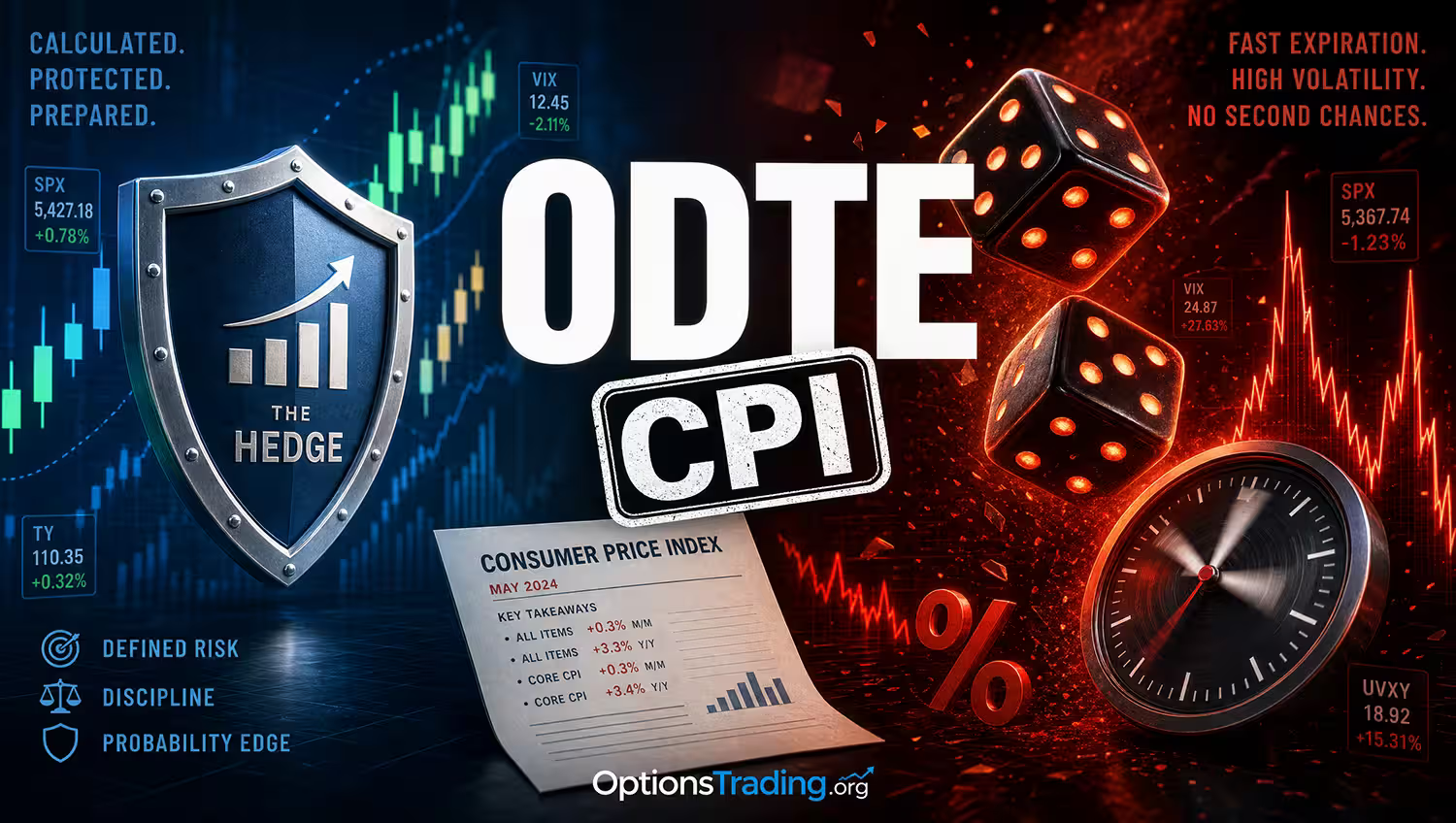
A CPI morning can make 0DTE options feel unusually precise. The release is scheduled, the market reaction can be fast, and a same-day contract appears to offer a clean way to define risk around one known event.
That does not automatically make the trade a smart hedge. A hedge has a job, a size, an exit plan, and a reason it offsets a real exposure. A same-day option bought because the number might surprise the market is often closer to event speculation, even when the maximum loss is limited to the premium paid.
The useful question is not whether CPI-day 0DTE options are good or bad. It is whether the contract’s premium, expected move, implied volatility, gamma exposure, bid-ask spread, and remaining time match the reason for using it.
CPI-Day 0DTE Decision Frame
The Consumer Price Index is a scheduled inflation report, so traders usually know the release date before the session begins. The BLS CPI release schedule is the primary calendar source to verify before making dated claims about timing.
A 0DTE option expires the same trading day. That short clock can make the contract sensitive to small price changes, changes in implied volatility, and execution quality. FINRA’s 0DTE options education emphasizes that these contracts can be complex and risky, especially for investors who do not understand the compressed time frame.
For readers who need the foundation first, the safer path is to review options trading basics before treating CPI-day contracts as a hedge, speculation tool, or tactical adjustment.
Quick Takeaways
- CPI-day 0DTE options can define maximum premium risk, but that alone does not make them conservative.
- A real hedge should offset a specific exposure, not simply express a market hunch.
- Expected move, implied volatility, gamma, time decay, and bid-ask spreads can change quickly around the release.
- The first minutes after the number can be especially difficult for execution and exits.
- If the purpose, size, and exit plan are unclear, the trade is probably speculation rather than protection.
Why CPI Days Make Same-Day Options Tempting
CPI can matter because inflation data can shift rate expectations, index futures, sector leadership, Treasury yields, and market volatility in a short window. That makes the event attractive to traders who want a defined-risk way to participate in a sharp move without holding overnight exposure.
The problem is that the option market also knows the report is coming. Premium often reflects event uncertainty before the number arrives. A trader can be right that CPI matters and still buy a contract that requires a larger, faster, or cleaner move than the market delivers.
This is where implied volatility matters. Elevated event premium can make the breakeven harder to reach. After the release, implied volatility may fall, and the option may lose extrinsic value even if the underlying initially moves in the expected direction.
The same idea applies to strategy choice. A trader comparing long calls, long puts, spreads, or no trade is really comparing different options strategies for event exposure. None of those structures is automatically better unless it fits the exposure, risk budget, and available execution.
Hedge or Gamble? The Distinction Matters
The label depends less on the instrument and more on the job the position is supposed to do. A same-day option can be part of a hedge, but only if the trader can explain what it protects and how it will be managed.
Question | Looks More Like A Hedge | Looks More Like Speculation |
|---|---|---|
What is being protected? | A defined portfolio, position, or event exposure. | A feeling that the market will move sharply after CPI. |
How is size chosen? | Position size is tied to the exposure being offset. | Size is chosen because the contract looks cheap or exciting. |
What must happen? | The option reduces damage if a specific adverse move occurs. | The trade needs the market to move far and fast enough to overcome premium and spread. |
How is it exited? | The exit is planned before the release or tied to the protected exposure. | The trader waits for a quick win and improvises if the market reverses. |
What is reviewed first? | Expected move, implied volatility, spread, liquidity, and max loss. | Only the CPI forecast, social sentiment, or directional opinion. |
CPI-Day Option Timeline
Before the release, the main question is what the market already prices. A trader should compare the contract premium with the expected move, the breakeven, the spread, and the time remaining after the report. If the option already requires an unusually large move, the headline may have less room to help than it appears.
In the first minutes after the number, price discovery can be messy. The underlying may whip in both directions, spreads can widen, and a quoted midpoint may not represent a realistic fill. This is one reason options trading brokers and platform tools matter: order types, quote quality, and execution controls can affect the real outcome.
Later in the session, the contract has less time to recover from a false start. Gamma can make the option react sharply near the money, while theta keeps pressing against the buyer. A move that looked tradable at 9:35 a.m. may no longer have the same risk-reward profile by midday.
Near the close, the trade becomes a pure expiration-management problem. The buyer may be deciding whether to salvage remaining value, accept a loss, or avoid holding an in-the-money contract into automatic exercise or assignment rules. That process should be understood before the trade is entered.
A Simple CPI-Day Premium Example
These numbers are intentionally simplified. The point is to show why the option thesis has to be separate from the CPI thesis.
Input | Example Reading | Question Before Buying |
|---|---|---|
Index ETF price | Shares trade near $500 before the CPI release. | How much of the expected CPI move is already reflected? |
0DTE call premium | A same-day $503 call costs $2.20. | Does the market need to move above $505.20 quickly enough to matter? |
Expected move | The option chain implies a larger-than-normal event move. | Is the contract priced for the surprise the trader expects? |
Implied volatility | IV is elevated before the number. | What happens if volatility falls right after the release? |
Bid-ask spread | The spread widens during the first reaction. | Can the trade be exited at a real price, not just a screen value? |
Where CPI-Day 0DTE Trades Go Wrong
- Calling a position a hedge when it does not offset a clearly identified exposure.
- Buying premium without comparing the breakeven with the expected move.
- Ignoring that implied volatility can fall after the report even if the market moves.
- Assuming volume means liquidity when bid-ask spreads are moving quickly.
- Using too much size because the maximum loss is limited to the premium.
- Entering without a plan for exercise, assignment, or late-day expiration decisions.
0DTE CPI-Day Checklist
- Verify the CPI release date and timing from a current official calendar.
- Define whether the position is a hedge, a directional trade, or no-trade discipline.
- Compare premium, breakeven, expected move, implied volatility, and spread before entering.
- Know how much time will remain after the release and when the exit plan should trigger.
- Review liquidity and order type instead of assuming the midpoint is tradable.
- Understand the maximum loss, contract multiplier, and expiration handling.
- Skip the trade if the setup requires a perfect reaction to work.
FAQ
These questions focus on using CPI-day 0DTE options as educational event-risk context, not as a recommendation to trade the release.
Are CPI-day 0DTE options ever a smart hedge?
They can be used as part of a defined hedge, but only when the position offsets a specific exposure, is sized appropriately, and has an exit plan. A limited-loss trade is not automatically a hedge.
Why can a correct CPI direction still lose money?
The option may have been priced for a large move before the release. If the actual move is smaller, slower, or followed by a volatility drop, premium decay and execution costs can overwhelm the directional call.
Should beginners trade 0DTE options on CPI days?
Many beginners are better served by studying the mechanics first. CPI-day 0DTE contracts compress price movement, volatility changes, and expiration decisions into one session, which leaves little room for confusion.
Use The Event To Improve The Process
CPI-day 0DTE options are not automatically smart hedges, and they are not automatically reckless gambles. The difference is the process around them. A defined exposure, sensible size, realistic expected-move review, and clear exit plan can make the trade more disciplined. A vague directional bet with no execution plan is still a gamble, even if the loss is capped.
For most readers, the strongest takeaway is slower thinking before a fast event. Verify the calendar, separate the hedge thesis from the option thesis, check what the premium already prices, and decide in advance what would make the trade not worth taking.